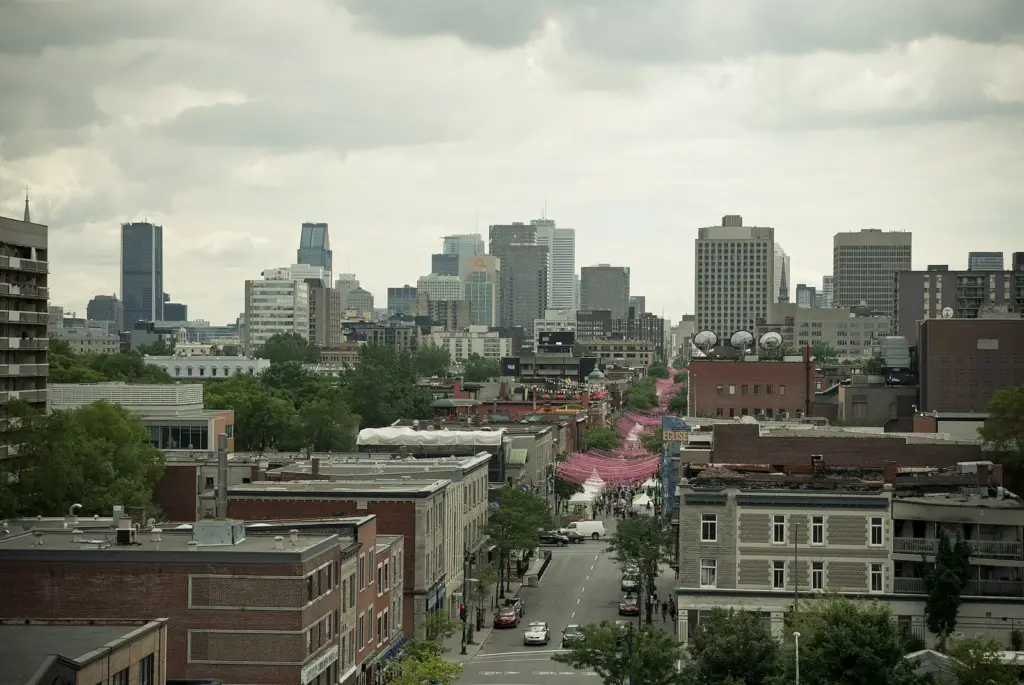
Montreal neighborhoods — or neighbourhoods, as the city itself spells it — are the real reason people fall for this place. The famous sights are concentrated in a few blocks, but the character of Montreal lives in its districts: the curling outdoor staircases of the Plateau, the bagel ovens of Mile End, the espresso bars of Little Italy, the grey-stone lanes of Old Montreal, the canal-side warehouses of Saint-Henri, and a dozen others, each with its own language mix, food, history and pace. This guide walks through seventeen of them, from the ones every visitor sees to the ones most never reach, with what each is like, who it suits, what not to miss and how to get there by metro. It also explains how they fit together, because the biggest planning mistake in Montreal is treating very different places as if they were the same.
If you’re deciding where to base yourself, our guide to where to stay in Montreal compares the neighbourhoods purely on accommodation. This page is about what they’re like to explore.
How Montreal Is Organised
Montreal is an island city, and officially it’s divided into 19 boroughs (arrondissements), each with its own borough council. The trouble for visitors is that the borough names on official maps rarely match the neighbourhood names people actually use. The Plateau-Mont-Royal borough, for example, includes both the Plateau and Mile End, which feel like different places. Ville-Marie, the central borough, contains downtown, Old Montreal, Chinatown, the Quartier Latin and the Village. Le Sud-Ouest covers Griffintown, Little Burgundy, Saint-Henri and Pointe-Saint-Charles. Little Italy sits within Rosemont–La Petite-Patrie. In this guide we use the neighbourhood names you’ll hear on the street.
A few more quirks. Westmount, the wealthy enclave on the western slope of the mountain, isn’t a borough at all but a separate city surrounded by Montreal. Mount Royal, the mountain park in the middle of the island, sits between most of the central neighbourhoods and shapes how you move between them. And boulevard Saint-Laurent, known as “the Main”, runs north from the river through the heart of the city. Historically it divided the English-speaking west from the French-speaking east, and it’s still the line where street addresses switch from Ouest (west) to Est (east). If an address says “rue Rachel Est”, it’s east of the Main.
Finally, a note on directions. Montreal’s street grid is tilted about 45 degrees from true north, but locals ignore that. “North” means up towards the mountain and away from the river; “south” means down towards the river. Every map and every Montrealer will use “city north”, so do the same.

Montreal Neighborhoods at a Glance
| Neighbourhood | Known for | Best for | Metro |
|---|---|---|---|
| Old Montreal | Historic streets, Notre-Dame Basilica, the Old Port | History, first-timers | Place-d’Armes, Champ-de-Mars (Orange) |
| Downtown | Shopping, towers, the RÉSO, the Bell Centre | Practical base, winter | McGill, Peel (Green); Bonaventure (Orange) |
| Golden Square Mile | Mansions, museums, McGill University | Art, architecture | Peel, Guy-Concordia (Green) |
| Quartier des Spectacles / Quartier Latin | Festivals, theatres, students | Festivals, nightlife | Place-des-Arts (Green), Berri-UQAM |
| Chinatown | Dumplings, bakeries, noodle shops | Cheap eats | Place-d’Armes (Orange) |
| The Village | LGBTQ+ life, Pride, bars | Nightlife | Beaudry, Papineau (Green) |
| The Plateau | Staircases, bistros, Parc La Fontaine | Food, strolling | Sherbrooke, Mont-Royal (Orange) |
| Mile End | Bagels, cafés, artists | Coffee, creative scene | Laurier (Orange), bus 55 |
| Outremont | Leafy streets, avenue Laurier | Quiet elegance | Outremont (Blue) |
| Little Italy | Jean-Talon Market, espresso | Food markets | Jean-Talon (Orange, Blue) |
| Griffintown | New condos, the canal | Modern stays | Lionel-Groulx (Green, Orange) |
| Little Burgundy | Rue Notre-Dame restaurants, jazz history | Dinner | Lionel-Groulx, Georges-Vanier |
| Saint-Henri | Atwater Market, the canal, indie shops | Markets, cycling | Place-Saint-Henri (Orange) |
| Pointe-Saint-Charles | Working-class history, Maison Saint-Gabriel | Off the beaten path | Charlevoix (Green) |
| Verdun | Rue Wellington, the urban beach | Local life, summer swimming | Verdun, De L’Église (Green) |
| Hochelaga-Maisonneuve | Olympic Park, Marché Maisonneuve | Space for Life, local markets | Pie-IX, Viau (Green) |
| Westmount | Victorian houses, avenue Greene | Architecture, quiet walks | Atwater (Green) |
| Côte-des-Neiges | Saint Joseph’s Oratory, global food | The Oratory, diverse eats | Côte-des-Neiges (Blue) |
The Central Neighbourhoods
Old Montreal (Vieux-Montréal)
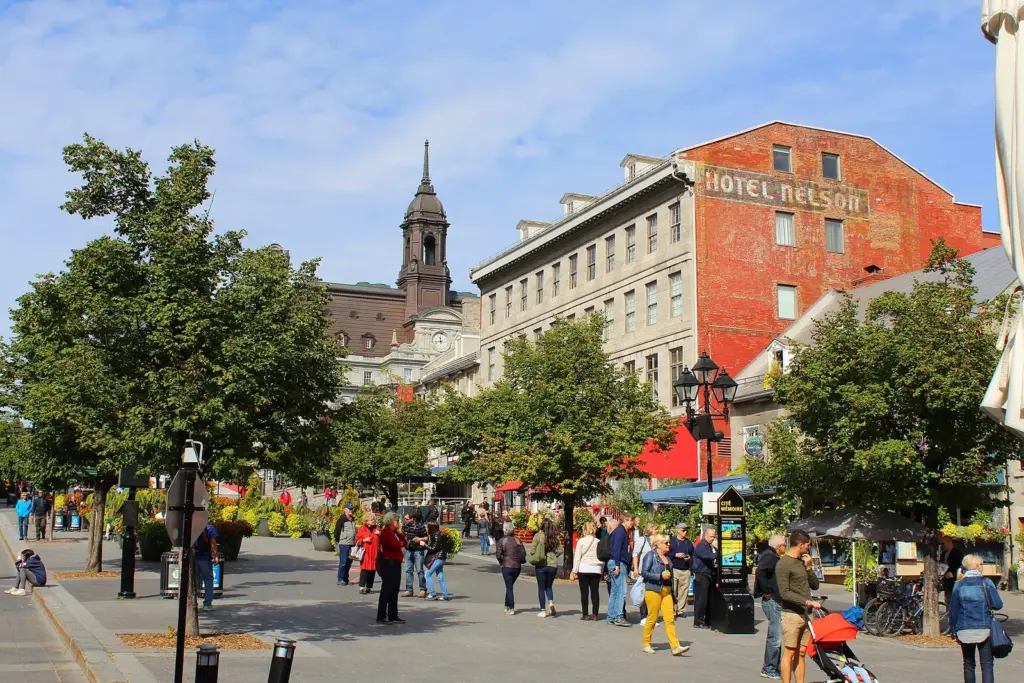
The historic heart of the city, where Ville-Marie was founded in 1642, and the neighbourhood every visitor sees first. Its narrow, partly cobbled streets are lined with 18th- and 19th-century stone buildings, and within a few blocks you’ll find Notre-Dame Basilica ($16 for a daytime visit), Pointe-à-Callière, the archaeology museum built on the founding site ($30 for adults aged 31 to 64), Place Jacques-Cartier, City Hall and, down by the river, the Old Port’s promenade. It’s beautiful, compact and very busy on summer weekends, and quiet in the evenings once the day-trippers leave.
Old Montreal is not downtown, even though many guides treat it as the city centre. It’s a distinct historic district below downtown, and most visitors need a day here rather than a whole trip. Our complete Old Montreal guide has a walking route, prices and the sights worth skipping.
- Metro:
- Place-d’Armes, Champ-de-Mars, Square-Victoria–OACI (Orange)
- Best for:
- history, first-timers, romantic evenings
- Don’t miss:
- the basilica’s interior, rue Saint-Paul, the Old Port at sunset

Downtown (Centre-Ville)
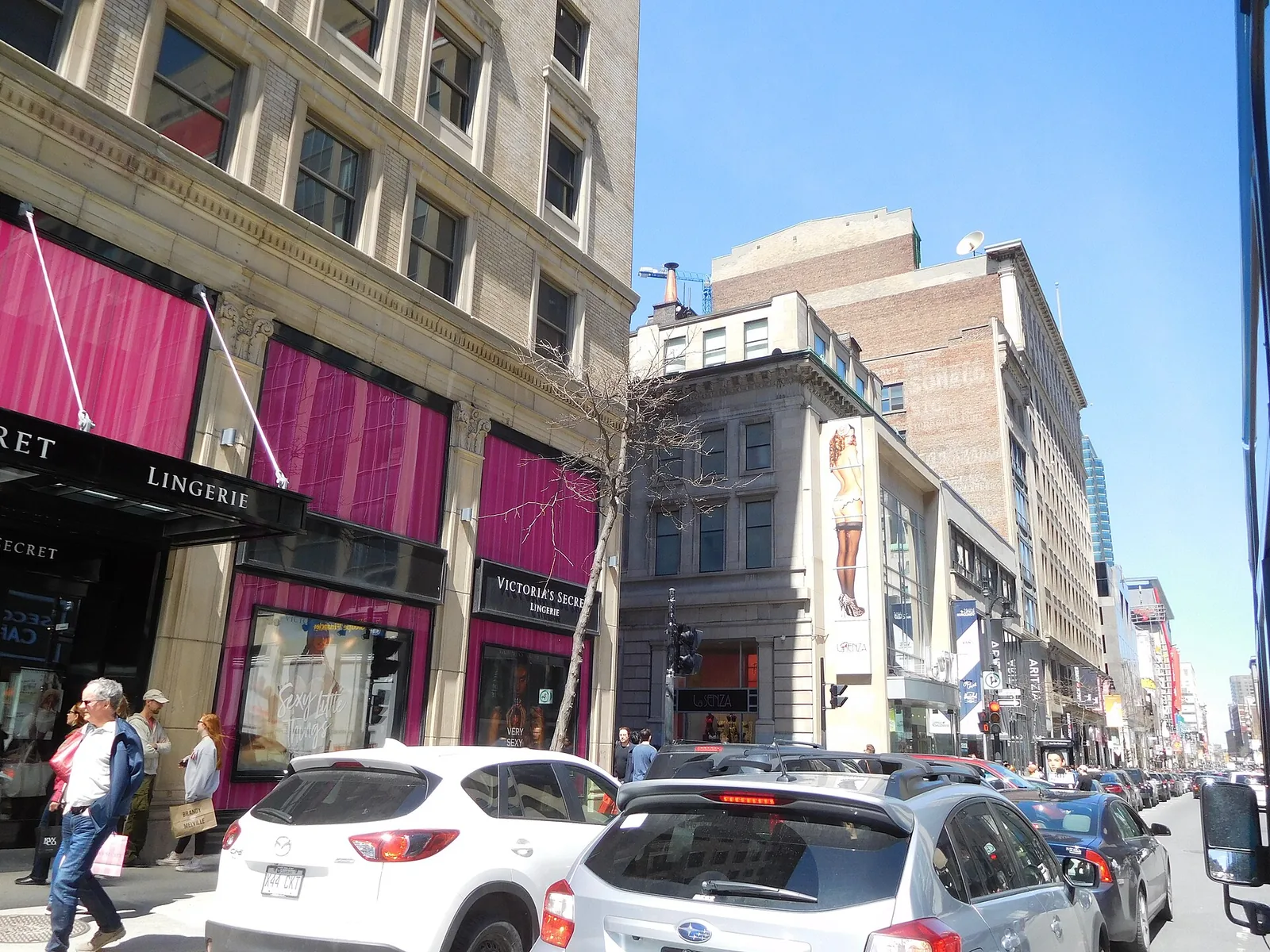
Modern Montreal: office towers, department stores, universities and hotels, with rue Sainte-Catherine as its shopping spine. Downtown isn’t the city’s most charming area, but it’s its most practical, with the widest choice of hotels, the Montreal Eaton Centre, the Bell Centre (home of the Canadiens) and the RÉSO, a network of about 33 km of connected indoor passages linking metro stations, malls and office buildings. The RÉSO isn’t one continuous underground city, but in winter it lets you cross much of downtown without going outside.
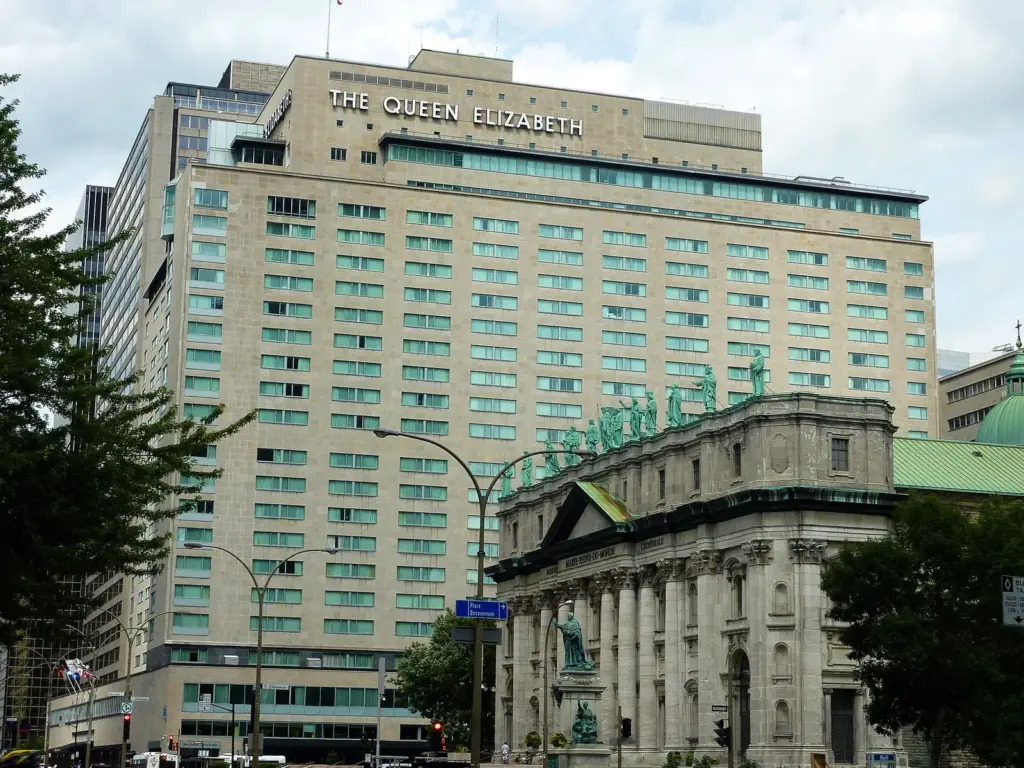
Just to the north-west, the Golden Square Mile climbs the slope of Mount Royal. In the 19th and early 20th centuries it was home to Canada’s wealthiest families, and rue Sherbrooke Ouest still has the grandest buildings in the city: the Montreal Museum of Fine Arts ($30, free for visitors 25 and under), the McCord Stewart Museum, the gates of McGill University and the Ritz-Carlton hotel.
- Metro:
- McGill, Peel, Guy-Concordia (Green); Bonaventure (Orange)
- Best for:
- shopping, museums, winter visits
- Don’t miss:
- the Museum of Fine Arts, rue Sherbrooke, the RÉSO in January
Quartier des Spectacles and the Quartier Latin
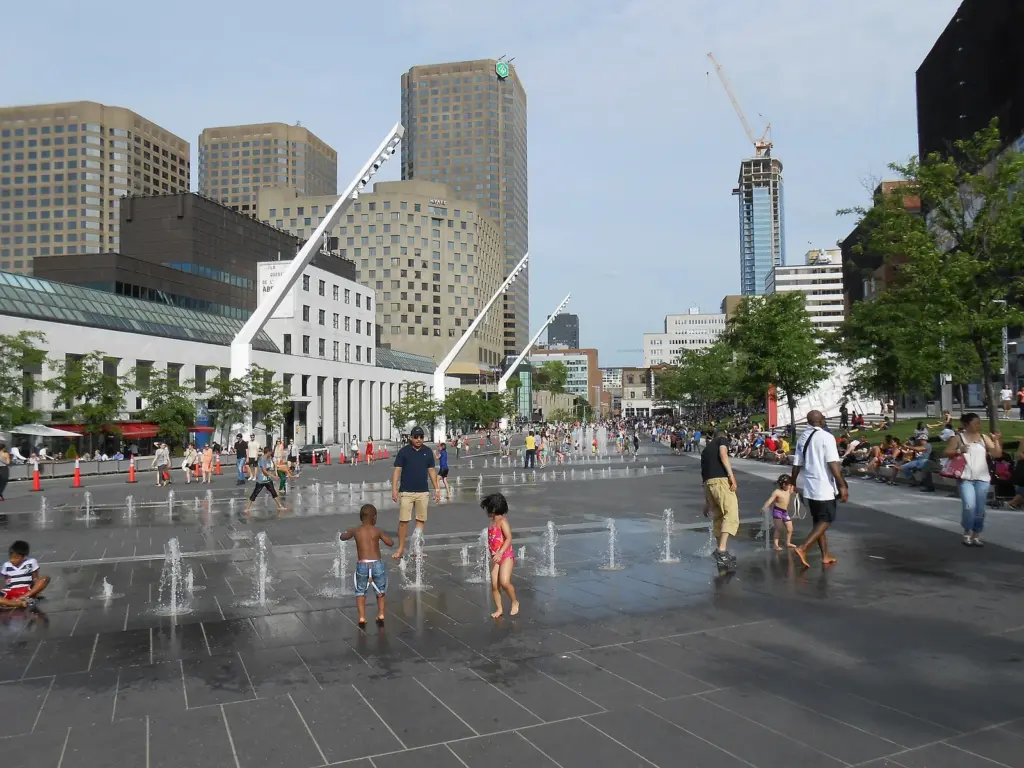
East of downtown, the Quartier des Spectacles is the city’s entertainment district, built around Place des Arts and the Place des Festivals. It’s where the Jazz Festival, the Francos and Montréal en Lumière hold their big free outdoor shows, and it’s the most exciting place in the city on a summer festival night. Our Montreal festivals calendar has the 2026–27 dates.
Just east, the Quartier Latin clusters around rue Saint-Denis and the Université du Québec à Montréal. It’s a student district of theatres, cinemas, bars, cheap restaurants and bookshops, lively and a little scruffy. Berri-UQAM station, where the Green, Orange and Yellow lines meet, is its hub.
- Metro:
- Place-des-Arts, Saint-Laurent (Green); Berri-UQAM (Green, Orange, Yellow)
- Best for:
- festivals, nightlife, budget travellers
- Don’t miss:
- a free outdoor show on the Place des Festivals
Chinatown (Quartier Chinois)
Small but lively, Montreal’s Chinatown sits between downtown and Old Montreal, centred on rue De La Gauchetière and boulevard Saint-Laurent. It’s marked by ornamental gates and is packed with dumpling houses, noodle shops, Vietnamese pho restaurants, Chinese bakeries and grocery stores. It’s the best cheap lunch in the centre of the city, five to ten minutes’ walk north of Place d’Armes, and a good stop between Old Montreal and the Quartier des Spectacles.
- Metro:
- Place-d’Armes (Orange), Saint-Laurent (Green)
- Best for:
- cheap eats
- Don’t miss:
- dumplings and a bakery stop
The Village
Montreal’s LGBTQ+ neighbourhood, stretched along rue Sainte-Catherine Est, is one of the largest in North America and one of the most welcoming neighbourhoods in the city for anyone. It’s full of bars, clubs, cabarets, cafés and restaurants, and in summer part of the main street is closed to traffic and turned into a pedestrian promenade of terrasses. It’s the heart of Fierté Montréal, the largest Pride in the French-speaking world, which ran from 31 July to 9 August in 2026.
- Metro:
- Beaudry, Papineau (Green)
- Best for:
- nightlife, Pride, people-watching
- Don’t miss:
- a summer evening on the pedestrianised street
North of the Mountain: the Plateau, Mile End and Beyond
The Plateau-Mont-Royal
If you’ve seen a picture of a Montreal street, it was probably the Plateau: rows of two- and three-storey brick houses (triplexes) with iron staircases curling up the outside, colourful doors, balconies full of plants and bicycles chained to every railing. The outdoor staircases were a practical solution, saving indoor space in homes built for working families, and they’ve become a symbol of the city.
The Plateau is Montreal’s most characterful residential neighbourhood and its best one for simply wandering. Its main streets — boulevard Saint-Laurent, rue Saint-Denis and avenue du Mont-Royal — are lined with bistros, cafés, boutiques, bookshops and bars, and the side streets are quiet and leafy. It’s also where much of the city’s classic food lives: Schwartz’s smoked meat at 3895 boulevard Saint-Laurent, 24-hour poutine at La Banquise at 994 rue Rachel Est, and Au Pied de Cochon at 536 rue Duluth Est. Parc La Fontaine, with its pond (a natural skating rink in winter), is its green heart, and the foot of Mount Royal is a short walk west.
- Metro:
- Sherbrooke, Mont-Royal, Laurier (Orange)
- Best for:
- food, strolling, neighbourhood life
- Don’t miss:
- the side streets east of rue Saint-Denis, Parc La Fontaine, a BYOB dinner on rue Duluth
Mile End
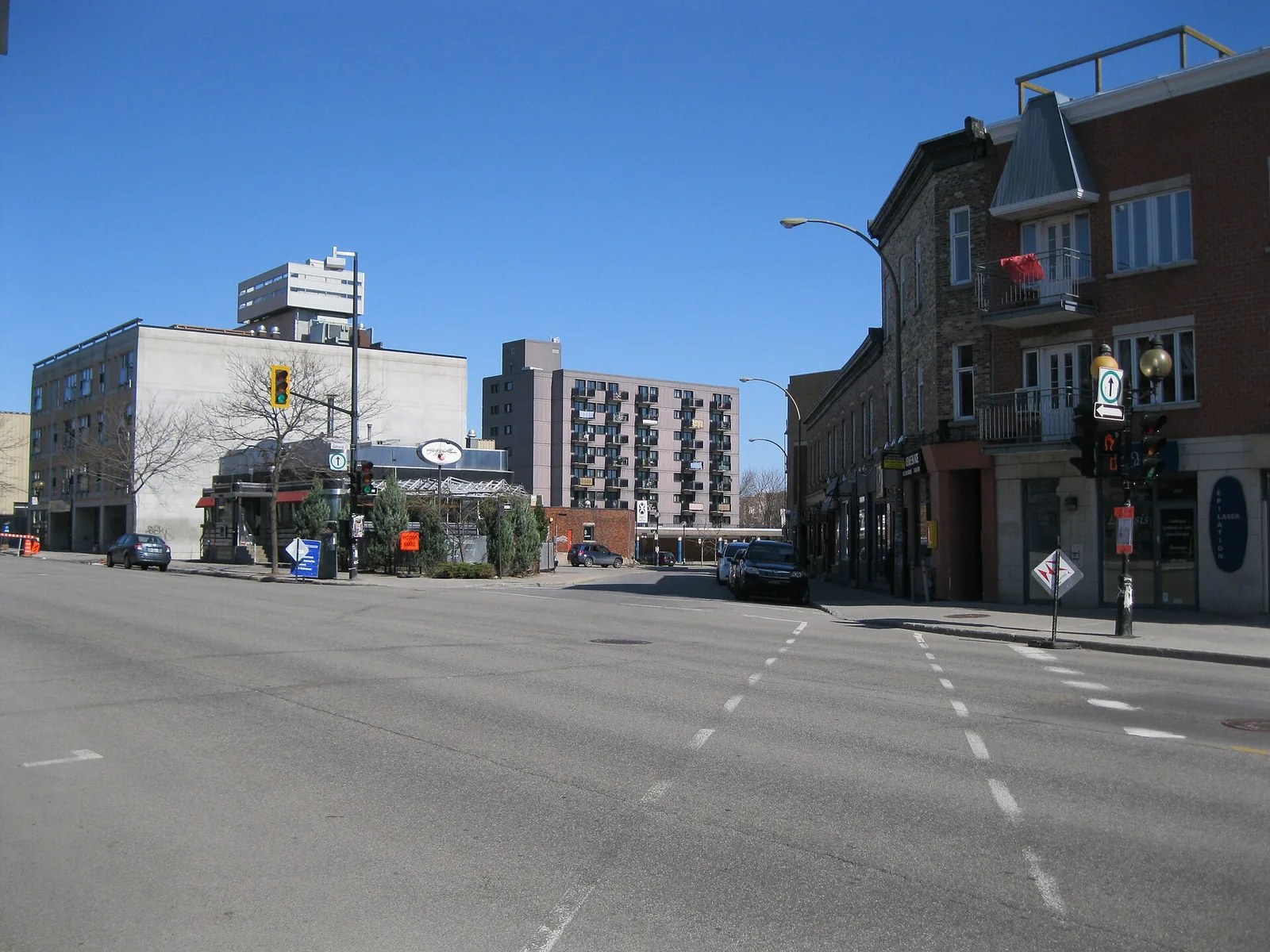
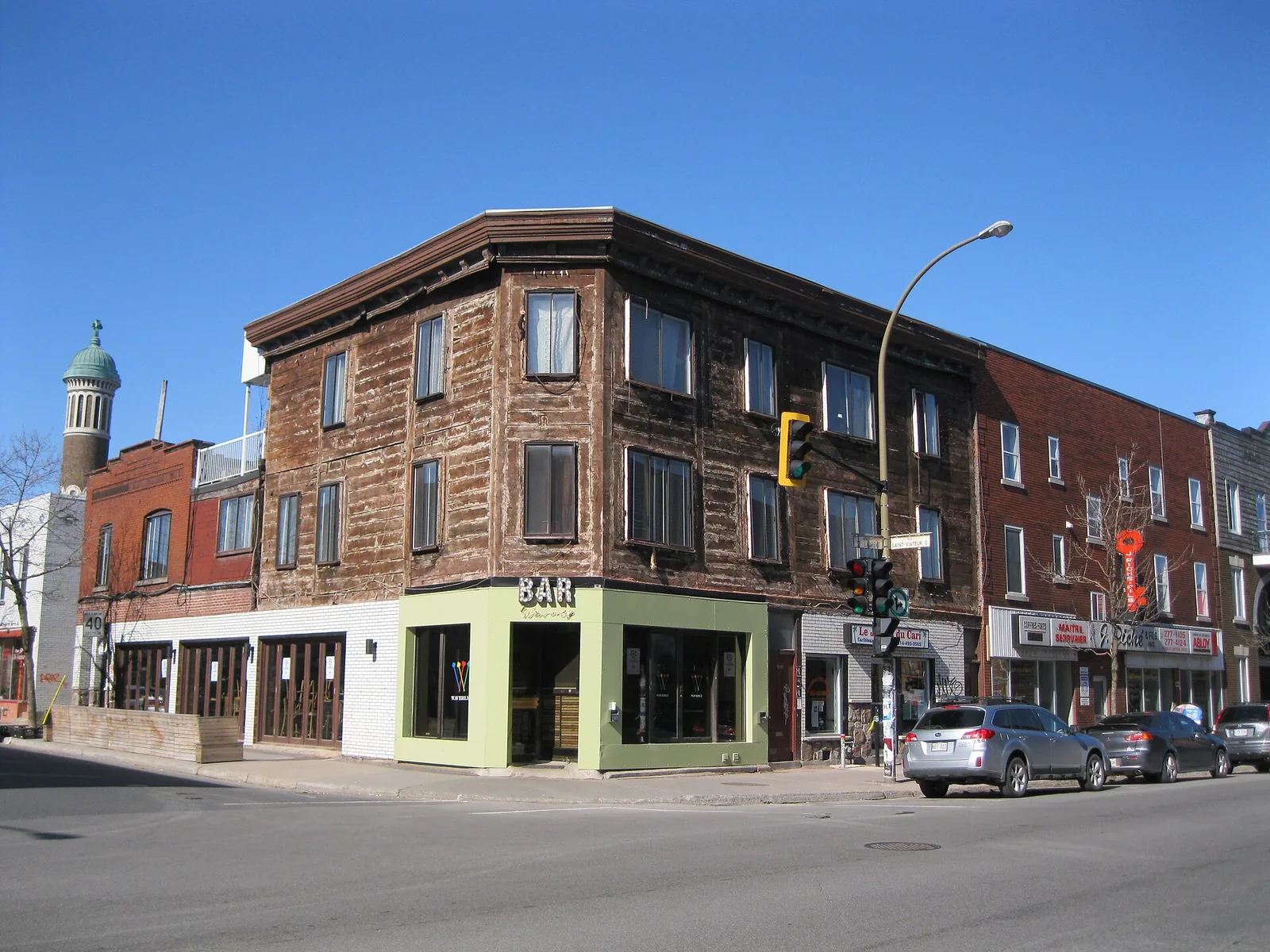
North of the Plateau, and often confused with it, Mile End has its own distinct identity. Historically a neighbourhood of Jewish, Portuguese, Greek and Italian immigrants, it became the centre of Montreal’s creative and music scene, and it still has an artsy, slightly bohemian feel. Its landmarks are the two rival bagel bakeries, St-Viateur (263 rue Saint-Viateur Ouest, open 06:00 to midnight) and Fairmount (74 rue Fairmount Ouest), plus Wilensky’s lunch counter, independent cafés, record shops, vintage stores and small, ambitious restaurants along boulevard Saint-Laurent, rue Saint-Viateur and rue Bernard.
Mile End sits partly in the Plateau borough and partly in Outremont, and it’s a bit further from the metro than the Plateau: Laurier station is about fifteen minutes’ walk away, and bus 55 runs along boulevard Saint-Laurent. The best way to see it is on a slow morning, with a bagel and a coffee.
- Metro:
- Laurier (Orange), or bus 55
- Best for:
- coffee, bagels, creative types
- Don’t miss:
- a bagel taste test between the two bakeries
Outremont
West of Mile End, on the northern slope of Mount Royal, Outremont is one of the city’s most affluent neighbourhoods: wide, tree-lined streets, large houses, elegant parks and a strongly francophone character, alongside a long-established Hasidic Jewish community. Its shopping streets, avenue Laurier Ouest and rue Bernard, have upscale boutiques, bakeries, chocolate shops and cafés. It’s not a sightseeing neighbourhood, but it’s a lovely place for a quiet walk after Mile End.
- Metro:
- Outremont (Blue)
- Best for:
- quiet walks, cafés
- Don’t miss:
- avenue Laurier Ouest’s shops and bakeries
Little Italy (Petite-Italie)
Further north, Little Italy is built around the Jean-Talon Market, one of the largest open-air markets in North America and the one Montrealers love most. It’s open year-round (Monday to Saturday 08:00–18:00, Sunday 08:00–17:00), with around 150 vendors at its peak from roughly May to November, and its central stalls are enclosed for the winter from October. Around the market, boulevard Saint-Laurent is lined with Italian delis, espresso bars, pizzerias and gelato shops, where older regulars argue over coffee on the terrasses.
Look out for the Madonna della Difesa church, the neighbourhood’s parish, which has an unexpected piece of history inside: a ceiling fresco painted in the 1930s that includes Mussolini on horseback, a reminder of the political climate of the time. The leafy Parc de la Petite-Italie is a good spot to eat a picnic from the market.
- Metro:
- Jean-Talon (Orange, Blue), De Castelnau (Blue)
- Best for:
- food markets, coffee
- Don’t miss:
- a weekday morning at Jean-Talon
The South-West: Along the Lachine Canal
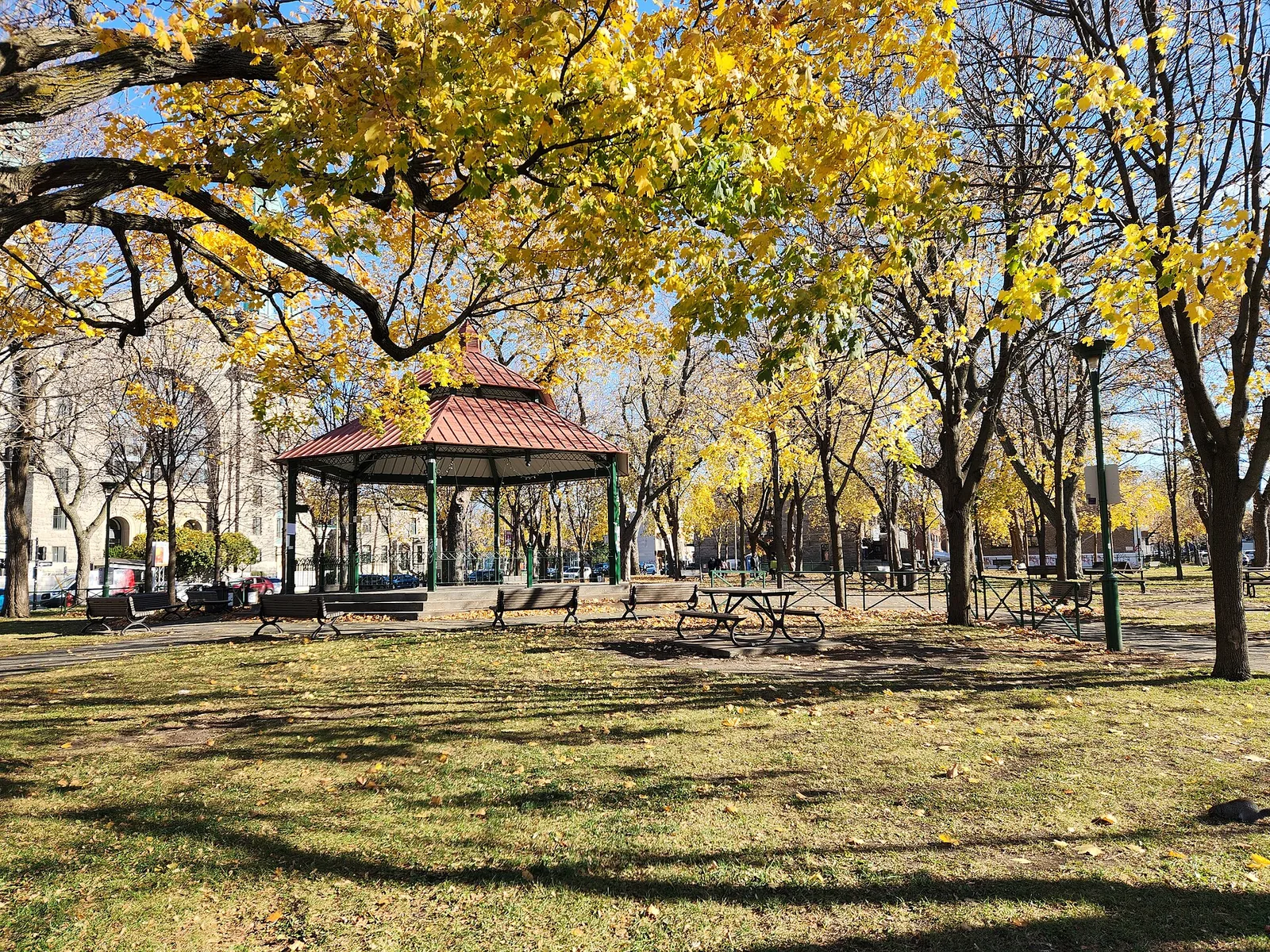
South-west of downtown, the Lachine Canal runs 14.5 km from the Old Port to Lake Saint-Louis, with a flat towpath that’s the easiest bike ride in the city. Its banks were once the industrial heart of Canada, lined with factories and warehouses, and the working-class neighbourhoods that grew up around them have been transformed over the past two decades into some of the most interesting parts of the city.
Griffintown
Once a working-class Irish neighbourhood, Griffintown was largely abandoned by the late 20th century and has since been rebuilt almost from scratch as a district of glass-and-steel condo towers, apartment-hotels and new restaurants. It lacks the historic charm of the older neighbourhoods, and parts still feel like a construction site, but it’s modern, convenient and right on the canal.
- Metro:
- Lionel-Groulx (Green, Orange), Bonaventure (Orange)
- Best for:
- modern apartments, cycling
- Don’t miss:
- the canal path at sunset
Little Burgundy (Petite-Bourgogne)
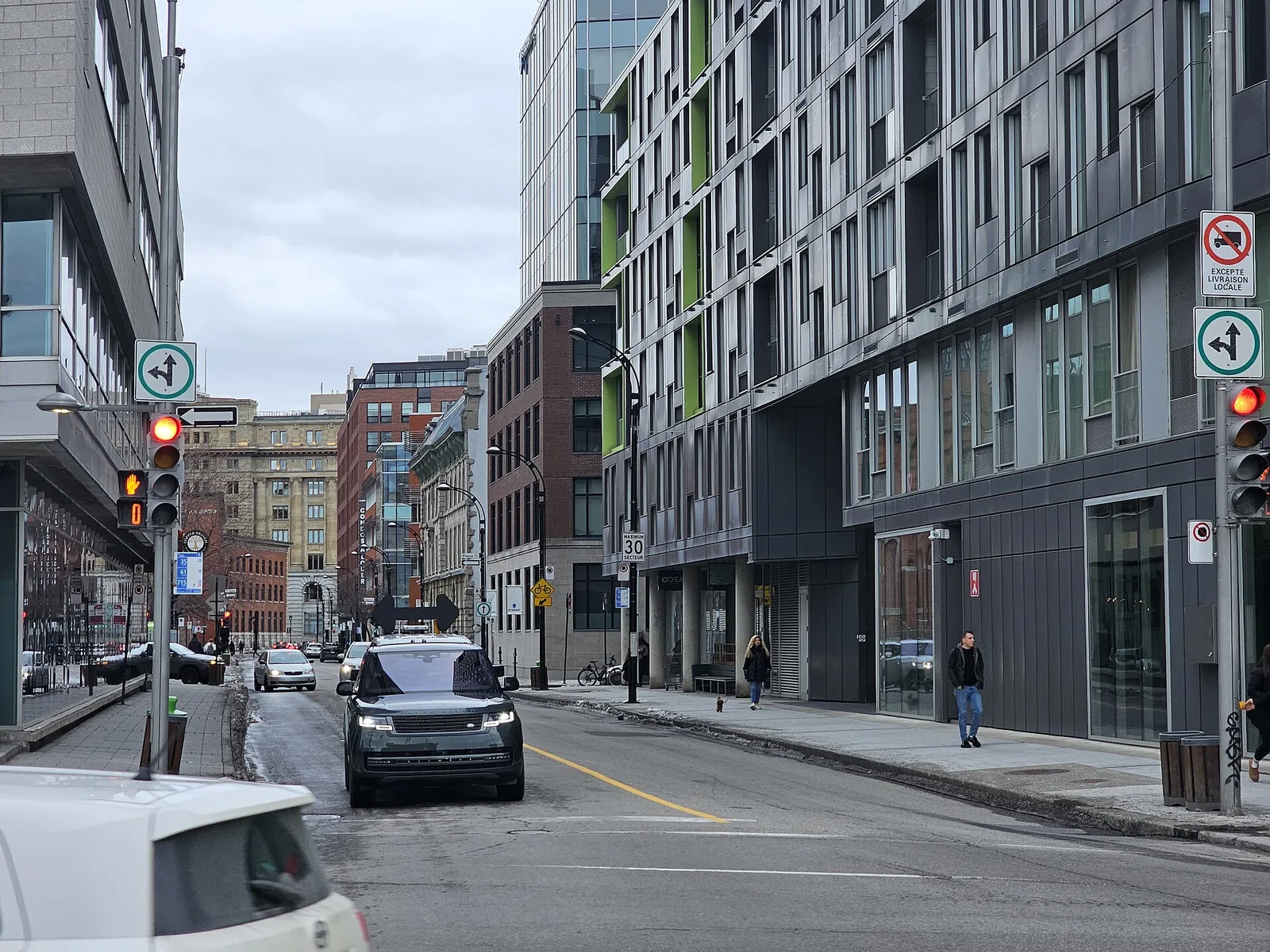
Historically the heart of Montreal’s English-speaking Black community, Little Burgundy was once the city’s jazz district. The pianist Oscar Peterson grew up here. Today its stretch of rue Notre-Dame Ouest is one of the best restaurant strips in the city, anchored by Joe Beef at number 2491 (dinner Tuesday to Saturday from 17:00) and its sister restaurant Liverpool House, alongside wine bars and small restaurants. Our guide to the best restaurants in Montreal covers them.
- Metro:
- Lionel-Groulx (Green, Orange), Georges-Vanier (Orange)
- Best for:
- dinner
- Don’t miss:
- an evening on rue Notre-Dame Ouest
Saint-Henri
Further west along the canal, Saint-Henri was a famously poor factory neighbourhood, immortalised in Gabrielle Roy’s classic Quebec novel The Tin Flute. It’s now a mix of old working-class streets, converted lofts, independent shops, cafés and bars. Its star attraction is Atwater Market, a 1933 art deco market hall with a clock tower on the canal bank, open Monday to Friday 09:00–18:00 and weekends 09:00–17:00, with some of the city’s best butchers, bakers and cheese shops.
- Metro:
- Place-Saint-Henri, Lionel-Groulx (Orange)
- Best for:
- markets, cycling, local bars
- Don’t miss:
- a picnic from Atwater Market on the canal bank
Pointe-Saint-Charles
South of the canal, “the Point” is one of the city’s oldest working-class neighbourhoods, historically Irish and French-Canadian, with rows of modest brick houses built for workers at the nearby rail yards. It’s still largely residential and off most visitors’ radar, but it has one gem: the Maison Saint-Gabriel, a 17th-century farmhouse turned museum that tells the story of New France’s early settlers. Combine it with a ride along the canal.
- Metro:
- Charlevoix (Green)
- Best for:
- off-the-beaten-path history
- Don’t miss:
- the Maison Saint-Gabriel
Verdun
South of Pointe-Saint-Charles along the river, Verdun is a lively, historically working-class neighbourhood that has become one of the city’s most popular places to live. Its main street, rue Wellington, is lined with cafés, bars, restaurants and shops, and is partly pedestrianised in summer. Verdun’s big draw for visitors is the Verdun Beach, a free urban beach on the St Lawrence, near De L’Église metro, behind the Verdun Auditorium. Its buoyed, calm-water swimming area is protected by a rock jetty, and the city describes it as the only safe place to swim in the river. In 2026 it opened daily from 13 June to 30 August, 10:00–19:00, plus the Labour Day weekend of 5–7 September. Swimming can be suspended after heavy rain or storms, so check before you go.
- Metro:
- Verdun, De L’Église (Green)
- Best for:
- local life, summer swimming
- Don’t miss:
- a summer afternoon at the beach, then dinner on rue Wellington
East and West of the Centre
Hochelaga-Maisonneuve
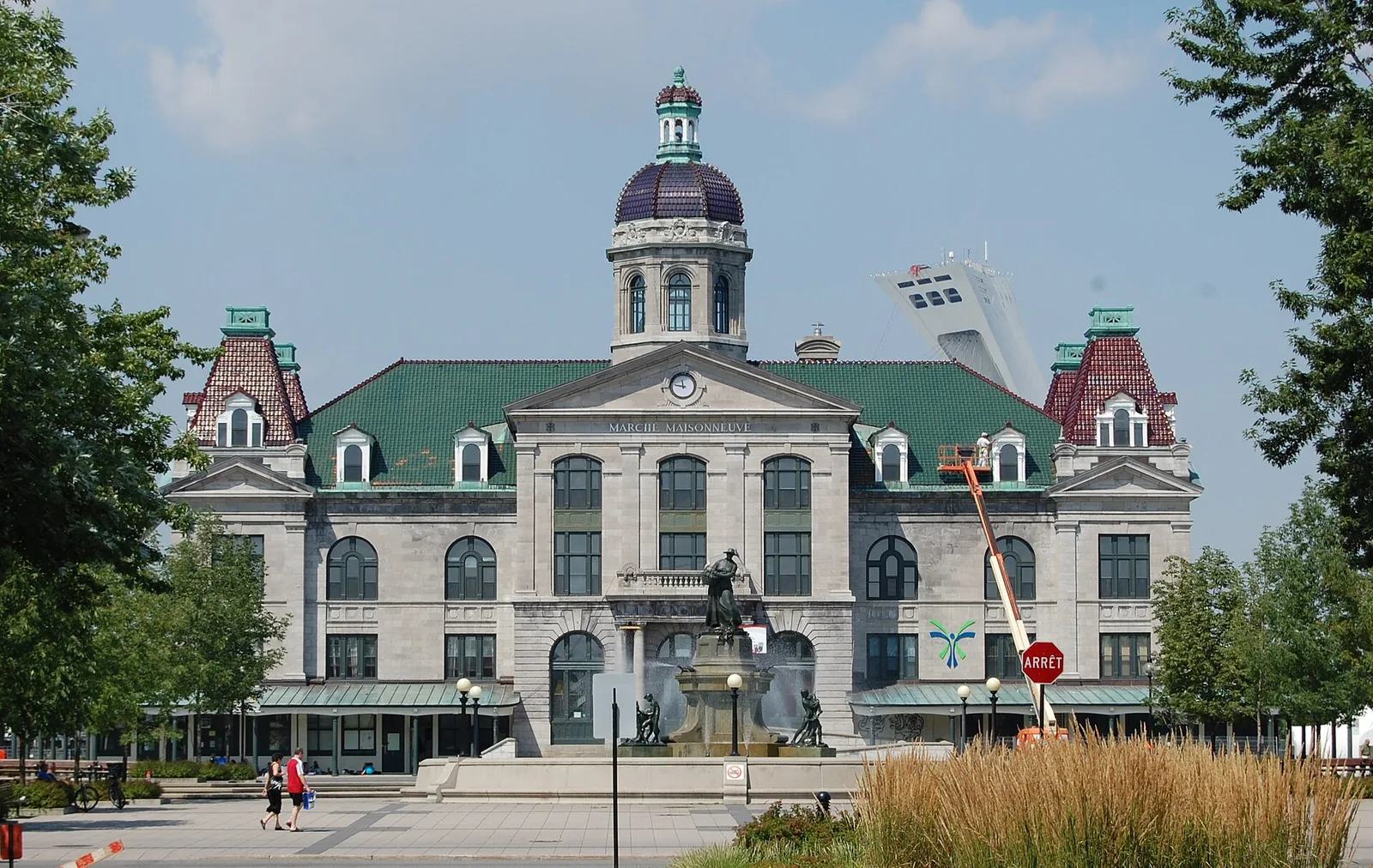
East of the centre, “Homa” to locals is a historically working-class, francophone neighbourhood that’s gentrifying fast. It’s home to the Olympic Park, with its stadium and inclined tower (the observatory is closed until spring 2027), the Biodôme, and, just across boulevard Pie-IX, the Botanical Garden and Insectarium. The Space for Life museums cost $25.50 each for adults.
The neighbourhood’s heart is the Marché Maisonneuve, a grand Beaux-Arts public market building from the early 20th century, now home to a smaller, local-feeling food market. Nearby, rue Ontario Est (the “Promenade Ontario”) is a lively local shopping street with cafés, bakeries and bars. Combine a morning at the Biodôme with lunch here for a taste of everyday francophone Montreal.
- Metro:
- Pie-IX, Viau, Joliette (Green)
- Best for:
- Space for Life, local markets
- Don’t miss:
- the Marché Maisonneuve and rue Ontario Est
Westmount
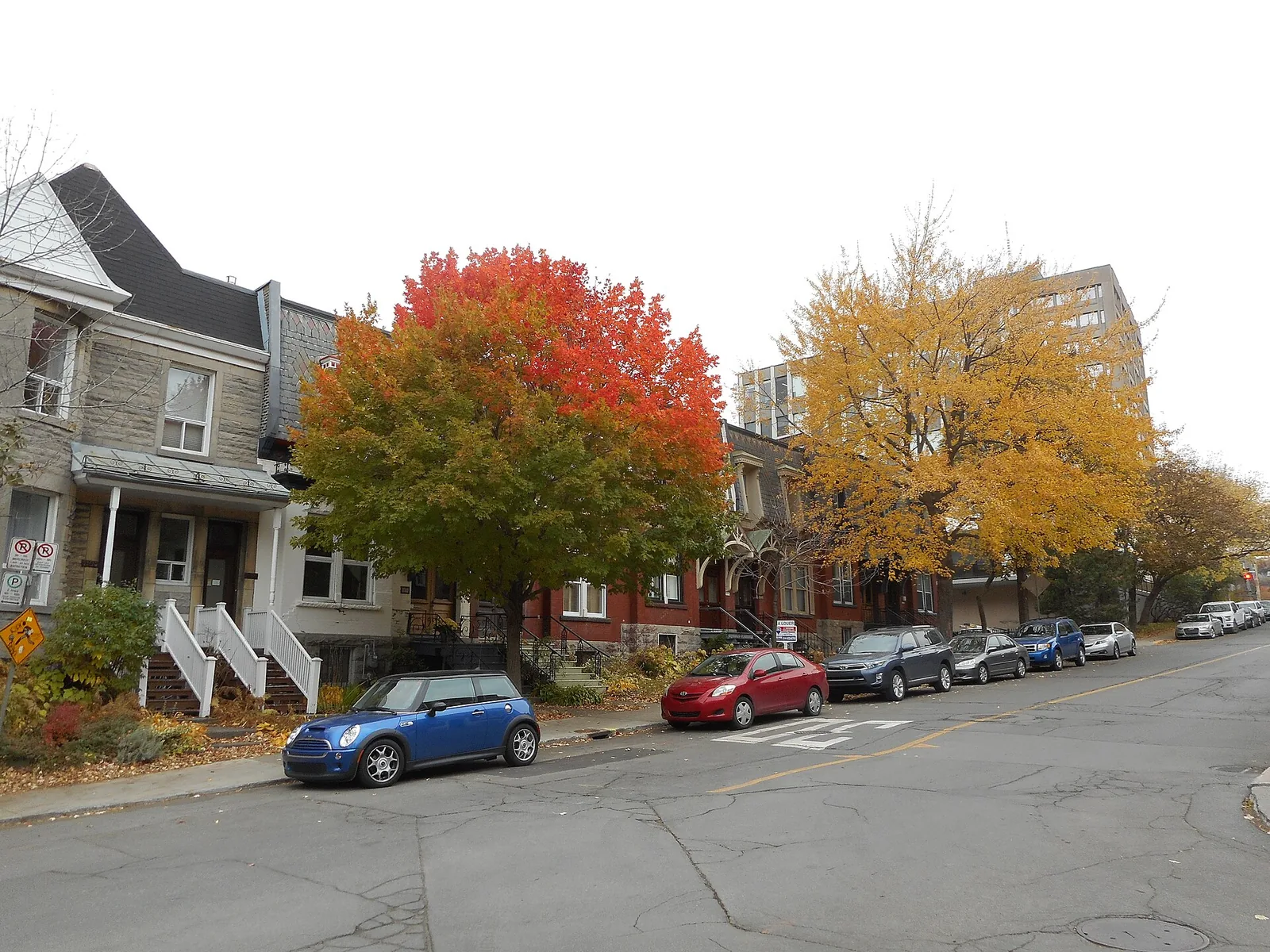
On the western slope of Mount Royal, Westmount is technically a separate city, an affluent, historically English-speaking enclave surrounded by Montreal. Its steep streets are lined with grand Victorian and Edwardian houses, and its main shopping streets, avenue Greene and rue Sherbrooke Ouest, have upscale boutiques, cafés and restaurants. It’s at its best in autumn, when the maples turn, and makes a pleasant walk from downtown or from the Westmount Summit lookout on the mountain.
- Metro:
- Atwater (Green)
- Best for:
- architecture, quiet walks
- Don’t miss:
- the residential streets in October
Côte-des-Neiges
On the northern and western slopes of the mountain, Côte-des-Neiges is one of the most diverse neighbourhoods in Canada, home to the Université de Montréal and a large international population. For visitors, its highlight is Saint Joseph’s Oratory, the largest church in Canada, whose dome crowns the mountainside. Entry is free, and it’s open daily from 06:30 to 21:00. The neighbourhood’s streets are packed with inexpensive restaurants from across the world, particularly along chemin de la Côte-des-Neiges.
- Metro:
- Côte-des-Neiges (Blue)
- Best for:
- the Oratory, international food
- Don’t miss:
- the view from the Oratory terrace
Parc Jean-Drapeau and the Islands
Not a neighbourhood, but an essential part of the city’s geography: in the St Lawrence River, Parc Jean-Drapeau covers two islands, Île Sainte-Hélène and Île Notre-Dame, the latter man-made for Expo 67. Here you’ll find the Biosphère (Buckminster Fuller’s geodesic dome from Expo 67, now an environment museum), the Circuit Gilles-Villeneuve where the Canadian Grand Prix is held, La Ronde amusement park, the Casino de Montréal and Plage Jean-Doré, a summer beach. Osheaga is held here in August. Take the Yellow line to Jean-Drapeau.
The Neighbourhoods Through the Seasons
Montreal’s neighbourhoods change character dramatically with the weather, and the same street can feel like a different place in January and July.
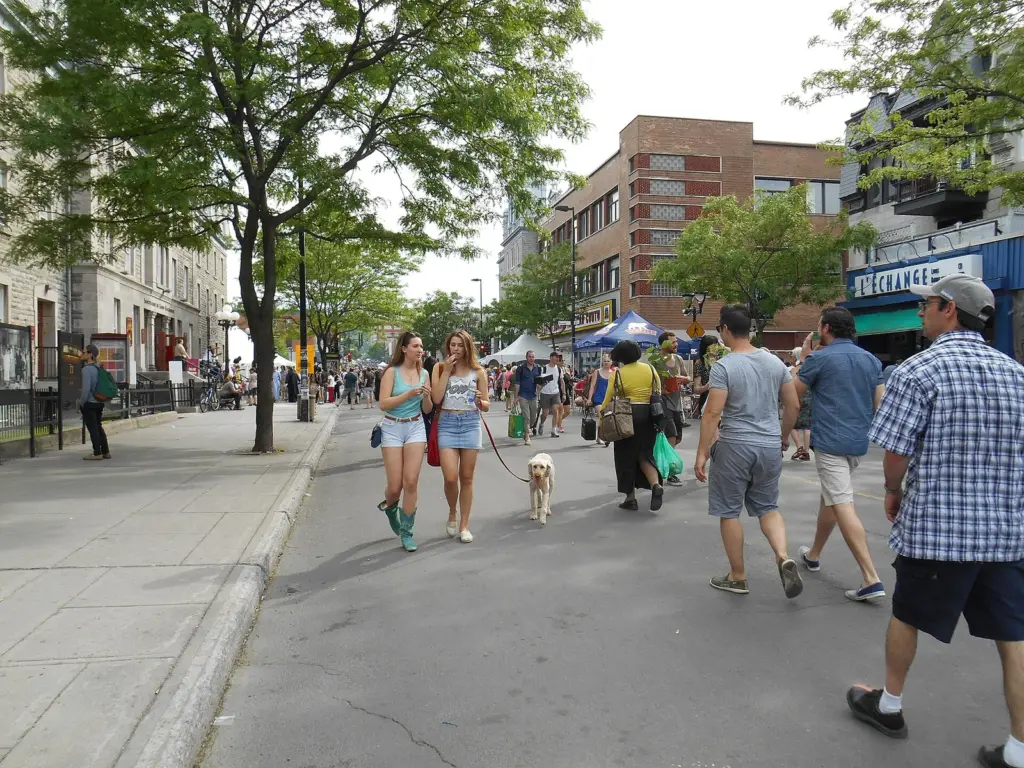
Summer is when the neighbourhoods spill outdoors. Terrasses line the Plateau, Mile End and Little Italy from May to October, and several main streets, including stretches of rue Sainte-Catherine Est in the Village and rue Wellington in Verdun, close to traffic for the season and fill with café tables. On Sunday afternoons from May to September, the free tam-tams drum circle takes over the foot of Mount Royal on the Plateau side. The Verdun Beach and Parc Jean-Drapeau’s beach open for swimming, and the Quartier des Spectacles fills with free festival shows.
Autumn is the season for the leafy residential neighbourhoods. Colour peaks in the city around mid-October, and Westmount, Outremont and the slopes of Mount Royal are at their best. The markets at Jean-Talon and Atwater overflow with the harvest. For more on timing, see our guide to the best time to visit Montreal.
Winter changes how you move between neighbourhoods. Downtown’s RÉSO network lets you cross the centre indoors, and the metro runs entirely underground, unaffected by snow. The Plateau’s outdoor staircases look spectacular under snow, but they can be treacherous, and residents salt and shovel them constantly. Parc La Fontaine’s pond becomes a free outdoor skating rink when the deep cold sets in, and Old Montreal is at its most photogenic on a weekday morning after a storm. Our Montreal winter guide has more on getting around when it’s cold.
Spring arrives late, with slush and bare trees in April and a sudden burst of life in May, when the terrasses reopen. Then comes a Montreal oddity: 1 July is Moving Day, when most residential leases in Quebec end at once. In the Plateau, Mile End and other rental-heavy neighbourhoods, the streets fill with moving trucks and the sidewalks with discarded furniture. It’s chaotic, strangely festive, and worth knowing about if you’re visiting around Canada Day.
Language Across the Neighbourhoods
Montreal is a French-speaking city with a large English-speaking minority and many other languages besides, and the mix varies noticeably from neighbourhood to neighbourhood. Traditionally, areas east of boulevard Saint-Laurent, such as Hochelaga-Maisonneuve, the eastern Plateau and Rosemont, are strongly francophone, while areas to the west, such as Westmount and parts of downtown, have been more anglophone. Mile End, Côte-des-Neiges and much of the centre are thoroughly multilingual.
For visitors, none of this is a problem. Quebec’s language laws, including the Charter of the French Language and Bill 96, require French to predominate on commercial signs and in customer service, but they impose no obligation on tourists. You’re not required to speak French anywhere in Quebec. In the central neighbourhoods, staff greet customers with “Bonjour-hi”, and answering in English is completely normal. In the more francophone neighbourhoods, a few words of French (“bonjour”, “merci”, “s’il vous plaît”) are appreciated, and most people will switch to English readily if you need it.
Neighbourhood Walks Worth Doing
Some of the best ways to understand how Montreal’s neighbourhoods fit together are on foot. Here are four walks that link several of them.
The Main: Chinatown to Little Italy
Boulevard Saint-Laurent is the city’s great cross-section. Start in Chinatown at rue De La Gauchetière and walk north: through the edge of the Quartier des Spectacles, past Schwartz’s and the delis and Portuguese grills of the Plateau, into Mile End at rue Saint-Viateur, and on to Little Italy and the Jean-Talon Market. It’s roughly 5 km, and you’ll pass through half a dozen communities and a century of immigration history. Break it up with stops for dumplings, smoked meat, a bagel and an espresso. If your legs give out, bus 55 runs the whole length.
The Plateau’s staircases and Parc La Fontaine
From Mont-Royal metro, wander the residential side streets east of rue Saint-Denis — rue de Mentana, rue Fabre, rue Chambord and their neighbours — for the classic Plateau scenes of curling outdoor staircases, painted doors and balconies. Finish in Parc La Fontaine, with its pond and shady paths. It’s a short, easy walk best done in the late afternoon light.
The Lachine Canal: Old Port to Atwater Market
From the western end of the Old Port, follow the canal path south-west past Griffintown’s new towers and the old industrial buildings of Little Burgundy to Atwater Market in Saint-Henri. On foot it takes about an hour, or half an hour at an easy pace on a BIXI. Buy lunch at the market, eat it on the canal bank, and walk or ride on towards Saint-Henri’s streets or back along rue Notre-Dame Ouest for dinner.
Over the mountain: the Plateau to Côte-des-Neiges
Start at the foot of Mount Royal on the Plateau side, climb through the park to the Kondiaronk Belvedere for the classic view of downtown, continue past Beaver Lake, and descend the western slope to Saint Joseph’s Oratory in Côte-des-Neiges. It takes a good half-day with stops and shows you how the mountain sits at the centre of the city, with different neighbourhoods on every side. Our guide to the best things to do in Montreal has more on Mount Royal and the Oratory.
How to Choose Montreal Neighborhoods to Explore
You can’t do them all on one trip. Here’s how to prioritise, depending on what you enjoy.
- First visit, limited time: Old Montreal, downtown and the Golden Square Mile, the Plateau and Mile End. Add Little Italy for the market.
- Food: the Plateau, Mile End, Little Italy, Little Burgundy and Chinatown.
- History: Old Montreal, the Golden Square Mile, Pointe-Saint-Charles and Saint-Henri.
- Architecture: Old Montreal, the Golden Square Mile, Westmount and the Plateau’s staircases, plus the Olympic Park and the Biosphère.
- Nightlife: the Plateau, the Village, the Quartier Latin and downtown’s rue Crescent.
- Families: the Old Port, Hochelaga-Maisonneuve for the Biodôme and Botanical Garden, and Parc Jean-Drapeau in summer.
- Local life, off the tourist trail: Verdun, Saint-Henri, Hochelaga-Maisonneuve and Côte-des-Neiges.
For ready-made day plans that string the neighbourhoods together efficiently, see our Montreal itinerary guide.
A Neighbourhood-Hopping Day
One of the best days you can have in Montreal is a slow, walking tour of four neighbourhoods, linked by the Orange line.
- 09:00, Old Montreal. Start at Place d’Armes and Notre-Dame Basilica, walk rue Saint-Paul and the Old Port promenade. Metro: Place-d’Armes (Orange).
- 11:30, the Plateau. Take the Orange line north to Mont-Royal. Walk the side streets and avenue du Mont-Royal, then south to Parc La Fontaine. Lunch at a Plateau bistro, or at Schwartz’s on boulevard Saint-Laurent.
- 14:30, Mile End. Walk north along boulevard Saint-Laurent to rue Saint-Viateur. Bagels, coffee, and a browse through the shops on rue Bernard.
- 16:30, Little Italy. Continue north on boulevard Saint-Laurent, or take bus 55, to Jean-Talon Market before it closes at 18:00 (17:00 on Sundays), then an espresso on a terrasse.
- Evening: take the Orange line back south from Jean-Talon to wherever you’re staying, or to the Plateau for dinner.
The whole route involves about 6 to 7 km of walking. Wear comfortable shoes, and in summer bring water.
Getting Between Neighbourhoods
The metro is the key. As of September 2026 a single fare is $3.75, a 24-hour pass $11.25 and a 3-day pass $21.75. You can tap a contactless card at the turnstile or buy an OPUS card ($6) to load passes onto. The metro runs until about 00:30, later on Saturdays. The Orange line is the neighbourhood line, linking Old Montreal, downtown, the Plateau, Little Italy and Saint-Henri. The Green line runs from downtown east to Hochelaga-Maisonneuve and south-west to Verdun. The Blue line links Côte-des-Neiges, Outremont and Little Italy. The Yellow line crosses to Parc Jean-Drapeau.
Buses fill the gaps, notably the 55 along boulevard Saint-Laurent through the Plateau, Mile End and Little Italy. From mid-April to mid-November, BIXI bike-share ($1.60 to unlock plus $0.21 a minute) is ideal for neighbourhood-hopping, especially along the Lachine Canal. And many neighbourhoods are best explored on foot: the Plateau, Mile End and Old Montreal reward slow wandering more than any other part of the city.
Neighbourhood Mistakes Visitors Make
- Treating Old Montreal as the city centre. It’s a historic district below downtown, not the whole city.
- Confusing the Plateau with Mile End. They’re neighbours with distinct characters, and Mile End is further from the metro.
- Never leaving the centre. Some of the best experiences — Little Italy’s market, Saint-Henri’s canal, Verdun’s beach — are a short metro ride away.
- Zig-zagging across the city. Group neighbourhoods by metro line and geography, and do one cluster at a time.
- Driving between neighbourhoods. Parking is scarce and there’s no right turn on red anywhere on the island. Take the metro.
- Visiting the Olympic Park for the tower view. The observatory is closed until spring 2027. Go for the Biodôme and Botanical Garden instead.
Shopping, Neighbourhood by Neighbourhood
Each neighbourhood has its own kind of shopping, and knowing which is which saves a lot of wandering.
- Downtown: rue Sainte-Catherine Ouest, one of the longest commercial streets in Canada at about 11 km end to end, is the place for department stores and big brands. Simons, the Quebec department store, is the local favourite, and the Montreal Eaton Centre links into the RÉSO, so you can shop in January without a coat.
- Old Montreal: galleries, design shops and Quebec crafts along rue Saint-Paul, and the boutiques of Quebec designers and artisans inside Marché Bonsecours. Skip the souvenir shops near Place Jacques-Cartier, which sell the same maple-leaf goods as everywhere else.
- The Plateau: independent fashion, bookshops, homeware and vintage along avenue du Mont-Royal, rue Saint-Denis and boulevard Saint-Laurent.
- Mile End: vintage clothing, record shops, local designers and bakeries along boulevard Saint-Laurent, rue Saint-Viateur and rue Bernard. During POP Montreal (23–27 September 2026), its Puces POP craft fair is one of the best places to buy work by local makers.
- Little Italy and Saint-Henri: food shopping. Jean-Talon and Atwater markets are the places to buy Quebec cheese, maple products and ice cider to take home.
- Westmount and Outremont: upscale boutiques, chocolatiers and cafés along avenue Greene and avenue Laurier Ouest.
Remember that shelf prices exclude sales tax (GST and QST), which is added at the till and comes to just under 15%. Beer and wine are sold in dépanneurs (corner shops) until 23:00, and spirits and better wines at the SAQ, Quebec’s government liquor stores, found in most neighbourhoods.
Frequently Asked Questions
What are the best neighbourhoods in Montreal for visitors?
For a first visit, prioritise Old Montreal for history, downtown and the Golden Square Mile for museums and shopping, the Plateau for food and street life, Mile End for bagels and cafés, and Little Italy for the Jean-Talon Market. With more time, add Saint-Henri and the Lachine Canal, Hochelaga-Maisonneuve for the Biodôme and Botanical Garden, and Verdun in summer.
What is the difference between the Plateau and Mile End?
They’re neighbours, but different places. The Plateau is the larger, more central neighbourhood of colourful triplexes, bistros and Parc La Fontaine, well served by the Orange line. Mile End, just to the north, is smaller and artsier, known for its bagel bakeries, cafés and creative scene, and it’s about fifteen minutes’ walk from Laurier metro.
Is Old Montreal the same as downtown?
No. Old Montreal (Vieux-Montréal) is the historic district by the river, with Notre-Dame Basilica, cobbled streets and the Old Port. Downtown is the modern business and shopping district, with towers, department stores and the RÉSO network, fifteen to twenty minutes’ walk uphill to the north-west. Most visitors spend a day in Old Montreal and base themselves downtown.
Which Montreal neighborhoods are best for food?
The Plateau has Schwartz’s, La Banquise and dozens of bistros and BYOB restaurants. Mile End has the St-Viateur and Fairmount bagel bakeries. Little Italy has the Jean-Talon Market and espresso bars. Little Burgundy’s rue Notre-Dame Ouest has Joe Beef and a string of excellent restaurants, and Chinatown is the best spot for cheap dumplings and noodles in the centre.
How many boroughs does Montreal have?
The City of Montréal is divided into 19 boroughs, or arrondissements, each with its own borough council. Borough names don’t always match the neighbourhood names people use: the Plateau-Mont-Royal borough includes Mile End, and Ville-Marie includes downtown, Old Montreal, Chinatown and the Village. Westmount, on the mountain’s western slope, is a separate city.
What is “the Main” in Montreal?
“The Main” is the local nickname for boulevard Saint-Laurent, which runs north from the river through Chinatown, the Plateau, Mile End and Little Italy. It historically divided English-speaking west Montreal from French-speaking east Montreal, and it’s still where street addresses switch from Ouest (west) to Est (east). It’s lined with delis, bars, shops and restaurants.
Can you swim in the St Lawrence in Montreal?
Yes, at the Verdun Beach, a free urban beach near De L’Église metro, which the city describes as the only safe place to swim in the river. In 2026 it opened daily from 13 June to 30 August, 10:00–19:00, plus 5–7 September. Swimming can be suspended after heavy rain. Plage Jean-Doré on Île Notre-Dame is the other summer beach option.