Montreal festivals are not a side attraction; they are how the city spends its year. There are more than 100 of them, from the largest jazz festival in the world to an outdoor techno party on the frozen quays of the Old Port in January, and a surprising number cost nothing at all. The city even built a downtown district, the Quartier des Spectacles, largely so that crowds of tens of thousands could gather for free outdoor shows. Below you’ll find every major festival with its confirmed 2026–27 dates (and a clear note where dates haven’t been announced), what’s free, where each one happens, how to get there by metro, and how to enjoy the busiest weeks without the crowds and prices wearing you down.
A warning before you start planning: festival dates move every year, and a lot of travel sites simply repeat last year’s. The Canadian Grand Prix, for example, moved from June to late May in 2026, and many pages still list it in June. Every date on this page was checked against the organiser’s own announcements in September 2026. If you’re still deciding which part of the year suits you, our guide to the best time to visit Montreal sets the festivals against the weather and hotel prices month by month.
Why Montreal Is a Festival City
Plenty of cities have festivals. Montreal is organised around them. From the first warm weekend in June to the end of the summer, there is barely a week without a major event, and the winter calendar is almost as full, on the stubborn local principle that the best way to survive the cold is to go out into it.
Three things make it different. First, the free programming. The biggest summer festivals put hundreds of shows on outdoor stages that anyone can walk up to, so you can see world-class musicians and comedians without a ticket. Second, the Quartier des Spectacles, a purpose-built entertainment district around Place des Arts, with open squares, permanent stage infrastructure and light installations designed for festival crowds. Third, the culture of going out. Montreal has the latest last call of any major North American city (03:00), a legal drinking age of 18, and a population that treats a Tuesday-night outdoor concert as entirely normal.
The result is a city where your trip can be shaped by whatever happens to be on. Arrive in late June and you’ll hear jazz from the street on your way to dinner; come in February and you’ll find a whole district lit up for Montréal en Lumière; turn up on 24 June and you’ll be surrounded by blue-and-white Quebec flags. It pays to know the calendar before you book.
Montreal Festivals Calendar 2026–27
Dates confirmed by the organisers as of September 2026. “TBA” means the next edition’s dates hadn’t been announced yet; the previous edition’s dates are given as a guide only.
| Festival | Dates | Where | Cost | Metro |
|---|---|---|---|---|
| POP Montreal | 23–27 Sep 2026 | Venues across Mile End, the Plateau and downtown | Mostly ticketed | Various |
| Gardens of Light | 3 Sep–1 Nov 2026 | Botanical Garden | Timed tickets | Pie-IX (Green) |
| Festival du nouveau cinéma | 7–18 Oct 2026 | Cinemas across the city | Ticketed | Various |
| La Ronde Fright Fest | Weekends, 3 Oct–1 Nov 2026 | La Ronde, Île Sainte-Hélène | From $34.99 + tax and fees | Jean-Drapeau (Yellow) |
| Grand Marché de Noël | 13 Nov 2026–3 Jan 2027 | Place des Festivals | Free entry | Place-des-Arts (Green) |
| Igloofest | 14 Jan–6 Feb 2027 | Old Port | Ticketed | Champ-de-Mars (Orange) |
| Fête des neiges | January weekends, TBA | Parc Jean-Drapeau | See park website | Jean-Drapeau (Yellow) |
| Montréal en Lumière | 18–28 Feb 2027 | Quartier des Spectacles and restaurants citywide | Outdoor site free | Place-des-Arts (Green) |
| Nuit blanche | Sat 27 Feb 2027 | Citywide | Many events free | Various |
| Canadian Grand Prix | 21–23 May 2027 | Circuit Gilles-Villeneuve | Ticketed | Jean-Drapeau (Yellow) |
| Francos de Montréal | 11–19 Jun 2027 | Quartier des Spectacles | Free outdoor shows; paid indoor | Place-des-Arts (Green) |
| Fête nationale du Québec | 24 June every year | Citywide | Free | Various |
| Montreal International Jazz Festival | 25 Jun–4 Jul 2027 | Quartier des Spectacles | Free outdoor shows; paid indoor | Place-des-Arts (Green) |
| Just for Laughs | TBA (2026: 14–26 Jul) | Theatres and streets downtown | Street shows free; galas ticketed | Place-des-Arts, Berri-UQAM |
| Fierté Montréal (Pride) | TBA (2026: 31 Jul–9 Aug) | The Village and downtown | Mostly free | Beaudry (Green) |
| Osheaga | TBA (2026: 31 Jul–2 Aug) | Parc Jean-Drapeau | Ticketed | Jean-Drapeau (Yellow) |
The Big Summer Festivals
Summer is the peak. From early June to mid-August the major festivals run almost back to back, and in a good year you can move from the Francos to the Jazz Festival to Just for Laughs to Osheaga and Pride without a gap longer than a week or two. These are the ones worth planning a trip around.
Montreal International Jazz Festival
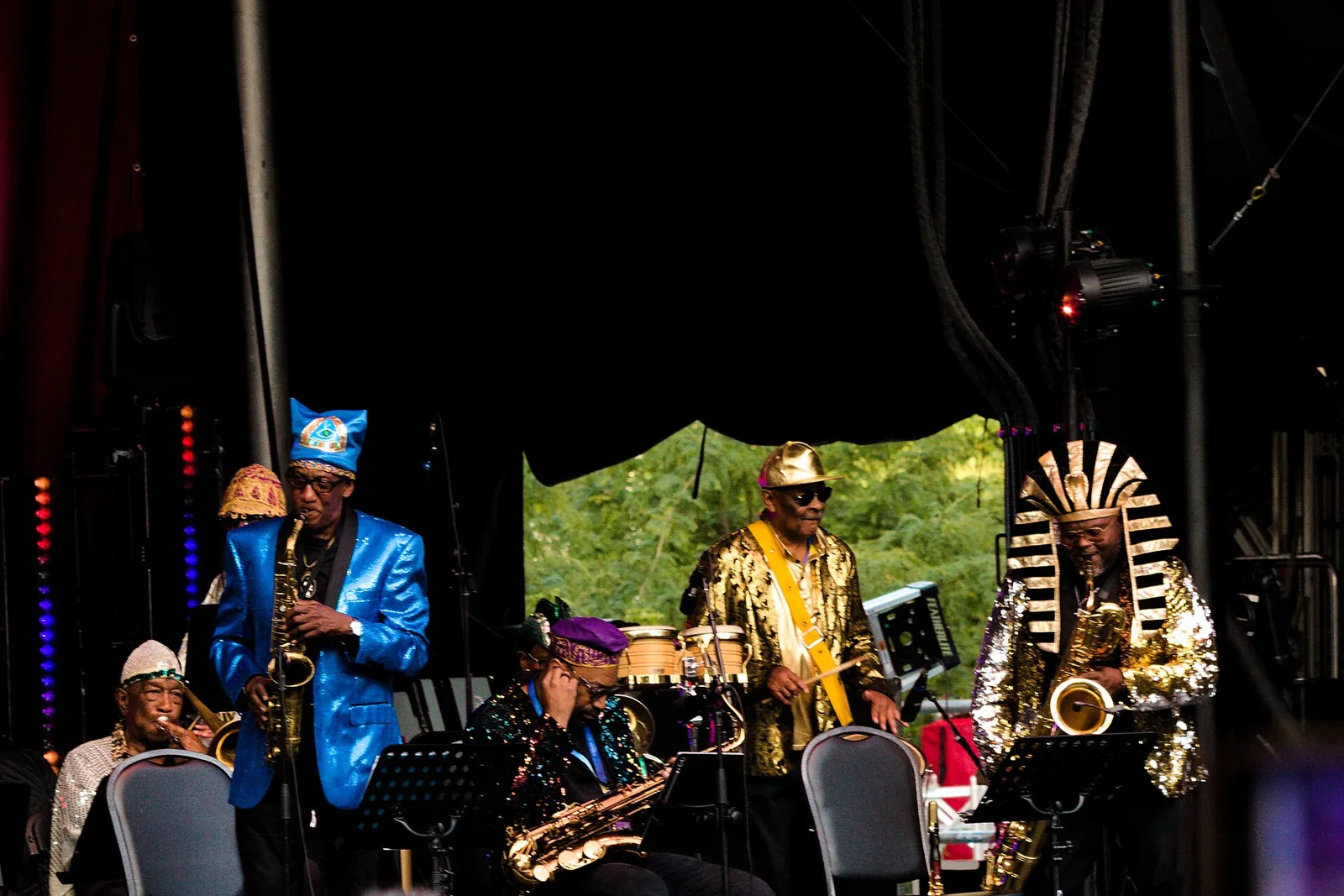
The Festival International de Jazz de Montréal holds the Guinness World Record as the largest jazz festival in the world, and it lives up to the title. For around ten days at the turn of June and July, the Quartier des Spectacles closes its streets to traffic and fills with outdoor stages, and hundreds of the shows are free. The 2026 edition ran from 25 June to 4 July, and the 2027 festival runs on the same dates, 25 June to 4 July.
Don’t be put off if you’re not a jazz purist. The programme stretches to blues, soul, funk, world music, pop and singer-songwriters, and the headliners in the concert halls of Place des Arts are often household names. The free outdoor shows range from brass bands at teatime to big evening concerts that draw tens of thousands of people to the Place des Festivals. The atmosphere is relaxed and multigenerational: families in the afternoon, a younger crowd late at night.
Tips: the big free evening shows get crowded an hour before they start, so arrive early if you want to see the stage rather than a screen. Weeknights are calmer than weekends. For ticketed shows, book as soon as the programme is released. Check the full line-up on the festival’s website.
- Metro:
- Place-des-Arts (Green)
- Cost:
- outdoor shows free, indoor shows ticketed
- Allow:
- at least two evenings
Francos de Montréal
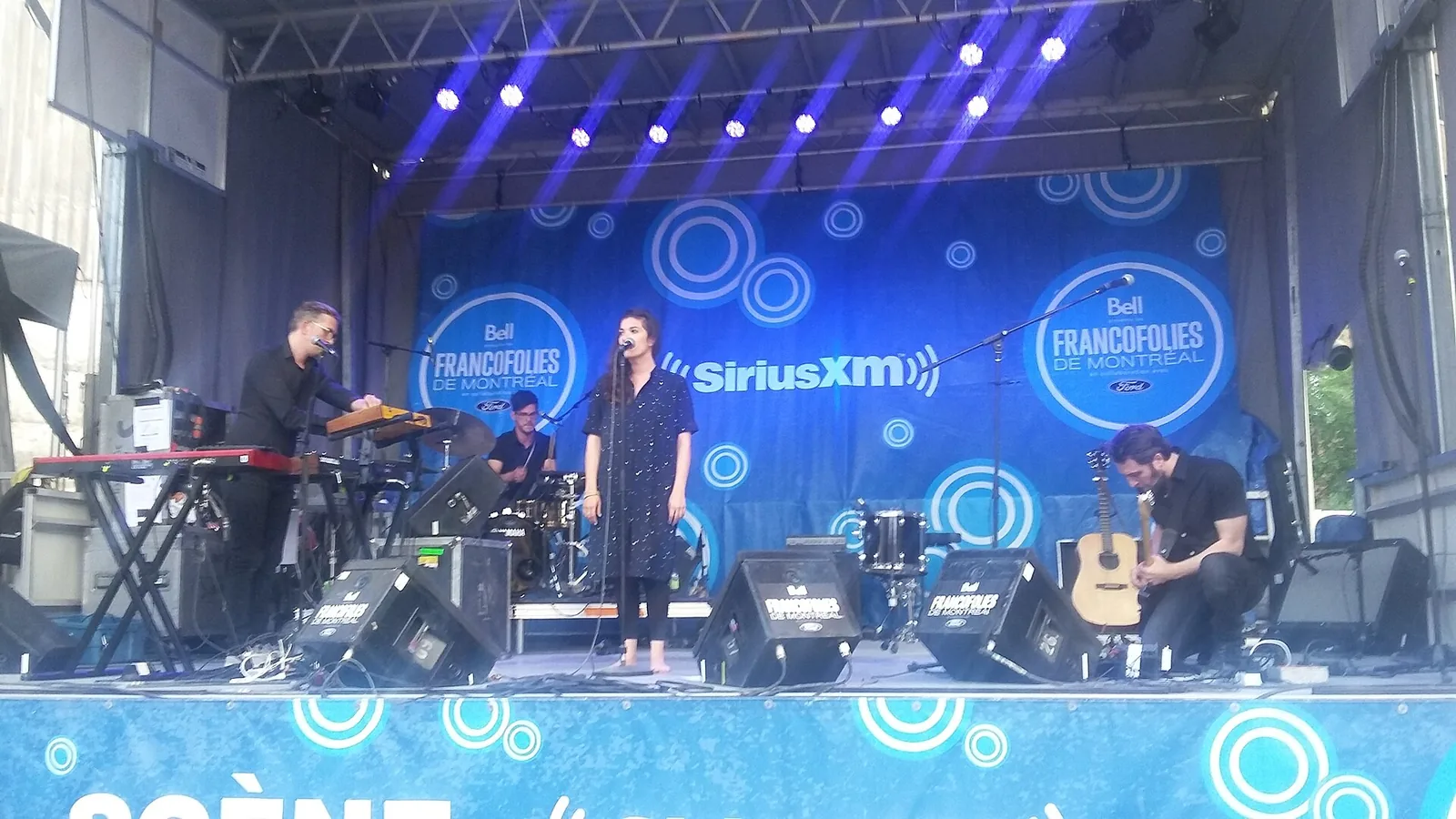
The Francos (formerly the Francofolies) bill themselves as the largest francophone music festival, and they’re the best introduction there is to Quebec’s own music scene. The 2027 edition runs from 11 to 19 June; in 2026 it ran from 12 to 20 June. The format mirrors the Jazz Festival: outdoor stages across the Quartier des Spectacles with a large free programme, plus paid concerts in the halls around Place des Arts.
You don’t need to speak French to enjoy it. Much of what’s on is pop, rock, hip-hop and electronic music that works in any language, and it’s one of the few chances a visitor gets to hear the artists Quebecers actually listen to, rather than international touring acts. The crowd is overwhelmingly local, and the mood on a warm June evening is excellent. The festival also falls just before the Fête nationale, so the whole city is in a celebratory frame of mind.
- Metro:
- Place-des-Arts (Green)
- Cost:
- outdoor shows free, indoor shows ticketed
- Allow:
- an evening or two
Fête nationale du Québec (24 June)
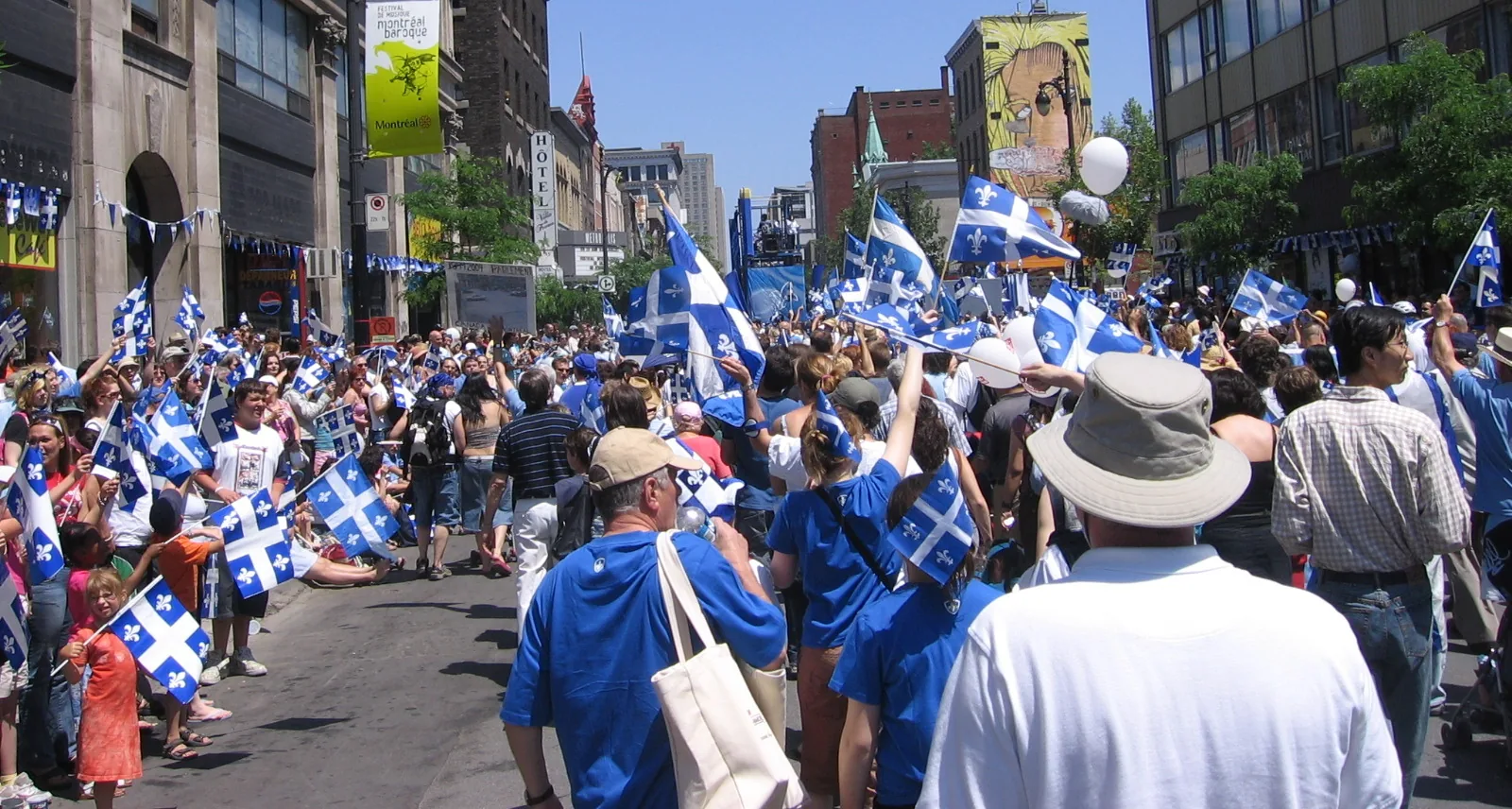
Quebec’s national holiday, also known as Saint-Jean-Baptiste Day, falls on 24 June every year. It’s the province’s biggest day of celebration, marked by neighbourhood parties, outdoor concerts, parades and a sea of blue-and-white fleur-de-lis flags. The evening before is usually when the biggest concerts and parties happen, and the day itself is a public holiday, so many shops and businesses close.
For visitors it’s a chance to see Quebec pride at its most joyful and least political. Join a neighbourhood party in the Plateau or Rosemont, or head for the big outdoor concert; check the city’s listings closer to the date for locations. A week later, 1 July brings Canada Day, which in Montreal coincides with Moving Day, when most residential leases in the province end and the city fills with moving trucks.
- Metro:
- various
- Cost:
- free
- Allow:
- the evening of 23 June and the day of the 24th
Just for Laughs
Just for Laughs (Juste pour rire in French) is often called the largest comedy festival in the world. It’s also a major industry event where comedians get discovered, TV deals get made and big names try out new material. The 2026 festival ran from 14 to 26 July; the 2027 dates were not yet announced in September 2026.
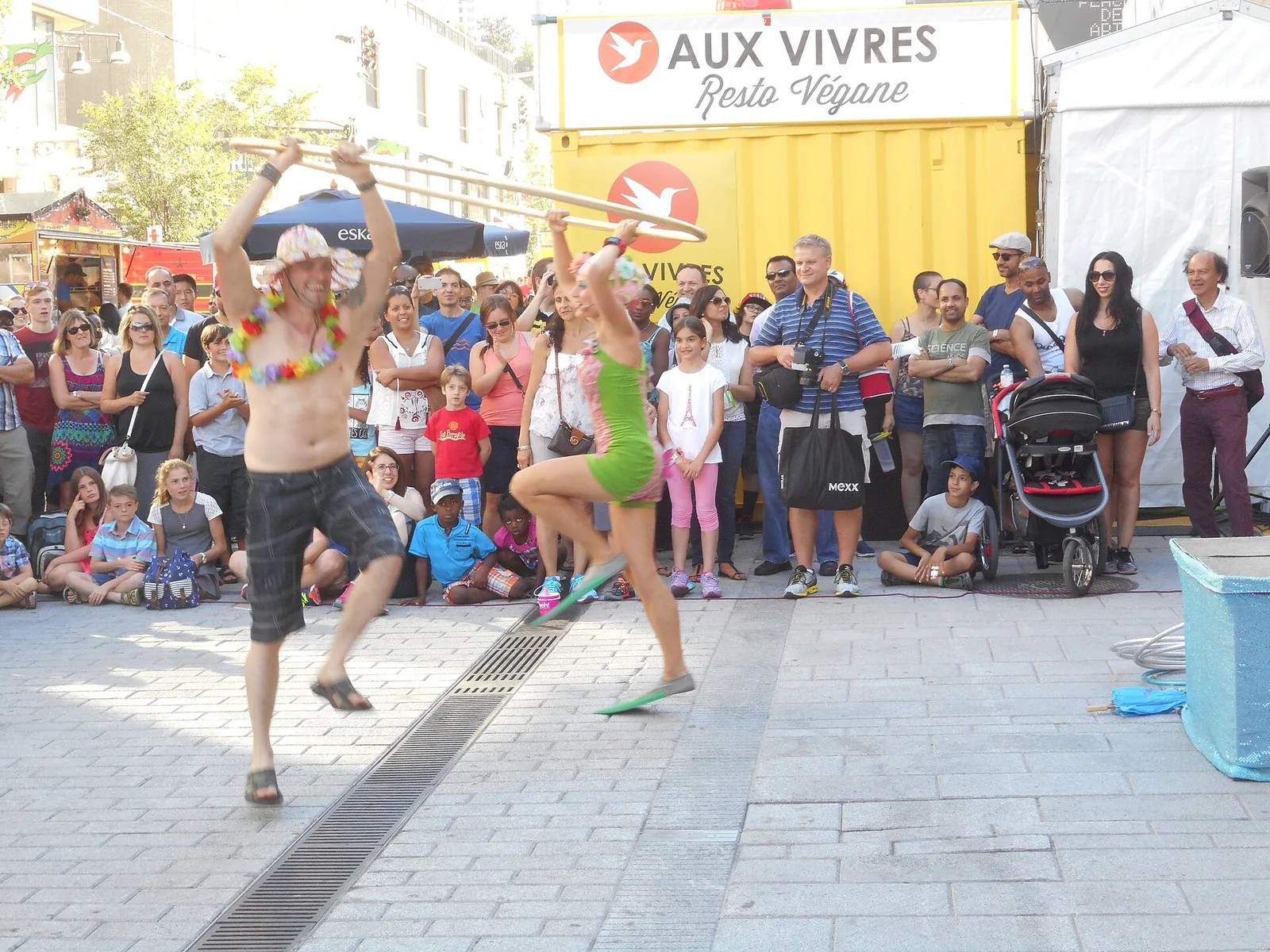
The festival has two sides. Indoors, the ticketed galas, stand-up showcases and headliner shows run in theatres across downtown, in both English and French, so check the language before you book. Outdoors, the free street programme brings acrobats, clowns, buskers and street theatre, which is excellent with children. If you want to see a specific famous comedian, book the moment tickets go on sale; if you just want a laugh, the smaller showcase nights are cheaper and often funnier.
- Metro:
- Place-des-Arts (Green) or Berri-UQAM (Green, Orange, Yellow)
- Cost:
- street shows free, indoor shows ticketed
- Allow:
- one or two evenings
Osheaga
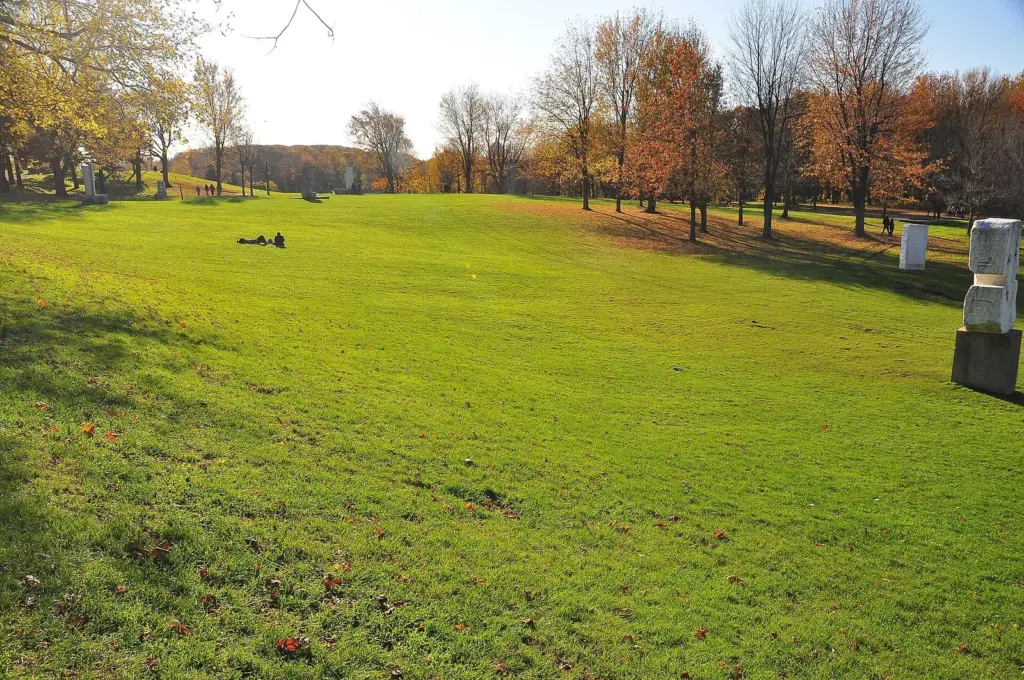
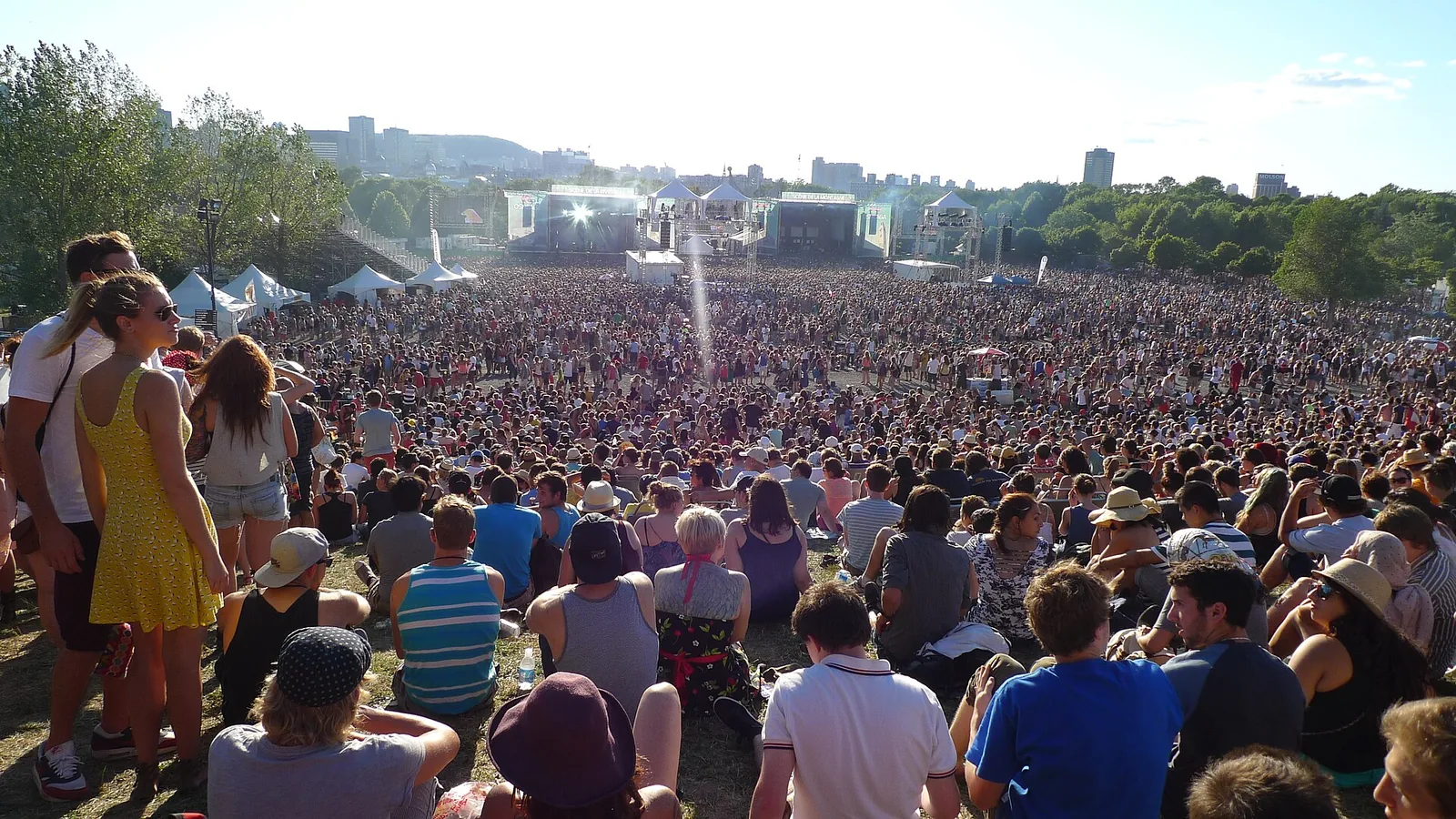
Osheaga is Montreal’s big three-day music festival, held on the lawns of Parc Jean-Drapeau, the island park in the St Lawrence. It draws international headliners across rock, pop, hip-hop and electronic music and crowds that fill the park from midday to late at night. The 2026 edition ran from 31 July to 2 August; check osheaga.com for the 2027 dates.
Unlike the downtown festivals, Osheaga is fully ticketed, with single-day and three-day passes. The park is reached on the Yellow line to Jean-Drapeau station. Expect heavy crowds on the metro at the end of each night, and allow time to get back. Bring sunscreen, a hat and a light rain layer; the island is exposed and August afternoons can swing from blazing sun to thunderstorm. Check the rules on bags and bottles before you go on the festival’s website.
- Metro:
- Jean-Drapeau (Yellow)
- Cost:
- ticketed
- Allow:
- one to three full days
Fierté Montréal (Pride)
Fierté Montréal is the largest Pride in the French-speaking world. In 2026 it ran from 31 July to 9 August, finishing with the parade on Sunday 9 August; the 2027 dates had not been announced as of September 2026. The festival is centred on the Village, Montreal’s LGBTQ+ neighbourhood along rue Sainte-Catherine Est, with free outdoor concerts, community events and parties throughout the week.
The parade is the largest single event, drawing huge crowds along its route, so claim a spot early. The Village is at its busiest this week, and its bars and terrasses are packed well into the night. Beaudry metro station, on the Green line, is the gateway to the Village and easy to spot for its rainbow-coloured entrance.
- Metro:
- Beaudry (Green)
- Cost:
- most events free
- Allow:
- an evening, plus the parade
The Canadian Grand Prix
The Formula 1 Canadian Grand Prix is the most expensive weekend of the year in Montreal, and the one that most changes the city. From 2026, the race moved from June to late May; the 2026 edition ran from 22 to 24 May. The 2027 race runs from 21 to 23 May.
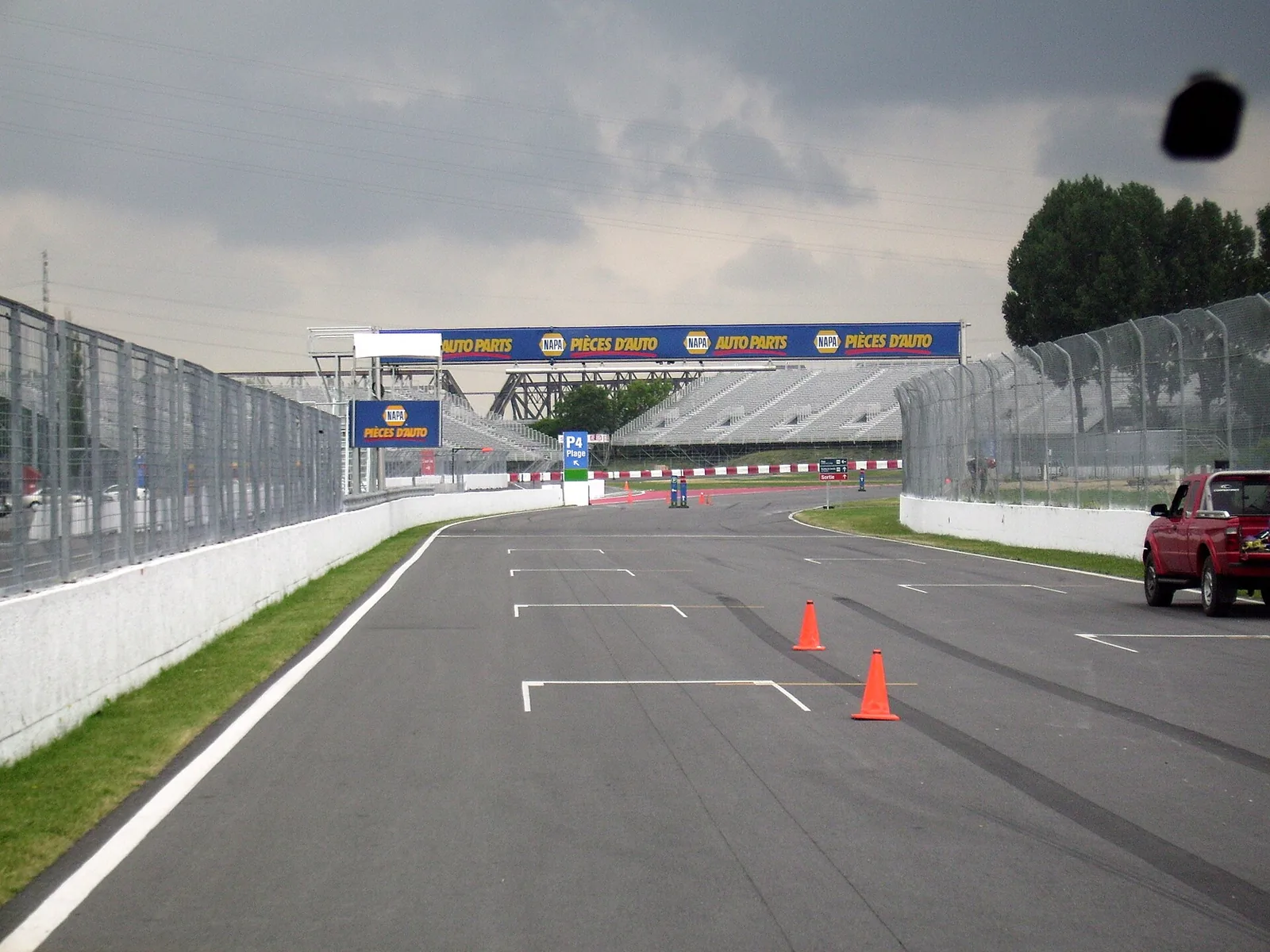
The race is held at the Circuit Gilles-Villeneuve on Île Notre-Dame, a man-made island built for Expo 67. It’s famous for the “Wall of Champions”, the concrete barrier at the final chicane that earned its name in 1999, when three world champions — Damon Hill, Jacques Villeneuve and Michael Schumacher — all crashed into it. Take the Yellow line to Jean-Drapeau; driving is pointless on race weekend.
Even if you’re not going to the race, you’ll feel it. Downtown fills with fans, street parties and car displays, and hotel rates hit their annual peak. If you’re not a racing fan, avoid the weekend. If you are, book as soon as the 2027 date is confirmed.
- Metro:
- Jean-Drapeau (Yellow)
- Cost:
- ticketed
- Allow:
- the race weekend
Smaller summer festivals worth catching
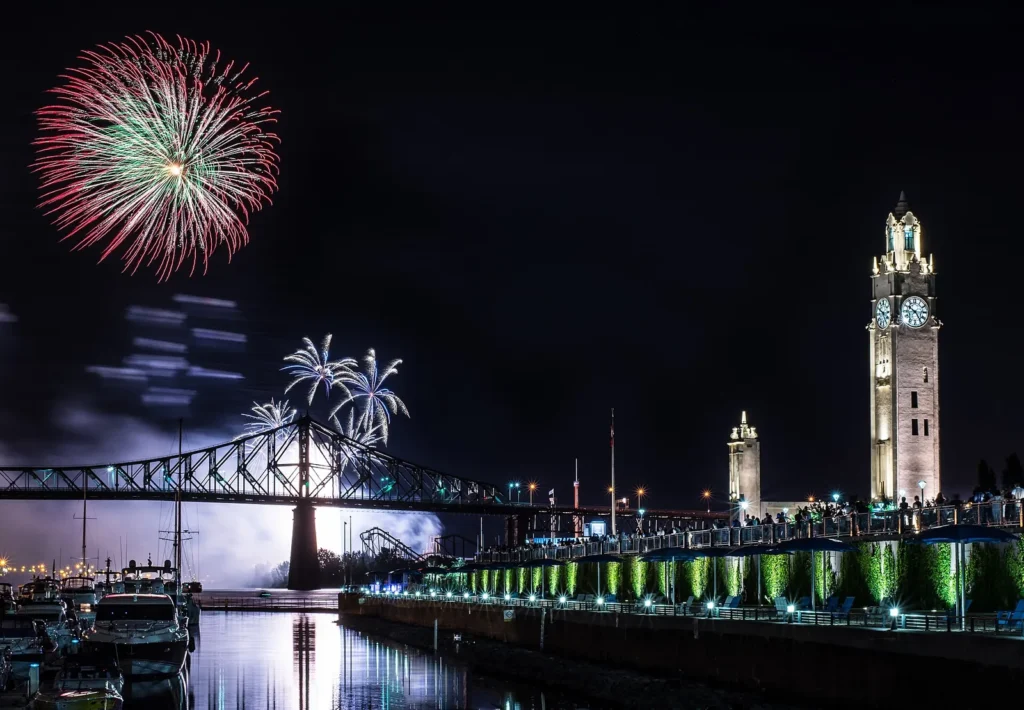
Beyond the headliners, the summer calendar is packed with specialist festivals. Look out for MURAL, the street-art festival that transforms the walls along boulevard Saint-Laurent with new murals every year; MUTEK, the electronic music and digital art festival; Fantasia, the genre-film festival loved by horror and cult-film fans; and the summer fireworks competition at La Ronde, which you can watch from along the river as well as from inside the park. Check each festival’s own website for current dates, as they vary from year to year.
Autumn Festivals
The summer crowds leave, but the calendar doesn’t empty. Autumn’s festivals are smaller, more local and often more rewarding.
POP Montreal (23–27 September 2026)
POP Montreal is the city’s independent music festival, and in 2026 it celebrates its 25th edition from 23 to 27 September. It fills clubs, churches, halls and bars across Mile End, the Plateau and downtown with hundreds of concerts, from emerging local bands to cult international acts, alongside talks, workshops, film screenings, visual art and family activities. Its Puces POP craft fair is one of the best places in the city to buy work by local designers and makers.
POP is where you’ll see the next wave of Montreal music before it becomes famous. It has a loose, neighbourhood feel, with venues close enough to walk between. Full details are on POP Montreal’s website.
- Metro:
- various; Laurier and Mont-Royal (Orange) for Mile End and the Plateau
- Cost:
- mostly ticketed
- Allow:
- a couple of evenings
Festival du nouveau cinéma (7–18 October 2026)
The Festival du nouveau cinéma (FNC) is Montreal’s festival of independent and international cinema. Its 55th edition runs from 7 to 18 October 2026, screening feature films, documentaries, shorts and new media works in cinemas across the city, many of them North American or Canadian premieres. If you’re visiting in October for the fall colour, it’s an excellent way to spend the cold evenings. Programme and tickets are on the FNC website.
- Metro:
- various
- Cost:
- ticketed
- Allow:
- an evening or two
Gardens of Light and Fright Fest
Two seasonal events round out the autumn. Gardens of Light at the Botanical Garden runs from 3 September to 1 November 2026, when the Chinese and Japanese gardens are lit up with lanterns after dark. It uses timed tickets, and the ticket includes daytime entry to the garden, so arrive in the afternoon and stay until dark. Fright Fest at La Ronde amusement park runs on weekends from 3 October to 1 November 2026, with haunted attractions and Halloween theming; La Ronde admission starts at $34.99 plus tax and fees and is sold online only.
Autumn is also hockey season. The Montreal Canadiens’ 2026–27 home opener at the Bell Centre is on Tuesday 6 October 2026 against Carolina. It’s not a festival, but on game nights the atmosphere downtown can feel like one.
Winter Festivals
Montreal’s winter festivals are the reason the city is worth visiting between December and March. For what to wear, where to skate and how the underground network works, see our guide to Montreal in winter. Here’s the festival calendar.
Grand Marché de Noël de Montréal
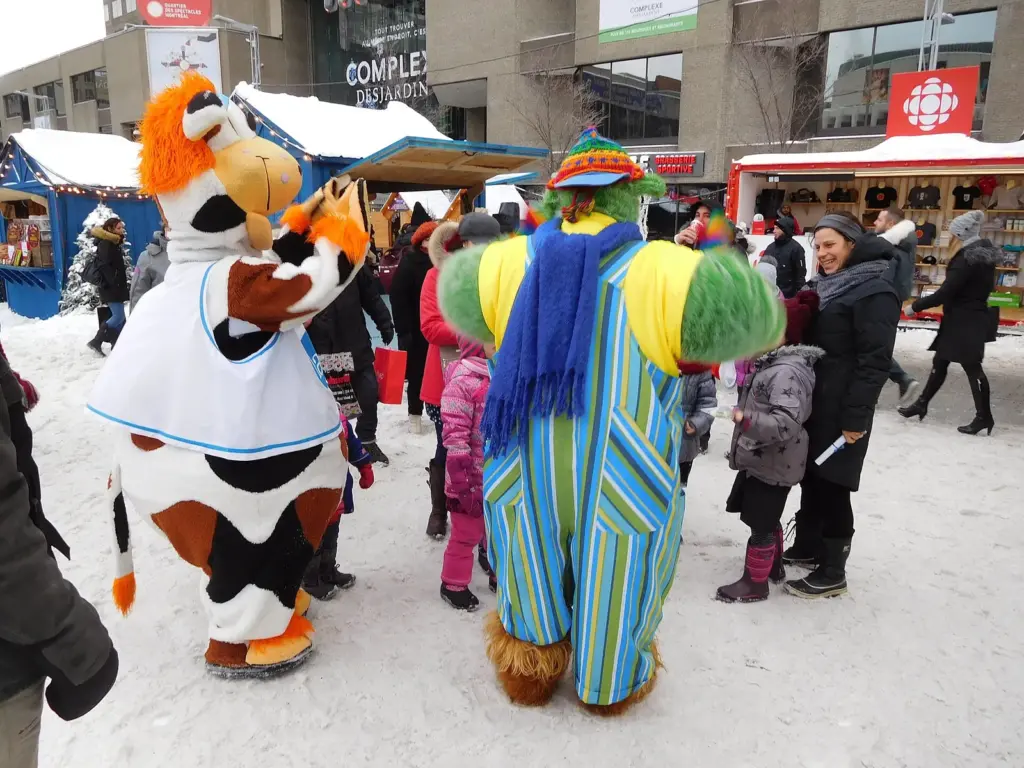
The city’s Christmas market takes over the Place des Festivals from 13 November 2026 to 3 January 2027. Entry is free, with around 60 artisans selling from wooden chalets, plus food and mulled drinks. Until 15 December it’s open Wednesday to Sunday; from 16 December it opens every day. It’s a lovely first evening in the city in December, especially under the Quartier des Spectacles lights.
- Metro:
- Place-des-Arts (Green)
- Cost:
- free entry
- Allow:
- 1 to 2 hours
Igloofest
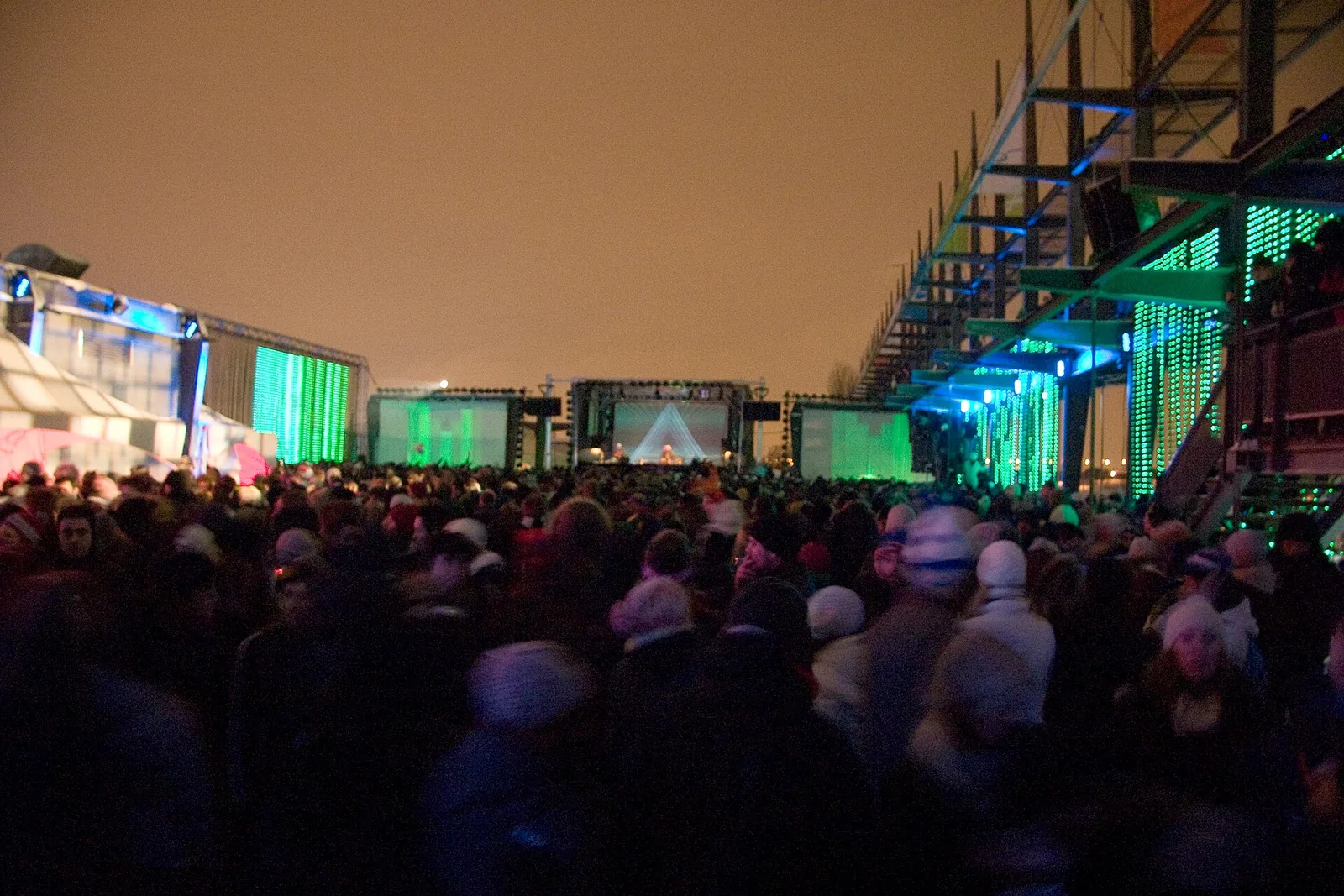
An outdoor electronic music festival, at night, in January, on the quays of the Old Port. It sounds like a dare, and that’s the point. Thousands of people dance in snowsuits (vintage one-piece ski suits are the unofficial uniform) to international DJs at temperatures well below zero. It runs over several weekends from January into early February. The 2026 edition ran from 15 January to 7 February; the festival’s site gives 14 January to 6 February for 2027, so trust it rather than third-party listings. It’s ticketed, and the crowd is 18 and over.
- Metro:
- Champ-de-Mars (Orange)
- Cost:
- ticketed
- Allow:
- an evening
Fête des neiges
The family winter festival, held on January weekends at Parc Jean-Drapeau, with snow slides, snow sculptures, outdoor stages and activities for children. The 2027 dates and prices hadn’t been published as of September 2026; check Parc Jean-Drapeau’s website before you go. The island is exposed and windy, so dress children warmly.
- Metro:
- Jean-Drapeau (Yellow)
- Cost:
- see the park’s website
- Allow:
- half a day
Montréal en Lumière and Nuit blanche
The big one. Montréal en Lumière runs from 18 to 28 February 2027 and is really three festivals in one: a free outdoor site of light installations, rides and activities in the Quartier des Spectacles; a food programme with visiting chefs in restaurants across the city; and a performing-arts line-up. The outdoor site, glowing against the snow in the dark, is what most visitors come for.
Its climax is Nuit blanche on Saturday 27 February 2027, an all-night arts crawl when galleries, museums, theatres and public spaces across Montreal host events until the small hours, many of them free. It’s cold, crowded and brilliant. Pick a neighbourhood or two rather than trying to see everything, and dress for hours outdoors. More on the festival’s website.
- Metro:
- Place-des-Arts (Green)
- Cost:
- outdoor site free; food and shows vary
- Allow:
- an evening, or all night for Nuit blanche
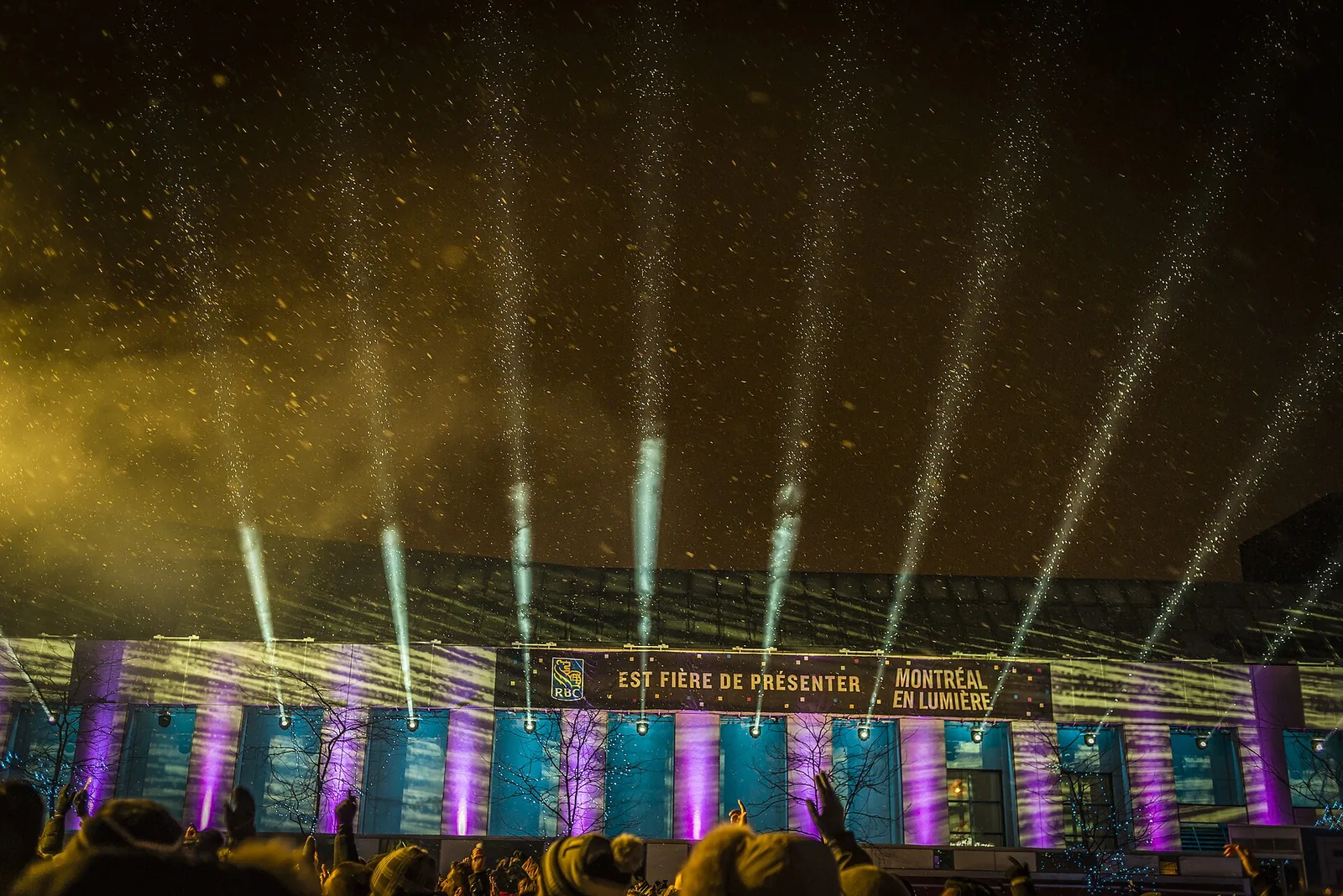
Spring: The Quiet Build-Up
Spring is the one season without a major festival, and it’s worth knowing that before you book. From late March to mid-May the city is between seasons: the winter events have finished, the summer ones haven’t started, and the weather swings between slush and sunshine.
There is one great seasonal ritual. Sugar shack season runs from roughly March into early April, when the cabanes à sucre in the countryside around Montreal open for huge communal meals of pea soup, ham, beans and omelettes drenched in maple syrup, ending with maple taffy rolled on snow. They’re outside the city, so you’ll need a car or a tour.
By May the city wakes up. The terrasses come back out, the free Sunday-afternoon tam-tams drum circle returns to the foot of Mount Royal (running from May to September), and the Grand Prix in late May kicks off the summer season.
The Quartier des Spectacles: Montreal’s Festival District
Most of Montreal’s big downtown festivals happen in the same place: the Quartier des Spectacles, an entertainment district of about a square kilometre around Place des Arts. It’s worth understanding its layout, because you’ll probably spend several evenings here.
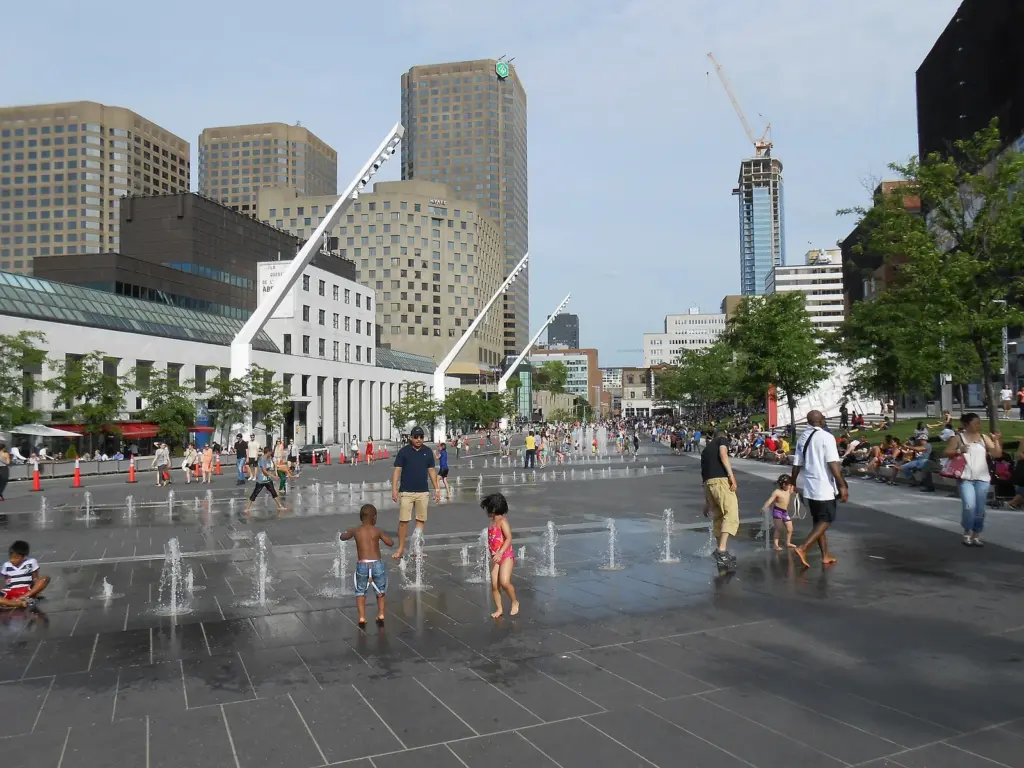
The heart of it is the Place des Festivals, a large open square with a grid of ground-level fountains that children run through in summer and that becomes the main stage area for the Jazz Festival, the Francos and Montréal en Lumière. Around it are the concert halls of Place des Arts, including the Maison symphonique, home of the Montreal Symphony Orchestra, and a series of smaller squares and pedestrian streets that fill with stages during festivals. After dark, many of the building facades carry light projections, so the district is worth a walk even when nothing is on.
Getting there is easy: Place-des-Arts station on the Green line is right underneath, and Saint-Laurent station is at the eastern end. In winter, you can walk underground from Place des Arts through Complexe Desjardins and on towards the Palais des congrès and Old Montreal, part of the RÉSO network of connected indoor passages.

How to Do Montreal Festivals Well
A few practical habits make the difference between a great festival trip and an exhausting one.
- Use the metro. Every major festival site is on a metro line, and driving and parking near them is a nightmare. As of September 2026 a single fare is $3.75, a 24-hour pass $11.25, a 3-day pass $21.75, a weekend pass (Friday 16:00 to Monday 05:00) $17.00 and an evening pass (18:00–05:00) $6.75. Tap a contactless card at the turnstile or buy an OPUS card for $6.
- Know when the last train goes. The metro runs until roughly 00:30, later on Saturdays. After that it’s a taxi, Uber or a night bus, and after a big show the taxi queues are long. Leave a headliner a few minutes early or plan to walk.
- Arrive early for free headliners. The big free evening shows fill up an hour or more before they start.
- Check bag rules. Each festival sets its own rules on bags, bottles and chairs. Read them before you go rather than at the gate.
- Dress for the season and the hours. Summer means sunscreen, water and a rain layer for sudden thunderstorms. Winter means boots, thermals and hand warmers for hours outside.
- Book accommodation early. Hotels near the Quartier des Spectacles and in Old Montreal fill up months ahead for the Jazz Festival, the Grand Prix and Just for Laughs.
- Mind the language. Many shows are in French, especially at the Francos and the French side of Just for Laughs. Music needs no translation; comedy and theatre do, so check before buying tickets.
- Pace yourself. Bars pour until 03:00 and the legal drinking age is 18, so festival nights run late. Keep at least one morning clear for sightseeing.
Pairing Festivals in One Trip
Because the calendar is so dense, it’s often possible to catch two or three festivals in a single week. These are the combinations that work best.
- Mid to late June: the Francos, the Fête nationale and the start of the Jazz Festival. In 2027 the Francos run from 11 to 19 June, the Fête nationale is on 24 June, and the Jazz Festival usually opens in the last week of June. A trip from about 18 to 28 June catches the end of one, the national holiday and the start of the other.
- Mid-July: Just for Laughs with summer at full strength. Comedy in the evenings, the Old Port, Mount Royal and the islands by day. The Jazz Festival has usually finished by then, so it’s slightly calmer downtown.
- Late July to early August: Pride and Osheaga. In 2026 the two overlapped, with Osheaga on 31 July–2 August and Pride running until the parade on 9 August. It’s the city’s most crowded and most expensive week of the summer, so book early.
- Late September to mid-October: POP Montreal, the FNC and the fall colour. POP runs from 23 to 27 September 2026 and the FNC from 7 to 18 October, with Gardens of Light on throughout and the leaves peaking around mid-October. It’s the best combination for anyone who dislikes summer crowds.
- Late February: Montréal en Lumière and Nuit blanche. Montréal en Lumière runs from 18 to 28 February 2027, with Nuit blanche on the 27th. Come for the last long weekend and you’ll get both.
A Free Festival Evening, Step by Step
If you’ve never done one of Montreal’s big free outdoor festivals, here’s how a typical Jazz Festival or Francos evening goes, and how to make the most of it.
Eat early, somewhere a few blocks from the site. The restaurants right on the Quartier des Spectacles are packed at festival time, while those on the edge of Chinatown, the Quartier Latin or the Plateau are calmer. Take the Green line to Place-des-Arts and come up into the festival site around 18:00, when the early-evening shows on the smaller stages are under way. This is the best time to wander: the crowds are thinner, the sets are shorter, and you’ll stumble onto bands you’ve never heard of.
By 20:00 or so, pick your headliner and find a spot. For the biggest free shows on the Place des Festivals, that means arriving well before the start time; the square fills fast, and latecomers end up watching on the screens from the side streets. Bring a light layer, because June evenings can cool quickly, and something waterproof in case of a thunderstorm. After the last show, the crowd flows out towards the metro in one great wave. Either leave a few minutes before the end, or wait twenty minutes over a drink and let it clear. Just keep an eye on the time: the metro runs until about 00:30, later on Saturdays.
Montreal Festivals with Children
Montreal’s festivals are unusually family-friendly, especially in the daytime. The Just for Laughs street programme, with acrobats, clowns and buskers, is made for children. The Place des Festivals fountains are a free splash pad on hot days, and the afternoon shows at the Jazz Festival and the Francos are relaxed, with plenty of room to spread out. In winter, the Fête des neiges on Parc Jean-Drapeau is designed around kids, and the Christmas market and the Montréal en Lumière outdoor site are fun early in the evening.
A few tips. Bring ear protection for small children at the big stages, which are loud. Leave the stroller at the hotel for the biggest evening shows, when the crowds make it hard to move, or stick to the edges of the site. Agree on a meeting point in case you get separated. Save the late-night events — Igloofest, Osheaga’s evenings, Nuit blanche after midnight — for adults. Older children and teenagers who like being scared will enjoy La Ronde’s Fright Fest in October, and Gardens of Light at the Botanical Garden is a gentle, magical evening for all ages.
Accessibility at Festival Sites
The Quartier des Spectacles is largely flat and paved, which makes the downtown festivals among the easier big events to navigate with a wheelchair or limited mobility, although the crowds at peak times are the main obstacle. Parc Jean-Drapeau covers a large area with longer distances between stages. Most of the major festivals publish accessibility information, including viewing areas and accessible entrances, on their websites; check before you go. Not every metro station has an elevator, so check the STM’s list of accessible stations when planning your route to and from a site.
Where to Stay for Festivals
Choose your base by the festival you’re coming for.
- Jazz Festival, Francos, Montréal en Lumière, Christmas market: stay downtown near Place-des-Arts, Saint-Laurent or McGill metro stations. You’ll be able to walk back from late shows.
- Just for Laughs and Pride: downtown or the Quartier Latin, within walking distance of both the theatres and the Village.
- Igloofest: Old Montreal puts you a short walk from the Old Port.
- Osheaga and the Grand Prix: anywhere with easy access to the Yellow line, which starts at Berri-UQAM. You don’t need to stay near Parc Jean-Drapeau itself.
- POP Montreal: the Plateau or Mile End, close to the venues and on the Orange line.
Hotel prices peak during the Grand Prix, the Jazz Festival, Just for Laughs and the Osheaga and Pride period. Book as early as you can and keep bookings cancellable until festival dates are confirmed.
Montreal Festivals on a Budget
You can do a lot of Montreal’s festival calendar for nothing. The Jazz Festival and the Francos both have large free outdoor programmes. Just for Laughs has free street shows. Most of Pride is free, and so is the Fête nationale. In winter, the Christmas market and the Montréal en Lumière outdoor site are free to enter, and many Nuit blanche events cost nothing.
To keep costs down, buy a transit pass that matches your trip — the weekend pass at $17.00 or the evening pass at $6.75 are made for festival-goers — and stock up on picnic supplies at Jean-Talon Market in Little Italy. Beer and wine are sold in dépanneurs (corner shops) until 23:00, and spirits at the SAQ, Quebec’s liquor stores. Prices in shops, bars and restaurants exclude sales tax, and tipping is 15–20% at a table and $1–2 a drink at the bar. For more free things to do between shows, see our rundown of things to do in Montreal.
Festival Mistakes to Avoid
- Trusting last year’s dates. The Grand Prix moved to late May from 2026, and festival dates shift every year. Check the organiser’s own site.
- Booking a hotel after booking a festival ticket. The rooms sell out first. Book cancellable accommodation early.
- Driving to a festival. Take the metro. Road closures and parking make driving slower and more expensive.
- Missing the last metro. It runs until about 00:30 (later on Saturdays). Plan the ride home before the encore.
- Underdressing for Igloofest. You’ll be outside for hours at well below zero.
- Buying tickets to French-language comedy without realising. Check the language of every Just for Laughs show before you pay.
- Planning a view from the Montreal Tower between shows. The observatory is closed until spring 2027.
Festivals are only part of the calendar. Hockey, ballet, fireworks and the public holidays that close the shops all shape a trip too, and the month-by-month events calendar puts them side by side.
Frequently Asked Questions
What is the biggest festival in Montreal?
The Montreal International Jazz Festival is the biggest, and it holds the Guinness World Record as the largest jazz festival in the world. It runs for around ten days in late June and early July; the 2026 edition ran from 25 June to 4 July. Hundreds of its shows are free on outdoor stages in the Quartier des Spectacles, alongside ticketed concerts at Place des Arts.
Are Montreal festivals free?
Many are, at least in part. The Jazz Festival and the Francos have large free outdoor programmes, Just for Laughs has free street shows, and most Pride events and the Fête nationale are free. In winter, the Christmas market and the Montréal en Lumière outdoor site are free to enter. Osheaga, Igloofest, the Grand Prix and headline indoor shows are ticketed.
When is festival season in Montreal?
Summer is the peak, from the Francos in mid-June through the Jazz Festival, Just for Laughs, Pride and Osheaga into early August. But Montreal holds more than 100 festivals a year, and the winter season is strong too, with the Christmas market, Igloofest and Montréal en Lumière. Spring, from late March to mid-May, is the quietest period.
When is the Montreal Jazz Festival 2027?
The 2027 festival runs from 25 June to 4 July, the same dates as in 2026. Check the festival’s official website for the programme, and book accommodation early, as downtown hotels fill quickly.
What Montreal festivals are on in winter?
The Grand Marché de Noël runs from 13 November 2026 to 3 January 2027, Igloofest runs on January and early February weekends at the Old Port (14 January to 6 February in 2027), and the Fête des neiges fills Parc Jean-Drapeau on January weekends. Montréal en Lumière runs from 18 to 28 February 2027, with Nuit blanche on Saturday 27 February.
Do I need to speak French to enjoy Montreal festivals?
No. Music festivals like the Jazz Festival, Osheaga, Igloofest and the Francos need no translation, and staff at festival sites switch to English readily. Language matters most for comedy and theatre: Just for Laughs runs separate English and French shows, so check before you buy. Visitors are never required to speak French in Quebec.
What’s on in Montreal in September and October?
POP Montreal runs from 23 to 27 September 2026, its 25th edition. The Festival du nouveau cinéma screens films from 7 to 18 October 2026. Gardens of Light lights up the Botanical Garden from 3 September to 1 November, La Ronde’s Fright Fest runs on weekends from 3 October to 1 November, and the Canadiens’ home opener is on 6 October.