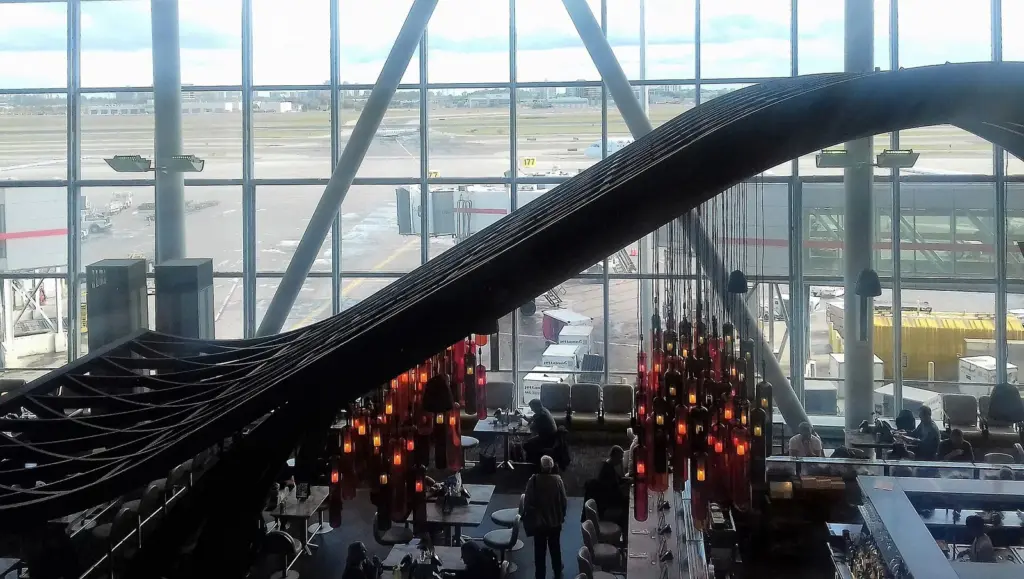
The Montreal airport almost every visitor uses is Montréal–Trudeau (YUL), about 20 km west of downtown in the suburb of Dorval, and the trip into the city is simpler and cheaper than most people expect. A 24-hour bus runs the whole way for $11.25 and throws in a day of free metro rides, taxis charge a flat $49.45 to downtown by day, and the new REM light rail you may have read about does not reach the terminal yet. Below: how the terminal works, what customs will ask you, every realistic way into town with times and prices checked in September 2026, which option suits which neighbourhood, how to get back out for your flight, and the trains, buses and roads that bring everyone else to Montreal.
The Short Version
- Take the 747 bus. It runs 24/7 from outside arrivals, costs $11.25 in cash or by card, and the ticket covers 24 hours of unlimited bus and metro travel afterwards.
- Taxis are a fixed fare to downtown: $49.45 from 05:00 to 23:00 and $56.70 overnight, before tip.
- The REM does not serve the airport. The station is under construction and targeted for the end of 2027. Any page telling you to ride it from arrivals is wrong.
- Flying to the United States? You clear US immigration and customs in Montreal before you board, so arrive early.
- Heading straight to Ottawa or Toronto by train? A free shuttle links the terminal to Dorval VIA Rail station.
- Visa-exempt travellers flying in need an eTA before they board. US citizens don’t.
Montreal Airport at a Glance
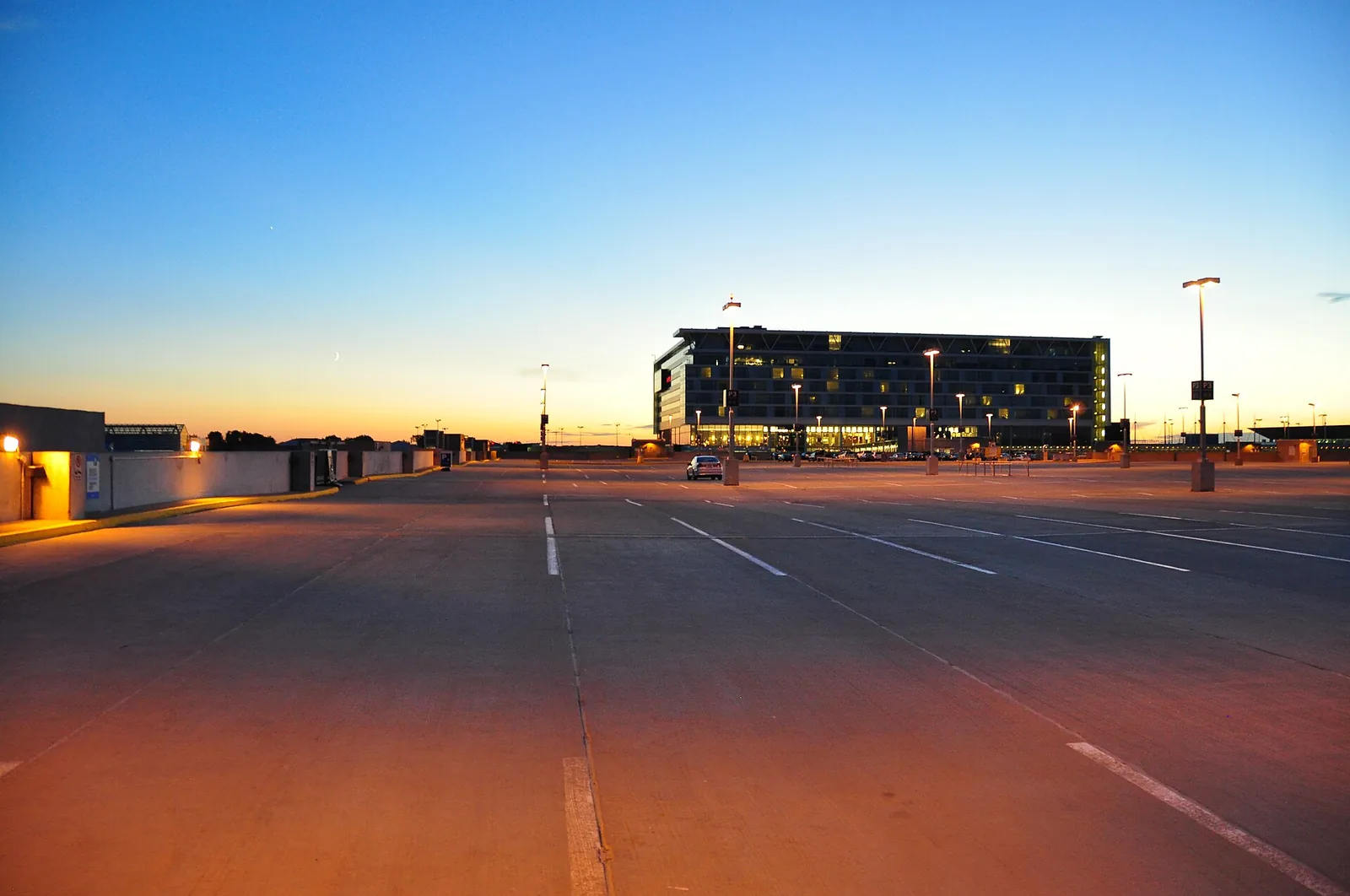
The full name is Montréal–Pierre Elliott Trudeau International Airport. Locals still sometimes call it Dorval, which was its name until 2004 and is still the name of the town around it. Its code, YUL, is what you will see on luggage tags, booking sites and the airport’s own branding, and it is the third-busiest airport in Canada after Toronto Pearson and Vancouver.
It is also a home base. Air Canada has its head office in Montreal and runs a large share of YUL’s flights, and Air Transat, the leisure carrier, is headquartered here too. That is why Montreal has direct flights to places you might not expect, from much of Europe and North Africa to the Caribbean and Latin America, and why a Paris flight from Montreal is often easier to find than one from much larger US cities.
| What you need to know | Detail |
|---|---|
| Airport code | YUL |
| Location | Dorval, on the island of Montreal, about 20 km west of downtown |
| Terminals | One passenger terminal with domestic, international and US (transborder) sectors |
| Public transport into town | 747 bus, 24/7, $11.25 including 24 h of bus and metro travel |
| Taxi to downtown | Fixed $49.45 (05:00–23:00) or $56.70 (23:00–05:00) |
| Rail link | No direct rail yet; REM airport station targeted for end of 2027. Free shuttle to Dorval VIA station |
| US flights | US preclearance on site: you clear US border formalities before departure |
| Other “Montreal” airports | Mirabel is cargo only; Plattsburgh (New York) is the nearest US alternative |
One practical oddity: because the airport sits on the island itself, you never cross a bridge or pay a toll to reach downtown. The drive is a straight run along Highway 20 and the A-720 (the Ville-Marie Expressway), and the only thing that makes it slow is traffic.
Inside the Terminal
YUL is a single building, which makes it easy to navigate once you know it has three distinct zones. Check which one your flight uses before you arrive, because the security lines and the walking distances are different for each.
Domestic, international and transborder
The domestic sector handles flights within Canada: Toronto, Vancouver, Calgary, Halifax and the rest. Security is the standard screening and nothing more, so this is the quickest part of the airport to get through.
The international sector handles everything that isn’t Canada or the United States, which means Europe, Africa, the Caribbean, Mexico and beyond. This is where the long-haul evening departures to Paris, London and other European cities leave from, and it can be very busy between late afternoon and about 22:00.
The transborder sector is for flights to the US. It is the one that surprises people, because it includes a full border inspection before you ever reach the gate.
US preclearance at YUL
Montreal is one of the Canadian airports where US Customs and Border Protection officers work on site. If you are flying to the United States, you go through Canadian security, then US immigration and customs, all in Montreal. You then land in the US as if it were a domestic flight, walk off the plane and leave the airport without queuing again.
It is a good system at the other end and a slower one at this end. Budget time for two queues rather than one, have your passport and any US visa or ESTA ready, and don’t pack anything in your checked bag that you would need to explain to a customs officer, since you will be asked about it here. Members of trusted-traveller programmes such as Global Entry and NEXUS save real time. If you are connecting in Montreal from an international flight to a US one, give yourself a generous layover.
Money, phones and Wi-Fi
Currency exchange counters in any airport give weaker rates than a bank, and YUL is no exception. Unless you need Canadian cash for a specific reason, skip them: contactless cards work almost everywhere in Montreal, including on the 747 bus fare reader and at metro turnstiles. If you want a few banknotes for tips, a bank-branded ATM in arrivals is usually better value than the exchange desk.
Free Wi-Fi is available in the terminal. Visitors from outside Canada who want mobile data should sort out an eSIM before flying, since buying a SIM on arrival is more fiddly and rarely cheaper. Canadian mobile plans are expensive by international standards, so check what your home carrier charges for roaming before you land and switch off data if in doubt.
The in-terminal hotel
The Marriott In-Terminal Hotel is connected directly to the terminal building, so you can walk from your room to check-in without going outside. It makes sense for a very early departure, a late arrival with an onward connection, or a winter night when a snowstorm has cancelled your flight. For a normal city break it is the wrong base: you would spend a good chunk of each day travelling to and from the places you came to see. Our guide to where to stay in Montreal covers the neighbourhoods that are better value.
Arriving at Montreal Airport: Customs and Entry
International arrivals clear Canadian border formalities at YUL. The process is run by the Canada Border Services Agency (CBSA) and is mostly automated: you scan your passport at a kiosk or eGate, answer the declaration questions, have your photo taken, and then speak briefly to an officer. On a quiet morning the whole thing takes minutes. When several European flights land together in the late afternoon, it can take much longer.
Do you need an eTA or a visa?
This is the question to settle before you book, not at the check-in desk. The broad rules, which you should always confirm on the Government of Canada’s eTA page:
- US citizens need a valid passport to fly to Canada but no visa and no eTA.
- US lawful permanent residents (green card holders) don’t need an eTA but must carry their valid green card as well as their passport.
- Citizens of visa-exempt countries, including the UK, Ireland, most of the EU, Australia, New Zealand and Japan, need an Electronic Travel Authorization (eTA) to fly to or through Canada. It costs $7 CAD, is applied for online, and is linked to your passport. Most are approved within minutes.
- Everyone else generally needs a visitor visa, which takes weeks rather than minutes.
Apply only through the official government site. Several lookalike websites sell eTA “services” for many times the real price and add nothing. The eTA is only required for arrival by air: if you cross into Canada by car, bus or train from the US, you don’t need one.
Advance Declaration
You can fill in your customs declaration before you land using the CBSA’s Advance Declaration, available through the ArriveCAN app or website. It is optional, but it lets you skip part of the kiosk process and is worth the two minutes if you are on a busy transatlantic arrival.
What to declare
Declare all food, plants and animal products, even a sandwich from the plane. Canada is strict about meat, dairy, fresh fruit and anything that could carry pests, and declaring an item that turns out to be allowed costs you nothing. Failing to declare it can cost a fine.
Visitors of legal drinking age (18 in Quebec) can bring in a limited amount of alcohol duty-free: one of 1.5 litres of wine, 1.14 litres of spirits, or up to 8.5 litres of beer. Anyone carrying $10,000 CAD or more in cash, or the equivalent, must declare it. And a common mistake: although cannabis is legal in Canada, carrying it across the border in either direction is illegal, including products bought legally at home.
After customs
Once through, collect your bags and walk into the arrivals hall. Signs for “Transport” or “Transport terrestre” point to the bus stops, the taxi rank and the ride-share pickup. Everything you need for the trip into town is within a few minutes’ walk of the doors.
Getting from Montreal Airport to Downtown
There are five ways into the city, and for most visitors the choice comes down to two: the bus, if you have the patience and a light bag, or a taxi, if there are two or more of you, you’re tired, or it’s the middle of the night. Here is how they compare.
| Option | Cost (Sep 2026) | Time to downtown | Hours | Best for |
|---|---|---|---|---|
| 747 bus, branch 1 (downtown) | $11.25 incl. 24 h of transit | About 45–70 min | 24/7 | Solo travellers staying downtown or in the Quartier Latin |
| 747 bus, branch 2 (Lionel-Groulx) | $11.25 incl. 24 h of transit | About 30–35 min, then metro | 24/7 | Beating rush-hour traffic; Saint-Henri, Griffintown, Old Montreal |
| Taxi | Fixed $49.45 day / $56.70 night | About 25–45 min | 24/7 | Two or more people, heavy luggage, late arrivals |
| Uber | Varies with demand | About 25–45 min | 24/7 | Addresses outside downtown |
| Rental car | Rental plus hotel parking | About 25–45 min | Desk hours | Only if you’re leaving the city immediately |
| REM light rail | — | — | Not yet | Airport station targeted for end of 2027 |
The 747 bus, step by step
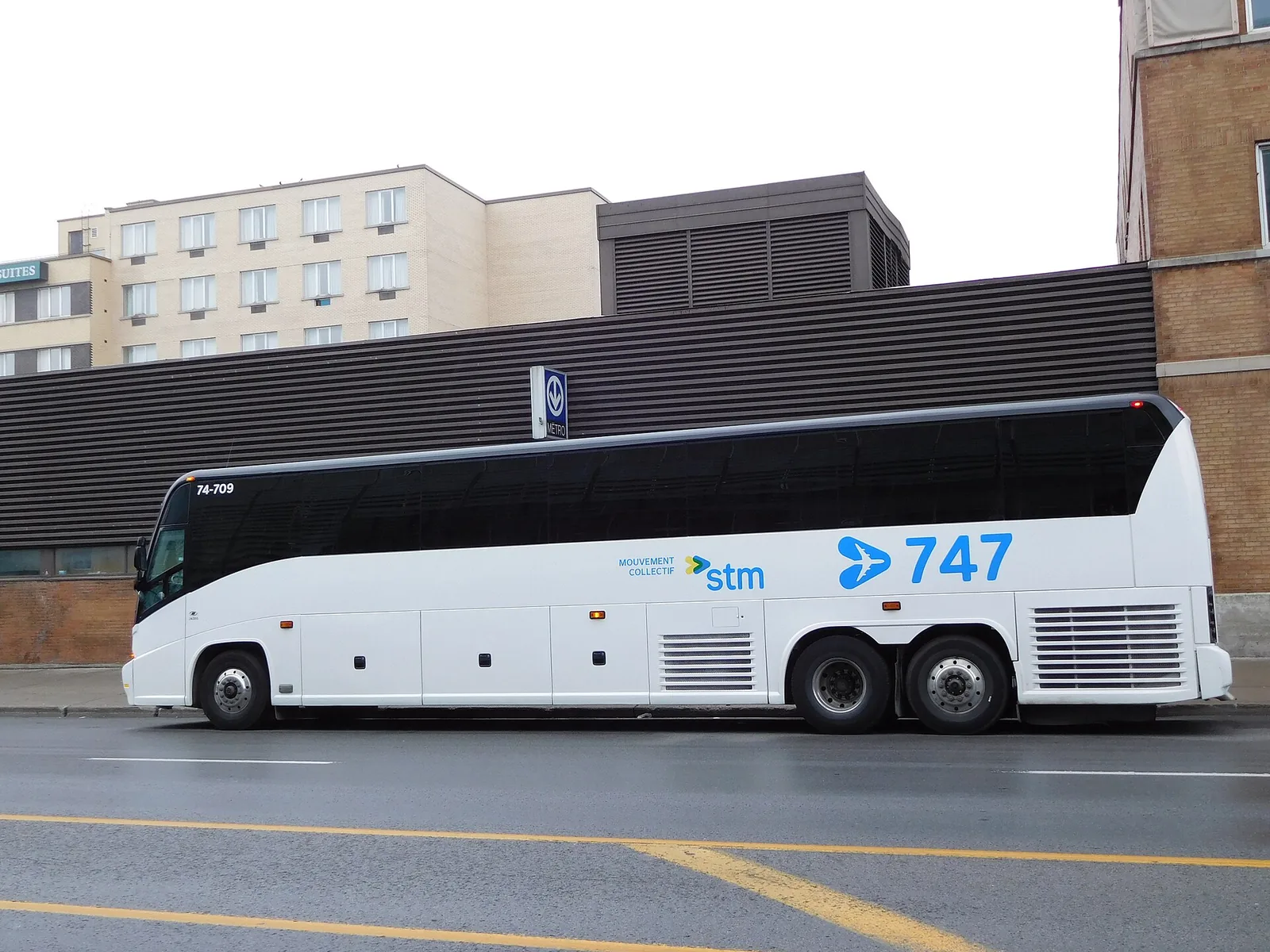
The 747 is run by the STM, Montreal’s public transit company, and it is the best-value airport link in any big Canadian city. It never stops running, so it works for a 06:00 departure or a 01:30 arrival just as well as for a lunchtime landing.
- Find the stop. Follow the bus signs from the arrivals level. The 747 stop is just outside the terminal and clearly marked with the route number.
- Pay. The fare is $11.25. You can pay cash on board or tap a contactless credit or debit card on the reader. If you already hold a 24-hour, 3-day or weekend pass on an OPUS card, it is valid on the 747. An evening pass is not.
- Pick the right branch. The front of the bus shows whether it’s heading downtown or to Lionel-Groulx (more on that choice below).
- Keep your ticket or remember which card you tapped. For the next 24 hours it is your pass on every STM bus and the metro, so you can ride from your drop-off stop to your hotel without paying again.
The 747 carries plenty of people with suitcases and there is room for luggage, but it is a city bus service rather than an airport coach with a hold, so an enormous family’s worth of bags will be awkward at busy times.
747-1 or 747-2: which branch?
The 747-1 goes all the way downtown. It makes 12 stops, most of them along boulevard René-Lévesque through the heart of downtown, and since 26 January 2026 its terminus has been on René-Lévesque at rue Berri, near Berri-UQAM metro. The ride takes about 45 minutes in light traffic and up to 70 in the weekday rush.
The 747-2 goes to Lionel-Groulx metro station with just one stop, and takes about 30 to 35 minutes. Lionel-Groulx is where the Green and Orange lines meet, so from there you can reach almost anywhere in a few stops, using the same ticket. It is the smarter choice at rush hour, when the metro is immune to traffic on the expressway, and the obvious choice for anyone staying in Saint-Henri, Griffintown, Little Burgundy or near the Lachine Canal.
Our rule of thumb: if your hotel is within a short walk of René-Lévesque, stay on the 747-1 and enjoy the view. If not, or if it’s between about 15:30 and 18:30 on a weekday, take the 747-2 and switch to the metro.
Montreal airport taxi fares
Taxis from YUL to downtown charge a fixed fare of $49.45 between 05:00 and 23:00 and $56.70 between 23:00 and 05:00, according to Aéroports de Montréal, the airport’s operator. The price is the same whether the ride takes 25 minutes or 50, which makes a taxi much less stressful at rush hour than a meter would be. Confirm with the driver before you set off that your address falls inside the flat-rate downtown zone.
For anywhere else, the meter runs: $4.10 to start by day ($4.70 at night), $2.05 per kilometre ($2.35 at night), and $0.77 per minute of waiting ($0.89 at night). Tip around 10 to 15% for a smooth ride with help with bags. Take cabs only from the official rank outside arrivals, and ignore anyone who approaches you inside the terminal offering a ride.
Do the maths for a group. Two people on the 747 pay $22.50 and get two day passes out of it. Three or four people with suitcases pay roughly the same per head in a taxi and arrive at the door, which is usually the better deal.
Uber and ride-share
Uber operates at YUL, with pickups from a designated area the app directs you to. Prices move with demand, so it can undercut the flat taxi fare on a quiet afternoon and beat it by a wide margin when several flights land at once or the weather turns. It is most useful for destinations outside downtown, where a taxi would be on the meter anyway. Compare the app’s quote with the $49.45 flat fare before you book.
Renting a car at the airport
The major rental companies have counters at the airport. For a stay in the city itself, a car is more trouble than it is worth: hotels charge for parking, street parking downtown is metered and confusing if you can’t read French signs, and the metro gets you nearly everywhere a visitor wants to go. See our guide to getting around Montreal for how the network works.
If you are planning to see the Laurentians, the Eastern Townships or Quebec City, pick the car up on the morning you leave town rather than on arrival. The day trips from Montreal guide has the drives that actually justify one.
Why the REM isn’t an option yet
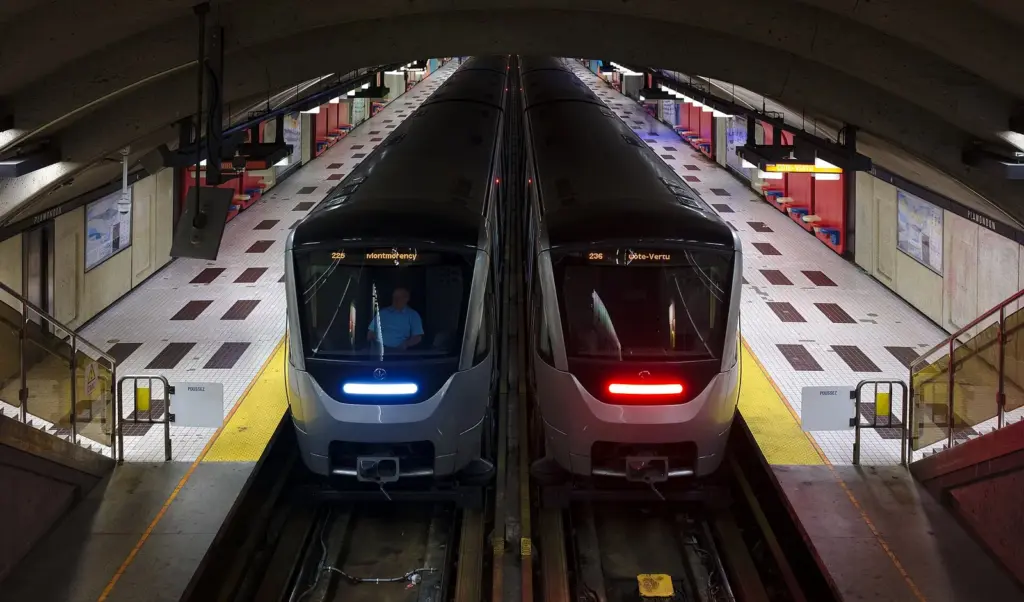
Montreal’s new REM (Réseau express métropolitain) is an automated light metro that already runs to Brossard, Deux-Montagnes and, since May 2026, Anse-à-l’Orme in the West Island. An airport branch is part of the plan, and an underground station is being built beneath the terminal. It is not open. The target is the end of 2027.
We mention this because plenty of travel sites, and the occasional AI-generated answer, describe the REM as if you could board it at arrivals. You can’t, and no shuttle currently connects the terminal to a REM station in a way that makes sense for a visitor. Until it opens, the 747 is the only public transport link from YUL.
Which Route for Your Neighbourhood
“Downtown” covers a lot of ground, and the best way in depends on exactly where you are sleeping. This is how we would do it with a suitcase and no rush.
| Staying in | Best public transport route | By taxi |
|---|---|---|
| Downtown (Peel, McGill, Concordia area) | 747-1 to the nearest René-Lévesque stop, or 747-2 then Green line to Guy-Concordia, Peel or McGill | Flat fare |
| Old Montreal | 747-2 to Lionel-Groulx, then Orange line to Square-Victoria–OACI or Place-d’Armes | Flat fare, door to door on narrow streets |
| Quartier Latin and the Village | 747-1 to the Berri terminus, then walk or one Green line stop to Beaudry | Flat fare |
| Plateau Mont-Royal | 747-1 to Berri-UQAM, then Orange line north to Sherbrooke, Mont-Royal or Laurier | Check the zone |
| Mile End and Little Italy | 747-2 to Lionel-Groulx, then Orange line to Laurier, Rosemont or Jean-Talon | Metered |
| Griffintown and Little Burgundy | 747-2 to Lionel-Groulx, then walk or ride one or two Orange line stops | Check the zone |
| Saint-Henri | 747-2 to Lionel-Groulx, then one Orange line stop to Place-Saint-Henri | Metered |
| Near the airport or West Island | Taxi or Uber is simpler than transit | Metered, short ride |
Not sure which of these areas suits you? Our Montreal neighbourhoods guide explains the character of each, and the difference between the Plateau and Mile End, which are neighbours but not the same place. First-timers who want to be close to the historic streets should look at Old Montreal, but know that the cobbles are hard work with a wheeled bag.

Leaving Montreal: Getting to the Airport for Your Flight
The return trip is where people get caught out, mostly by underestimating two things: rush-hour traffic on the way west, and the queue for US preclearance.
How early to leave
Most airlines advise arriving two hours before a flight within Canada and three hours before an international or US flight. For US flights, treat the three hours as a real minimum at busy times, because you are doing security and a full border inspection before you reach the gate.
Work backwards from there. From a downtown hotel, the 747-1 can take 70 minutes on a weekday afternoon, so for a 19:00 flight to New York you would want to be on a bus by about 14:30. A taxi at the same time might take 45 minutes. Outside rush hour and at weekends, both are quicker, but it is never worth cutting it fine for the sake of an extra half-hour of sightseeing.
Taking the 747 to the airport
Board the 747-1 at its terminus on René-Lévesque at rue Berri or at any of its stops along René-Lévesque, or take the metro to Lionel-Groulx and catch the 747-2 from there. The same $11.25 fare applies, and if you still have a valid 24-hour, 3-day or weekend pass, you ride for free. Check the direction on the front of the bus: you want the one signed for the airport (Aéroport).
If you are leaving on a weekday afternoon, the Lionel-Groulx branch is again the better bet, because the metro takes care of the most congested stretch of downtown.
Taxis and Uber to YUL
Ask your hotel to call a cab or order one through an app. The flat fare applies in this direction too for trips from downtown. For a very early flight, book the night before; at 04:30 the streets are empty and the ride is quick, but you don’t want to be hunting for a car.
Returning a rental car
Rental returns are signposted as you approach the airport. Fill the tank before you get there, since the stations immediately around airports tend to be the most expensive, and leave an extra 20 minutes for the return inspection and the walk to the terminal.
Onward Connections from Montreal Airport
Not everyone is heading downtown. YUL is also a jumping-off point for the rest of Quebec and for Ottawa and Toronto.
The Dorval VIA Rail shuttle
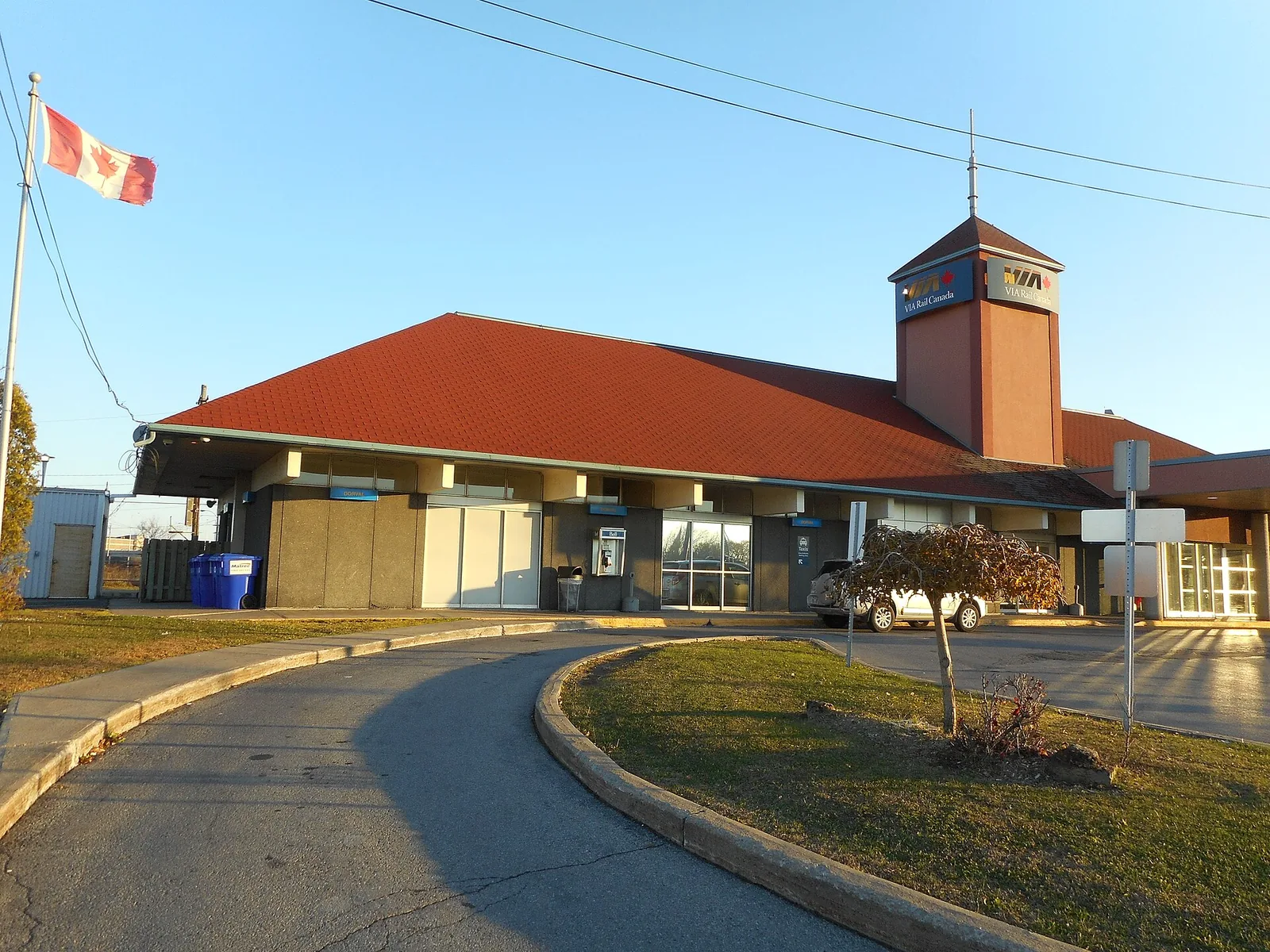
VIA Rail’s Dorval station is only a few kilometres from the terminal, and a free shuttle connects the two. It leaves from Door 8 on the departures level. Most VIA trains between Montreal, Ottawa and Toronto stop at Dorval, so if you are flying into Montreal and continuing by rail to Ottawa (about two hours) or Toronto, you can skip downtown entirely.
Dorval station is also a stop on the exo commuter train to downtown’s Lucien-L’Allier station, but the service is built around weekday commuters, so for most visitors the 747 remains the easier way into the city.
Mont-Tremblant and the Laurentians
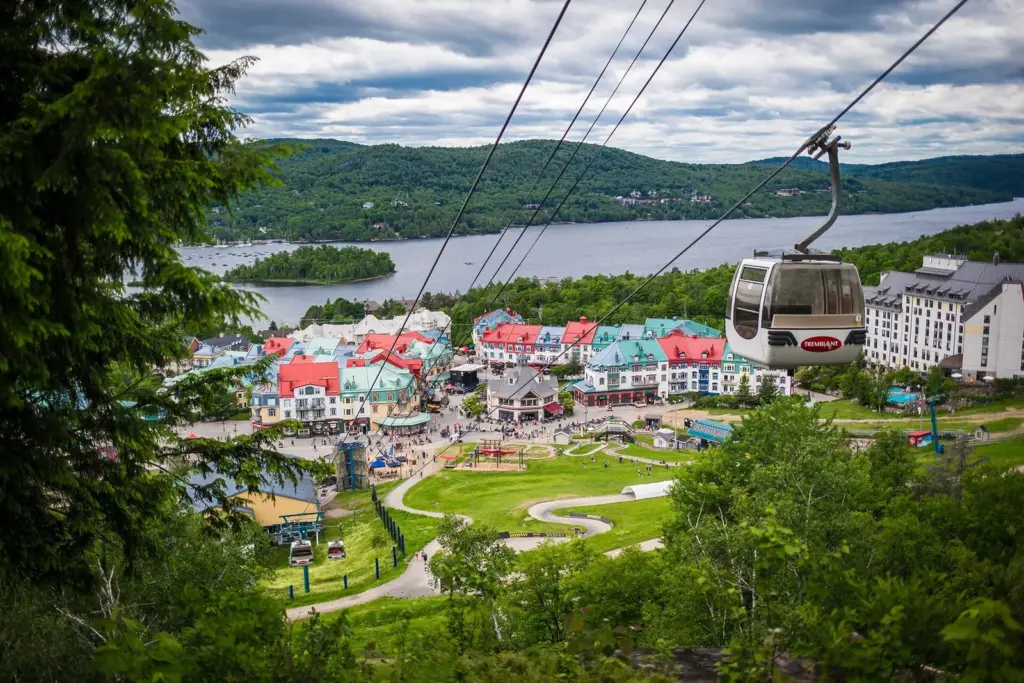
Tremblant is roughly 90 minutes from Montreal by car. Seasonal shuttles run from Montreal to the resort, including from the airport, and in 2026 the summer and autumn Getaway Shuttle service runs until 11 October. Check the resort’s website for the winter schedule before you book a ski trip around it.
Quebec City
You can fly from YUL to Quebec City, but by the time you have cleared security and waited at the gate, the train is usually just as fast. VIA Rail from Montreal’s Gare Centrale takes about 3 hours 26 minutes on average, and a car takes about three hours. Unless you have a same-ticket connection from an international flight, take the train.
Parking at Montreal Airport
If you are a local friend picking someone up, or a Quebec resident leaving your car, YUL has several lots in and around the terminal, from short-term parking close to the doors to the EconoParc P10 on English Avenue, which has a free shuttle to the terminal. Rates vary by lot, length of stay, season and how full the airport is, so there is no single price to quote. Booking online gets 10% off the regular rate in all of the airport’s lots, and in holiday periods booking ahead also secures a space.
For a quick pickup, the cheapest approach is to wait off-site until your passenger has their bags and is standing at the doors, rather than circling arrivals or paying for a short-term space.
Other Airports Near Montreal
Mirabel
Montréal–Mirabel, about 50 km north-west of the city, was built in the 1970s as Montreal’s future international airport. The plan never worked, passenger flights moved back to Dorval, and Mirabel now handles cargo and aerospace manufacturing. If an old guidebook or a relative mentions flying into Mirabel, it’s out of date: no scheduled passenger flights use it.
Plattsburgh, New York
Plattsburgh International Airport, across the US border about 100 km south of Montreal, markets itself to Montrealers as a cheaper way to reach US destinations on low-cost carriers. For American visitors coming to Montreal it can occasionally work out cheaper too, but add the drive, the border crossing (which can involve a long wait on summer weekends and holidays) and a car or shuttle. It is worth a look only if the fare difference is large.
Burlington, Vermont
Burlington is roughly two hours’ drive from Montreal. It is an option for New Englanders with a car, or for a road trip that combines Vermont and Quebec, but it is not a sensible airport for a city break without one.
Getting to Montreal by Train
For anyone coming from Ottawa, Toronto, Quebec City or New York, the train is a genuine alternative to flying, and it drops you right in the centre rather than 20 km out.
VIA Rail and Gare Centrale
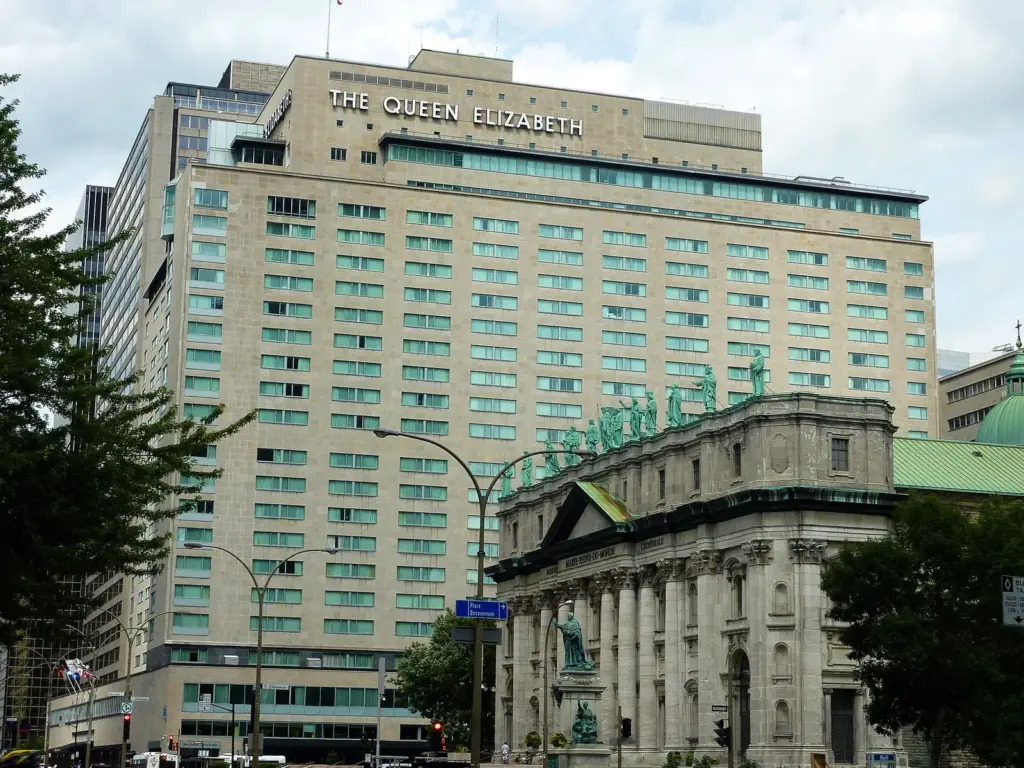
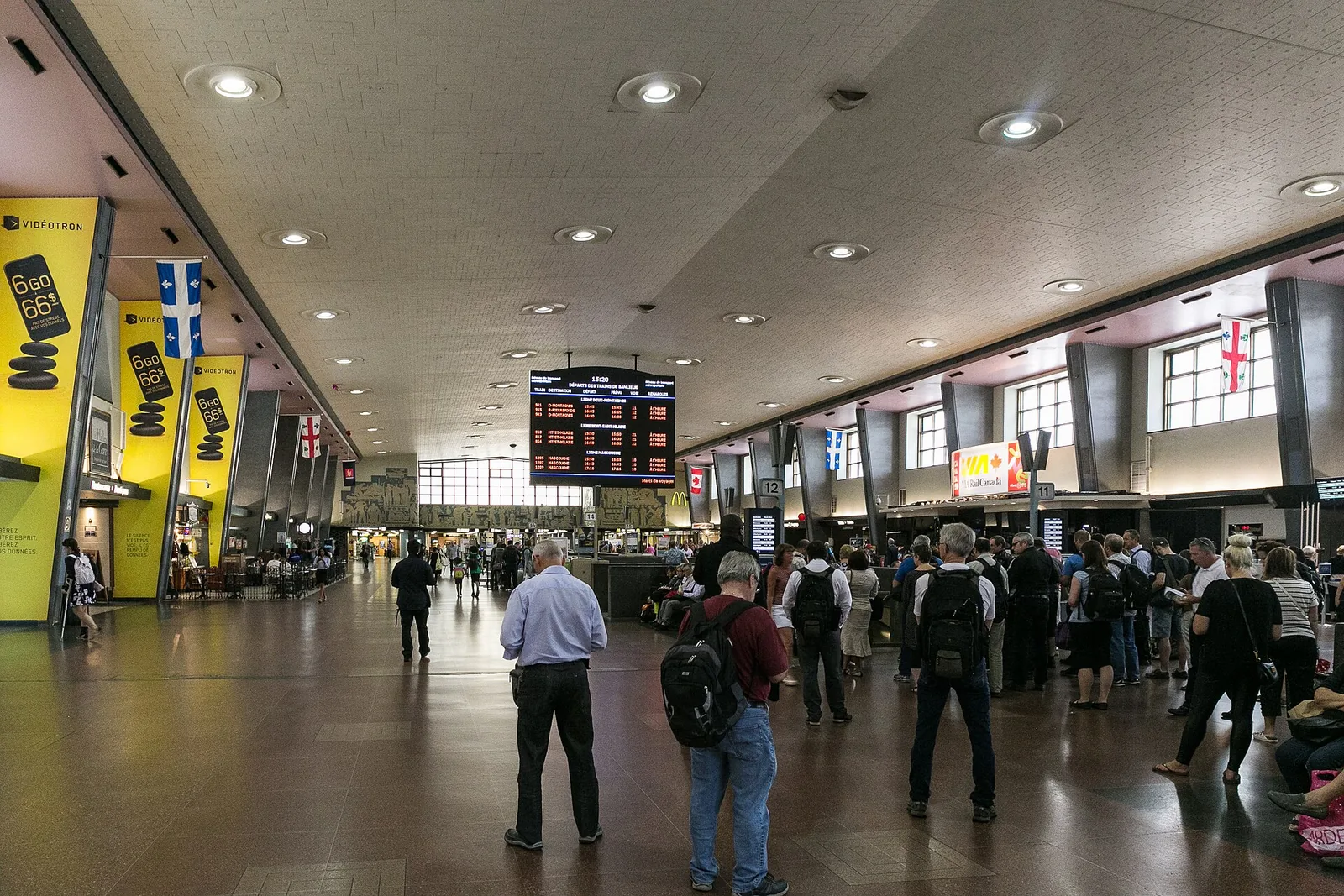
VIA Rail is Canada’s national passenger railway, and Montreal sits in the middle of its busiest corridor. Trains arrive at Gare Centrale (Central Station), downtown beneath the Queen Elizabeth hotel, and the concourse connects underground to Bonaventure metro (Orange line) and the REM’s Gare Centrale station. From there, most downtown hotels are a short walk or one or two metro stops away.
| Route | Typical journey time | Frequency | Notes |
|---|---|---|---|
| Ottawa – Montreal | About 2 h 4 min average | 35 departures a week | Faster door to door than flying |
| Quebec City – Montreal | About 3 h 26 min average | 34 departures a week | Easiest way between the two cities |
| Toronto – Montreal | About 5 hours | Several trains a day | Worth it over flying if you count airport time |
| New York – Montreal (Amtrak) | About 11 hours | Once a day | Slow, scenic, with a border stop |
Book early for the best fares on viarail.ca, especially on Friday and Sunday afternoons. The Toronto route is the closest call: a flight is quicker in the air, but by the time you add the trip out to two airports and security, the train’s centre-to-centre five hours, with Wi-Fi and a proper seat, often wins.
Amtrak’s Adirondack from New York
Amtrak’s Adirondack runs once a day between New York’s Penn Station and Montreal, following the Hudson River and the shore of Lake Champlain. It is not fast, and the border inspection adds time, but in October, with the leaves turning, it is one of the best-looking train rides in North America. Take it if the journey is part of the holiday, and fly if you just want to get there. Have your passport in your hand luggage: you will need it on board.
Getting to Montreal by Bus
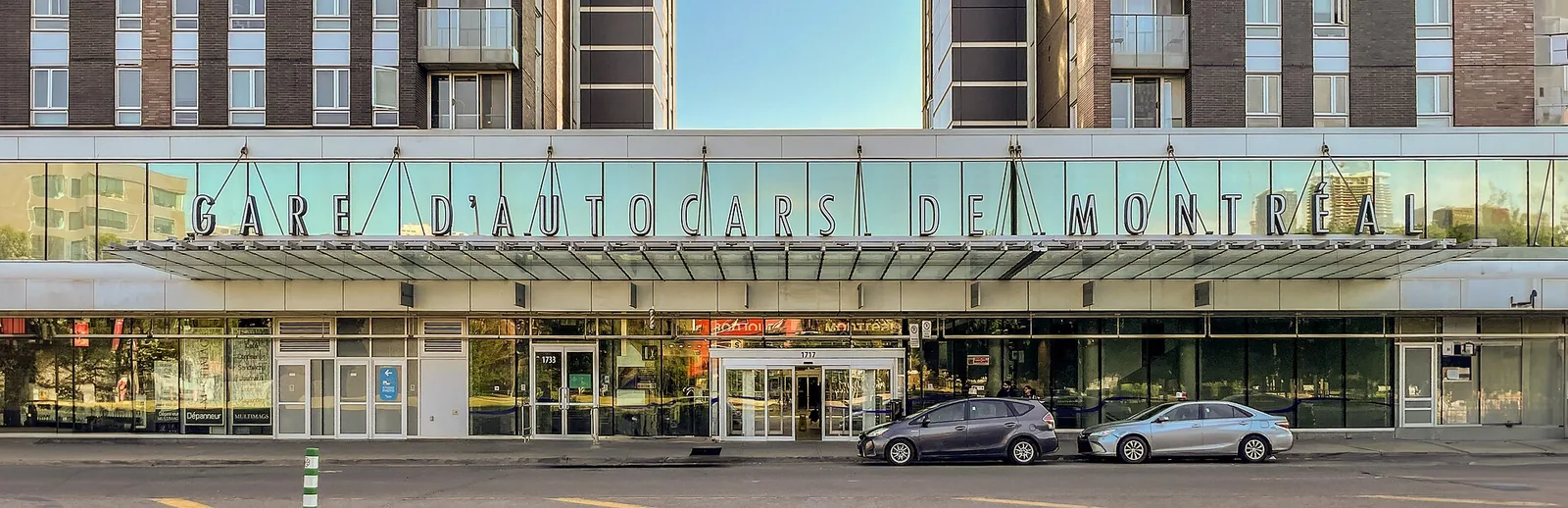
Intercity coaches arrive at the Gare d’autocars de Montréal, the city’s bus terminal on rue Berri, right next to Berri-UQAM metro, where the Green, Orange and Yellow lines meet. It is a convenient spot to arrive: the Quartier Latin is outside the door and Old Montreal is a 15-minute walk away.
Orléans Express runs the route to and from Quebec City and other towns along the St Lawrence. Other operators serve Ottawa, Toronto and US cities including New York and Boston. The line-up of companies and routes changes more often than the trains do, so compare on the day you book. Buses are usually the cheapest option and the slowest, and on the US routes the border stop means everyone gets off with their bags for inspection.
Driving to Montreal
Montreal is a comfortable day’s drive from much of the north-eastern US and from Ontario, and plenty of visitors arrive by car. The roads are good and well signed; the city itself is the difficult part.
| From | Approx. distance | Approx. driving time | Main route |
|---|---|---|---|
| Ottawa | 200 km | 2 hours | Highway 417 / A-40 |
| Quebec City | 250 km | 3 hours | A-40 or A-20 |
| Burlington, Vermont | 150 km | 2 hours plus border | I-89 / Route 133 |
| Boston | 500 km | 5 hours plus border | I-93 / I-89 |
| Toronto | 540 km | 5.5–6 hours | Highway 401 / A-20 |
| New York City | 600 km | 6–7 hours plus border | I-87 / A-15 |
Crossing the border by car
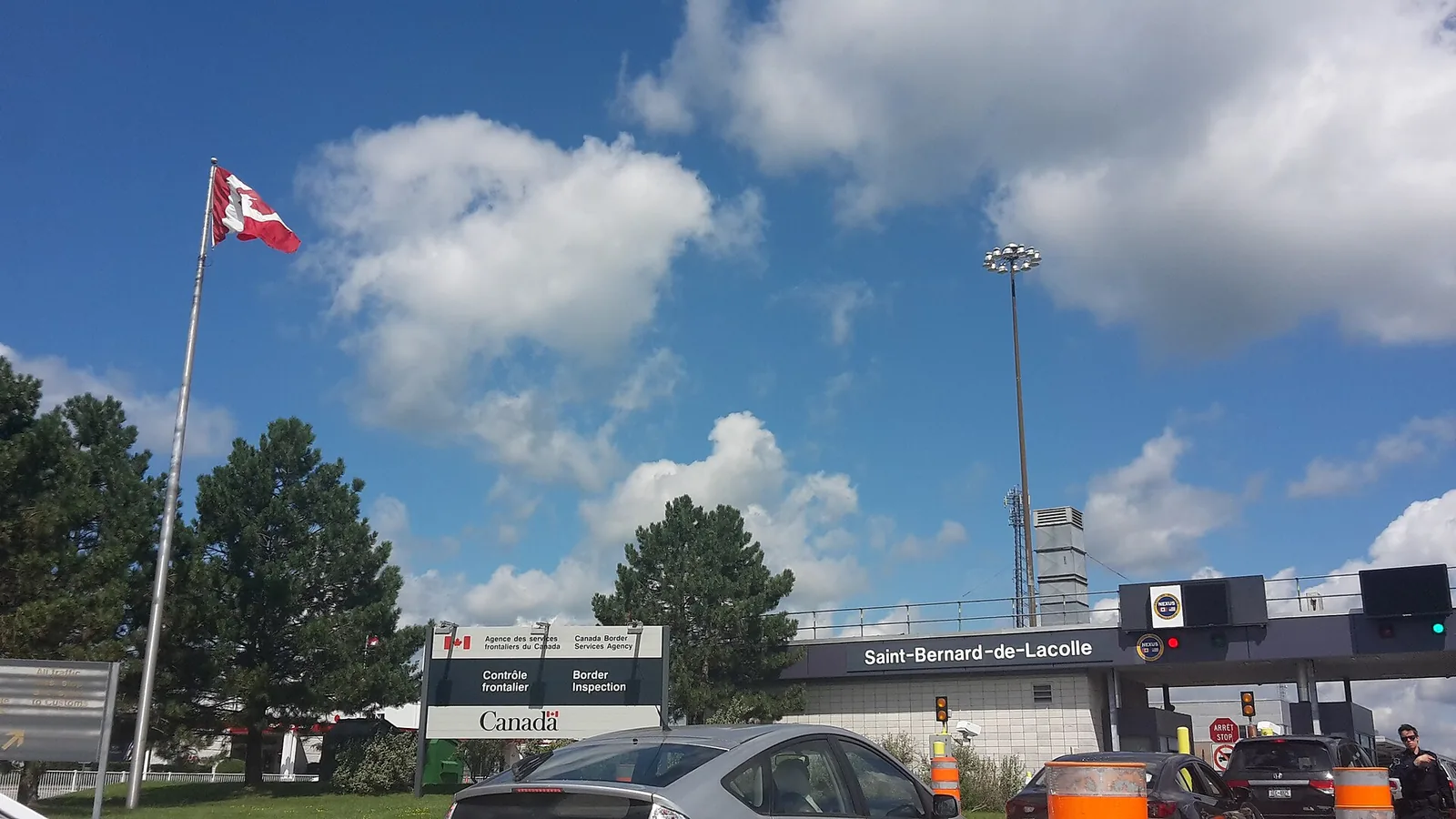
Most drivers from New York use Interstate 87, which becomes Autoroute 15 at the Lacolle crossing (Champlain on the US side). It is the busiest crossing on that route. From Vermont and Boston, drivers usually come through Highgate Springs and Saint-Armand/Philipsburg.
US citizens driving in need a passport, a passport card, a NEXUS card or an enhanced driver’s licence. Visitors of other nationalities need a passport and, if their country requires one, a visa (no eTA is needed for land arrivals). Expect questions about how long you are staying, where, and what you are carrying. Declare alcohol, food and any firearms, and leave cannabis at home. Queues are longest on Friday evenings heading north and Sunday afternoons heading south, and on long weekends in both countries. The CBSA publishes live wait times online, so check before you set off.
Driving and parking in the city
The rule every US driver needs to know: you can’t turn right on a red light anywhere on the island of Montreal, even though you can in most of the rest of Quebec. Road signs are in French (“arrêt” is stop, “sortie” is exit), distances and speeds are in kilometres, and the weekday rush hours run roughly 07:00–09:00 and 16:00–18:00, with roadworks adding delays through much of the warm season.
Parking is the bigger headache. Street parking is metered in the centre, at roughly $2.50 to $4.25 an hour depending on the zone, and the signs listing when you can and can’t park (including snow-clearing restrictions in winter) are notoriously hard to read. Most hotels charge extra for parking. Our advice is to park once when you arrive and leave the car there until you drive out of town.
Arriving in Winter
Montreal’s winter runs roughly from mid-November to mid-March, and January averages about −9 °C before windchill. The airport and the city are well used to it: snow is cleared quickly, the 747 keeps running and flights generally operate. What changes is time. Planes need de-icing before take-off, which can add a wait on the tarmac, and the drive to downtown slows in a storm.
Build in slack on both ends. Pack your warmest layer in your hand luggage so you aren’t standing at the bus stop in a light jacket, and if you have a tight onward connection, choose a longer layover. The Montreal in winter guide covers what to wear and what to do once you’re here, and the best time to visit Montreal explains how the seasons change prices and crowds.
Arriving During a Festival
In late June and July, Montreal’s big summer events fill hotels and the airport. The International Jazz Festival runs from 25 June to 4 July in 2026, and Just for Laughs and Osheaga follow. The practical effect for arrivals is simple: taxi lines at YUL get longer and ride-share prices climb when several flights land together, so the 747 becomes relatively better value. Moving Day on 1 July, when a huge share of Montreal’s leases turn over at once, also clogs streets with vans. See the Montreal festivals calendar before you pick your dates.
Your First Hour in the City
Arriving well sets up the whole trip. A few habits make the difference:
- Use the day pass you just bought. The 747 fare covers 24 hours of transit, so plan a busy first afternoon: the metro to Mount Royal or Old Montreal costs nothing extra. Our Montreal itinerary has day plans that start from wherever you land.
- Drop your bags, then eat. Most hotels will hold luggage before check-in. A bagel, a smoked meat sandwich or a poutine is never far away; see where to eat in Montreal.
- Say “Bonjour, hi”. That’s the standard bilingual greeting, and staff will switch to English as soon as you reply in English. Visitors are not required to speak French.
- Remember tax and tip. Prices on shelves and menus don’t include sales tax, and tipping works as it does in the US.
- Don’t over-plan day one. Keep the first evening close to your hotel and save the big sights on our things to do in Montreal list for when you’re rested.
Common Mistakes at Montreal Airport
- Looking for a REM train at arrivals. There isn’t one yet. Take the 747 or a taxi.
- Buying an eTA from an unofficial website. The real one costs $7 CAD on the Government of Canada site.
- Taking the 747-1 at rush hour when the 747-2 and the metro would save half an hour.
- Arriving two hours before a US flight at a busy time. Preclearance adds a border inspection. Give it three.
- Paying for a taxi on the meter to downtown. The flat fare applies; check the zone before you set off.
- Bringing cannabis across the border. Legal in Canada, illegal to carry across in either direction.
- Collecting a rental car on arrival for a city-only stay, then paying days of parking for it.
- Trying to use an evening pass on the 747. It isn’t accepted; 24-hour, 3-day and weekend passes are.
Frequently Asked Questions
What is the main Montreal airport called?
Montreal’s passenger airport is Montréal–Pierre Elliott Trudeau International Airport, usually shortened to Montréal–Trudeau, with the code YUL. It is in Dorval, about 20 km west of downtown, and was itself called Dorval Airport until 2004. Mirabel, the city’s other airport, no longer has scheduled passenger flights. If you are booking a flight to Montreal, YUL is the airport you want.
How do I get from Montreal airport to downtown?
The 747 bus runs 24 hours a day from outside arrivals and costs $11.25, which includes 24 hours of unlimited bus and metro travel. The 747-1 goes downtown in about 45 to 70 minutes; the 747-2 goes to Lionel-Groulx metro in about 30 to 35 minutes. A taxi to downtown is a fixed $49.45 from 05:00 to 23:00 and $56.70 overnight.
Does the REM go to Montreal airport?
Not yet. The REM light metro already serves Brossard, Deux-Montagnes and Anse-à-l’Orme, but its airport station is still under construction and is targeted to open at the end of 2027. Until then, the 747 bus is the only public transport link between YUL and downtown Montreal, and pages telling you otherwise are out of date or simply wrong.
How much is a taxi from Montreal airport?
Taxis from Montréal–Trudeau to downtown charge a flat fare of $49.45 between 05:00 and 23:00 and $56.70 between 23:00 and 05:00, as of September 2026. Outside the downtown zone the meter runs from $4.10 plus $2.05 per kilometre by day. Tip is extra, usually 10 to 15%. Take cabs from the official rank outside arrivals only.
How early should I get to Montreal airport?
Aim for two hours before a flight within Canada and three hours before a US or international flight. US-bound passengers clear American immigration and customs at YUL before boarding, which adds a second queue. On weekday afternoons allow up to 70 minutes on the 747-1 from downtown, or take the metro to Lionel-Groulx and the faster 747-2.
Do I need an eTA to fly to Montreal?
Citizens of visa-exempt countries such as the UK, Australia and most of the EU need an Electronic Travel Authorization to fly into Canada. It costs $7 CAD and is applied for online through the Government of Canada. US citizens don’t need one, and US green card holders are exempt but must carry their card. No eTA is needed when arriving by land.
Is there a train from Montreal airport?
There is no train directly from the terminal yet. A free shuttle from Door 8 on the departures level runs to Dorval VIA Rail station, where trains to Ottawa and Toronto stop, so you can connect straight onto the rail network. For downtown Montreal the 747 bus is quicker and simpler than any rail connection until the REM airport station opens.