Getting around Montreal is easy once you understand three things: the metro does almost everything, the fares were reset on 1 July 2026, and the city’s newest train, the REM, does not yet go to the airport, whatever you may have read. With four colour-coded metro lines, a 24-hour airport bus that doubles as a day pass, a bike-share with stations on half the street corners, and a compact centre you can cross on foot in twenty minutes, most visitors never need a car. Below is how each part of the system works, what it costs as of September 2026, which ticket to buy, how to get in from the airport, and the handful of rules and quirks that catch people out, from the missing Line 3 to the right turn on red you’re not allowed to make.
If you’re still planning where to stay, choose somewhere within a few minutes’ walk of a metro station; our guide to where to stay in Montreal lists the stations for each neighbourhood. Everything else follows from that.
Getting Around Montreal: The Short Version
- Use the metro. Four lines — Green, Orange, Yellow and Blue — reach almost every place a visitor needs. It runs until about 00:30, later on Saturdays.
- Tap your card. Contactless credit and debit cards work at metro turnstiles and bus readers for a single fare of $3.75. For passes, buy an OPUS card ($6) or a pass at a station machine.
- Buy a pass if you’ll ride three times in a day. A 24-hour pass is $11.25, a 3-day pass $21.75 and a weekend pass $17.00.
- From the airport, take the 747 bus. It runs 24 hours a day, costs $11.25 and includes 24 hours of unlimited travel. A taxi to downtown is a fixed $49.45 by day.
- The REM doesn’t serve the airport yet. Its airport station is under construction, targeted for the end of 2027.
- Walk the centre. Downtown to Old Montreal is 15 to 20 minutes on foot, and the Plateau and Mile End are best explored on foot.
- Use BIXI in the warmer months. The full bike-share season runs from 15 April to 15 November.
- Don’t drive in the city. Parking is scarce and there’s no right turn on red anywhere on the island.
The Metro
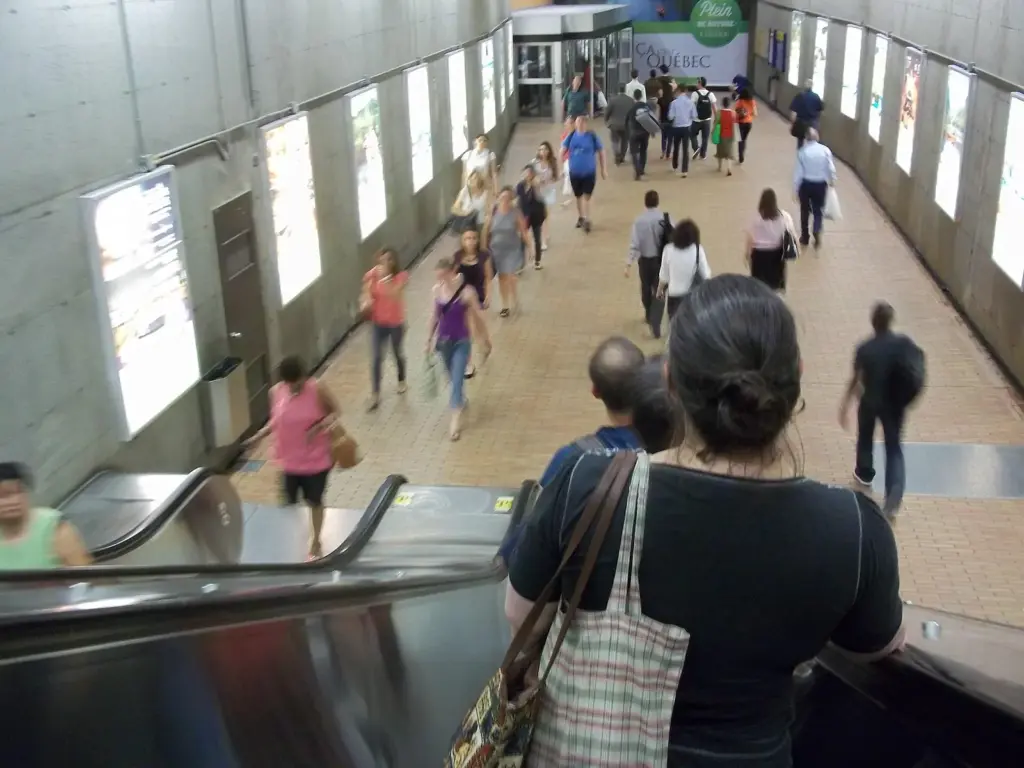
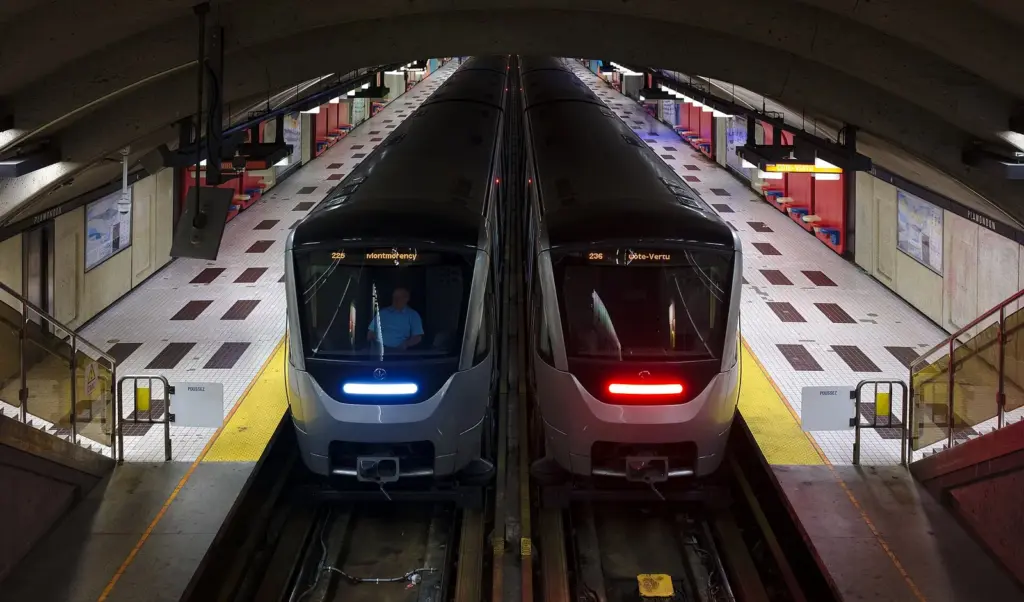
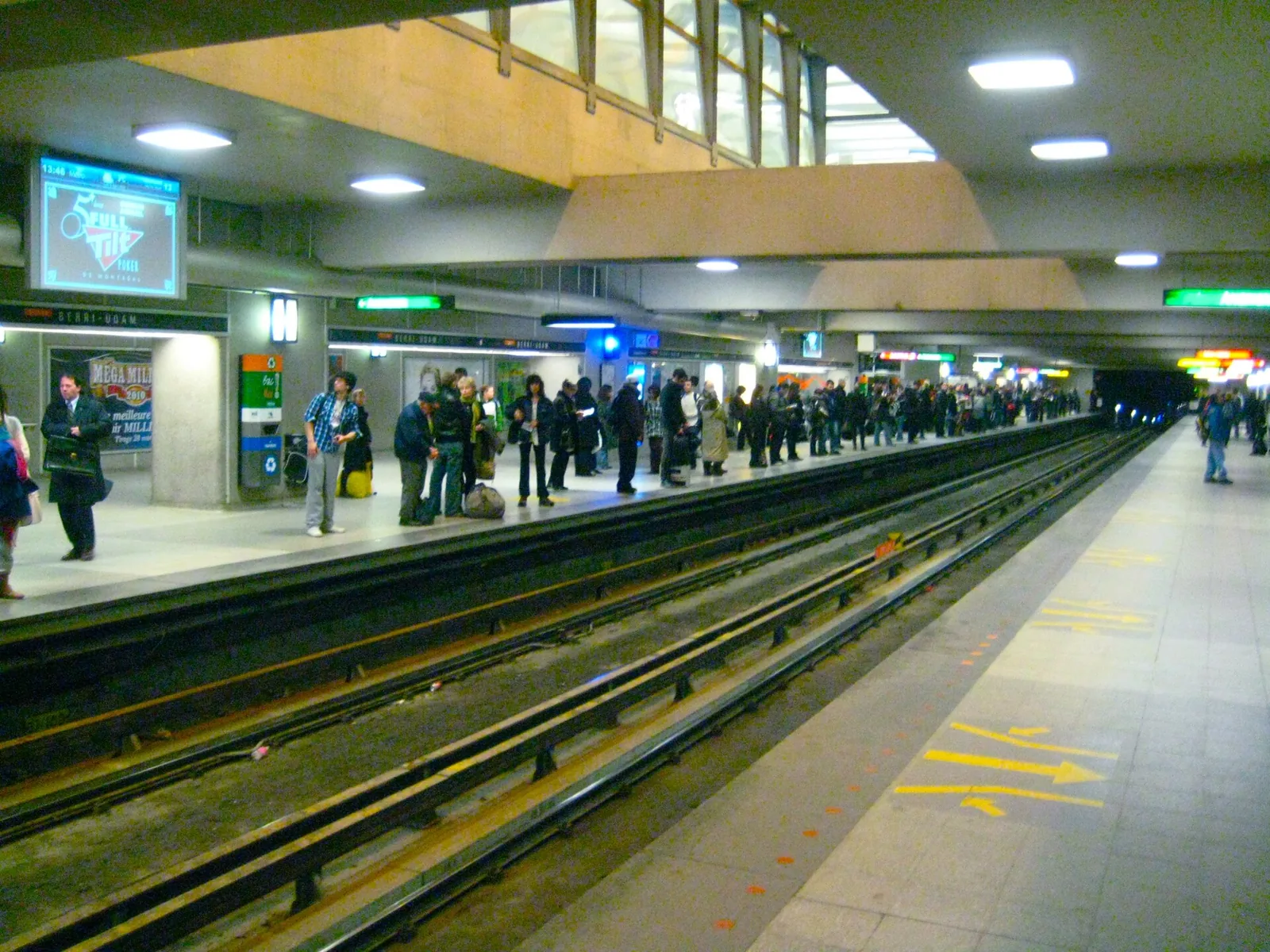
The Montreal metro is run by the STM (Société de transport de Montréal) and is the backbone of getting around the city. It has four lines and 68 stations, and it runs entirely underground, so snow, ice and summer storms don’t affect it. The trains run on rubber tyres, which makes them quieter than most subways, and many of its stations are known for their distinctive architecture.
The lines are numbered and colour-coded: Line 1 Green, Line 2 Orange, Line 4 Yellow and Line 5 Blue. There is no Line 3. It was planned in the 1960s and never built, and its number was never reused, which is why the numbering jumps.
| Line | Termini | Useful stations for visitors |
|---|---|---|
| 1 Green | Angrignon – Honoré-Beaugrand | Atwater, Guy-Concordia, Peel, McGill, Place-des-Arts, Saint-Laurent, Berri-UQAM, Beaudry, Papineau, Pie-IX and Viau (Olympic Park), Lionel-Groulx, Charlevoix, Verdun, De L’Église |
| 2 Orange | Côte-Vertu – Montmorency | Lucien-L’Allier, Bonaventure (Gare Centrale), Square-Victoria–OACI, Place-d’Armes, Champ-de-Mars, Berri-UQAM, Sherbrooke, Mont-Royal, Laurier, Jean-Talon, Lionel-Groulx, Georges-Vanier, Place-Saint-Henri |
| 4 Yellow | Berri-UQAM – Longueuil–Université-de-Sherbrooke | Jean-Drapeau (Parc Jean-Drapeau, the Biosphère, La Ronde, the Grand Prix circuit) |
| 5 Blue | Snowdon – Saint-Michel | Côte-des-Neiges (Saint Joseph’s Oratory), Édouard-Montpetit (REM connection), Outremont, Jean-Talon, De Castelnau |
How the lines fit together
The Orange line is the one visitors use most. It’s shaped like a U: one arm runs north through the Plateau and Little Italy, the bottom of the U runs through Old Montreal and downtown, and the other arm runs out through Saint-Henri. The Green line runs east–west under downtown, from the Olympic Park in the east to Verdun in the south-west. The two cross at Berri-UQAM in the east of downtown and Lionel-Groulx in the south-west. The short Yellow line runs from Berri-UQAM under the river to Parc Jean-Drapeau and on to Longueuil on the South Shore. The Blue line is a northern cross-town line, linking Côte-des-Neiges and the Oratory with Outremont and Little Italy, where it meets the Orange line at Jean-Talon.
Berri-UQAM, where the Green, Orange and Yellow lines meet, is the key interchange. Learn where it is and you’ll never be more than one change from anywhere.
How to ride
Directions are signed by the name of the station at the end of the line, not by compass points. To go north on the Orange line from downtown towards the Plateau, follow signs for Montmorency; to go the other way, follow Côte-Vertu. (Confusingly, because the Orange line is a U, both directions take you through downtown; check the station list on the platform.) Tap your card or ticket at the turnstile on the way in; you don’t need to tap out.
The metro runs until roughly 00:30, a little later on Saturday nights. Don’t count on catching a train after that; plan a taxi, Uber or night bus instead. Current service information is on the STM website.
Metro etiquette and safety
The Montreal metro is clean, busy and generally safe, and a few habits will help you blend in. Let passengers off before you board, move away from the doors once you’re inside, and take your backpack off in crowded carriages. Seats near the doors are reserved for older passengers, pregnant women and people with disabilities. Weekday rush hours, roughly 07:00 to 09:00 and 16:00 to 18:00, are the most crowded times, especially on the Orange and Green lines through downtown, so if you can, travel outside them.
As in any big city, keep an eye on your belongings in crowded trains and stations, particularly during festivals and after big events, when thousands of people pour into the same stations at once. Stations have staffed booths and emergency intercoms, and trains have emergency alarms. If you feel unwell or need help, speak to the station staff; they’ll switch to English readily.

Fares and Tickets
Public transit fares in the Montreal region are set by the ARTM (the regional transit authority), not by the STM, and are organised by zone. Zone A covers the whole island of Montreal, which is all most visitors need. The current fares took effect on 1 July 2026. If a website quotes lower prices, it’s out of date.
| Ticket | Price (Zone A) | Valid for | Best for |
|---|---|---|---|
| Single fare | $3.75 | One trip, including transfers | Occasional rides |
| 24-hour pass | $11.25 | Unlimited travel for 24 hours | Three or more rides in a day |
| 3-day pass | $21.75 | Unlimited travel for 3 days | A typical long weekend |
| Weekend pass | $17.00 | Friday 16:00 to Monday 05:00 | Friday-to-Sunday trips |
| Evening pass | $6.75 | 18:00 to 05:00 | Nights out, festivals |
| 747 airport bus | $11.25 | Includes 24 hours of network travel | Arriving from YUL |
| OPUS card | $6 (one-off) | Reusable card to load passes | Anyone buying passes |
How to pay
The simplest option for a single trip is to tap a contactless credit or debit card at the metro turnstile or the bus fare reader. For passes, buy an OPUS card, the region’s reusable transit card, from a machine or ticket booth in any metro station for $6, and load your pass onto it. On the 747 airport bus, you can also pay the $11.25 fare in cash on board.
Which ticket should you buy?
Do the maths before you buy. A 24-hour pass costs exactly the same as three single fares, so it pays for itself from the third ride. A 3-day pass beats buying singles once you take six or more rides. If you arrive on the 747, your ticket already covers your first 24 hours, and the 747 also accepts 24-hour, 3-day and weekend passes (but not the evening pass). For a Friday-to-Sunday trip, the weekend pass is usually the best value of all.
Buying tickets at the station
Every metro station has ticket machines, and most have a staffed booth. The machines sell single fares and passes, load passes onto OPUS cards and switch between French and English at the touch of a button. If you’re buying a pass, get the OPUS card first and load the pass onto it; keep the card afterwards, as it’s reusable and you can top it up on your next visit. For a single ride, you don’t need a machine at all: just tap a contactless credit or debit card at the turnstile.
On buses, tap your card or pass on the reader beside the driver every time you board, including when you transfer from the metro. Keep your card with you until the end of your trip, as it’s your proof of payment.
Children and seniors
Children aged 11 and under ride free at all times when accompanied by someone aged 14 or over with a valid fare; one adult can bring up to five children aged 6 to 11. Free transit for people aged 65 and over is only for Montreal residents with a special photo OPUS card, so visiting seniors pay the regular fares. Details are on the ARTM website.
Buses
The STM also runs around 220 bus routes, which fill the gaps between metro stations. Visitors mostly need only a few of them:
- 747 — the 24-hour airport bus (details below).
- 55 — runs along boulevard Saint-Laurent, “the Main”, through Chinatown, the Plateau, Mile End and Little Italy. Handy for the bagel bakeries and Schwartz’s.
- 11 — climbs Mount Royal from Mont-Royal metro, stopping near Beaver Lake and the lookouts. The easy way up the mountain.
Board at the front and tap your card or ticket on the reader. A single fare includes transfers between buses and the metro for a limited period, so you don’t pay again if you change. After the metro closes, a network of night buses keeps the main corridors running; check the STM’s trip planner for the route you need.
Getting Around Montreal from the Airport
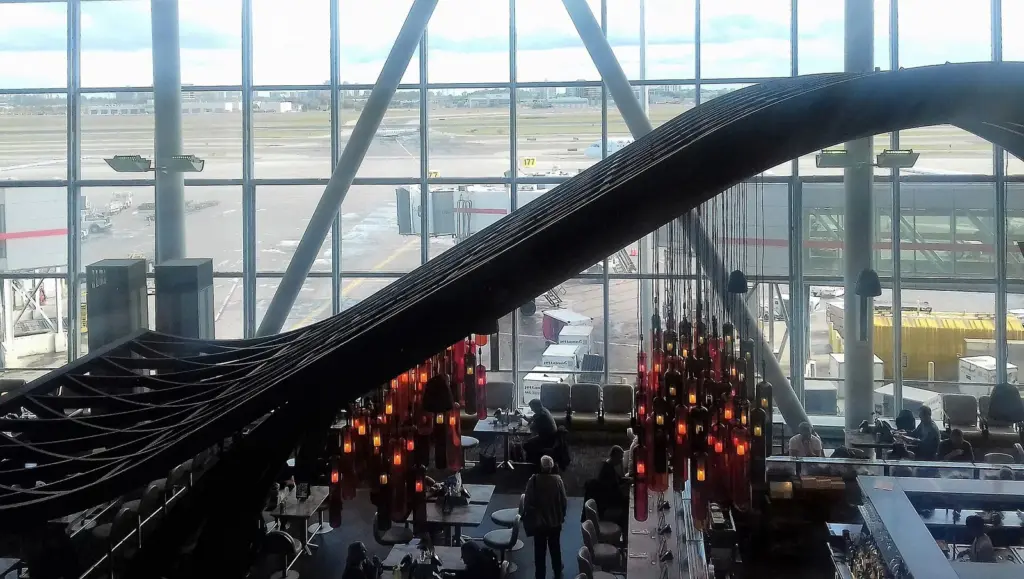
Montréal–Trudeau International Airport (YUL) has a single passenger terminal, on the island west of downtown. You have four realistic options for getting into the city.
The 747 bus
The 747 runs 24 hours a day, every day, and costs $11.25, which includes 24 hours of unlimited travel on the bus and metro network, so your first day’s travel is covered. You can pay in cash on board or tap a card. There are two branches:
- 747-1 runs downtown with 12 stops, taking roughly 45 to 70 minutes depending on traffic. Since 26 January 2026, its downtown terminus has been on boulevard René-Lévesque at rue Berri, near Berri-UQAM metro.
- 747-2 runs to Lionel-Groulx metro station, where the Green and Orange lines meet, with one stop, taking roughly 30 to 35 minutes. From there, the metro takes you anywhere. It’s often the fastest option in heavy traffic, and ideal if you’re staying in Griffintown, Saint-Henri or anywhere on the Orange or Green lines.
Taxi
Taxis between the airport and downtown Montreal charge a fixed fare: $49.45 between 05:00 and 23:00, and $56.70 between 23:00 and 05:00, according to the airport’s official information. For destinations outside downtown, taxis use the meter: a $4.10 starting fare by day ($4.70 at night), plus $2.05 per kilometre ($2.35 at night) and $0.77 per minute of waiting ($0.89 at night). Take taxis only from the official rank outside arrivals. Tipping is customary, as in restaurants.
Ride-hailing and car rental
Uber also operates in Montreal, including at the airport; fares vary with demand. Rental car desks are at the airport, but unless you’re heading straight out of the city on a day trip, you won’t need a car in Montreal.
What about the REM?
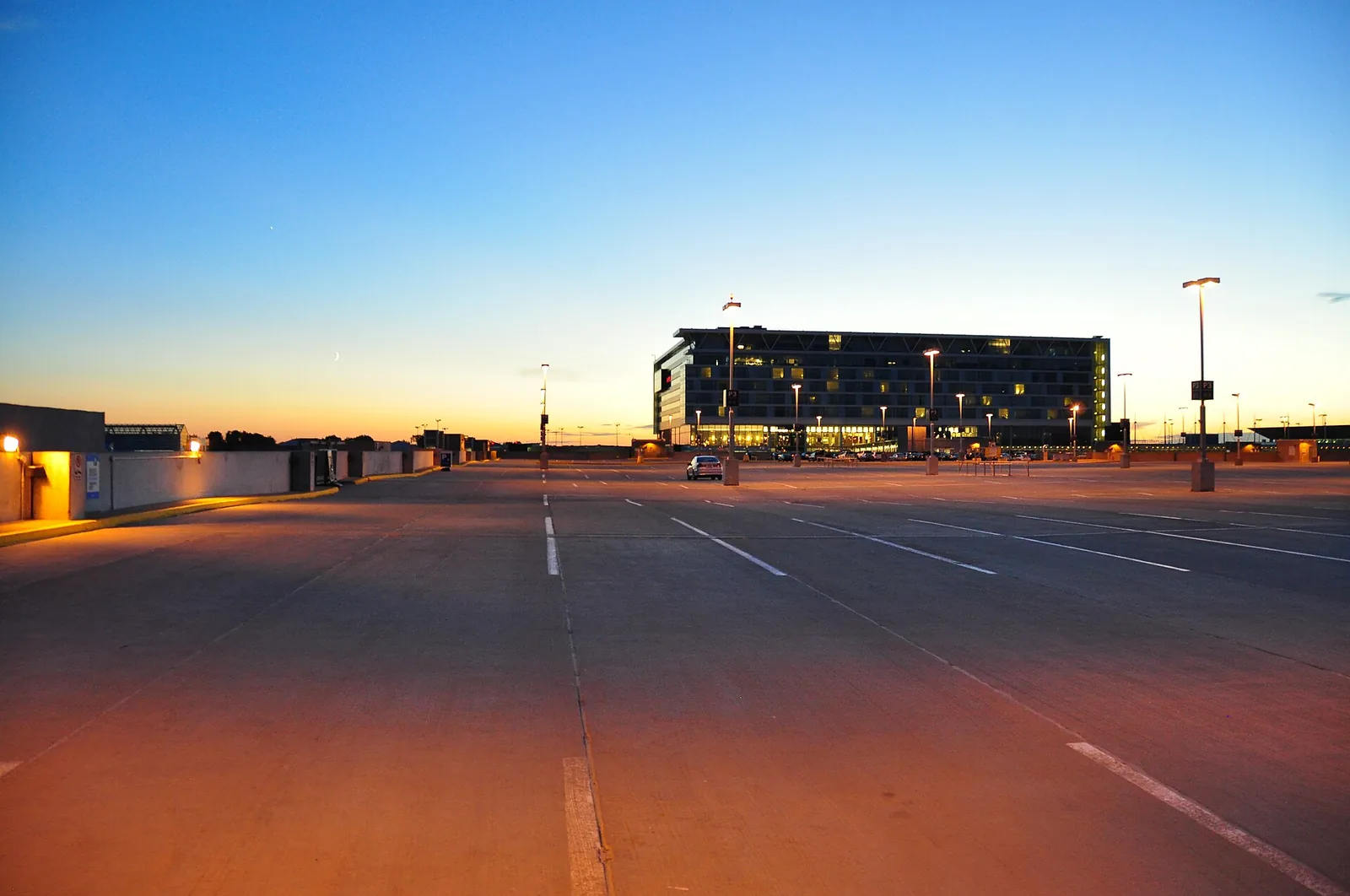
Several websites claim you can take the REM light rail from the airport. You can’t. The REM’s airport station is still under construction and is targeted to open at the end of 2027. Until then, the 747 is the public transport link.
| Option | Cost | Time to downtown | Notes |
|---|---|---|---|
| 747-1 bus | $11.25 | About 45–70 min | 24/7; includes 24 h of network travel |
| 747-2 bus to Lionel-Groulx | $11.25 | About 30–35 min, then metro | One stop; fastest in traffic |
| Taxi | $49.45 (05:00–23:00); $56.70 (23:00–05:00) | Depends on traffic | Fixed fare to downtown; tip extra |
| Uber | Varies | Depends on traffic | Fares rise with demand |
| REM | — | — | Not serving the airport until end of 2027 at the earliest |
The REM: What It Does and Doesn’t Do
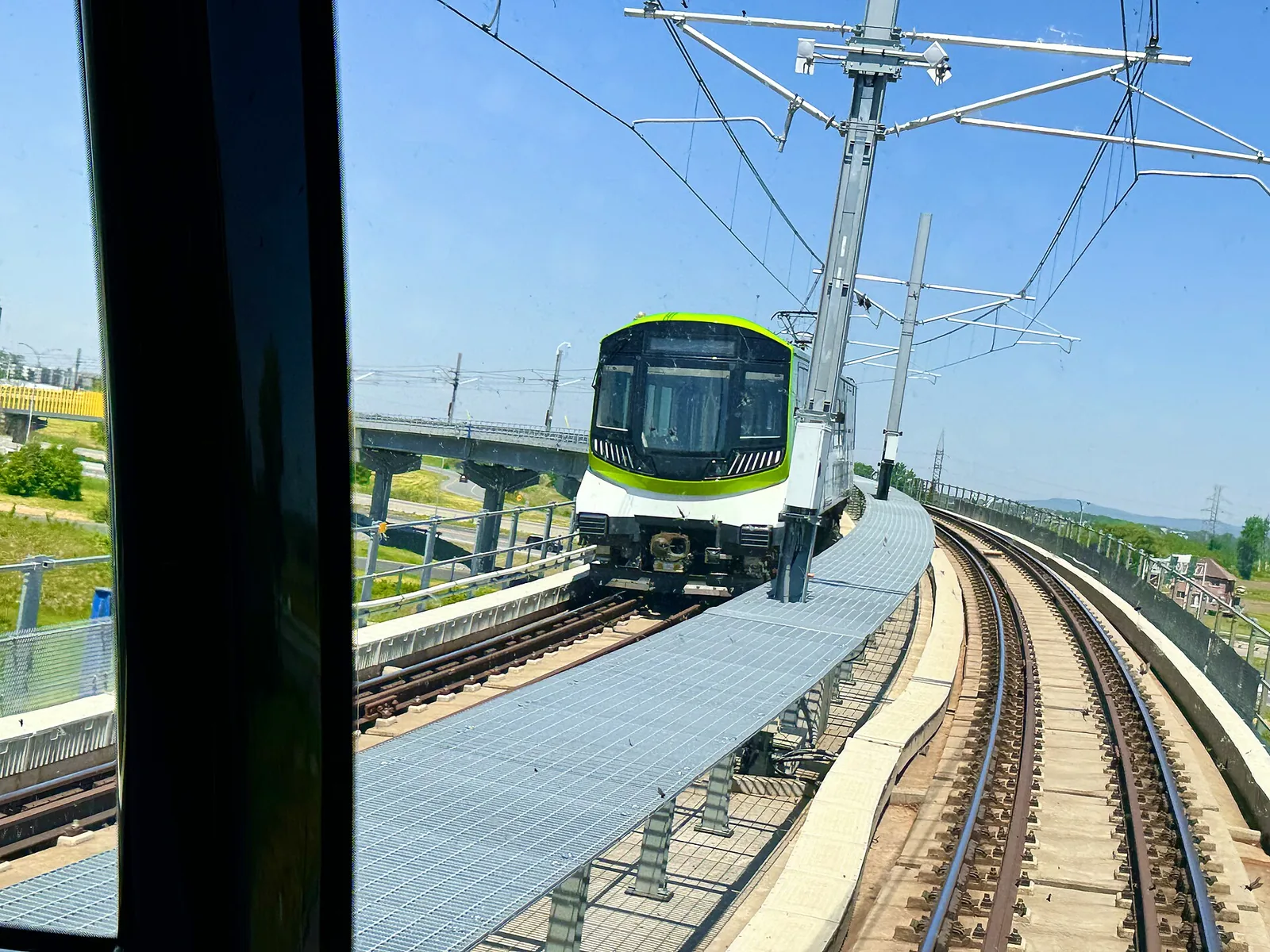
The REM (Réseau express métropolitain) is a new automated light-metro network, and it’s easy to misunderstand. As of September 2026, it’s in partial service between three end points: Brossard on the South Shore, Anse-à-l’Orme in the West Island and Deux-Montagnes to the north-west. The Anse-à-l’Orme branch opened on 18 May 2026. Its central stations include Île-des-Sœurs, Gare Centrale, McGill and Édouard-Montpetit, and the airport branch is still being built.
For most visitors, the REM is useful mainly for its connections: at Gare Centrale it links to Bonaventure metro (Orange line) and VIA Rail; at McGill to the Green line; and at Édouard-Montpetit to the Blue line. Unless you’re staying on the South Shore, in the West Island or near one of its stations, you probably won’t use it much. It uses the region’s integrated fare system, so check the zone before riding beyond the island. Current information is on the REM website.
A REM ride for the view
If you like trains, the REM makes a surprisingly good short excursion. Board at Gare Centrale or McGill and ride south: the automated, driverless trains run on to Île-des-Sœurs (Nuns’ Island) and cross the St Lawrence on the Samuel De Champlain Bridge towards Brossard, with wide views of the river and the downtown skyline along the way. Sit at the front of the train, where there’s no driver’s cab, for the best view. Remember that Brossard is off the island, so you’ll need a fare valid beyond Zone A; check before you ride. For most sightseeing, though, the metro remains the network you’ll actually use.
BIXI and Cycling
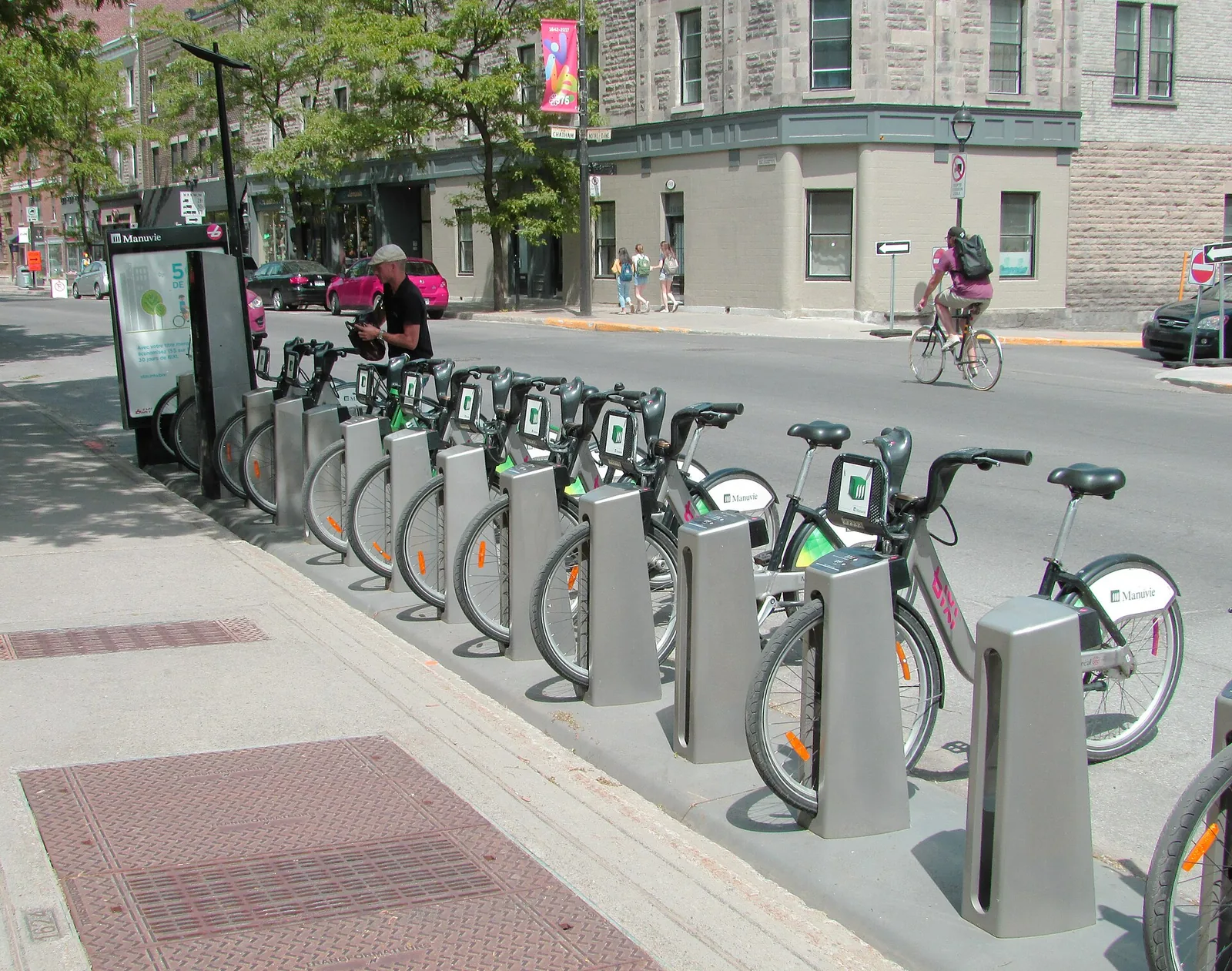
Montreal is one of North America’s most bike-friendly cities, and BIXI, its bike-share, is one of the best ways to get around from spring to autumn. There are stations all over the central neighbourhoods, and both classic bikes and e-bikes are available in the main season.
- Price: there’s no day pass. You pay $1.60 to unlock a bike, plus $0.21 a minute on a classic bike or $0.36 a minute on an e-bike, with tax extra.
- Season: the full season runs from 15 April to 15 November. From 16 November to 14 April, a reduced winter service runs with 234 stations and no e-bikes.
- How it works: unlock a bike with the BIXI app or at the station terminal, ride, and dock it at any station. Check the app for stations with free docks before you set off.
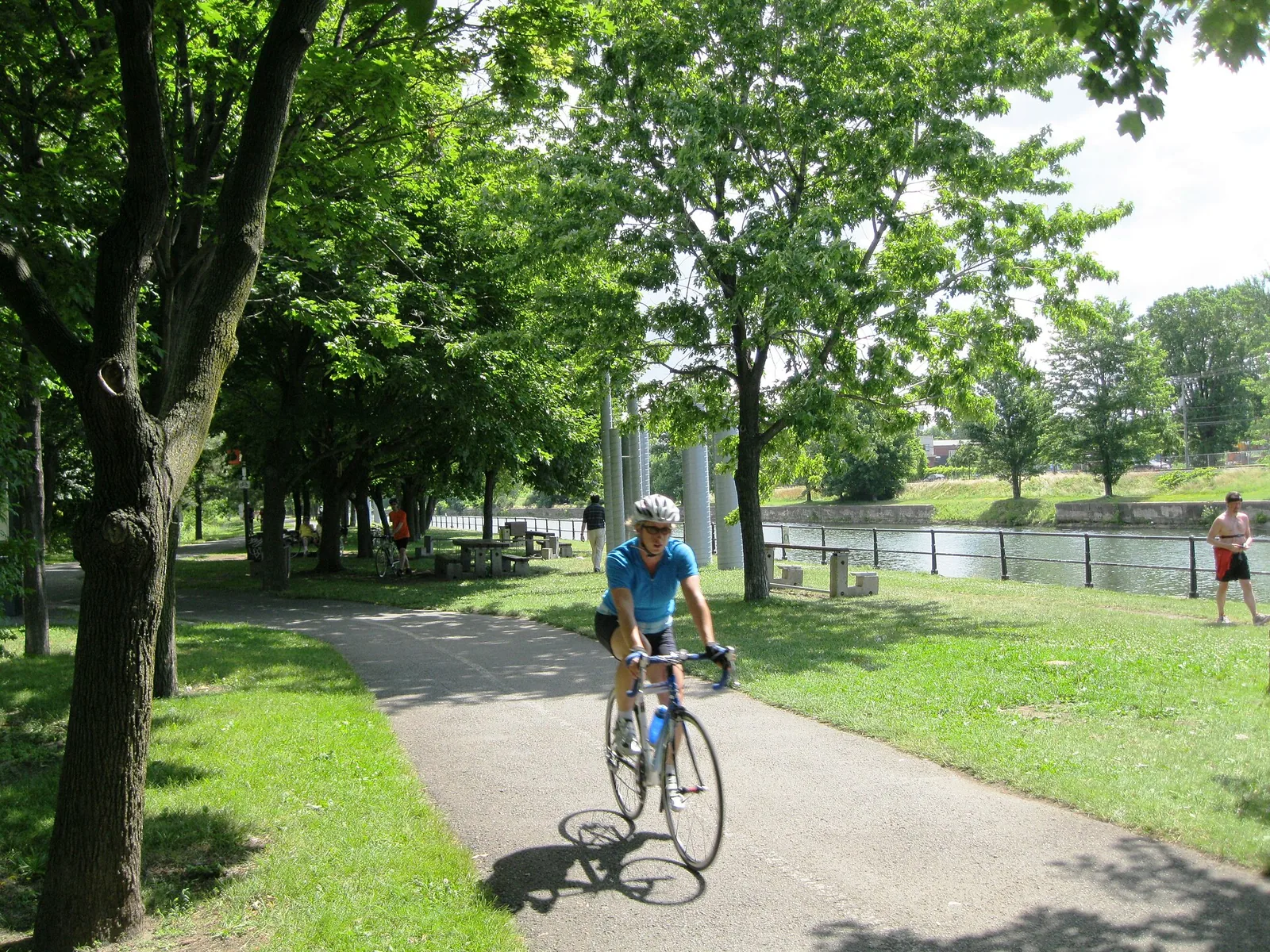
The best ride for visitors is the Lachine Canal path, which runs flat and car-free for 14.5 km from the Old Port to Lake Saint-Louis, passing Atwater Market about half an hour from the start. Parc Jean-Drapeau’s islands and the Plateau’s bike lanes are also good. Mount Royal is a real climb; an e-bike helps.
Walking and the Underground City
Montreal’s centre is very walkable. Downtown to Old Montreal is a 15- to 20-minute walk downhill, and the Plateau, Mile End and Old Montreal are best explored on foot, with something to look at on every corner. Comfortable shoes are essential: Old Montreal’s cobbles are hard on thin soles, and Mount Royal involves a genuine climb.
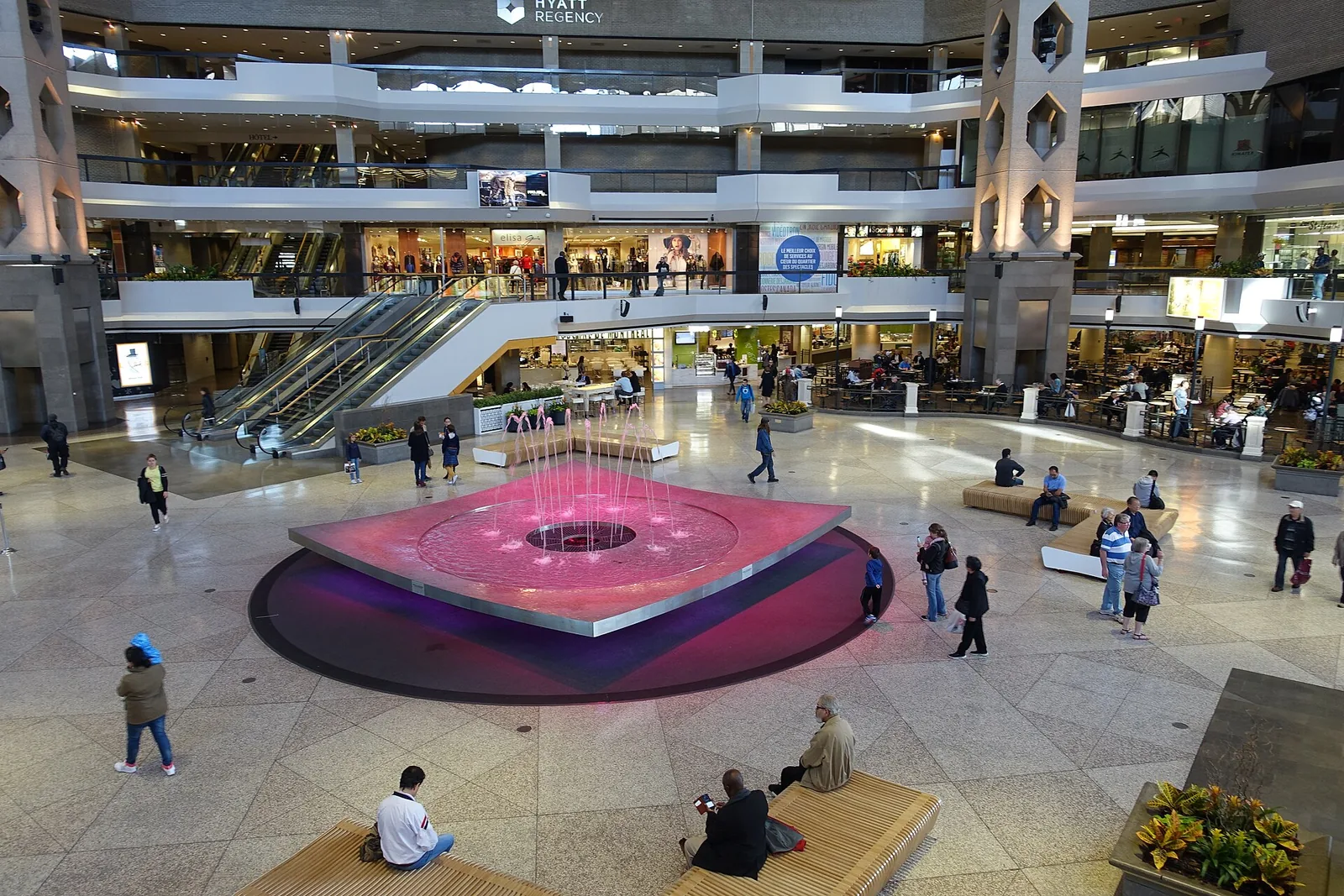
Downtown, the RÉSO (the “Underground City”) links about 33 km of pedestrian passages, shopping centres, office buildings, hotels and metro stations. It isn’t one continuous underground city: it’s a series of segments joined through buildings and stations, each with its own opening hours, broadly following the metro schedule. It’s free, and in winter it’s the best way to cross downtown without a coat. In summer, the street is usually quicker.
Handy walking times
Some of the walks visitors ask about most, from the nearest metro station:
- Downtown to Old Montreal: 15 to 20 minutes, downhill via Côte du Beaver Hall to Square Victoria.
- Place-d’Armes metro to Notre-Dame Basilica: about 5 minutes.
- Place-d’Armes to Chinatown: 5 to 10 minutes.
- Champ-de-Mars metro to the Old Port’s Clock Tower: about 12 minutes.
- Mont-Royal metro to La Banquise on rue Rachel Est: about 10 minutes.
- Laurier metro to the Mile End bagel bakeries: about 15 minutes.
- Lionel-Groulx metro to Atwater Market: about 10 minutes.
Many of these walks end somewhere good to eat; our Montreal food guide has the addresses and hours.
Taxis, Ride-Hailing and Driving
Taxis and Uber
Taxis are easy to find downtown and in Old Montreal, at ranks or by app, and they use the meter for trips within the city ($4.10 starting fare by day, plus distance and time). Uber also operates in Montreal. After the metro closes at about 00:30, a taxi or ride-share is usually the easiest way home, although queues after big shows and festivals can be long.
Driving in Montreal
Our advice for a city trip is simple: don’t drive. If you do, know these rules and realities:
- No right turn on red anywhere on the island of Montreal. This is the single most important rule for visitors from the United States and elsewhere in Canada.
- Rush hours run roughly 07:00 to 09:00 and 16:00 to 18:00 on weekdays.
- Parking in the centre is scarce and expensive. Street meters in downtown and the Old Port cost about $2.50 to $4.25 an hour, depending on the zone, and event parking at the Bell Centre costs about $29.
- Signs are in French. Read parking signs carefully; they often list different rules by time and day.
- Snow removal in winter brings temporary no-parking signs that appear at short notice. Cars left in the way are towed.
- Construction season, from spring to autumn, means detours and lane closures across the city.
A car only makes sense for day trips into the countryside, and even then, you can pick one up on the morning you leave. See our guide to day trips from Montreal for which destinations need one.
Renting a car for day trips
If you do rent a car, time it well. Pick it up on the morning you leave the city for the countryside rather than on arrival, so you don’t pay for days of hotel parking while it sits unused. Rental agencies are at the airport and scattered around downtown. A few things differ from the United States: speed limits and distances are in kilometres, fuel is sold by the litre, and road signs are in French (“arrêt” means stop and “sortie” means exit). Right turns on red are forbidden throughout the island of Montreal but generally allowed elsewhere in Quebec unless a sign says otherwise. In winter, check with the agency that the car is equipped for snow and ice before you drive into the mountains.
Getting Around Montreal in Winter
Winter changes how you move, but it doesn’t stop the city. The metro runs entirely underground, so it’s unaffected by snow and ice. Downtown, the RÉSO lets you walk between metro stations, shops and hotels indoors. Buses keep running, though they slow down in heavy snow. BIXI runs a reduced winter service with no e-bikes, which only hardy locals use.
On foot, sidewalks are gravelled and salted rather than cleared to bare pavement, and ice is common at crossings and on station stairs. Wear boots with a deep tread and take small steps. Driving becomes harder, with narrowing streets, snowbanks and snow-removal towing. Our Montreal winter guide covers what to wear and how to use the RÉSO.
Trains and Buses Out of Montreal
Gare Centrale, downtown, is the main station for intercity trains, linked directly to Bonaventure metro and the RÉSO. VIA Rail runs to Quebec City (an average of 3 hours 26 minutes) and Ottawa (an average of 2 hours 4 minutes), as well as Toronto, and Amtrak’s Adirondack runs between Montreal and New York. Intercity coaches leave from the Montreal bus station at Berri-UQAM. Commuter trains run by exo, the regional commuter network, serve the suburbs.
Arriving by train or coach
If you arrive at Gare Centrale by VIA Rail or Amtrak, you’re already downtown. Follow the signs to Bonaventure metro, on the Orange line, which is connected indoors, or walk out into the city: Old Montreal is about fifteen minutes away on foot. Passengers on Amtrak’s Adirondack from New York go through customs and immigration checks at the border, so allow for that when planning onward connections. Arriving by intercity coach at the bus station beside Berri-UQAM, you’re at the one station where three metro lines meet, so almost anywhere in the city is a single ride away.
Accessibility
Montreal’s metro is older than many and not fully accessible: not every station has an elevator, so check the STM’s list of accessible stations before planning a route. The newer REM was designed with accessibility in mind; check its website for station details. Most STM buses are low-floor, with ramps, and there’s a paratransit service for people with disabilities, run through the regional transit system. On foot, Old Montreal’s cobbles and narrow sidewalks are the hardest part of the city to navigate; the Old Port’s riverside promenade is flat and smooth.
How to Get Around Each Part of the City
- Old Montreal and the Old Port: Place-d’Armes, Champ-de-Mars or Square-Victoria–OACI on the Orange line, then walk. See our Old Montreal guide.
- Downtown and the museums: McGill, Peel and Guy-Concordia on the Green line.
- The Plateau and Mile End: Sherbrooke, Mont-Royal and Laurier on the Orange line, plus bus 55.
- Little Italy: Jean-Talon (Orange and Blue lines) or De Castelnau (Blue).
- Mount Royal: bus 11 from Mont-Royal metro, or walk up from the Plateau or downtown.
- The Olympic Park and Space for Life: Viau and Pie-IX on the Green line.
- Parc Jean-Drapeau: Jean-Drapeau on the Yellow line.
- The Lachine Canal, Atwater Market and Saint-Henri: Lionel-Groulx, Georges-Vanier or Place-Saint-Henri on the Orange line, or BIXI along the canal.
For more on what each area is like, see our guide to Montreal’s neighbourhoods, and for ready-made plans that string them together by metro line, our Montreal itinerary guide.
Getting to the Big Sights by Transit
Here’s how to reach Montreal’s main attractions on public transport, with the nearest station and what to expect when you get there.
| Sight | Line and station | From the station |
|---|---|---|
| Notre-Dame Basilica | Orange, Place-d’Armes | About 5 minutes’ walk |
| Pointe-à-Callière | Orange, Place-d’Armes | About 10 minutes’ walk |
| Old Port and Clock Tower | Orange, Champ-de-Mars | About 12 minutes’ walk |
| Mount Royal and the Kondiaronk Belvedere | Orange, Mont-Royal | Bus 11 up the mountain |
| Saint Joseph’s Oratory | Blue, Côte-des-Neiges | Short walk up the hill |
| Montreal Museum of Fine Arts | Green, Guy-Concordia or Peel | Short walk to rue Sherbrooke |
| Jean-Talon Market | Orange or Blue, Jean-Talon; Blue, De Castelnau | Short walk |
| Schwartz’s and the Plateau | Orange, Sherbrooke or Mont-Royal | About 15 minutes’ walk, or bus 55 |
| Biodôme and Olympic Park | Green, Viau | Right beside the station |
| Botanical Garden and Insectarium | Green, Pie-IX | Cross boulevard Pie-IX |
| Parc Jean-Drapeau, Biosphère, La Ronde | Yellow, Jean-Drapeau | Walk or park shuttle |
| Bell Centre | Orange, Bonaventure or Lucien-L’Allier | Indoor connection or short walk |
| Atwater Market and the Lachine Canal | Green or Orange, Lionel-Groulx | About 10 minutes’ walk |
| Verdun Beach | Green, De L’Église | Short walk to the river |
Getting Around During Festivals and Big Events
Montreal’s big events put serious pressure on the transit system, and a little planning saves a lot of waiting.
For the downtown festivals — the Jazz Festival, the Francos, Montréal en Lumière and the Christmas market — use Place-des-Arts or Saint-Laurent on the Green line. Both get extremely busy after the big free evening shows, so either leave a few minutes before the end or linger for twenty minutes and let the crowd clear. For events on Parc Jean-Drapeau, including Osheaga and the Grand Prix, the Yellow line is the only metro link, and queues at Jean-Drapeau station at the end of the night can be long. For a Canadiens game at the Bell Centre, Bonaventure and Lucien-L’Allier stations on the Orange line are the closest.
The evening pass ($6.75, valid 18:00 to 05:00) is made for festival nights, and the weekend pass ($17.00) covers a Friday-to-Sunday festival trip. Keep an eye on the time: the metro closes at roughly 00:30 (later on Saturdays), and after that taxi queues near big venues can be long. Our Montreal festivals calendar has the 2026–27 dates, and our guide to the best time to visit Montreal shows which weeks are busiest.
Two Sample Transit Days
A day on the 24-hour pass
Start at Place-d’Armes for Old Montreal (ride one). After lunch, take the Orange line north to Mont-Royal (ride two) and the 11 bus up the mountain to the lookout (ride three). Walk down into the Plateau for the afternoon, then take the Orange line north to Jean-Talon for the market (ride four), and back to your hotel in the evening (ride five). Five single fares would cost $18.75; the $11.25 day pass saves you $7.50, and means you never think about tickets.
A weekend on the weekend pass
Arrive on Friday evening and take the metro to your hotel and out to dinner (two rides). On Saturday, cover Old Montreal, Mount Royal and the Plateau (four rides). On Sunday, visit Mile End, Little Italy and the Olympic Park (four rides). That’s ten rides, which would cost $37.50 in single fares; the $17.00 weekend pass, valid from Friday at 16:00 until Monday at 05:00, saves you $20.50.
Getting Around with Children
Montreal is an easy city to get around with children, not least because children aged 11 and under ride free on the metro and buses when travelling with someone aged 14 or over who has a valid fare. One adult can take up to five children aged 6 to 11, so a family’s transit costs are often just the adults’ passes.
Strollers are allowed on the metro and buses, but not every metro station has an elevator, so check the STM’s list of accessible stations before choosing a route, and be ready to carry the stroller on the stairs at some stations. Buses, which are mostly low-floor, can be easier with small children. Avoid rush hours, roughly 07:00 to 09:00 and 16:00 to 18:00, when trains are packed. For family cycling, the flat, car-free Lachine Canal path and the islands of Parc Jean-Drapeau are much more relaxing than the city streets.
Money-Saving Transit Tips
- Let the airport bus be your first day pass. The $11.25 747 ticket includes 24 hours of unlimited travel, so plan a busy first day.
- Do the pass maths. The 24-hour pass pays off from the third ride, the 3-day pass from the sixth, and the $17.00 weekend pass is the best deal for a Friday-to-Sunday trip.
- Use the evening pass for nights out. At $6.75 for unlimited travel from 18:00 to 05:00, it’s cheaper than two single fares.
- Remember the kids ride free. Children aged 11 and under travel free with a paying rider aged 14 or over.
- Use BIXI for short hops. A 10-minute ride on a classic bike costs $1.60 to unlock plus $2.10 in minutes, $3.70 before tax, about the same as a metro fare, and often quicker for short distances in the warmer months.
- Walk the centre. Downtown, Old Montreal, the Plateau and Mile End are compact, and walking between them is free and often the best way to see them.
- Skip the car. Between parking, fuel and the stress of city driving, a rental car in Montreal is almost always a false economy unless you’re leaving town.
Transport Mistakes Visitors Make
- Looking for the REM at the airport. It doesn’t go there yet. Take the 747.
- Using old fare information. Fares changed on 1 July 2026. A single fare is now $3.75.
- Looking for Line 3. It doesn’t exist.
- Buying single tickets all day. From the third ride, the $11.25 day pass is cheaper.
- Using an evening pass on the 747. It isn’t accepted on the airport bus; 24-hour, 3-day and weekend passes are.
- Assuming seniors ride free. Free transit for over-65s is for Montreal residents only.
- Missing the last metro. It runs until about 00:30, later on Saturdays.
- Turning right on red. It’s illegal everywhere on the island.
- Driving into the centre. The metro is faster, cheaper and far less stressful.
For everything to do once you’re moving, see our guide to the best things to do in Montreal.
Frequently Asked Questions
How much is the metro in Montreal?
As of September 2026, a single fare on the Montreal metro and buses is $3.75. A 24-hour pass costs $11.25, a 3-day pass $21.75, a weekend pass (Friday 16:00 to Monday 05:00) $17.00 and an evening pass (18:00 to 05:00) $6.75. These fares took effect on 1 July 2026 and cover Zone A, the whole island of Montreal.
How do you pay for the metro in Montreal?
For a single trip, tap a contactless credit or debit card at the metro turnstile or bus reader. For passes, buy a reusable OPUS card for $6 from a machine or booth in any metro station and load a pass onto it. On the 747 airport bus you can also pay the $11.25 fare in cash on board.
How do I get from Montreal airport to downtown?
The 747 bus runs 24 hours a day from Montréal–Trudeau airport and costs $11.25, including 24 hours of network travel. The 747-1 goes downtown in about 45 to 70 minutes; the 747-2 goes to Lionel-Groulx metro in about 30 to 35 minutes. A taxi to downtown is a fixed $49.45 from 05:00 to 23:00 and $56.70 overnight.
Does the REM go to Montreal airport?
Not yet. As of September 2026, the REM runs between Brossard, Anse-à-l’Orme and Deux-Montagnes, but its airport station is still under construction, with opening targeted for the end of 2027. Until then, take the 747 bus, which runs 24 hours a day, or a taxi at the fixed downtown fare.
What time does the Montreal metro close?
The metro runs until roughly 00:30, a little later on Saturday nights. After that, you’ll need a taxi, Uber or one of the STM’s night buses. If you’re out late, especially after a show or festival, plan your ride home before the last train, as taxi queues can be long.
Is getting around Montreal easy without a car?
Very. The metro’s four lines reach almost every place a visitor needs, the 747 bus links the airport 24 hours a day, BIXI bikes cover the central neighbourhoods from mid-April to mid-November, and the centre is compact enough to walk. A car only makes sense for day trips into the countryside, and parking in the city is scarce and expensive.
Do children ride free on Montreal public transit?
Yes. Children aged 11 and under ride free at all times when accompanied by someone aged 14 or over with a valid fare. One adult can bring up to five children aged 6 to 11. Teenagers and adults pay the regular fares, and free transit for seniors applies only to Montreal residents.
Can you use BIXI in winter?
Yes, but with a reduced service. From 16 November to 14 April, BIXI runs a winter network of 234 stations with no e-bikes. The full season, with all stations and e-bikes, runs from 15 April to 15 November. There’s no day pass: you pay $1.60 to unlock plus a per-minute rate, with tax extra.