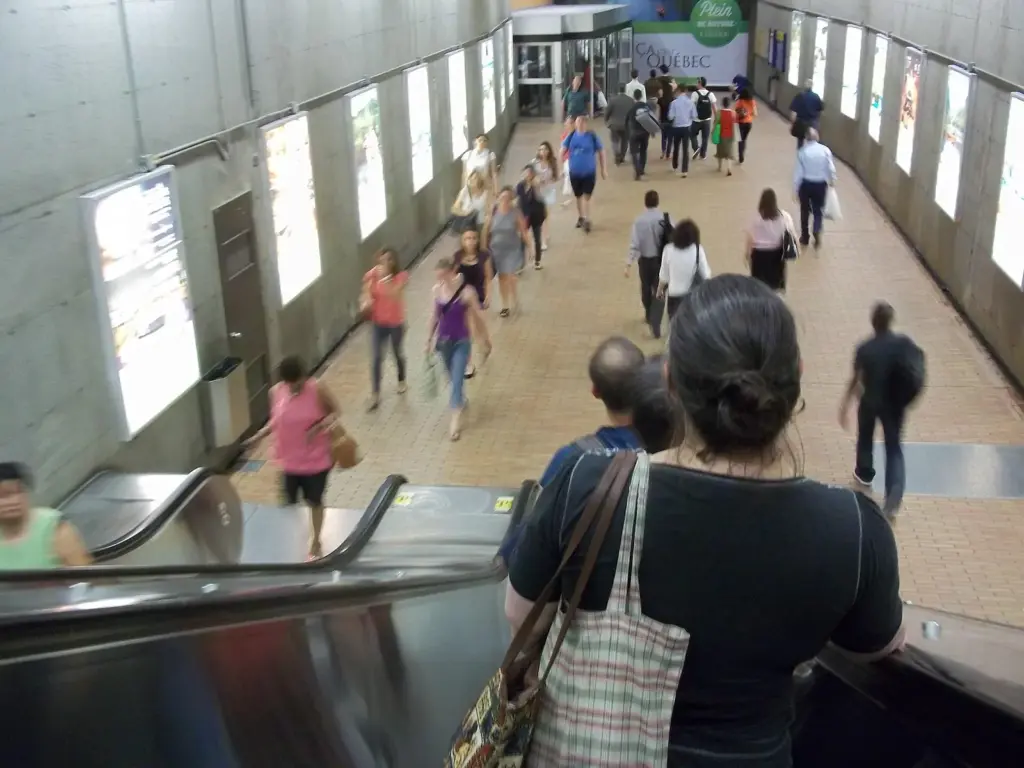
The Montreal underground city is neither really a city nor, for long stretches, underground. Its official name is RÉSO, and it’s more than 33 km of tunnels, mall concourses, station halls and office-tower basements that plug a big slice of downtown into the metro. On a January morning that means you can get from a train platform to your hotel, a food hall, a concert or a hockey game without zipping up your coat. What it isn’t is one continuous town beneath the streets that you can wander from end to end, whatever the brochures imply.
Think of it instead as a handful of indoor islands, each run by different buildings with different opening hours, strung together by the metro. Once that clicks, the network stops being a maze and becomes the most useful tool you have for enjoying Montreal in winter. Here’s how it actually fits together, which stretches are worth walking, when they’re open, and how locals use it: as a shortcut, not a sightseeing destination.
What the Montreal Underground City Actually Is
RÉSO is a pun. The name, adopted in 2004, sounds exactly like réseau, the French word for network, and that’s the more honest description. Most Montrealers still just say la ville souterraine or “the underground”. Tourisme Montréal currently puts it at over 33 km of pedestrian links. Those links tie together more than 1,700 shops, over 200 restaurants, hotels, universities, concert halls, Central Station and roughly ten metro stations, with more than 120 doors out to the street.
None of it costs anything to enter. There’s no ticket, no gate and no single front door. You walk into a shopping centre or a metro station, ride an escalator down a level, and you’re in it. The only place you pay is at the metro turnstiles, and only if you actually want to ride; walking through a station’s concourse outside the fare gates is free.
A lot of the “underground” is really at street or mezzanine level. The Complexe Desjardins atrium sits under a glass roof, the Centre Eaton climbs several storeys above Sainte-Catherine, and the passages between buildings rise and fall with the slope of downtown. Planners have long preferred the term “indoor city”, which is more accurate and never caught on.
What it is not
The most repeated line about the network is that it’s a “city beneath the city” you can explore for a day. It isn’t, and planning around that idea wastes a morning. The corridors belong to the buildings they run through, so each owner sets its own hours. Office towers lock their links in the evening and at weekends, and when a building renovates, its passage can close for months.
There’s also no unified map on the ground, no information desk and no point on the network that’s an attraction in its own right. What you get instead is weatherproof plumbing between places you already want to go. That’s less romantic and a lot more useful. Treat it as the connective tissue between the city’s real things to do, not as one of them, and it will repay you every cold day of your trip.
From a Railway Cutting to 33 Kilometres: A Short History
It started with a hole in the ground. North of Central Station, the railway approach ran through an open cutting that split downtown for decades. In the late 1950s the developer William Zeckendorf and the firm of architect I. M. Pei covered it with Place Ville Marie, the cruciform tower that opened in 1962. Their planner, Vincent Ponte, put the shops below the plaza and linked them straight to Central Station and the Queen Elizabeth hotel, keeping pedestrians away from traffic and out of the weather.
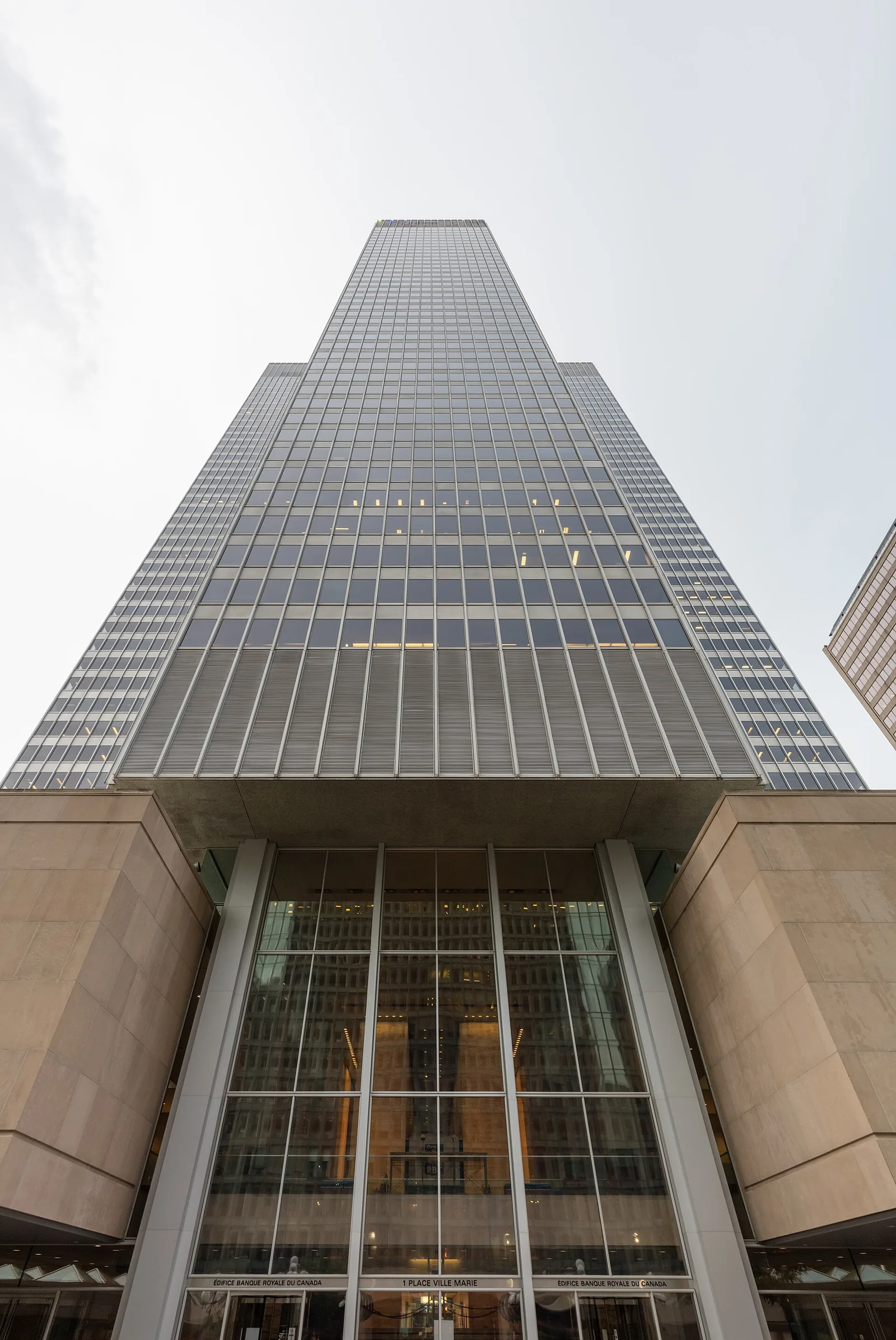
The metro turned one complex into a system. When it opened in October 1966, stations were built to connect directly into the basements of neighbouring buildings, and developers were keen to pay for their own links, because a metro corridor running past your shops is worth a great deal in rent. Place Bonaventure followed in 1967, the year of Expo 67. Complexe Desjardins opened in 1976 and joined Place des Arts to the south, and the 1980s added Complexe Guy-Favreau and the Palais des congrès.
The strangest chapter came in the late 1980s, when Christ Church Cathedral on Sainte-Catherine was propped up on stilts while a shopping mall, Promenades Cathédrale, was dug out beneath it. The Anglican cathedral still stands on top of its own basement mall, which tells you most of what you need to know about how seriously this city takes staying indoors in February.
The network took the RÉSO name in 2004, and it keeps changing shape. The newest links are the REM light-metro stations at Central Station and McGill, which tie the automated line into the older corridors. The oldest parts, meanwhile, get renovated one building at a time, which is why a passage you used a few years ago may now end at a construction hoarding.
How the Montreal Underground City Is Laid Out
Forget the idea of one grid. The network is really six clusters, each wrapped around one or two metro stations, and the metro is the thread that ties them together. Some clusters join up indoors; others are a single metro stop apart, and that stop is the connection. The table sums them up, and the sections below walk through each one.
| Cluster | Metro and rail | Anchor buildings | Worth it for |
|---|---|---|---|
| Quartier des spectacles | Place-des-Arts (Green) | Place des Arts, Complexe Desjardins | Shows, the Desjardins atrium, a cheap lunch |
| Quartier international | Place-d’Armes, Square-Victoria–OACI (Orange) | Complexe Guy-Favreau, Palais des congrès, World Trade Centre | Staying dry on the way to Old Montreal; OASIS immersion |
| McGill and Peel | McGill, Peel (Green); REM at McGill | Centre Eaton, Place Montréal Trust, Les Cours Mont-Royal | Shopping, the Time Out Market |
| The station district | Bonaventure, Lucien-L’Allier (Orange); REM at Gare Centrale | Place Ville Marie, Central Station, Place Bonaventure, Bell Centre | Trains, hotels, hockey nights, Le Cathcart |
| Latin Quarter | Berri-UQAM (Green, Orange, Yellow) | UQAM buildings, Grande Bibliothèque | The library, changing lines |
| Atwater | Atwater (Green) | Place Alexis-Nihon, Westmount Square | Everyday errands; not a sight |

Place-des-Arts and Complexe Desjardins
This is the friendliest stretch for visitors, and the one with the most going on. Place des Arts is the performing-arts complex at the heart of the Quartier des spectacles, home to the Montreal Symphony Orchestra’s Maison symphonique, with the Opéra de Montréal and Les Grands Ballets Canadiens on its stages. The box office is here if you fancy same-day tickets. The Musée d’art contemporain’s building on the same site is closed while it’s rebuilt, so don’t come expecting exhibitions.
From the station, a passage runs under Sainte-Catherine into Complexe Desjardins, whose glass-roofed atrium, fountain and all, is one of the few spaces on the network that feels like a public square. It hosts events and displays through the year, and its food court is a fast, cheap lunch before a matinée. The Hyatt Regency hotel is part of the same complex.
- Metro:
- Place-des-Arts (Green)
- Cost:
- free to walk
- Allow:
- 30–45 minutes, longer with a show
Complexe Guy-Favreau, the Palais des congrès and the Quartier international
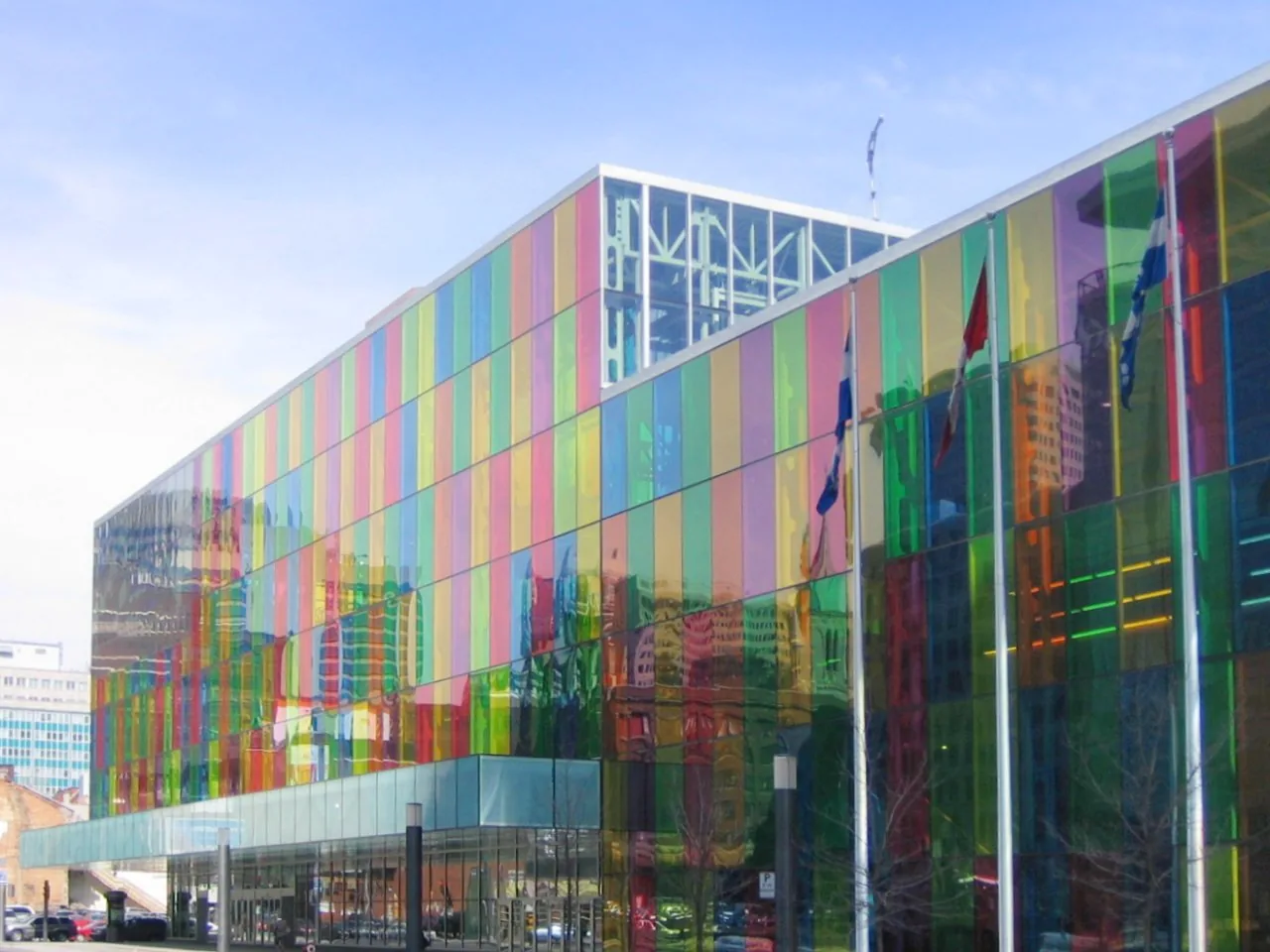
South of Desjardins, a tunnel under boulevard René-Lévesque leads into Complexe Guy-Favreau, a federal office complex with a Service Canada office and a YMCA inside, and from there into the Palais des congrès, the convention centre with the multicoloured glass facade on the southern edge of Chinatown. It matters to visitors for two reasons: OASIS immersion, a large walk-through digital art space, is inside it, and it opens directly into Place-d’Armes metro station at the top of Old Montreal.
From the Palais, corridors continue west through the Quartier international to Square-Victoria–OACI station and the Montreal World Trade Centre, where a glassed-over lane runs through the complex and a section of the Berlin Wall stands on display. It’s a quiet, businesslike stretch, handy for the hotels around Square Victoria and not much else.
- Metro:
- Place-d’Armes or Square-Victoria–OACI (Orange)
- Cost:
- free to walk; OASIS immersion is ticketed
- Allow:
- 20 minutes to pass through
McGill and Peel: the shopping core
McGill station is the busiest node for shoppers. Centre Eaton de Montréal, at 705 Sainte-Catherine Ouest, rises above it on several levels, with the Time Out Market food hall on the second floor. Place Montréal Trust, across avenue McGill College, is linked in too, and a passage from the Eaton Centre heads south towards Place Ville Marie. Since the REM opened its McGill station, you can also step off the light metro and straight into this cluster.
One stop west on the Green line, Peel station connects to Les Cours Mont-Royal, a 1920s hotel converted into shops and offices, with more upmarket labels than the malls at McGill. The big closure to know about is the Hudson’s Bay department store at the east end of McGill station, which shut in 2025 when the chain was liquidated. Any guide that still sends you there is out of date.
- Metro:
- McGill or Peel (Green)
- Cost:
- free to walk
- Allow:
- 1–2 hours if you’re shopping
Place Ville Marie, Central Station and Bonaventure
This is the original core, and the busiest part of the network on a weekday. Place Ville Marie’s concourse holds Le Cathcart, a food hall, and connects to Central Station, or Gare Centrale, where VIA Rail trains leave for Quebec City and Ottawa and the REM has a station. Fairmont The Queen Elizabeth sits right on top of the station, with its Marché Artisans market-style restaurant and the Rosélys dining room.
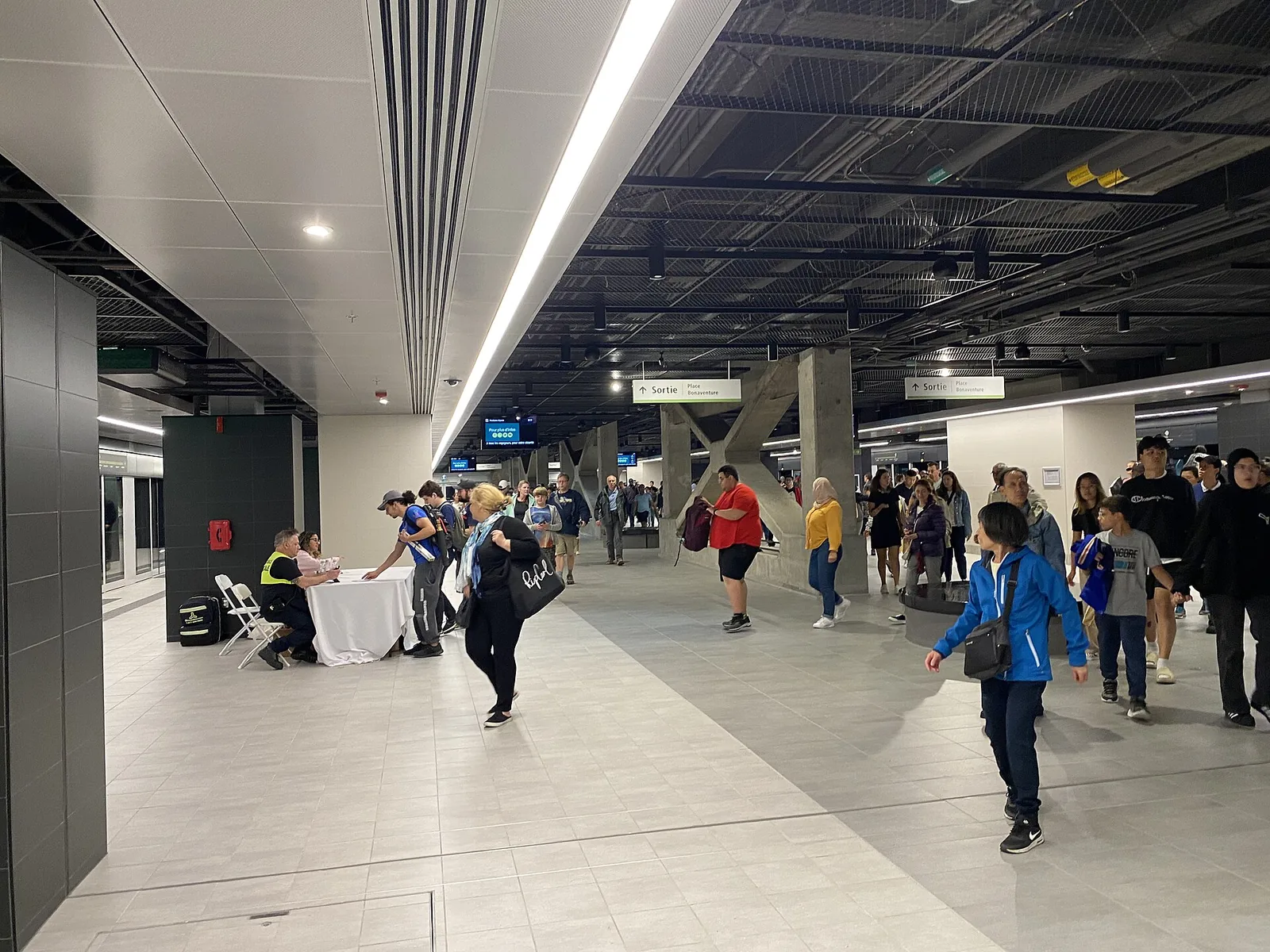
Keep going south and a passage takes you to Place Bonaventure, a vast 1967 exhibition-and-office block with the Hôtel Bonaventure on its roof, and to Bonaventure metro station. From there, corridors run west past the 1000 De La Gauchetière tower to the Bell Centre, home of the Canadiens, which also connects to Lucien-L’Allier station. On a game night this whole stretch fills with red jerseys an hour before the puck drops.
The same tower holds Atrium Le 1000, an indoor rink that runs year-round; our guide to ice skating in Montreal covers it along with the city’s free outdoor rinks.
- Metro:
- Bonaventure or Lucien-L’Allier (Orange); REM at Gare Centrale
- Cost:
- free to walk
- Allow:
- 20–30 minutes end to end
Berri-UQAM and the Latin Quarter
Berri-UQAM is where the Green, Orange and Yellow lines meet, and it’s the station where you’re most likely to change trains. It connects into buildings of the Université du Québec à Montréal and, most usefully for visitors, straight into the Grande Bibliothèque, Quebec’s national library: free, warm, handsomely designed and a genuinely good place to spend a cold hour with a book or a laptop. The 747 airport bus now terminates on boulevard René-Lévesque at rue Berri, a few minutes’ walk south.
- Metro:
- Berri-UQAM (Green, Orange, Yellow)
- Cost:
- free, including the library
- Allow:
- 30 minutes to an hour
Atwater: the western end
At the western tip, Atwater station links Place Alexis-Nihon, a practical, everyday mall, with Westmount Square, the black steel-and-glass complex designed by Mies van der Rohe, just across the line in the separate city of Westmount. It’s handy if you’re staying near Concordia or the western end of downtown and need supplies. Nobody should make a special trip.
- Metro:
- Atwater (Green)
- Cost:
- free
- Allow:
- only if you need it
Two Indoor Walks Worth Doing
You can’t walk the whole network, and you wouldn’t want to. These two stretches are the ones that run continuously indoors, pass things worth seeing and end somewhere useful. Both are at their best on a weekday, when every door along the way is open.
The station spine: McGill to the Bell Centre
- McGill station. Come up into the Centre Eaton. If it’s lunchtime, the Time Out Market is upstairs on the second floor.
- South to Place Ville Marie. Follow the signs for Place Ville Marie through the connecting passage; the concourse is lined with shops and Le Cathcart’s counters.
- Central Station. Look up at the carved friezes over the main hall, then carry on past the VIA Rail departure boards and the REM entrance.
- Place Bonaventure. Follow the signs for Bonaventure through the passage south of the station.
- The Bell Centre. Keep heading west, following signs for the arena or Lucien-L’Allier.
At an easy pace, without stops, it takes about 25 minutes. With lunch and some browsing, allow two hours. Coming back, ride the Orange line from Lucien-L’Allier or Bonaventure rather than retracing your steps.
The culture corridor: Place des Arts to Place-d’Armes
- Place-des-Arts station. Take the exit for Place des Arts and have a look around the concert-hall concourse.
- Complexe Desjardins. The passage under Sainte-Catherine brings you out into the atrium.
- Complexe Guy-Favreau. Head south, under René-Lévesque.
- Palais des congrès. Follow the signs for the Palais and Place-d’Armes; OASIS immersion is inside.
- Place-d’Armes. Leave through the metro station and you’re a five-minute walk from Notre-Dame Basilica and the top of Old Montreal.
It’s about 20 minutes without stops, and it’s the smartest way to reach the old town on a bitter day, because you stay indoors until the last few hundred metres. Be clear-eyed about what happens next, though. Old Montreal has no tunnels, so the basilica ($16 including tax for a day visit, as of 2026), Pointe-à-Callière and the Old Port are all reached on foot, outside.
Linking them up: the loop
Here’s the trick that makes the network feel whole. Walk the culture corridor north from Place-d’Armes to Place-des-Arts, ride the Green line one stop west to McGill, walk the station spine south to Bonaventure, then take the Orange line two stops back to Place-d’Armes. That’s roughly an hour and a half of indoor walking with two short metro rides, and it takes in most of what’s worth seeing on the network. With single fares at $3.75 each, a 24-hour pass at $11.25 pays for itself by the third ride.
Getting Around Underground: Signs, Maps and the Metro
Finding your way in the Montreal underground city
Signage is the network’s weakest point. RÉSO signs exist, but every building also posts its own, and they don’t always agree on what to call the place you’re heading for. The fix is simple: navigate by building names and metro stations, not by streets you can’t see. Every complex has “you are here” boards near its main junctions, and exits to the street are usually signed by street name.
Don’t trust the blue dot on your phone down here. GPS doesn’t reach reliably below ground, so map apps drift or freeze, and they will cheerfully point you the wrong way down a corridor. Look at the route before you go down, note the order of the buildings, and follow the signs for the next building in the chain. If you get turned around, surface for a minute, get your bearings from the street and go back in.
When to take the metro instead of walking
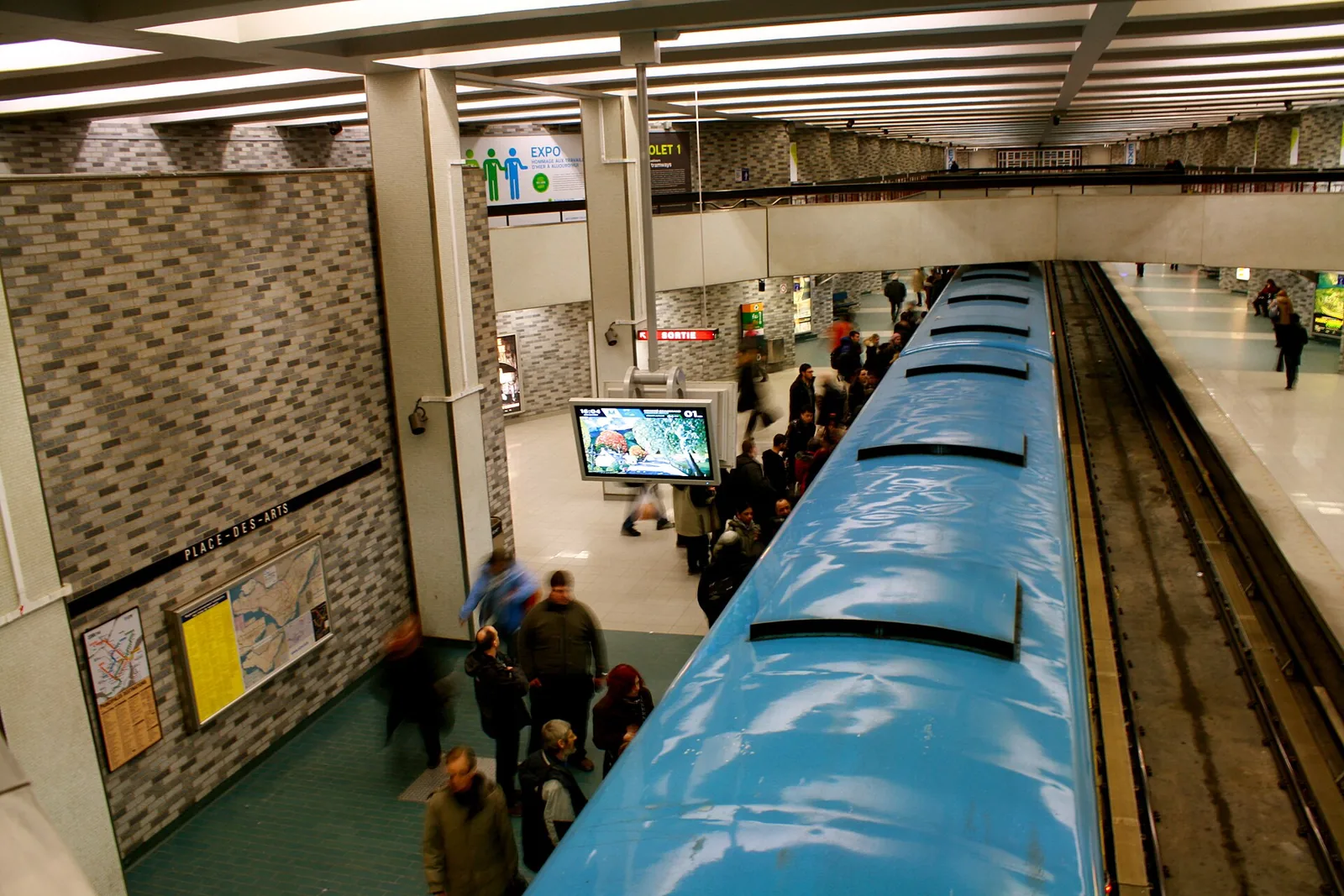
Whenever two clusters aren’t joined indoors, the metro is the connection. That’s not a failure of the network; it’s how it was designed. Place-des-Arts to McGill is one stop on the Green line, Bonaventure to Place-d’Armes is two on the Orange, and Berri-UQAM puts three lines at your feet. Trains come every few minutes at busy times, and the ride is quicker than the walk would be even in July.
For lines, passes and the OPUS card in full, read our guide to getting around Montreal. The short version: tap a contactless credit or debit card at the turnstile, or buy a pass if you’ll ride more than twice a day. Fares are set regionally and apply across the STM network.
| Fare (Zone A, as of 2026) | Price (CAD) | Best for |
|---|---|---|
| Single trip | $3.75 | One or two rides |
| Evening (18:00–05:00) | $6.75 | A show or a game, there and back |
| 24 hours | $11.25 | A day of hopping between clusters |
| Weekend (Fri 16:00–Mon 05:00) | $17.00 | A weekend visit |
| 3 days | $21.75 | Most short trips |
Children 11 and under ride free with a fare-paying passenger aged 14 or over. The OPUS card, the reloadable fare card, costs a one-off $6; on a short visit you can skip it and tap your bank card instead.
Opening Hours: Why There’s No Single Answer
Ask when the underground city opens and the only honest reply is “which bit?” The network broadly follows the metro, which runs until about 00:30 (a little later on Saturdays), but that’s the outer limit, not a promise. Each building sets its own hours inside that window, and the corridors through office towers exist for the people who work in them.
| When | What you’ll find open | What tends to be shut |
|---|---|---|
| Weekday, early morning | Metro stations, station links, coffee counters | Most shops |
| Weekday, daytime | Nearly everything; the network at full strength | Very little |
| Weekday evening | Main malls, the Time Out Market, Place des Arts, cinemas, the Bell Centre on game nights | Office food courts, some office-tower corridors |
| Saturday | Shopping centres, stations, the main links | Some office corridors and food courts |
| Sunday | Big malls on shorter hours, stations | More office links; food courts thin out |
| After the last metro | Hotel lobbies, for guests | Almost everything else |
In practice, shops open mid-morning and close in the early evening, earlier on Sundays, and the food halls keep going after the office food courts have stacked their chairs. If a particular shop or restaurant matters to you, check its own hours before you set off. And if your route runs through an office complex at the weekend, have a street-level plan B.
Where to Eat Without Going Outside
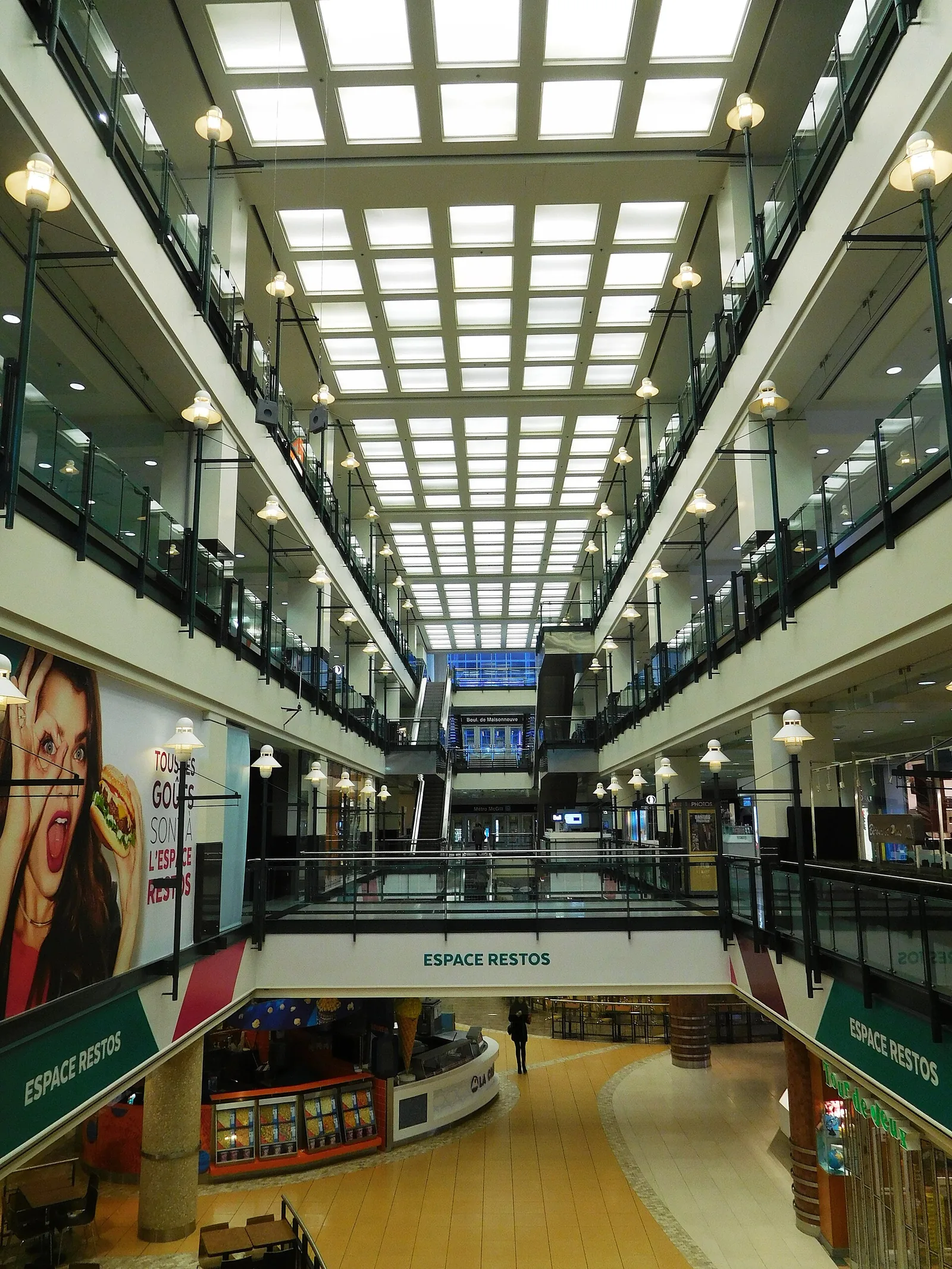
The network’s food comes in two kinds: food halls built to be destinations, and food courts built to feed office workers between noon and one. Both have their place, and the difference matters mostly in the evening, when the second kind goes dark.
- Time Out Market Montréal, second floor of the Centre Eaton, 705 Sainte-Catherine Ouest (McGill). A food hall of counters run by well-known Montreal chefs and restaurants, and the best all-round choice for a group that can’t agree on dinner.
- Le Cathcart, Place Ville Marie. A food hall at the heart of the original complex, packed at lunch with the office crowd and calmer mid-afternoon.
- Marché Artisans and Rosélys, Fairmont The Queen Elizabeth. The hotel’s market-style restaurant and its sit-down dining room, both steps from the Central Station platforms.
- Complexe Desjardins food court, Place-des-Arts. Cheap, fast and busy at lunch; good before a show.
What to skip: the chain counters you’d find in any North American mall. You’re minutes from some of the best eating in the country, and nearly all of it is above ground. Schwartz’s smoked meat, the St-Viateur bagel shop and the Jean-Talon Market are each a short metro ride away, and our Montreal food guide covers where to go. Use the underground for a fast, warm lunch and save the proper meal for the street.
Shopping Underground: What’s Worth It
The network was built around retail, and the shopping is fine: mainstream, practical and mostly the same Canadian and international names you’d find in any big downtown. Tourisme Montréal’s own round-up runs from the Renaud-Bray and Indigo bookshops to Zara, Lululemon, ALDO and Rudsak, plus Jean Coutu pharmacies and discounters such as Winners.
For visitors, the smart angle is winter kit. If you’ve underpacked, this is where to put it right without setting foot outdoors: boots, a proper hat, thermal layers and mitts are all on sale within a few hundred metres of McGill station. ALDO and Rudsak both started in Montreal, and a good pair of Quebec-made boots is a better souvenir than a maple-leaf fridge magnet.
For the street-level picture, from Sainte-Catherine and Simons to the boutiques of Mile End and the public markets, see our guide to shopping in Montreal. Remember that shelf prices exclude sales tax; GST and QST are added at the till.
Shows, Screens and Hockey: Culture on the Network
The underground’s best trick is getting you to an evening out without a coat check full of snow. Place des Arts is the big one: symphony, opera, ballet, touring shows and festival programming, all a corridor away from Place-des-Arts station. OASIS immersion in the Palais des congrès runs large-scale projection exhibitions that suit a cold afternoon, and Tourisme Montréal lists the Cinéma Banque Scotia on Sainte-Catherine as part of the network for a film on a stormy evening.
Hockey is the other reason people use these corridors after dark. The Bell Centre, at 1909 avenue des Canadiens-de-Montréal, seats 21,105 and is the largest arena in the NHL; the Canadiens open their 2026–27 home season against Carolina on Tuesday 6 October. There’s a clear-bag policy and no re-entry, so eat before you go in. Our sports and entertainment guide covers tickets and the rest of the calendar.
Two more things worth timing a visit around. Art Souterrain, an annual contemporary art festival, turns the corridors and lobbies into a free, sprawling gallery while it runs. And during Montréal en Lumière, from 18 to 28 February 2027, Place-des-Arts station is the warm way into the outdoor festival site next door. Our Montreal festivals calendar has the dates for everything else. Most of the big museums, including the Museum of Fine Arts up on Sherbrooke, aren’t connected at all; our museums guide says which are worth the outdoor walk.
Hotels Connected to the RÉSO
Staying in a hotel that plugs straight into the network is the single biggest comfort upgrade for a winter trip. Among the hotels built into or attached to network complexes are Fairmont The Queen Elizabeth above Central Station, the Hyatt Regency in Complexe Desjardins, the Hôtel Bonaventure on the roof of Place Bonaventure, and the InterContinental at the Montreal World Trade Centre.
A connection is only as good as its opening hours, though. Before you book on the strength of it, ask the hotel which corridor you’d actually use and whether it’s open at the times you’ll need it, including weekends. Our guide on where to stay in Montreal weighs downtown against Old Montreal and the Plateau, which matters more in summer, when nobody needs a tunnel.
Using the Montreal Underground City in Winter
Here’s what a well-planned −20 °C day looks like, with the indoor stretches doing the heavy lifting and the outdoor ones kept short.
- 09:30 Metro to Place-des-Arts. Walk the culture corridor south through Desjardins, Guy-Favreau and the Palais des congrès.
- 10:15 Surface at Place-d’Armes and walk five minutes to Notre-Dame Basilica. Spend the rest of the morning in the old town’s museums, which are warm inside and close together.
- 12:30 Back into Place-d’Armes; Orange line two stops to Bonaventure. Walk north through Central Station and Place Ville Marie.
- 13:15 Lunch at the Time Out Market in the Centre Eaton, then an hour of shopping for whatever you forgot to pack.
- 15:30 Green line from McGill to Berri-UQAM and a warm hour in the Grande Bibliothèque, or back to the hotel to thaw out.
- 19:00 A game at the Bell Centre via Lucien-L’Allier, or a show at Place des Arts, with an evening fare ($6.75) covering the ride there and back.
Dress for the switch between −20 °C outside and a heated mall inside. The tunnels are warm, so wear layers you can unzip and a coat you don’t mind carrying for an hour. Every Montrealer has a memory of sweating through a thermal shirt in the Centre Eaton; learn from them.
Accept, too, that much of what makes a winter trip memorable is above ground. Skating at Beaver Lake and the snowy lookouts of Mount Royal, the old stone streets, and the cafés of the Plateau and Mile End are all outdoors or a walk from any tunnel. Our overview of Montreal’s neighbourhoods shows how far each one sits from the network. The underground is how you cover the distances in between comfortably, and our Montreal itinerary builds it into a full three-day plan. For the festivals, the skating and the rest of the season, head back to our winter in Montreal guide, and if you’re still picking dates, our look at the best time to visit Montreal sets winter against the rest of the year.
What Most Guides Get Wrong
- “You can walk 33 km underground.” The figure adds up every link on the network. It isn’t a route, and the longest continuous walks take 20 to 30 minutes.
- “It’s open 24 hours.” It broadly follows metro hours at best, and many corridors close well before the last train.
- “It connects Old Montreal.” Only as far as Place-d’Armes and the Palais des congrès. The old town itself is entirely above ground.
- “Visit the Hudson’s Bay store, or the contemporary art museum.” The Bay closed in 2025, and the Musée d’art contemporain’s Place des Arts building is being rebuilt.
- “The REM takes you from the airport into the underground city.” Not yet. The REM’s airport station is still under construction, targeted for the end of 2027. Take the 747 bus; our Montreal airport guide explains the two branches.
- “It’s a tourist attraction.” It’s infrastructure, and very good infrastructure. Enjoy the best stretches, but don’t build a day around it.
Accessibility, Strollers and Safety
The malls themselves are generally step-free, with elevators between levels, but the links between them and the metro aren’t always. Not every metro station has elevators yet, and some corridors join through stairs or escalators only. If you use a wheelchair or push a stroller, check the STM’s list of stations with elevators and plan around those, rather than assuming a route is step-free because it’s indoors. Families will find more stroller-friendly ideas in our guide to Montreal with kids.
The network is busy and well lit by day, with security staff in the major complexes. It empties after the evening rush, and some office corridors feel deserted after 19:00; that’s the time to stick to the main malls and station links. The usual big-city rules apply: keep your phone and wallet close in crowded stations, particularly around the Bell Centre after a game. Our Montreal travel tips cover money, tipping and the language question.
Frequently Asked Questions
Is the Montreal underground city free?
Yes. Walking the RÉSO costs nothing: there’s no ticket, no gate and no pass to buy. You only pay if you go through the metro turnstiles to ride a train, which costs $3.75 for a single trip as of 2026. Shops, food halls and attractions along the way charge as normal, but the corridors, atriums and station concourses are free to walk through during opening hours.
How long is the underground city in Montreal?
Tourisme Montréal puts the network at over 33 km of pedestrian links. That’s the total of every tunnel, concourse and passage, not a single route, and several of the pieces only connect by metro. The longest stretches you can walk continuously indoors, such as McGill station to the Bell Centre, take about 20 to 30 minutes at an easy pace.
Is the Montreal underground city open 24 hours?
No. There are no unified hours. The network broadly follows the metro, which stops running around 00:30 (a little later on Saturdays), and each building sets its own schedule inside that. Office-tower corridors often lock in the evening and at weekends, and most shops close in the early evening. After the last train, treat the underground as closed.
Can you walk from downtown to Old Montreal underground?
Most of the way. The culture corridor runs indoors from Place-des-Arts through Complexe Desjardins, Complexe Guy-Favreau and the Palais des congrès to Place-d’Armes metro station. From there you’re outside, but Notre-Dame Basilica is only about five minutes’ walk. Old Montreal itself has no tunnels, so the Old Port, Pointe-à-Callière and the cobbled streets are all above ground.
Is the underground city worth visiting in summer?
Not as a sight in its own right. In summer the streets, terrasses and parks are the point, and the RÉSO is mainly useful as a rainproof shortcut or for air-conditioned shopping on a humid afternoon. If you’re curious, walk the culture corridor on your way to Old Montreal and have lunch at the Time Out Market. That’s the best of it in about an hour.
Which hotels are connected to the underground city?
Hotels built into or attached to network complexes include Fairmont The Queen Elizabeth above Central Station, the Hyatt Regency in Complexe Desjardins, the Hôtel Bonaventure on top of Place Bonaventure and the InterContinental at the Montreal World Trade Centre. Connections can close for renovations or outside business hours, so ask the hotel which corridor you’d use before booking because of it.
Does the Montreal underground city connect to the airport?
No. There’s no rail link to Montréal–Trudeau airport yet; the REM light metro’s airport station is still under construction and targeted for the end of 2027. The 747 bus runs 24/7 from the airport for $11.25, a fare that includes 24 hours of bus and metro travel, so you can ride straight on into the network from Lionel-Groulx or the downtown terminus near Berri-UQAM.