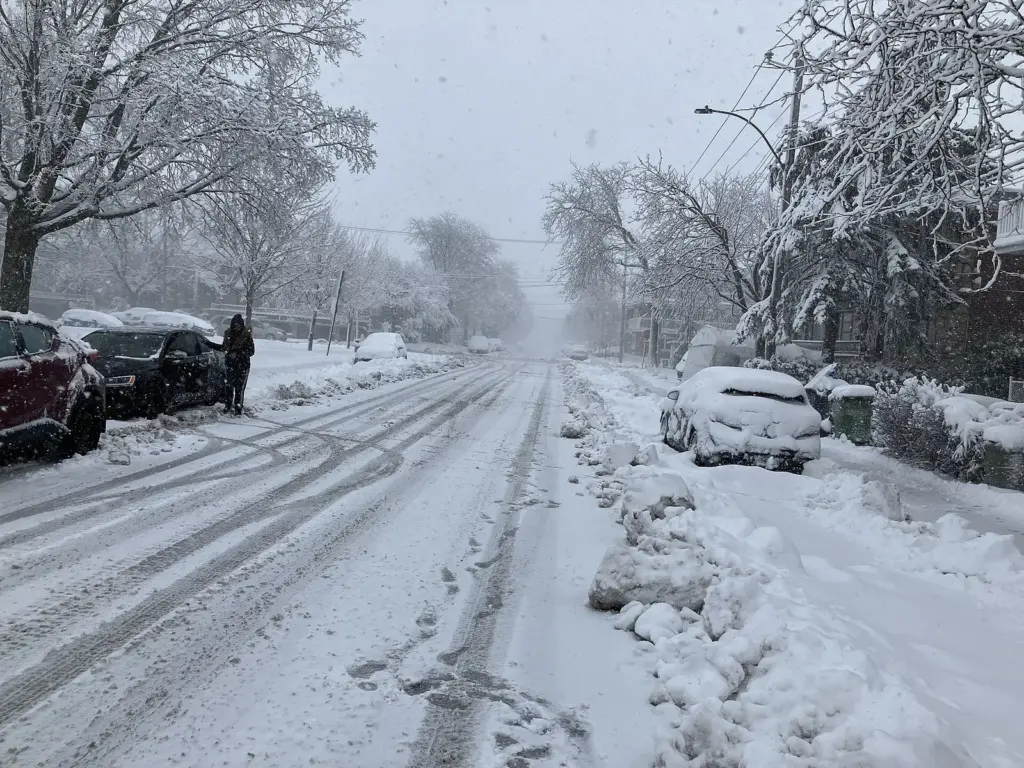
Montreal in winter is cold. There’s no point pretending otherwise: January averages about −9 °C, and the wind off the St Lawrence makes that feel a good deal worse. But it is also when the city is most itself. Locals skate on a lake in the middle of a mountain park, dance outdoors at night to techno in snowsuits, soak in hot pools on a boat in the harbour, and cross downtown through tunnels without putting their coats back on. Winter here runs roughly from mid-November to mid-March, and hotel rooms are at their cheapest outside the festival weekends. Come prepared and it’s one of the best winter trips in North America. Come in trainers and a fashion jacket and you will spend it indoors.
What follows is the honest version: what the weather actually does, what to pack, how the Underground City really works (it isn’t what most guides say), the festivals and their 2026–27 dates, where to skate, and a three-day plan that balances the cold with the warm. If you’re weighing winter against other seasons, our list of the best things to do in Montreal marks which of them work year-round.
What Montreal in Winter Is Really Like
The first real snow usually falls in late November or December and stays on the ground until March. In between there are a few big storms each season, stretches of hard, bright, bitterly cold days, and the occasional mild spell that turns the streets to slush before refreezing them overnight. The cold is dry, and a clear −12 °C day with no wind can be glorious. A grey −5 °C day with a stiff wind is miserable. Check the windchill (“ressenti” on French forecasts), not just the temperature.
The city is built for this. Snow clearing is a round-the-clock civic operation: ploughs and loading trucks work through the night after every storm, and main streets are usually passable by the next morning. Sidewalks get gravel and salt rather than being cleared to bare pavement, so expect a gritty, crunchy surface. The metro runs entirely underground, so snow does not stop it. Buses slow down but keep going.
Days are short. By December it’s dark by late afternoon, which is part of why the city lights itself up so thoroughly in winter: the festivals, the Christmas market and the light installations in the Quartier des Spectacles all happen in the long evenings. Plan outdoor activities for the middle of the day and indoor ones for after dark.
Two small hazards nobody warns visitors about. First, falling ice: in a thaw, sheets of snow and icicles slide off roofs, and you’ll see orange barriers on the sidewalk around some buildings — walk around them, not under them. Second, salt: it eats leather boots and leaves white tide marks on everything. Wipe your boots every evening.
Montreal in Winter, Month by Month
Dates below are the confirmed 2026–27 dates where organisers have announced them. Where they haven’t yet, the table says so. The festival’s own site gives 14 January to 6 February for 2027; trust it over third-party listings.
| Month | What it’s like | What’s on (2026–27) | Best for |
|---|---|---|---|
| November | Grey, damp, first snow possible; the gap between autumn and real winter | Grand Marché de Noël opens 13 Nov; Canadiens season under way at the Bell Centre | Museums, low hotel prices |
| December | Snow arrives, short days, festive lights | Christmas market daily from 16 Dec to 3 Jan; natural ice rinks start to open late in the month | Christmas atmosphere, shopping |
| January | The coldest month, about −9 °C on average; bright, dry, hard cold | Igloofest at the Old Port (14 Jan – 6 Feb 2027); Fête des neiges on Parc Jean-Drapeau weekends | Skating, snowshoeing, Igloofest |
| February | Still very cold, more snow, lengthening days | Montréal en Lumière 18–28 Feb 2027; Nuit blanche Sat 27 Feb 2027; Igloofest usually into early Feb | Festivals, food, nightlife |
| March | Thaws and refreezes; slush and melt by the end | Sugar shack season opens in the countryside, running into early April | Cabane à sucre, off-season prices |
If you can only pick one window, pick mid-January to late February. The snow is reliable, the rinks are frozen, Igloofest and Montréal en Lumière overlap or follow each other, and hotel rates outside the festival weekends are among the lowest of the year.
What to Wear
The classic mistake is packing for a ski trip or for a mild European winter. Montreal needs something in between: warm enough for 20 minutes outside at −15 °C, and easy to peel off when you walk into an overheated metro station or museum.
- Boots. The single most important item. Waterproof, insulated, with a deep rubber tread. Fashion boots with smooth soles are dangerous on icy sidewalks, and sneakers soak through in slush within minutes.
- A long, insulated coat that covers your hips, with a hood. A parka or a proper down jacket, not a wool overcoat.
- Layers underneath. A thermal base layer and a fleece or sweater. You will take the coat off constantly, because every building is heated.
- A tuque (the Canadian word for a knitted winter hat), mitts rather than gloves (they’re warmer), and a scarf or neck warmer to pull over your face in the wind.
- Warm socks — wool, not cotton — and a spare pair in your bag.
- Lip balm and moisturiser. The cold air and the indoor heating dry skin out fast.
If you arrive underdressed, buy locally rather than suffering. Simons, the Quebec department store on rue Sainte-Catherine, stocks good coats and accessories at a range of prices, and the sporting goods shops in the Eaton Centre sell boots, thermals and hand warmers. Buying a tuque in Montreal is practically a rite of passage anyway.
The Underground City (RÉSO), Explained Properly
This is where most travel guides get Montreal wrong. They describe a vast “underground city” you can wander for days, a secret world beneath the streets. The reality is more useful and less romantic.
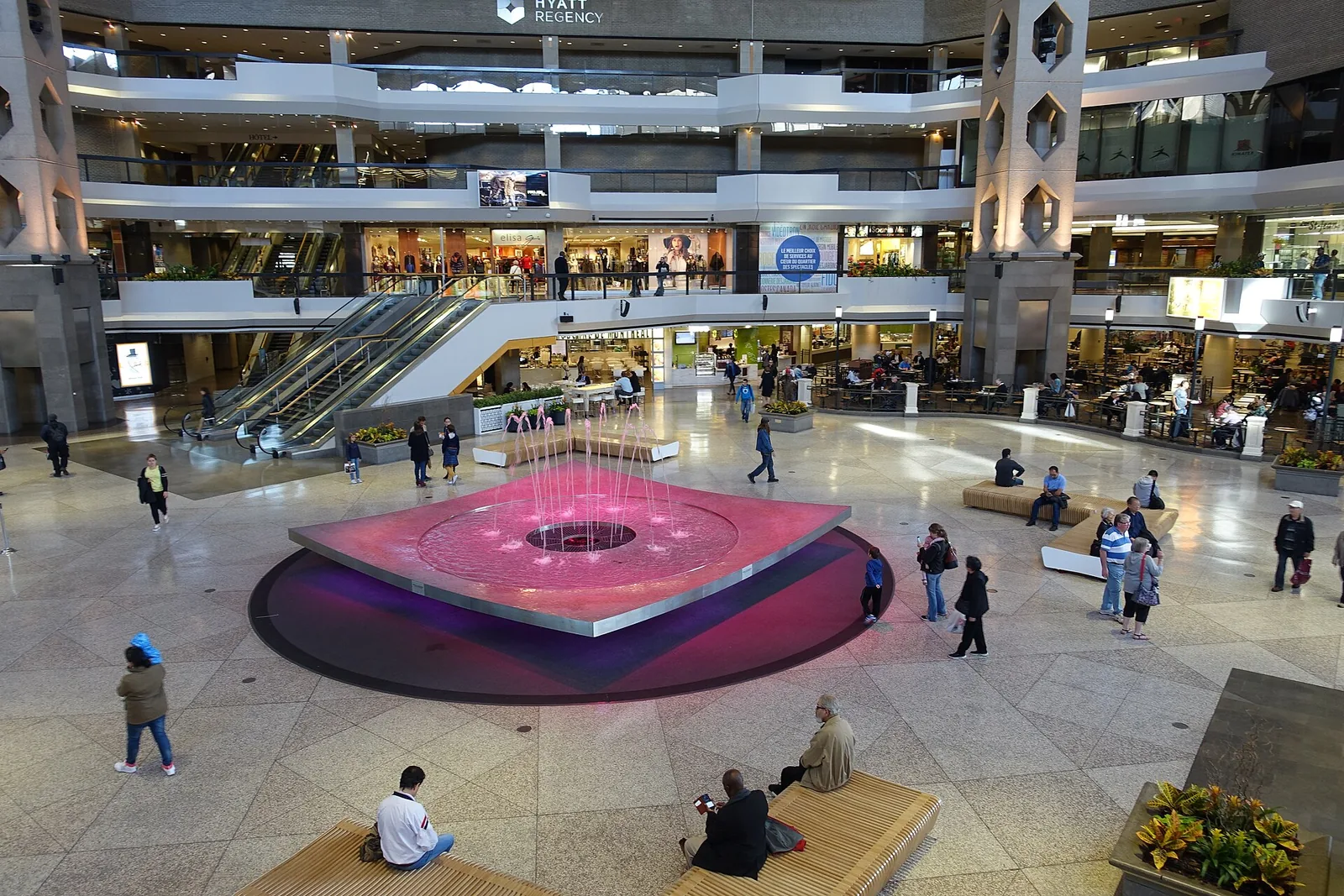
The RÉSO (the official name, a pun on the French réseau, network) is about 33 km of connected pedestrian passages linking more than 1,700 shops, over 200 restaurants, office towers, hotels, universities, concert halls and metro stations. But it is not one continuous city. It is a series of segments — mostly shopping-centre basements, corridors and building lobbies — joined together through the metro stations. Each building sets its own hours, so there are no unified opening times. Broadly, the network follows the metro schedule, and parts of it close earlier, especially on Sundays and holidays. There is no entry fee; you just walk in.
Think of it as a winter shortcut and a way to run errands without a coat, not as an attraction. It is mostly malls and office corridors, well lit and busy on weekdays, with food courts and the odd piece of public art. Nobody spends a holiday afternoon “exploring the Underground City” and comes back raving. What you do get is the ability to get from your hotel to a concert, a museum or dinner on a −20 °C evening without going outside for more than a minute.
The segments worth knowing
You don’t need a map of all 33 km. You need three chunks, all on the Green and Orange lines:
- McGill and Peel (Green line). The retail core. McGill station links into the Montreal Eaton Centre and the shopping centres on either side of it along rue Sainte-Catherine, so you can walk several blocks of the city’s main shopping street without touching the sidewalk. This is the busiest and most useful segment for visitors.
- Bonaventure and Gare Centrale (Orange line). The station and transport cluster: Bonaventure metro, Gare Centrale (VIA Rail and Amtrak trains), Place Ville Marie and Place Bonaventure, with hotels such as the Fairmont The Queen Elizabeth linked directly. The Bell Centre, home of the Canadiens, is reachable through here too, which on a hockey night in January is the whole point.
- Place-des-Arts to Place-d’Armes (Green and Orange lines). The cultural and convention stretch. Place des Arts, the concert hall complex, connects to Complexe Desjardins, which connects to Complexe Guy-Favreau and on to the Palais des congrès and Place-d’Armes metro at the edge of Old Montreal. It’s a long indoor walk from the festival district nearly to the old town.
How to use it without getting lost
Look for the RÉSO signs, but navigate by metro station and building name, because that is how the network is organised. Walking between two connected points underground usually takes longer than the surface route, since the corridors wind through basements and around food courts. If you just need to get from A to B and it isn’t brutally cold, the street is quicker. And if a door is locked, don’t assume the whole segment is closed; the building may simply keep shorter hours than its neighbours. Go back up, walk a block and come down again.
- Metro:
- McGill (Green), Peel (Green), Place-des-Arts (Green), Bonaventure (Orange), Place-d’Armes (Orange)
- Cost:
- free
- Allow:
- as a shortcut, not a sight

Winter Festivals and Events, 2026–27
Montreal fills its winter calendar deliberately, on the theory that the best way to survive the cold is to go out into it. Four events are worth planning a trip around.
Grand Marché de Noël de Montréal
The city’s big Christmas market takes over the Place des Festivals in the Quartier des Spectacles from 13 November 2026 to 3 January 2027. It is free to enter, with around 60 artisans selling from wooden chalets, plus food and drink stalls. Until 15 December it opens Wednesday to Sunday; from 16 December it’s open every day. It’s smaller than the famous German markets, but the Quebec crafts, maple treats and mulled wine under the lights of the Quartier des Spectacles make for a very good first evening. Check hours on the market’s website.
Visiting in December? Our guide to Christmas in Montreal covers the markets, the concerts and The Nutcracker, and what’s actually open on the 24th, 25th and 26th.
Staying for the countdown? Our guide to New Year’s Eve in Montreal covers the free outdoor parties, réveillon dinners and how to get home after midnight.
- Metro:
- Place-des-Arts (Green)
- Cost:
- free entry
- Allow:
- 1 to 2 hours
Igloofest
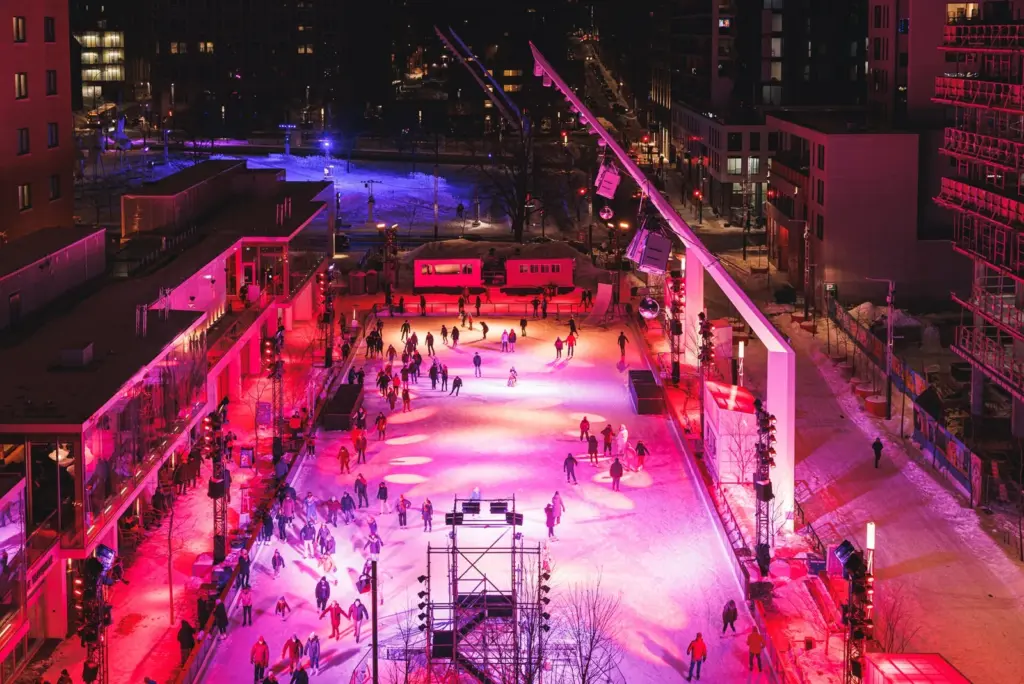
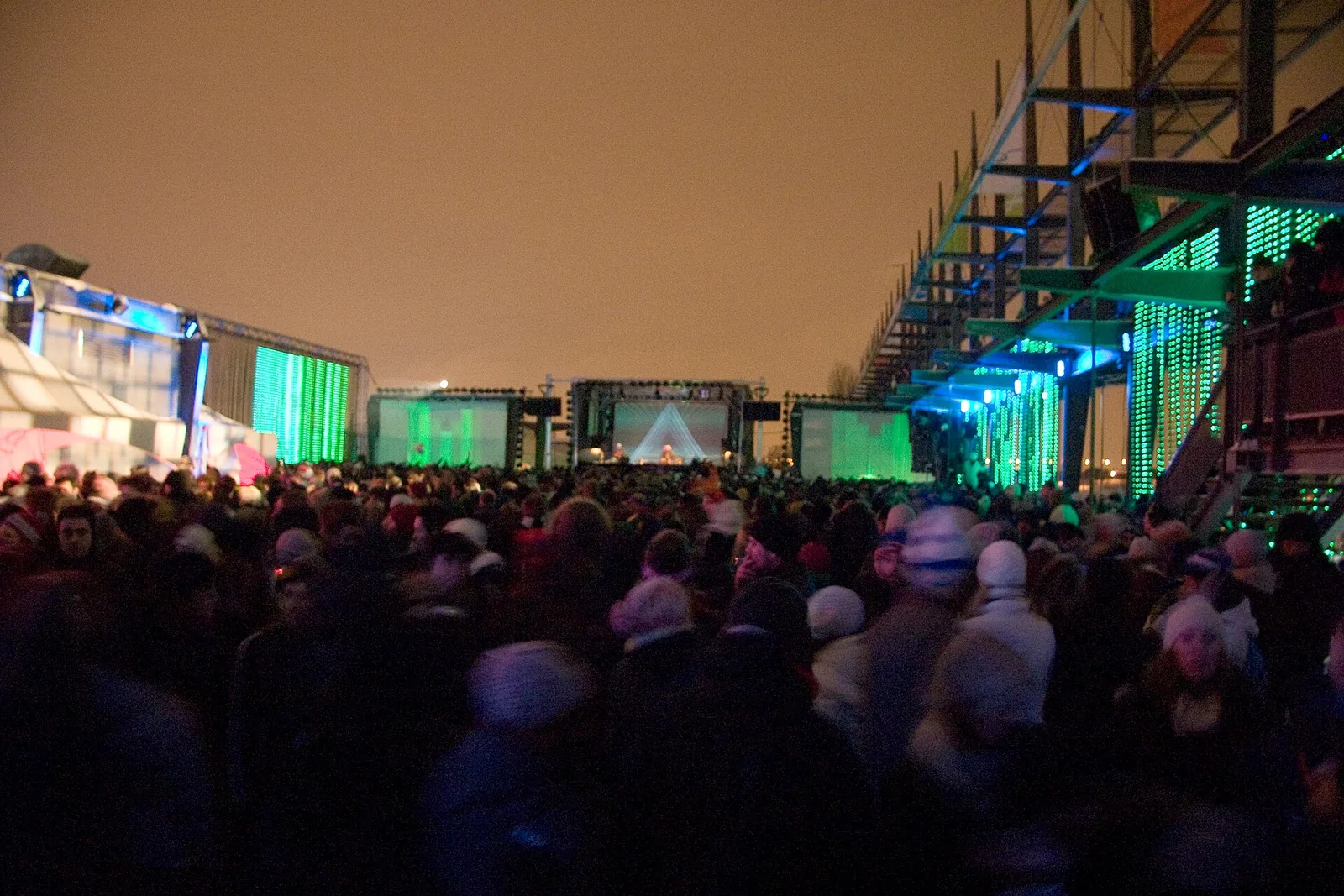
Picture an outdoor electronic music festival in January, at night, on the quays of the Old Port, with thousands of people dancing in snowsuits at −15 °C. That’s Igloofest, and it’s one of the most distinctly Montreal things you can do. The fancy-dress culture is part of the fun: vintage one-piece ski suits are the unofficial uniform. It runs over several weekends from January into early February and is ticketed. The 2026 edition ran from 15 January to 7 February; the 2027 edition runs from 14 January to 6 February, according to the festival’s site. Watch the festival’s own site rather than trusting third-party listings.
Dress as if you’re going to stand outside for three hours, because you are: boots, thermals, hand warmers, and nothing you can’t lose. It’s an adult crowd, and the drinking age in Quebec is 18.
- Metro:
- Champ-de-Mars (Orange)
- Cost:
- ticketed
- Allow:
- an evening
Fête des neiges de Montréal
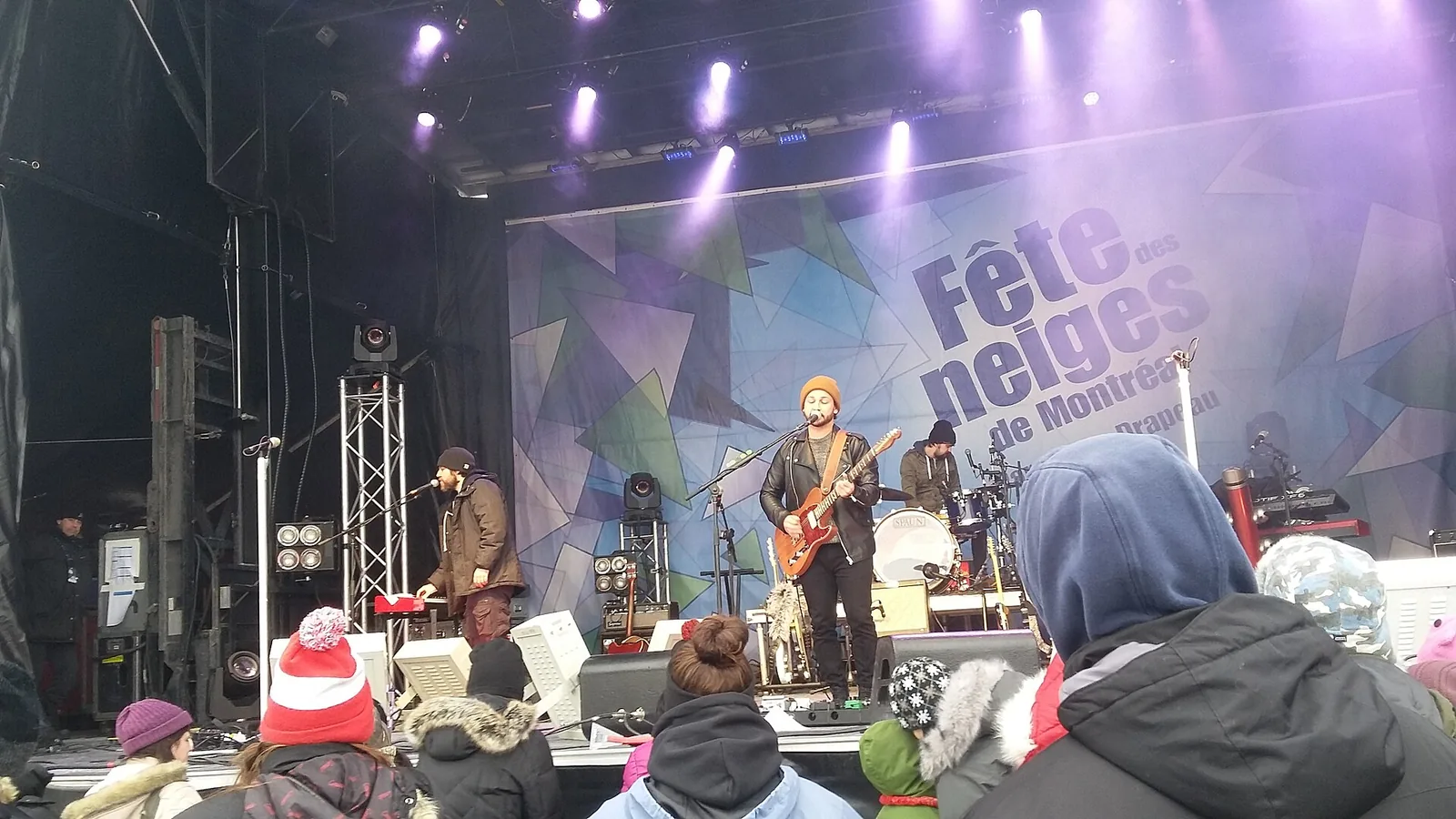
The family option. On January weekends Parc Jean-Drapeau, the island park in the river, turns into a snow playground with slides, snow sculptures, outdoor stages and activities for children. Its 2027 dates and prices hadn’t been published at the time of writing, so check Parc Jean-Drapeau’s website before you go. Take the Yellow line to Jean-Drapeau station; the park is exposed and windy, so dress children in more layers than you think they need.
- Metro:
- Jean-Drapeau (Yellow)
- Cost:
- see the park’s website
- Allow:
- half a day
Montréal en Lumière and Nuit blanche
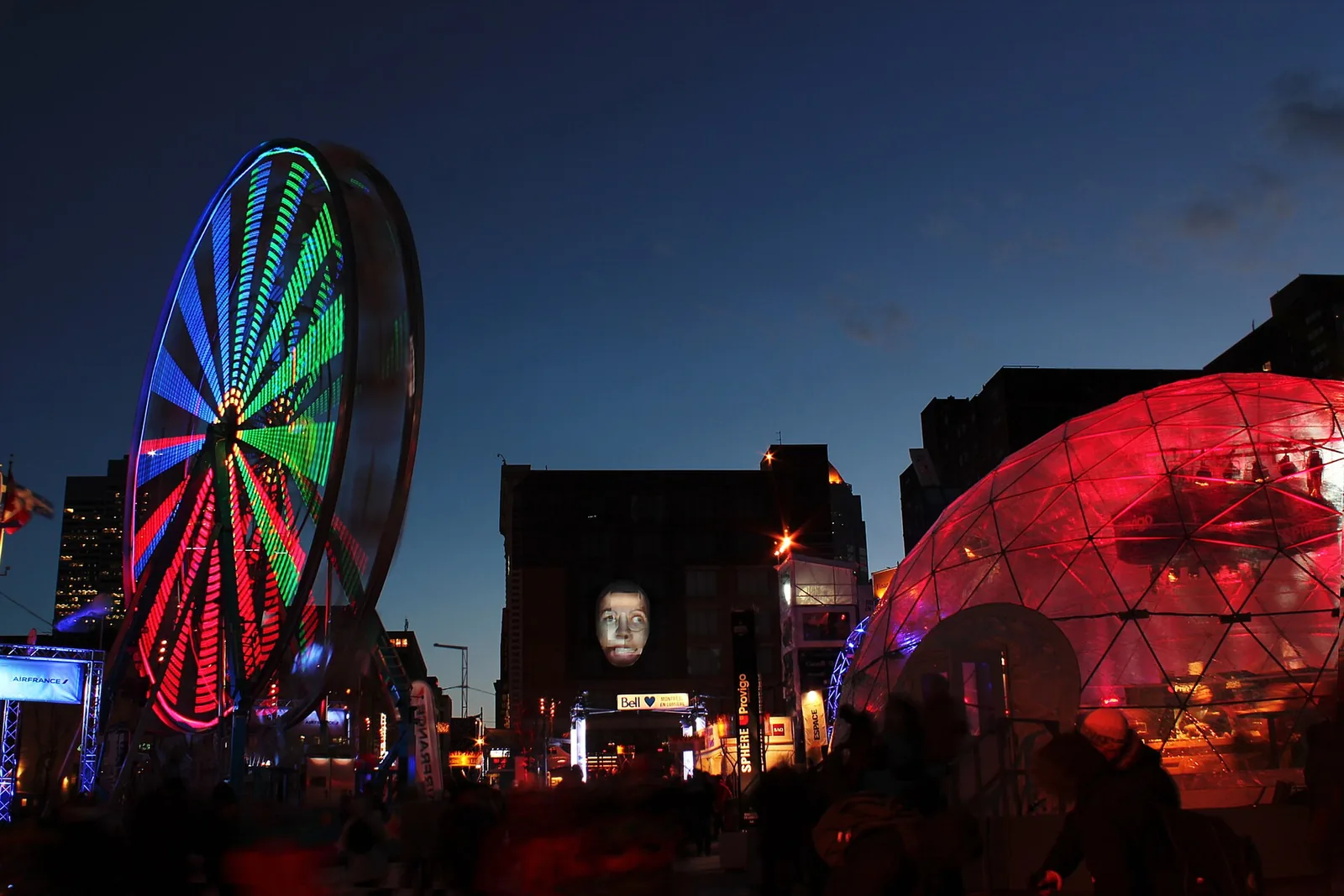
The big one. Montréal en Lumière runs from 18 to 28 February 2027 and combines three things: free outdoor light installations and activities in the Quartier des Spectacles, a food programme with visiting chefs in restaurants across the city, and a performing-arts line-up. The outdoor site is the draw for most visitors, with its illuminated rides, installations and stalls in the dark.
The festival’s climax is Nuit blanche on Saturday 27 February 2027, an all-night arts crawl when galleries, museums, theatres and public spaces across the city host events until the small hours. It’s crowded, cold, chaotic and brilliant. Plan a loose route in advance and expect queues at the most popular venues.
- Metro:
- Place-des-Arts (Green)
- Cost:
- outdoor site free; restaurant and show prices vary
- Allow:
- an evening, or the whole night for Nuit blanche
Hockey at the Bell Centre
Not a festival, but for many visitors the defining winter experience. The Montreal Canadiens play at the Bell Centre, the largest arena in the NHL with 21,105 seats, and the 2026–27 home season opened on Tuesday 6 October 2026 against Carolina. Saturday games against Toronto or Boston are the priciest tickets of the season. Midweek games against Western Conference teams are noticeably cheaper and the atmosphere is still loud. The arena has a clear-bag policy and no re-entry. Event parking runs about $29, but the metro is easier.
- Metro:
- Bonaventure (Orange) or Lucien-L’Allier (Orange)
- Address:
- 1909 avenue des Canadiens-de-Montréal
- Allow:
- 3 hours
| Event | 2026–27 dates | Where | Cost | Metro |
|---|---|---|---|---|
| Grand Marché de Noël | 13 Nov 2026 – 3 Jan 2027 | Place des Festivals | Free entry | Place-des-Arts |
| Igloofest | 14 Jan – 6 Feb 2027 | Old Port | Ticketed | Champ-de-Mars |
| Fête des neiges | January weekends; 2027 not yet announced | Parc Jean-Drapeau | See park website | Jean-Drapeau |
| Montréal en Lumière | 18–28 Feb 2027 | Quartier des Spectacles | Outdoor site free | Place-des-Arts |
| Nuit blanche | Sat 27 Feb 2027 | Citywide | Many events free | Various |
| Canadiens home games | From 6 Oct 2026 | Bell Centre | Varies by opponent and night | Bonaventure |
Skating, Snowshoeing and Sledding
You don’t need to leave the city for winter sports. Mount Royal, the mountain park that gives Montreal its name, becomes a snow playground from December to March.
Beaver Lake on Mount Royal
Beaver Lake (Lac aux Castors) is the best place in Montreal to skate outdoors. The rink on the lake is refrigerated, so it opens more reliably than natural ice, and it’s surrounded by trees with the city lights coming up at dusk. The Beaver Lake Pavilion beside it rents skates, cross-country skis, snowshoes and snow tubes, and there are dedicated tubing slopes nearby. Mount Royal has 22 km of cross-country ski trails. Rental prices are posted at the pavilion and on the Les amis de la montagne website. Skating on the lake itself costs nothing if you bring your own skates.
Combine it with a snowshoe or walk up to the Kondiaronk Belvedere, the free lookout over downtown, which is at its most dramatic on a clear, cold morning after a snowfall.
- Metro:
- Mont-Royal (Orange), then bus 11
- Cost:
- free with your own skates; rentals extra
- Allow:
- half a day
Parc La Fontaine and the neighbourhood rinks
When the deep cold sets in, usually from late December, the city floods ponds and parks all over the island into natural rinks. The pond in Parc La Fontaine on the Plateau is the prettiest. It’s free, busy with locals, and you’ll need your own skates or a pair rented at Beaver Lake. Natural ice depends on the weather, so conditions vary week to week.
What about the Old Port rink?
It’s gone. The Old Port’s outdoor rink in the Bonsecours Basin is permanently closed, even though older guides and blog posts still recommend it. The Old Port still comes alive in winter for Igloofest, and Old Montreal’s snowy streets are at their most photogenic on a weekday morning after a storm. For skating, though, go up the mountain.
Downhill skiing
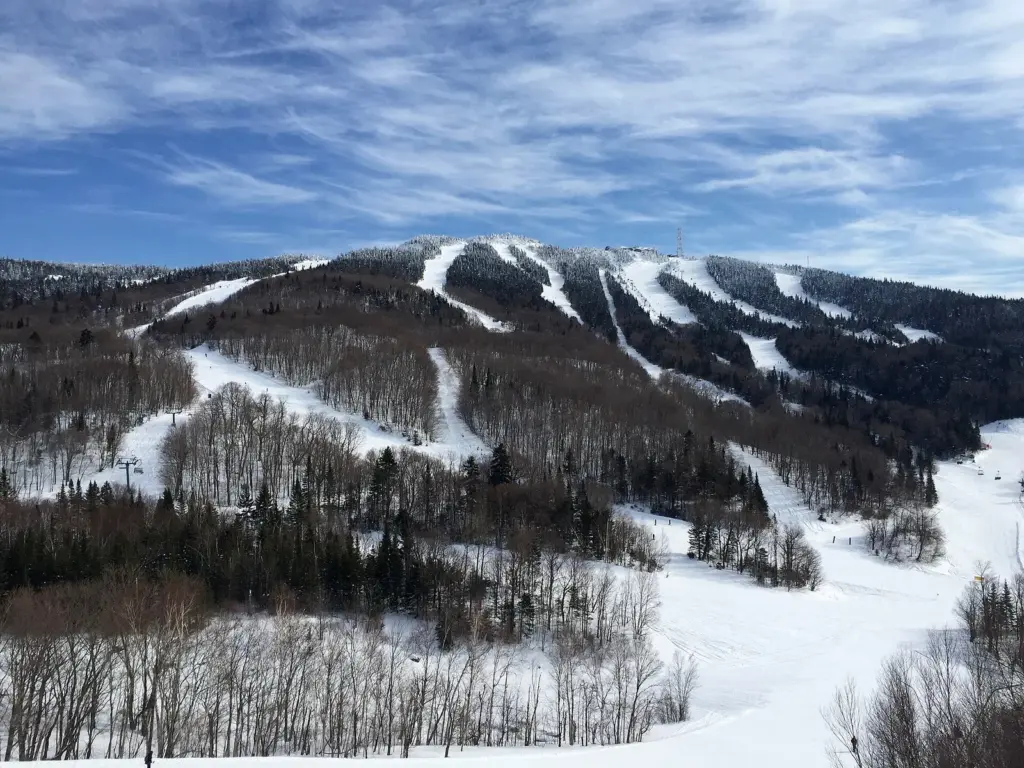
There’s no real downhill skiing on the island. The nearest proper ski areas are in the Laurentians north of the city and the Eastern Townships to the south-east, and Mont-Tremblant is the big destination resort. All are day trips or weekends, best done with a car or a resort shuttle.
Warm Things to Do When It’s Too Cold
Some days — the −25 °C windchill ones — nobody sensible stays outside for long. Montreal has plenty of indoor options, and several are at their best in winter.
Museums
- Montreal Museum of Fine Arts. $30 for adults ($32 with a major exhibition), and free for anyone 25 and under, one of the best museum deals in the country. Metro: Guy-Concordia or Peel (Green).
- McCord Stewart Museum. Montreal’s social history museum, with a strong costume collection. $20 online or $22 at the door, and pay-what-you-can on the first Sunday of the month. Metro: McGill (Green).
- Pointe-à-Callière. The archaeology museum on the city’s founding site in Old Montreal, with most of its best exhibits underground. $30 for adults aged 31–64.
- Notre-Dame Basilica. $16 by day, or the AURA light show in the evening at $37 plus tax. Evening tickets are sold online or by phone and sell out.
Space for Life
The city’s five natural-science museums — the Biodôme, the Botanical Garden, the Insectarium, the Planetarium and the Biosphère — are made for winter. The Biodôme recreates a tropical rainforest, a Laurentian maple forest, the Gulf of St Lawrence and the sub-polar and sub-Antarctic coasts, so you can walk from a humid jungle into a penguin colony. The Botanical Garden’s greenhouses are a warm, green escape in the middle of February. Adult admission is $25.50 per museum including tax, and there’s no day combo ticket. If you plan to visit several, the Space for Life Passport costs $87 for one person and gives 12 months of unlimited entry. The Biosphère is closed on Mondays from September. Details are on the Space for Life website.
Note that the Montreal Tower observatory at Olympic Park is closed until spring 2027, so don’t plan a winter visit around the view from the top.
Bota Bota and the Nordic spa ritual
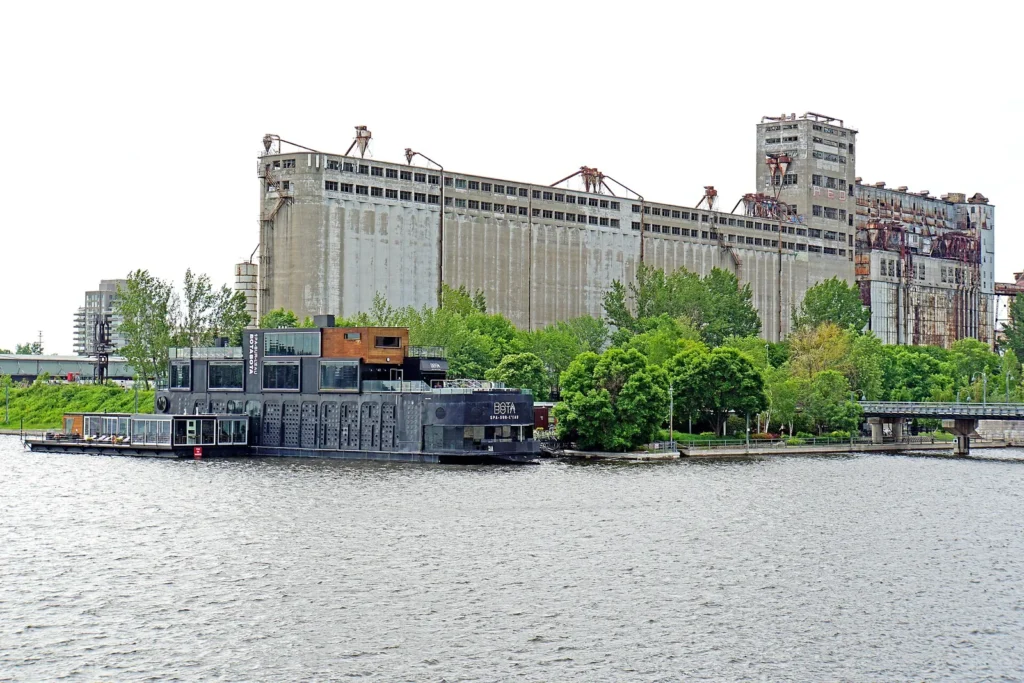
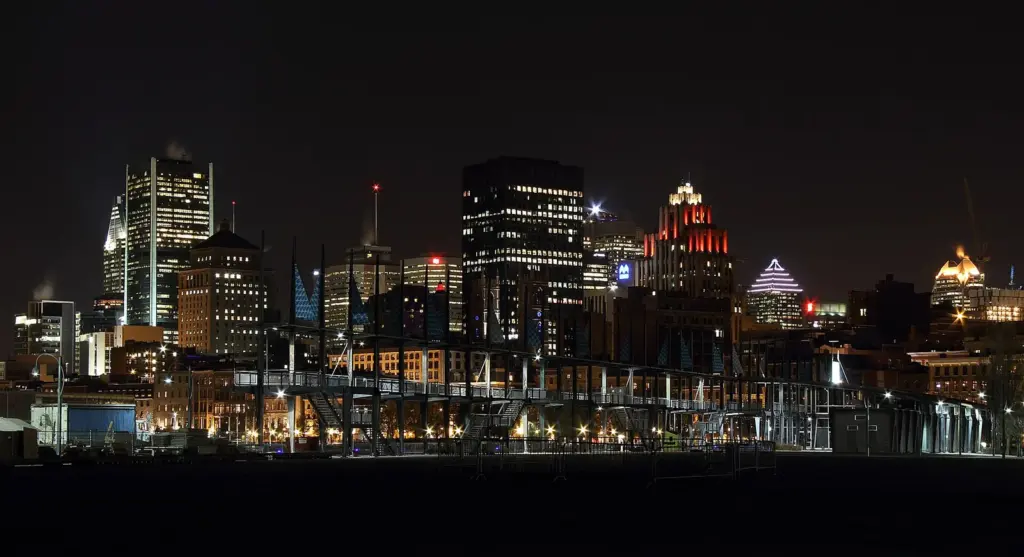
Sitting in a steaming outdoor pool while snow falls around you is one of the great winter pleasures, and Bota Bota, a converted 1950s ferry moored in the Old Port, does it with a view of the city skyline. The water circuit — hot pools, saunas, cold plunges, rest areas — costs $65 to $155 before tax depending on the day and length of visit, and it’s 18 and over only. Go on a clear, cold evening. It’s the best antidote to a long day of walking in the snow.
Markets, food and a late night
Jean-Talon Market in Little Italy is open year-round. From October the stalls move indoors, and it’s open Monday to Saturday 08:00–18:00 and Sunday 08:00–17:00. Atwater Market, by the Lachine Canal, keeps going too. For the full comfort-food experience, a late-night poutine at La Banquise on the Plateau, which is open 24 hours, is a Montreal tradition in any season and especially welcome in January. Bars pour until last call at 03:00.
Winter comfort food
Montreal eats seriously in winter, and the cold gives you an excuse. The queue outside Schwartz’s at 3895 boulevard Saint-Laurent doesn’t disappear in January. It just gets shorter and moves faster, and a smoked meat sandwich (ask for medium-fat) tastes better after standing in it. Up in Mile End, St-Viateur at 263 rue Saint-Viateur Ouest pulls bagels out of a wood-fired oven from 06:00 to midnight. It is not open around the clock, whatever older guides say, but a hot sesame bagel eaten on the sidewalk, steaming in the frozen air, is one of the city’s small perfect moments.
Beyond the famous names, look for the Quebec winter classics on bistro menus: tourtière (spiced meat pie), thick yellow pea soup, pouding chômeur (a cake baked in hot maple or brown-sugar syrup, whose name translates roughly as “unemployed man’s pudding”), and anything involving maple. The city’s many small-brewery pubs are at their best on a snowy evening, with steamed-up windows and a dark beer.
Sugar Shack Season
Winter ends in Quebec with a meal. As the nights stay below freezing and the days start to thaw, roughly from March into early April, the maple sap runs and the cabanes à sucre (sugar shacks) in the countryside around Montreal open their dining halls. The format is the same everywhere: long communal tables and a parade of heavy, delicious food. Pea soup, ham, baked beans, omelettes, sausages, crispy pork rinds and potatoes all come to the table, and all of it is meant to be doused in maple syrup.
The finale is tire d’érable: hot maple syrup poured in lines onto clean packed snow, left for a few seconds to set, then rolled up onto a wooden stick. It’s the moment every child (and most adults) remembers. Many shacks also give tours of the sugar bush and the evaporator, where the sap is boiled down.
Sugar shacks are outside the city, so you’ll need a car, a friend with one, or an organised tour. Popular shacks book up for weekends, so reserve ahead. The season depends entirely on the weather, so a warm or cold spring can shift it by a week or two. A trip in the second half of March lets you combine the last of the city’s winter with a shack meal on the way out.
Five Winter Walks Worth Doing
The city looks completely different under snow, and some walks are better in winter than in summer. All five are free.
- Up Mount Royal to the Kondiaronk Belvedere. The wide, gently graded Olmsted road that winds up the mountain is the easiest way up on foot in snow, and the view from the belvedere across a white downtown to the frozen river is the best free view in Montreal. Go in the morning, when the light is on the city side. Allow two hours up and back.
- Old Montreal after a snowfall. Get to Place d’Armes early, before the sidewalks are trampled and gravelled, and walk down rue Saint-Paul to Marché Bonsecours and the frozen river. The stone buildings and old lamps look like an engraving. Mind the cobbles.
- The Plateau’s staircases and Parc La Fontaine. The Plateau’s rows of triplexes with curling iron staircases outside are one of Montreal’s signature sights, and heaped with snow they’re even more striking. Wander the side streets east of rue Saint-Denis and finish on the pond in Parc La Fontaine, where locals skate once it freezes.
- Saint Joseph’s Oratory. The largest church in Canada sits high on the mountain’s western slope, and its dome against a hard blue winter sky is spectacular. Entry is free and it opens from 06:30 to 21:00, so you can warm up inside and take in the view from the terrace. Côte-des-Neiges metro (Blue line) is a short walk away.
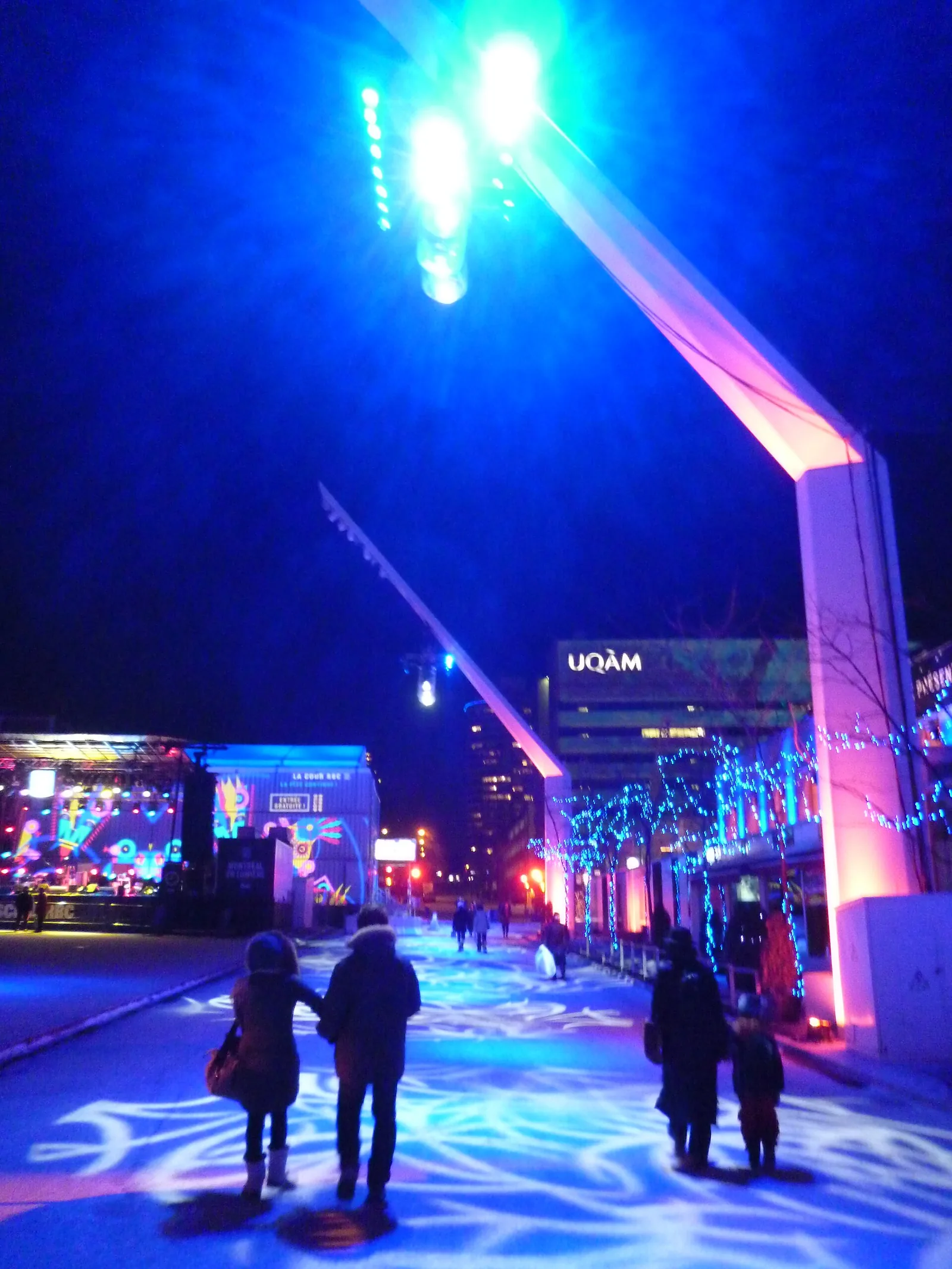
- The Quartier des Spectacles at night. After dark, the plazas around Place des Arts glow with light projections and installations through much of the winter, and during the Christmas market and Montréal en Lumière they’re the liveliest spot in town. It’s a good end to any day, and the metro is right underneath.
Montreal in Winter with Children
Children usually love a Montreal winter more than their parents do. The best days out for families are tubing and skating at Beaver Lake, the Fête des neiges on Parc Jean-Drapeau, and the Biodôme’s penguins. The Montreal Science Centre in the Old Port ($37 for adults) is a reliable rainy- or freezing-day fallback, with hands-on exhibits aimed at school-age kids.
Dress children in a full one-piece or two-piece snowsuit, waterproof boots, mitts on a string and a balaclava or neck warmer. Children lose heat faster than adults, and the sign to head inside is quiet, pink-cheeked stillness, not complaining. A stroller is nearly useless on snowy sidewalks. Locals pull toddlers on small plastic sleds instead, and a child carrier works too. Plan every outing around a warm indoor stop within reach, and keep the RÉSO in mind for getting across downtown with small children in the worst weather.
Getting Around Montreal in Winter
The metro is your best friend. It runs entirely underground, so snow and ice don’t affect it, and its stations connect to the RÉSO downtown. As of September 2026 a single fare is $3.75, a 24-hour pass $11.25, a 3-day pass $21.75, a weekend pass (Friday 16:00 to Monday 05:00) $17.00, and an evening pass (18:00–05:00) $6.75. You can tap a contactless credit or debit card at the turnstile, or buy an OPUS card ($6) and load passes onto it. The metro runs until roughly 00:30 (later on Saturdays); after that it’s a taxi, Uber or a night bus. The STM website has current service.
From the airport: the 747 bus runs 24 hours a day from Montréal–Trudeau (YUL) to downtown for $11.25, and the ticket works as a 24-hour pass. The REM light rail does not yet serve the airport; that station is targeted for the end of 2027.
BIXI in winter: the bike-share runs a reduced winter service from 16 November to 14 April, with 234 stations and no e-bikes. Cycling on snowy streets is for locals with studded tyres and nerves of steel. Most visitors should skip it.
Driving: think twice. Snow removal means temporary no-parking signs appear at short notice and cars that ignore them get towed. Streets narrow as the snowbanks grow, and there’s still no right turn on red anywhere on the island. If you rent a car for day trips, confirm with the agency that it’s equipped for winter conditions.
On foot: take small steps, keep your weight over your feet, and watch for black ice at crossings and on metro-station stairs. It’s the reason for the boots.
Where to Stay in Winter
In summer, neighbourhood matters most. In winter, the key question is: can you reach the metro or the RÉSO without walking far outside? A hotel connected directly to the underground network, or within a block or two of a downtown metro station, makes a real difference on a −20 °C morning.
- Downtown near McGill, Peel or Bonaventure. The most practical winter base. Several hotels link straight into the RÉSO, including the Fairmont The Queen Elizabeth (above Gare Centrale) and the Hotel Bonaventure (on top of Place Bonaventure). The Hyatt Regency connects through Complexe Desjardins.
- Old Montreal. The most atmospheric in the snow, but the old streets are icy, cobbled and quiet at night in winter. Good for a romantic weekend; less so for a week.
- The Plateau. Great neighbourhood life and close to Parc La Fontaine’s rink, but mostly apartments and small inns, with more walking outside. Best for return visitors.
Hotel prices drop noticeably from January to March, apart from Montréal en Lumière weekends, Nuit blanche and big hockey nights. Book those dates early.
A Three-Day Winter Itinerary
Day 1: Old Montreal and the Underground City
Start at Notre-Dame Basilica when it opens, then spend two hours underground at Pointe-à-Callière, where the archaeology stays at room temperature whatever it’s doing outside. Walk rue Saint-Paul and the Old Port promenade while you still have daylight. Our Old Montreal walking guide has the full route. In the late afternoon, walk the indoor stretch from Place-d’Armes metro through the Palais des congrès and Complexe Desjardins to Place des Arts. Finish at the Christmas market in season, or AURA back at the basilica.
Day 2: Mount Royal and the museums
Take the metro to Mont-Royal and the 11 bus up to Beaver Lake. Skate, snowshoe or go tubing for the morning, then walk to the Kondiaronk Belvedere for the view. Warm up in the afternoon at the Montreal Museum of Fine Arts or the McCord Stewart, both near the Green line, and finish with dinner on the Plateau and a late poutine.
Day 3: Space for Life and a spa evening
Spend the morning at the Biodôme and the afternoon in the Botanical Garden’s greenhouses or the Insectarium; they’re next to each other in the Olympic Park area. Head back to the Old Port for an evening at Bota Bota, or, in January and early February, Igloofest. On a Montréal en Lumière weekend, swap in the outdoor site at the Quartier des Spectacles.
Montreal in Winter on a Budget
Winter is Montreal’s cheapest season for hotels, and many of its best cold-weather experiences cost nothing.
- Free: skating on Beaver Lake and at Parc La Fontaine with your own skates, walking or snowshoeing up to the Kondiaronk Belvedere, the Christmas market, the Montréal en Lumière outdoor site, many Nuit blanche events, the RÉSO, and Saint Joseph’s Oratory (free entry, open 06:30–21:00).
- Cheap: the Montreal Museum of Fine Arts is free if you’re 25 or under; the McCord Stewart is pay-what-you-can on the first Sunday of the month; a weekend transit pass is $17.00.
- Worth paying for: Space for Life at $25.50 per museum, Pointe-à-Callière at $30, and, if you can, a night at Igloofest or an evening at Bota Bota.
Remember that menu prices exclude sales tax (GST and QST), and tipping is 15–20% at restaurants, $1–2 a drink at a bar. More free and cheap options across the city are in our Montreal things-to-do guide.
Winter Mistakes Visitors Make
- The wrong shoes. Smooth soles on ice are how winter holidays end in the emergency room.
- Treating the Underground City as an attraction. It’s a useful network of malls and corridors, not a destination.
- Planning around the Old Port rink. It’s permanently closed. Skate at Beaver Lake.
- Trusting last year’s festival dates. Igloofest and the Fête des neiges announce each year; check before booking.
- Packing the day too full outdoors. Alternate: an hour outside, an hour in a museum or café.
- Forgetting the light. It’s dark by late afternoon in December and January. Do the mountain in the morning.
- Driving in a storm. The metro doesn’t care about snow. Your rental car does.
Frequently Asked Questions
How cold is Montreal in winter?
Very. January is the coldest month, averaging about −9 °C, and windchill regularly makes it feel much colder. Cold snaps well below that are normal. The good news is that the cold is mostly dry and the city is built for it, with heated indoor spaces everywhere, a fully underground metro, and a winter culture that gets people outside anyway.
Is Montreal worth visiting in winter?
Yes, if you like winter and pack for it. You get Igloofest, Montréal en Lumière, outdoor skating on Mount Royal, hockey at the Bell Centre, Nordic spas and the lowest hotel prices of the year. You lose the terrasses, the long evenings and the summer festivals. For a first visit in January or February, plan a mix of outdoor and indoor time each day.
What should I wear in Montreal in winter?
Waterproof, insulated boots with a deep tread matter most. Add a long insulated coat with a hood, a thermal base layer, a warm sweater, wool socks, a tuque, mitts and a scarf or neck warmer. Dress in layers you can remove, because every building and metro station is heated. If you arrive underdressed, Simons and the shops in the Eaton Centre sell everything you need.
Can you walk around Montreal underground?
Partly. The RÉSO is about 33 km of connected pedestrian passages linking metro stations, malls, offices and hotels, but it isn’t one continuous city. It’s a series of segments joined through buildings and stations, each with its own hours. The McGill–Peel shopping core and the Place-des-Arts to Place-d’Armes stretch are the most useful. There’s no entry fee.
When is Igloofest 2027?
The festival’s site gives 14 January to 6 February 2027, at the Old Port; the 2026 edition ran from 15 January to 7 February. Check the festival’s official website for confirmed dates and tickets rather than third-party listings, which often repeat the previous year’s dates.
Where can you skate outdoors in Montreal?
Beaver Lake on Mount Royal is the best choice. Its rink is refrigerated, so it opens more reliably, and skates can be rented at the Beaver Lake Pavilion. The pond in Parc La Fontaine on the Plateau is a lovely free natural rink once the deep cold arrives, usually from late December. The Old Port rink in the Bonsecours Basin is permanently closed.
Does the Montreal metro run during snowstorms?
Yes. The metro runs entirely underground, so snow and ice don’t stop it, and it’s the most reliable way to get around in winter. Buses keep running but slow down in heavy snow. The metro closes at roughly 00:30 (later on Saturdays), so plan a taxi or night bus for very late evenings.