The best restaurants in Montreal are not all the expensive ones. Some of the meals people fly here for cost less than a museum ticket: a smoked meat sandwich eaten at a crowded counter on boulevard Saint-Laurent, a sesame bagel still hot from a wood-fired oven in Mile End, a poutine at three in the morning. Then there’s the other Montreal, of chef-owned bistros, Michelin stars, market-driven tasting menus and a restaurant scene that punches far above the city’s size. This page covers both. It starts with the dishes you have to eat and exactly where to eat them, moves on to the big-night-out restaurants and the city’s two great markets, and ends with the practical side: how tipping, tax, reservations and bring-your-own-wine actually work.
A word on how Montreal eats. It’s a French-speaking city with deep Jewish, Italian, Portuguese, Greek, Lebanese, Haitian, Vietnamese and Chinese roots, sitting next to some of the best farmland in eastern Canada, and all of that shows up on the plate. Restaurants here are generally less formal than their equivalents in Paris or New York, portions are generous, and dinner runs late: bars pour until last call at 03:00. If you’re planning the rest of your trip around meals, our list of things to do in Montreal maps the sights to the neighbourhoods where you’ll be eating.
What Makes Montreal a Food City
Montreal’s food identity comes from three things colliding. The first is French and Québécois cooking: bistros, butter, cheese, game, pork, and a strong tradition of rustic, rib-sticking country food built for long winters. The second is immigration. Eastern European Jewish immigrants brought smoked meat and the Montreal bagel; Italians built Little Italy and the Jean-Talon Market around it; Portuguese families gave the city its charcoal-grilled chicken; and generations of arrivals from Lebanon, Greece, Haiti, Vietnam and China have made the everyday food landscape one of the most varied in Canada. The third is the land: Quebec produces superb cheese, maple syrup, apples, berries, pork and duck, and the city’s best chefs have spent decades building their menus around it.
Add a culture of late nights, a legal drinking age of 18, a strong café habit, and a quirky local tradition of bring-your-own-wine restaurants, and you have a city where eating out is less a treat than a way of life. Visitors notice it quickly. So do their waistbands.
The Montreal Classics You Have to Eat
These are the dishes that define the city. None of them is fancy. All of them are worth crossing town for.
Montreal smoked meat
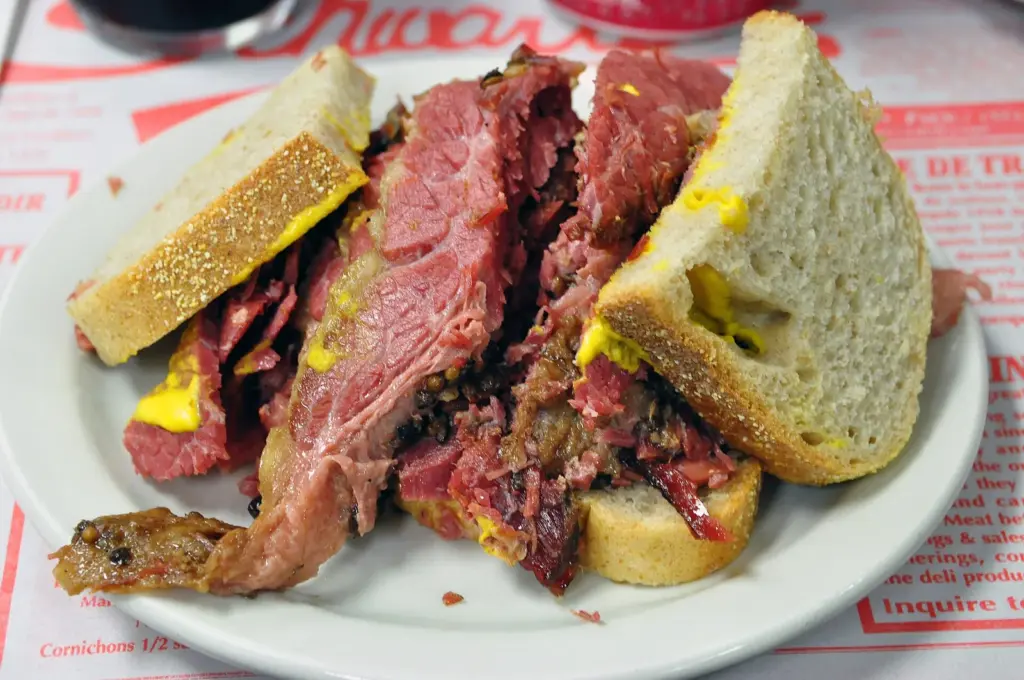
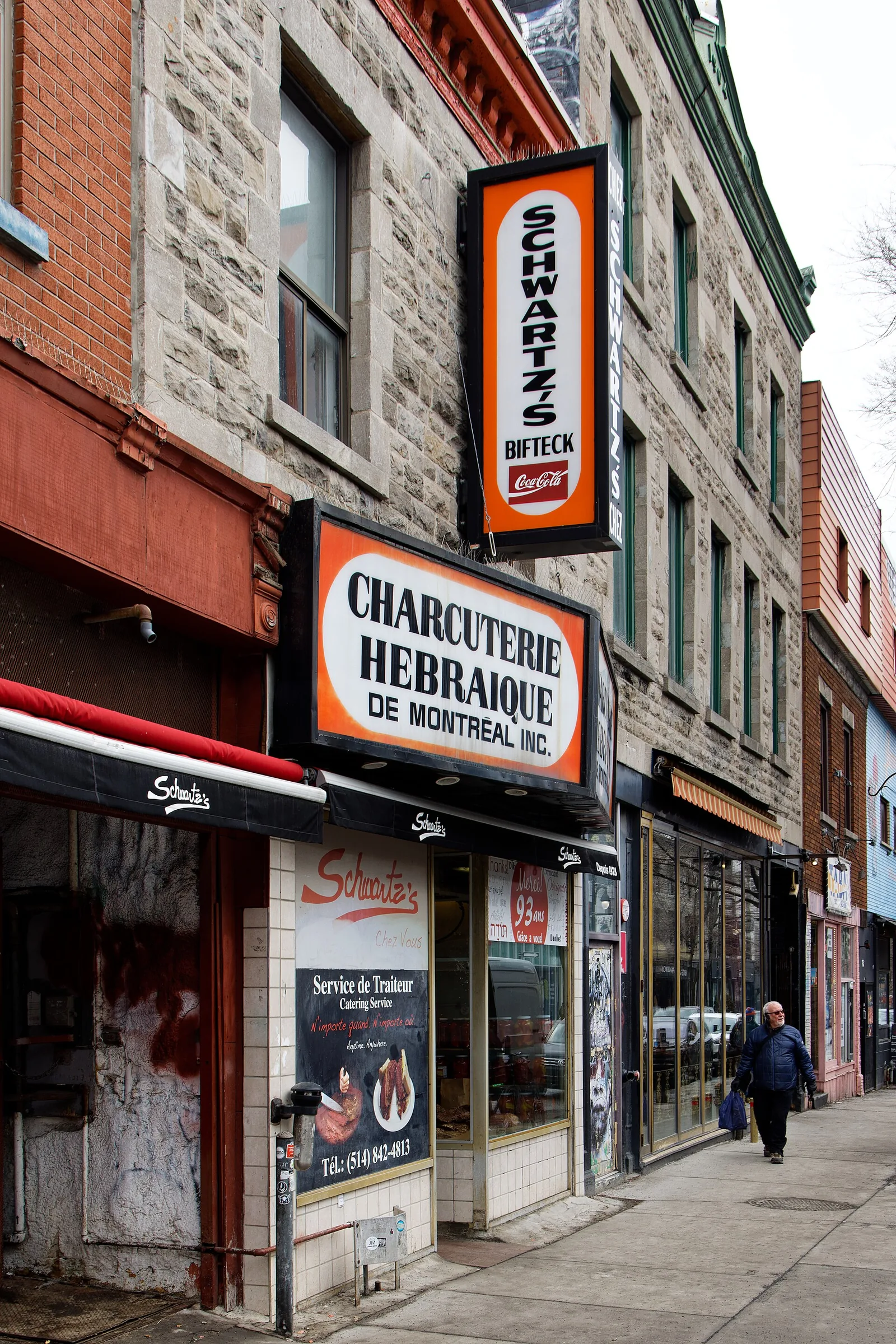
Montreal smoked meat is beef brisket cured with spices, smoked, steamed and hand-sliced, then piled high on rye bread with yellow mustard. It sits somewhere between pastrami and corned beef, but locals will tell you, firmly, that it’s neither. The place to eat it is Schwartz’s at 3895 boulevard Saint-Laurent, the Hebrew delicatessen that has become one of the city’s most famous institutions. Expect a queue outside, communal tables, brusque and efficient service, and a menu that barely matters because everyone orders the same thing.
Order a smoked meat sandwich medium-fat (lean is dry, fatty is for devotees), a side of fries, a pickle and, if you want to do it properly, a black cherry soda. The queue moves faster than it looks. Go mid-afternoon on a weekday to shorten it, or cross the road to the Main Deli Steak House, the long-standing rival, if you’re in a hurry. Hours vary, so check before a special trip.
- Where:
- 3895 boulevard Saint-Laurent, the Plateau
- Getting there:
- bus 55 along boulevard Saint-Laurent, or about 15 minutes’ walk from Sherbrooke or Mont-Royal metro (Orange)
- Tip:
- go mid-afternoon on a weekday
Montreal bagels
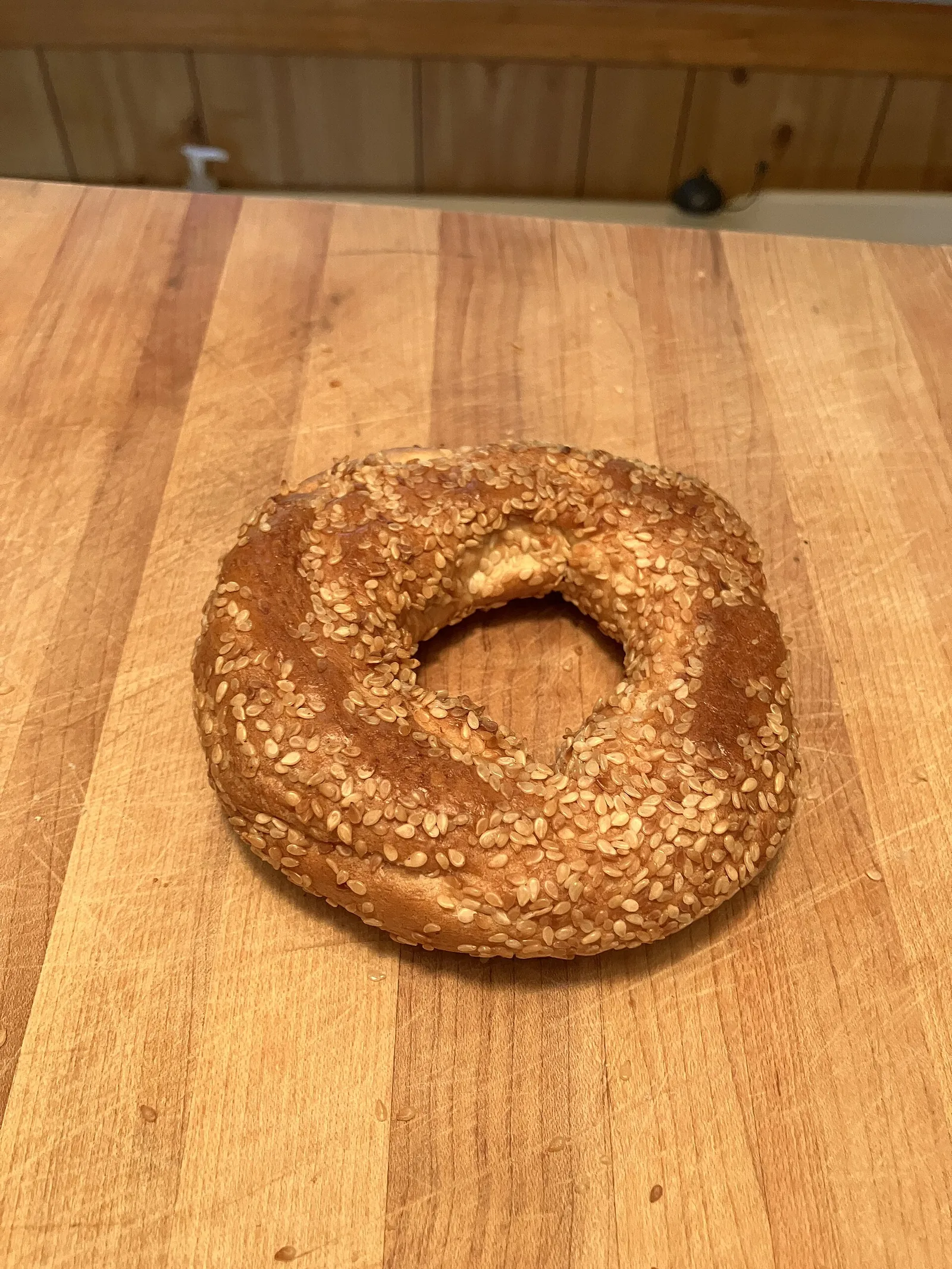
Forget the New York bagel. The Montreal version is smaller, denser and sweeter, with a bigger hole. The dough is boiled in honey-sweetened water before being baked in a wood-fired oven, which gives it a slightly charred, crackly crust and a chewy inside. Sesame is the classic; poppy seed is the other traditional choice.
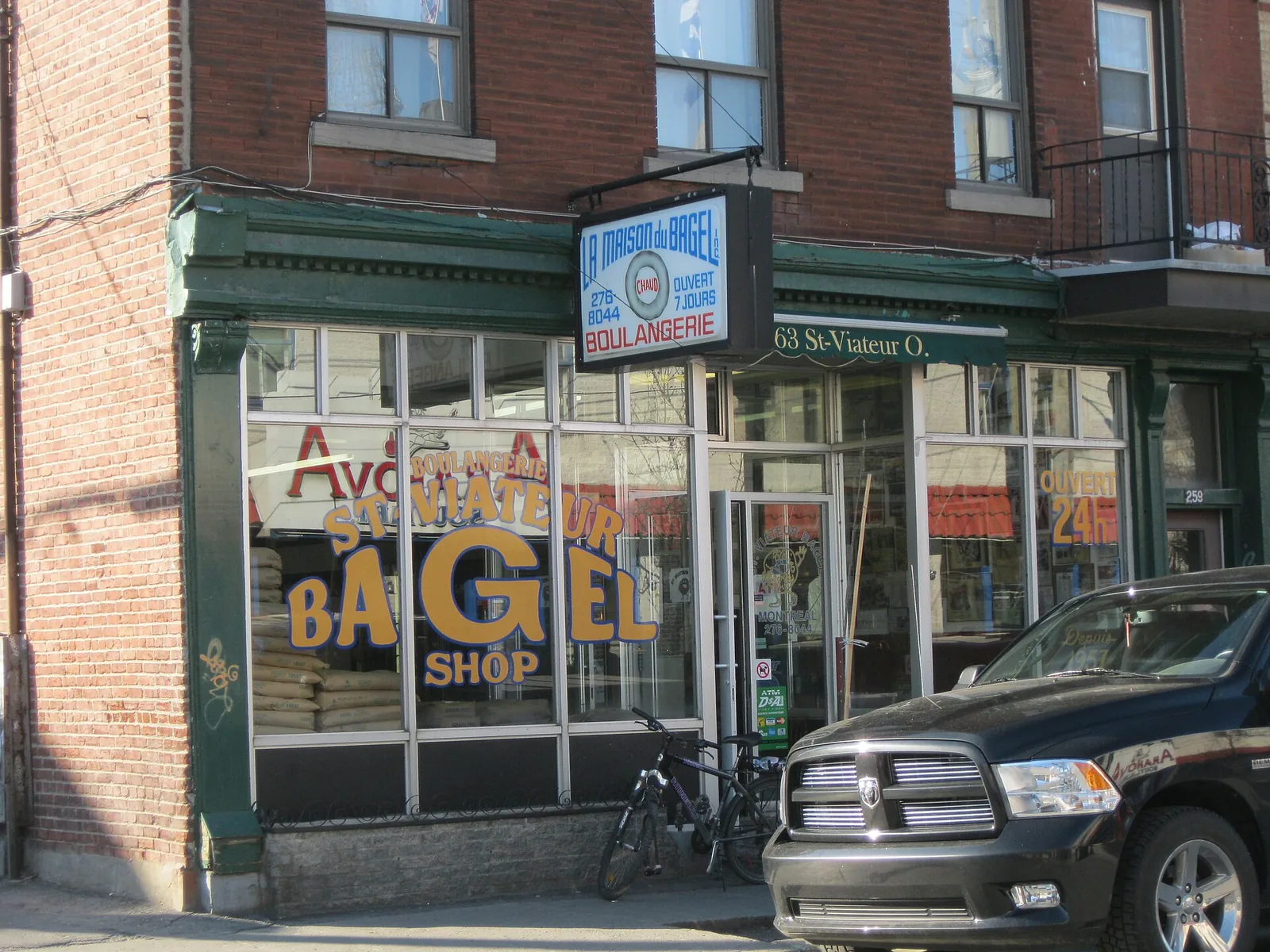
Two bakeries in Mile End, a few blocks apart, have been arguing about who makes the best for decades. St-Viateur, at 263 rue Saint-Viateur Ouest, is open from 06:00 to midnight (despite what some guides say, it isn’t open 24 hours). Fairmount, at 74 rue Fairmount Ouest, is the older rival. Both work the same way: stand at the counter, watch the bakers roll and shape the dough and slide it into the oven, and buy a dozen by the bag. Eat one hot on the pavement outside. Then, if you can, walk to the other shop and decide for yourself.
- Where:
- Mile End
- Getting there:
- about 15 minutes’ walk from Laurier metro (Orange), or bus 55
- Tip:
- buy a mixed dozen and freeze what you don’t eat — they travel well
Poutine
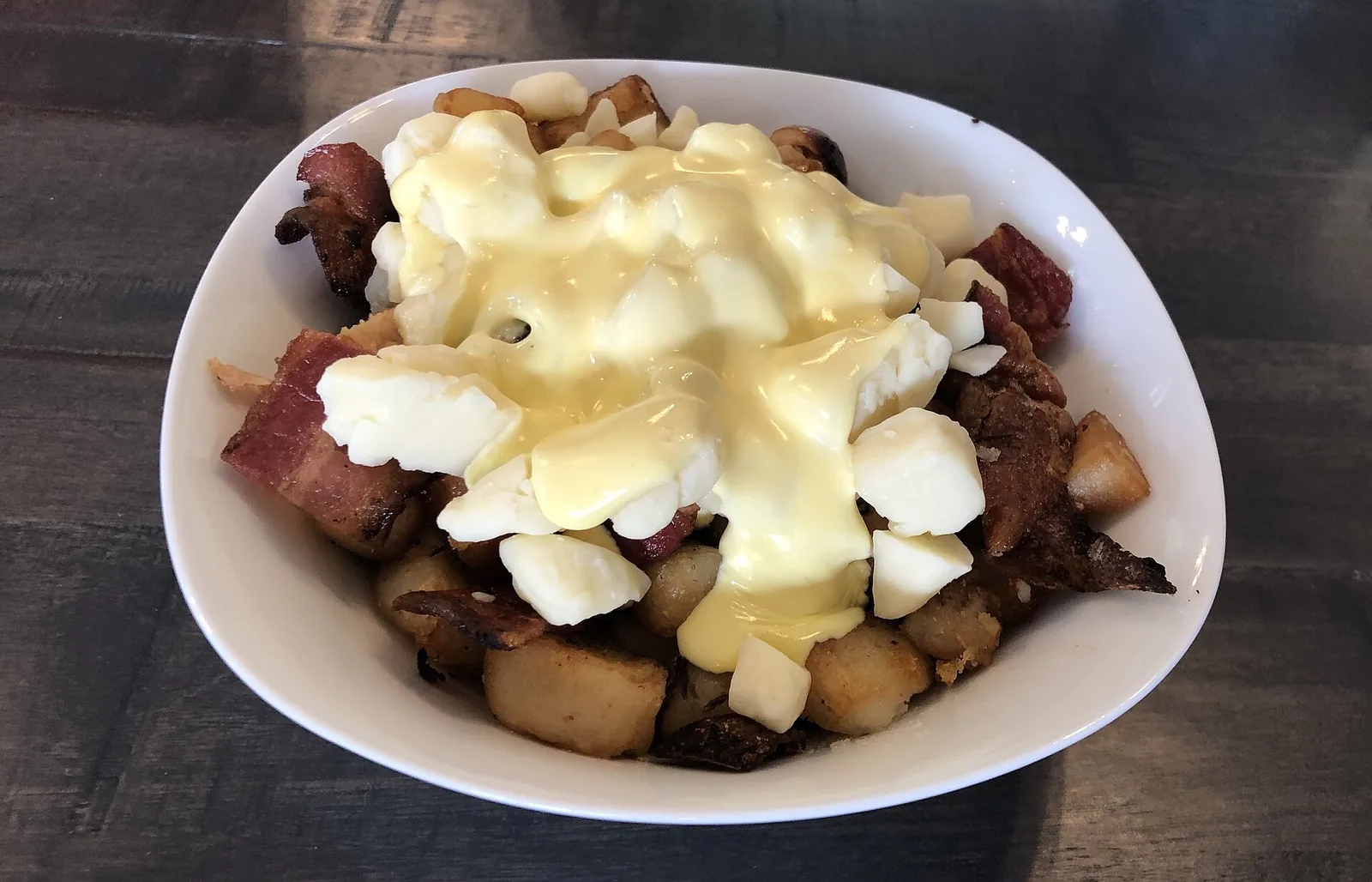
Quebec’s national comfort food is simple: French fries, fresh cheese curds and hot gravy. The detail that separates good poutine from bad is the curds. They should be fresh enough to squeak against your teeth and should soften, not fully melt, under the gravy. Anything made with grated cheese isn’t poutine.
The classic late-night destination is La Banquise at 994 rue Rachel Est, next to Parc La Fontaine, which is open 24 hours and serves dozens of variations, from the classic to versions loaded with sausage, bacon, peppers and more. At the other end of the scale, Au Pied de Cochon made its name with a poutine topped with foie gras. For a first time, order the plain classic. Once you understand it, go wild.
- Where:
- La Banquise, 994 rue Rachel Est
- Getting there:
- about 10 minutes’ walk from Mont-Royal metro (Orange)
- Tip:
- it’s busiest after the bars close at 03:00
Portuguese chicken
Montreal’s Portuguese community, centred on the streets around boulevard Saint-Laurent and rue Rachel in the Plateau, gave the city one of its best cheap meals: charcoal-grilled chicken, basted with a spicy piri-piri sauce and served with fries and salad. Romados on rue Rachel Est is the most famous spot, with a queue at lunchtime and the smell of charcoal drifting down the street. It’s mostly takeout; grab a portion and a custard tart (pastel de nata) and eat it in Parc du Portugal around the corner.
The Wilensky Special and other old-school counters
Montreal is full of old counters where little has changed in generations. Wilensky’s, on rue Fairmount Ouest in Mile End, is the most famous: a tiny luncheonette serving the “Special”, a pressed sandwich of grilled beef salami and bologna with mustard on a roll, and fountain sodas mixed by hand. It’s more about the atmosphere than the food, but the atmosphere is irreplaceable. On the brunch front, Beauty’s on avenue du Mont-Royal Ouest has been serving hearty breakfasts to queues of locals for decades.
Québécois comfort food
Look for the traditional dishes on bistro menus, especially in winter. Tourtière is a spiced meat pie, traditional at Christmas. Pâté chinois is Quebec’s version of shepherd’s pie, layered with ground beef, corn and mashed potato. Thick yellow pea soup is a sugar shack staple. For dessert there’s pouding chômeur, a cake baked in hot maple or brown-sugar syrup whose name translates roughly as “unemployed man’s pudding”, and sugar pie (tarte au sucre). And anything with maple.
Maple and the sugar shack
Quebec produces most of the world’s maple syrup, and the ultimate way to eat it is at a cabane à sucre (sugar shack) during the spring sugaring season, roughly March into early April. Long communal tables fill with pea soup, ham, beans, omelettes, sausages and crispy pork rinds, all meant to be drowned in syrup, with maple taffy (tire d’érable) poured on snow to finish. Au Pied de Cochon runs its own celebrated sugar shack at 11382 Rang Fresnière in Mirabel, open Friday to Sunday in season. Its reservations open on 1 December each year at 09:00 and go quickly. Most shacks are outside the city and need a car or a tour.
Montreal’s Food Institutions at a Glance
Addresses and hours checked in September 2026. Where hours aren’t listed, they vary; check the business’s own site before a special trip.
| Place | Order | Neighbourhood | Address | Hours | Getting there |
|---|---|---|---|---|---|
| Schwartz’s | Smoked meat, medium-fat | Plateau | 3895 boul. Saint-Laurent | Check site | Bus 55; Sherbrooke or Mont-Royal (Orange) |
| St-Viateur Bagel | Sesame bagels, hot | Mile End | 263 rue Saint-Viateur O. | 06:00–midnight | Laurier (Orange), 15 min walk |
| Fairmount Bagel | Sesame or poppy bagels | Mile End | 74 rue Fairmount O. | Check site | Laurier (Orange), 15 min walk |
| La Banquise | Classic poutine | Plateau | 994 rue Rachel E. | 24 hours | Mont-Royal (Orange), 10 min walk |
| Au Pied de Cochon | Foie gras poutine, pork, game | Plateau | 536 rue Duluth E. | Wed–Sun 17:00–22:00 | Sherbrooke (Orange), 10 min walk |
| Joe Beef | Seafood, steak, market dishes | Little Burgundy | 2491 rue Notre-Dame O. | Tue–Sat from 17:00 | Lionel-Groulx (Green, Orange), 10 min walk |
| Jean-Talon Market | Produce, cheese, snacks | Little Italy | Off boul. Saint-Laurent | Mon–Sat 08–18, Sun 08–17 | Jean-Talon (Orange, Blue) or De Castelnau (Blue) |
| Atwater Market | Butchers, bakeries, cheese | Saint-Henri / Lachine Canal | Av. Atwater at the canal | Mon–Fri 09–18, Sat–Sun 09–17 | Lionel-Groulx (Green, Orange), 10 min walk |
St-Viateur or Fairmount: The Great Bagel Debate
Ask ten Montrealers which bagel shop is better and you’ll get ten firm answers, a couple of family stories and at least one person who refuses to choose. The two bakeries, both founded by Jewish immigrant families and both still baking in Mile End, are a few minutes’ walk apart, and a bagel crawl between them is one of the cheapest and most enjoyable things you can do in the city.
The similarities matter more than the differences. At both, the dough is hand-rolled into rings, boiled briefly in honey-sweetened water, coated in seeds and baked on long wooden paddles in a wood-fired oven, which you can watch from the counter. The result is denser, sweeter and crustier than a New York bagel, with a larger hole. Neither shop is a café in the usual sense: you queue, you order by the bag, you pay and you leave, usually eating the first one before you’ve reached the corner.
The differences are subtle and fiercely debated. Fans of St-Viateur tend to praise its classic sesame bagel as the purest version of the form, and it’s the easier of the two to fit into a day because it’s open from 06:00 to midnight. Fairmount, the older of the two, is known for a wider range of flavours alongside the classics, and its partisans swear its bagels are chewier. Our advice: buy a sesame from each, eat them side by side on a bench, and pick your team.
Two tips. Don’t toast a fresh Montreal bagel; it’s at its best as it comes, perhaps with cream cheese. And if you’re taking some home, freeze them the same day and reheat them in the oven. They’ll keep that way for weeks.
Coffee, Beer, Cider and Wine
Café culture
Montreal takes its coffee as seriously as its food. The old Italian espresso bars of Little Italy, where regulars stand at the counter for a quick shot, sit alongside a generation of independent third-wave cafés in Mile End, the Plateau and downtown. For a coffee with a view of a room, Crew Collective’s banking hall in Old Montreal is hard to beat. Order a chocolatine with it: that’s the Québécois word for what the rest of the world calls a pain au chocolat, and using it will earn you a small smile from the person behind the counter.
Quebec beer
Quebec has one of the liveliest craft beer scenes in Canada, and Montreal is full of brewpubs (broue-pubs in local French) brewing on the premises, particularly in the Plateau and Mile End. Look for Quebec-brewed beers on tap wherever you eat. Beer is also sold in dépanneurs (corner shops) until 23:00, so it’s easy to pick up a few local cans for a picnic or your hotel room.
Cider and ice cider
The orchards around Montreal produce excellent apple cider, from dry and sparkling to sweet. The local speciality is ice cider (cidre de glace), made from apples or juice frozen by the Quebec winter to concentrate their sugars. It’s sweet, intense and served cold in small glasses with dessert or cheese. It makes an excellent gift to take home, and you’ll find it at the SAQ, at Jean-Talon Market and at many cheese shops.
Wine
Quebec’s own wine industry, concentrated in the Eastern Townships south-east of the city, has grown rapidly, and many Montreal restaurants now list local bottles. The city also has a strong natural-wine bar scene. To buy wine, head to the SAQ, Quebec’s government-run liquor store chain; dépanneurs and supermarkets sell a more limited range. And remember the “Apportez votre vin” restaurants, where you can bring your own bottle.
Late-Night Eating in Montreal
Montreal is one of the best late-night food cities in North America, largely because the bars can serve until last call at 03:00 and the crowd that spills out afterwards needs feeding. The obvious destination is La Banquise at 994 rue Rachel Est, which is open 24 hours and at its most atmospheric between 03:00 and 05:00. Before midnight, a hot bag of bagels from St-Viateur is the Mile End option. Across the city, pizza-by-the-slice counters, shawarma and souvlaki shops and old-school casse-croûtes (snack bars) keep going late, especially along boulevard Saint-Laurent and rue Sainte-Catherine.
One practical point: the metro stops running at roughly 00:30 (later on Saturdays), so late-night eating usually means a taxi, an Uber or a night bus home. Plan that before the last round.
A Food-Lover’s Two Days in Montreal
If eating is the main point of your trip, here’s a two-day route that covers the essentials without too much backtracking.
Day one: markets, bagels and smoked meat
- 08:00, Jean-Talon Market. Arrive as it opens, before the crowds. Graze the samples, have a coffee and a pastry, and buy fruit for later.
- 10:30, Mile End bagels. Walk or take a short bus ride south to St-Viateur and Fairmount. Buy a sesame from each and hold your own taste test.
- 11:30, Mile End wander. Browse the shops and cafés on boulevard Saint-Laurent and rue Bernard. Stop at Wilensky’s for a Special if you still have room.
- 14:30, Schwartz’s. A late lunch avoids the worst of the queue. Smoked meat, medium-fat, with fries and a pickle.
- Evening, the Plateau. Walk it off in Parc La Fontaine, then have dinner at Au Pied de Cochon (Wednesday to Sunday) or a BYOB bistro on rue Duluth. If you’re still going after the bars close, finish with a poutine at La Banquise.
Day two: Old Montreal, the canal and Little Burgundy
- 09:30, Old Montreal. Coffee at Crew Collective, then a walk through the old streets and down to the Old Port.
- 12:00, Olive et Gourmando. Lunch on rue Saint-Paul Ouest. Go a little before noon to beat the queue.
- 14:00, Lachine Canal by bike. Rent a BIXI in the Old Port and ride the flat canal path west to Atwater Market, about half an hour at an easy pace.
- 15:00, Atwater Market. Cheese, charcuterie, pastries and ice cider to take home. The market closes at 18:00 on weekdays and 17:00 at weekends.
- Evening, Little Burgundy. Walk along rue Notre-Dame Ouest for dinner at Joe Beef or Liverpool House (Tuesday to Saturday from 17:00), or at one of the wine bars and small restaurants along the strip. Lionel-Groulx metro is a short walk away.
The Best Restaurants in Montreal for a Special Night
When it comes to serious dining, Montreal has long been one of North America’s most underrated cities. That changed in the eyes of the wider world when the Michelin Guide began covering Quebec.
Michelin-starred restaurants
The Michelin Guide Québec’s 2026 selection, revealed on 6 May 2026, awarded stars to 13 restaurants across the province. Montreal’s starred restaurants include Hoogan et Beaufort and Sushi Nishinokaze, both new to the list in 2026, alongside Jérôme Ferrer – Europea, Mastard and Sabayon. The province’s only two-star restaurant, Tanière³, is in Quebec City. Starred restaurants book up well ahead, especially at weekends, so reserve as early as you can. The full selection, including the more affordable Bib Gourmand picks, is on the Michelin Guide’s Montreal page.
The chef-driven institutions
Some of Montreal’s most influential restaurants built their reputations long before Michelin arrived, and they remain the places locals recommend when you ask where to have one great dinner.
Toqué!, on Place Jean-Paul-Riopelle at the northern edge of Old Montreal, is chef Normand Laprise’s restaurant and arguably the most important kitchen in modern Quebec cooking. It pioneered the idea of building a fine-dining menu entirely around Quebec producers. Expect a polished tasting-menu experience and a bill to match.
Joe Beef, at 2491 rue Notre-Dame Ouest in Little Burgundy, is the opposite in spirit: loud, generous, rich and irreverent, with a chalkboard menu of seafood, steak and whatever the market has brought in. It serves dinner Tuesday to Saturday from 17:00, and its sister restaurant, Liverpool House, is next door at number 2501. Seats are hard to come by, so check the restaurant’s website for its current booking policy before you go.
Au Pied de Cochon, at 536 rue Duluth Est in the Plateau, is chef Martin Picard’s temple to Québécois excess: pork, duck, game and foie gras in quantities that should come with a warning. It’s open Wednesday to Sunday from 17:00 to 22:00. Go hungry, share, and don’t plan anything strenuous for the following morning. Reservations are on the Au Pied de Cochon website.
How to book the best restaurants in Montreal
Most of the top restaurants take reservations online, and the most popular ones fill their weekend tables weeks in advance. Book as soon as your dates are fixed, particularly for Friday and Saturday nights and during big festivals. If you can’t get a table, try for an early (17:30) or late (21:30) sitting, a weeknight, or a seat at the bar, which many restaurants keep for walk-ins. Cancellation policies are increasingly strict, with some places taking a card deposit, so read the terms before you book.
Finding the Best Restaurants in Montreal by Neighbourhood
Montreal’s restaurant scene is spread across the city, and each neighbourhood has its own character. Here’s where to go, and what for.
Old Montreal
The historic district has some of the city’s best restaurants and some of its worst value, often on the same street. The rule of thumb: the further you walk from Place Jacques-Cartier, the better and fairer the food. Olive et Gourmando on rue Saint-Paul Ouest is the essential lunch stop, a bakery-café with generous sandwiches and excellent pastries, and Crew Collective & Café at 360 rue Saint-Jacques serves coffee in a spectacular 1920s banking hall. Toqué! is just to the north. Avoid the menu-waving terrasses on Place Jacques-Cartier. Our Old Montreal guide has more on where to eat in the old town.
The Plateau
The Plateau is Montreal’s classic eating neighbourhood: bistros, brasseries, cafés and BYOB restaurants on almost every corner. Au Pied de Cochon and La Banquise are here, as is L’Express on rue Saint-Denis, a Parisian-style bistro that has been a late-night favourite of Montrealers for decades. Rue Duluth and rue Prince-Arthur are known for their bring-your-own-wine restaurants. Boulevard Saint-Laurent, “the Main”, is lined with delis, Portuguese grills and bars.
Mile End
Just north of the Plateau, Mile End is home to both famous bagel bakeries, Wilensky’s, and a dense scene of cafés, bakeries and small, ambitious restaurants. It’s an ideal neighbourhood for a slow morning: bagels, coffee, a browse through the shops on boulevard Saint-Laurent and rue Bernard. In the evening, brewpubs and wine bars take over.
Little Italy
Built around the Jean-Talon Market, Little Italy is the place for Italian delis, espresso bars, pizza and gelato. Spend a morning at the market and then take a table at one of the cafés on boulevard Saint-Laurent, where the older Italian regulars argue over espresso on the terrasse.
Saint-Henri and Little Burgundy
The stretch of rue Notre-Dame Ouest through Little Burgundy and Saint-Henri, south-west of downtown, has become one of the city’s most exciting restaurant strips over the past two decades. Joe Beef and Liverpool House anchor it, surrounded by wine bars, cocktail bars and small restaurants. Atwater Market is at one end, so it’s easy to combine a market visit with lunch and a walk or bike ride along the Lachine Canal.
Chinatown and downtown
Montreal’s compact Chinatown, just north of Old Montreal around boulevard Saint-Laurent, is the best budget escape in the centre of the city: dumplings, noodle soups, hand-pulled noodles, bakeries and Vietnamese pho at a fraction of Old Montreal prices. Downtown, the food courts in the RÉSO underground network, especially under the Eaton Centre near McGill station, are a practical, warm option in winter.
The Markets: Jean-Talon and Atwater
If you only have time for one food experience that isn’t a restaurant, make it a market. Montreal’s public markets are open year-round and are as much a part of local life as the restaurants.
Jean-Talon Market
In Little Italy, Jean-Talon is one of the largest open-air markets in North America and the one Montrealers love most. From roughly May to November it has around 150 vendors at its peak: farmers selling Quebec strawberries in early summer, corn and tomatoes in August, apples and squash in autumn, alongside cheese shops, butchers, fishmongers, bakeries, spice merchants and maple producers. From October the central stalls are enclosed for the winter, and the market stays open year-round. Hours are Monday to Saturday 08:00–18:00 and Sunday 08:00–17:00.
Go on a weekday morning to avoid the Saturday crowds. Graze rather than shop: most stalls offer samples, and the snack counters sell everything from fresh oysters and crêpes to empanadas. Pick up Quebec cheese, maple butter and ice cider (cidre de glace, a Quebec speciality made from frozen apples) to take home.
- Metro:
- Jean-Talon (Orange, Blue) or De Castelnau (Blue)
- Cost:
- free entry
- Allow:
- 1 to 2 hours

Atwater Market
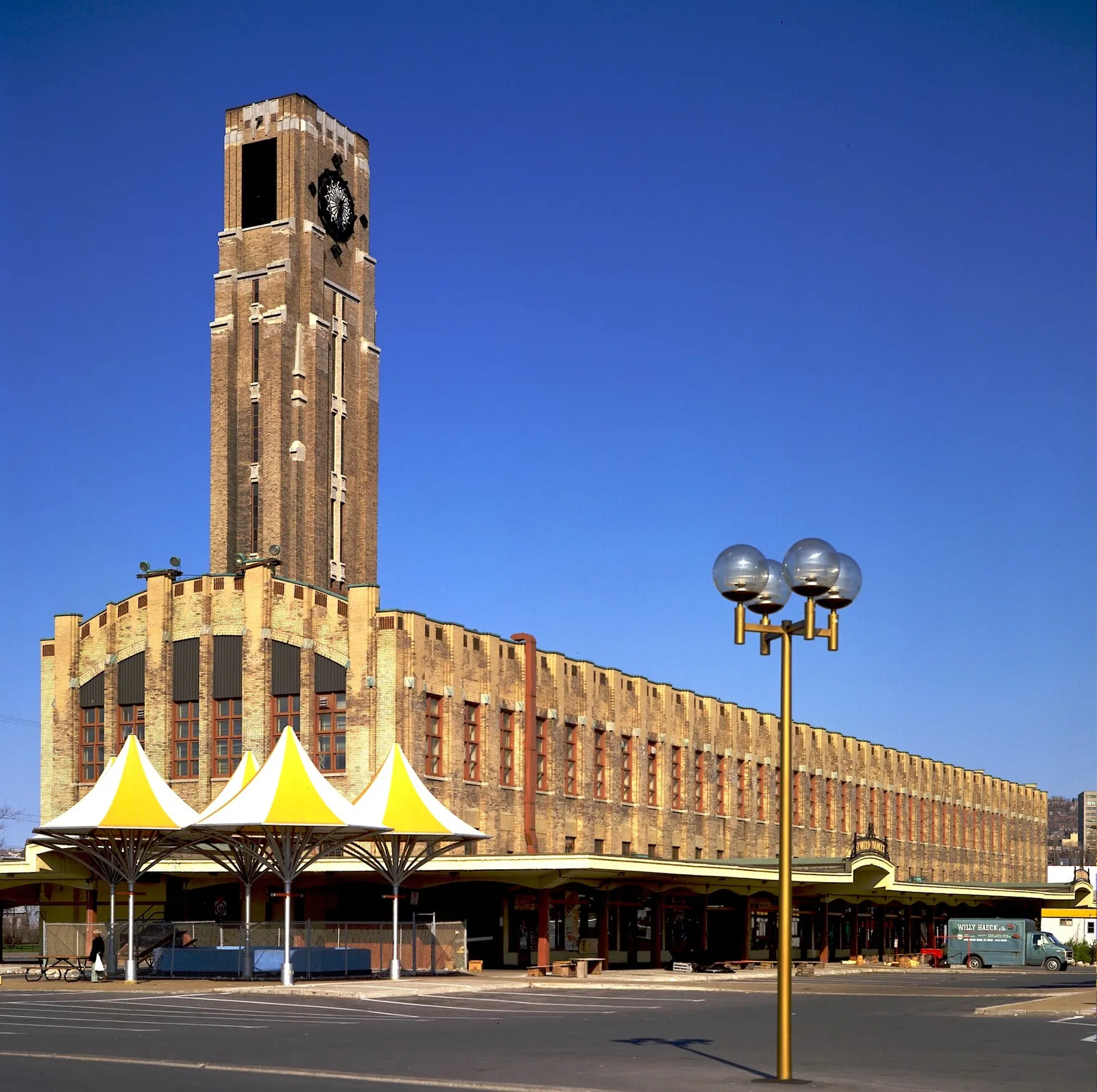
Atwater Market, in a 1933 art deco building with a striking clock tower beside the Lachine Canal, is smaller and more polished than Jean-Talon, with some of the city’s best butchers, bakeries, cheese shops and wine merchants inside, and flower and produce stalls outside in the warmer months. It’s open Monday to Friday 09:00–18:00 and weekends 09:00–17:00.
The best way to do it is by bike: rent a BIXI in the Old Port and ride the flat Lachine Canal path to the market, about half an hour at an easy pace, then buy a picnic and eat it on the canal bank. The full BIXI season runs from 15 April to 15 November.
- Metro:
- Lionel-Groulx (Green, Orange), about 10 minutes’ walk
- Cost:
- free entry
- Allow:
- 1 hour
Montreal Food Through the Year
What you eat in Montreal changes with the seasons more than in most cities.
- Spring: sugar shack season from roughly March into early April. By May, the terrasses (restaurant patios) are back out, and they stay out until October.
- Summer: terrasse season in full swing, strawberries and then corn at the markets, and outdoor eating during the festivals. See our Montreal festivals calendar for what’s on.
- Autumn: harvest season at Jean-Talon and Atwater, with apples, squash, cider and maple products. The last terrasse evenings of the year are in early October.
- Winter: comfort food, smoked meat, poutine and long bistro dinners. The Montréal en Lumière festival, from 18 to 28 February 2027, includes a food programme with visiting chefs in restaurants across the city. Our winter guide has more on eating well when it’s cold.
For a month-by-month view of what else is happening, see our guide to the best time to visit Montreal.
How Eating Out Works in Montreal
A few local customs will save you confusion, and possibly embarrassment, at the end of the meal.
- Tax isn’t included. Menu prices exclude sales tax (GST and QST), which together add just under 15%. A $30 main costs about $34.50 before the tip.
- Tipping is expected. Tip 15–20% at a table-service restaurant, calculated on the pre-tax total, and $1–2 per drink at a bar. The server will usually bring a portable card terminal to the table, which prompts you to choose a tip.
- Ask for the bill. Servers won’t bring it until you ask. “L’addition, s’il vous plaît” works, but so does English.
- Bring your own wine. Signs reading “Apportez votre vin” mean the restaurant has no alcohol licence and you’re welcome to bring your own bottle. Buy it at the SAQ (Quebec’s government liquor stores) or, for simpler wines and beer, at a dépanneur (corner shop), which can sell them until 23:00.
- Look for the table d’hôte. Many restaurants offer a fixed-price set menu, especially at lunch, which is often the best-value way to eat at a good bistro.
- Language. Menus are in French, often with English translations, and servers switch to English readily. A “Bonjour-hi” greeting is standard, and answering in English is completely normal.
- Drinking age and hours. The legal drinking age in Quebec is 18, and bars can serve until last call at 03:00.
A short Montreal food glossary
- Fromage en grains: fresh cheese curds, the key to a real poutine.
- Tire d’érable: maple taffy, hot syrup set on snow and rolled onto a stick.
- Table d’hôte: a fixed-price set menu, often with a starter, main and dessert.
- Apportez votre vin: bring your own wine.
- Cidre de glace: ice cider, a sweet dessert cider made from frozen Quebec apples.
- Dépanneur: a corner shop, which also sells beer and wine.
- Casse-croûte: a snack bar or roadside diner, the natural habitat of poutine.

Eating Well on a Budget
Montreal is one of the best cities in North America for eating well without spending much. The classics — bagels, smoked meat, poutine, Portuguese chicken — are all cheap. A few strategies help:
- Build a picnic at a market. Bagels from Mile End, cheese and fruit from Jean-Talon, and a bench in Parc La Fontaine or on Mount Royal.
- Eat your big meal at lunch. A lunchtime table d’hôte at a good bistro often costs much less than dinner.
- Go BYOB. Bringing your own wine to an “Apportez votre vin” restaurant can save a lot compared with restaurant wine lists.
- Head to Chinatown or the Main. Dumplings, pho and Portuguese chicken are some of the best-value meals in the centre.
- Use the food courts in winter. The RÉSO food courts downtown are warm, fast and cheap.
For a full list of free and cheap things to do between meals, see our guide to what to do in Montreal.
Vegetarian, Vegan and Dietary Needs
Montreal is easy for vegetarians and vegans, with a large number of dedicated plant-based restaurants and cafés, particularly in the Plateau and Mile End, and vegetarian options on most mainstream menus. The classics are trickier: smoked meat is obviously off the list, and traditional poutine gravy is usually meat-based, although many places now offer a vegetarian gravy. The city’s large Lebanese, Middle Eastern and South Asian communities mean halal food is widely available, especially in neighbourhoods like Côte-des-Neiges and Parc-Extension. For allergies and coeliac disease, tell your server clearly; most kitchens are used to adapting dishes.
Food Mistakes Visitors Make
- Eating on Place Jacques-Cartier. The view is lovely; the food is overpriced. Walk five minutes west.
- Queuing at Schwartz’s at peak time. Go mid-afternoon on a weekday instead of Saturday lunchtime.
- Expecting a 24-hour bagel at St-Viateur. It closes at midnight. La Banquise is the 24-hour option.
- Not booking at weekends. The best restaurants in the city fill their Friday and Saturday tables weeks ahead.
- Forgetting tax and tip. Add roughly 15% tax and a 15–20% tip to menu prices when budgeting.
- Driving to Jean-Talon on a Saturday. Take the metro. Parking near the market on weekends is a battle.
- Ignoring the BYOB restaurants. They’re a local institution and one of the best-value ways to eat well.
Frequently Asked Questions
What food is Montreal famous for?
Montreal is best known for smoked meat, especially from Schwartz’s on boulevard Saint-Laurent; wood-fired bagels from St-Viateur and Fairmount in Mile End; and poutine, the Quebec dish of fries, cheese curds and gravy. Maple syrup, Portuguese charcoal-grilled chicken and traditional Québécois dishes like tourtière and pouding chômeur are also local specialities worth seeking out.
What are the best restaurants in Montreal for a special occasion?
For a big night out, Montreal’s Michelin-starred restaurants include Hoogan et Beaufort, Sushi Nishinokaze, Europea, Mastard and Sabayon in the 2026 selection. Long-standing favourites include Toqué!, Normand Laprise’s influential restaurant near Old Montreal; Joe Beef in Little Burgundy; and Au Pied de Cochon in the Plateau. Book weekend tables weeks ahead.
Does Montreal have Michelin-starred restaurants?
Yes. The Michelin Guide now covers Quebec, and its 2026 selection, revealed on 6 May 2026, awarded stars to 13 restaurants across the province. Montreal’s starred restaurants include Hoogan et Beaufort, Sushi Nishinokaze, Jérôme Ferrer – Europea, Mastard and Sabayon. The province’s only two-star restaurant, Tanière³, is in Quebec City.
Which is better, St-Viateur or Fairmount bagels?
It depends who you ask, and Montrealers have been arguing about it for decades. Both bakeries in Mile End make hand-rolled, honey-water-boiled, wood-fired bagels. St-Viateur, at 263 rue Saint-Viateur Ouest, is open from 06:00 to midnight; Fairmount is at 74 rue Fairmount Ouest. They’re a few minutes’ walk apart, so the best answer is to try both.
Where can you get poutine late at night in Montreal?
La Banquise, at 994 rue Rachel Est next to Parc La Fontaine, is open 24 hours and serves dozens of poutine variations. It’s busiest in the small hours after the bars close at 03:00. For something more extravagant, Au Pied de Cochon on rue Duluth Est serves a famous foie gras poutine, but it closes at 22:00.
How much should you tip in Montreal restaurants?
Tip 15–20% at table-service restaurants, usually calculated on the total before tax, and $1–2 per drink at a bar. Remember that menu prices don’t include sales tax (GST and QST), which adds just under 15%. Servers usually bring a portable card terminal to the table, which prompts you to choose the tip amount.
What does “apportez votre vin” mean?
It means “bring your own wine”. Restaurants displaying the sign have no alcohol licence and welcome customers who bring their own bottle, which is a long-standing Montreal tradition, especially on rue Duluth and rue Prince-Arthur in the Plateau. Buy wine at an SAQ store, or at a dépanneur (corner shop), which can sell beer and wine until 23:00.
Is Jean-Talon Market open in winter?
Yes. Jean-Talon Market in Little Italy is open year-round. From October the central stalls are enclosed for the winter, and hours are Monday to Saturday 08:00–18:00 and Sunday 08:00–17:00. It’s busiest and most colourful from roughly May to November, when around 150 vendors fill the market at its peak.