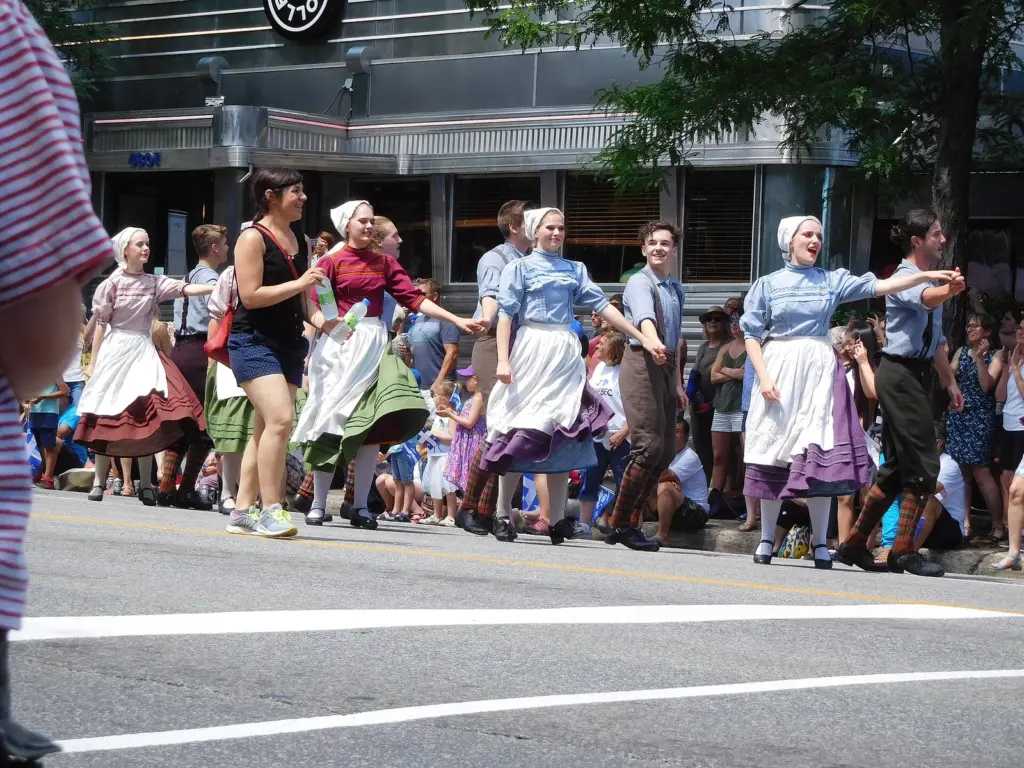
Do you need to speak French in Montreal? No. Not to visit, not to order dinner, not to buy a metro ticket and not to ask for directions. More than half the people in the Montreal area speak both English and French, staff in hotels, restaurants, shops and museums switch languages without a second thought, and Quebec’s much-discussed language laws place no obligation at all on visitors. But Montreal is a French-speaking city, proudly so, and knowing how that works will make your trip richer and a lot smoother. Below: what the language laws actually say, where you’ll hear which language, how the famous “Bonjour-Hi” works, the French words and phrases worth learning, how Quebec French differs from the French of France, and a guide to the Québécois culture, festivals, food and history that make Montreal unlike any other city in North America.
Do You Need to Speak French in Montreal? The Short Answer
For a visitor, the honest answer is that you’ll be fine in English. French helps, it’s appreciated, and it opens doors, but it isn’t required anywhere a tourist normally goes.
- Most people you’ll deal with are bilingual. In the 2021 census, 56.4% of people in the Montreal metropolitan area could hold a conversation in both English and French, and among workers, 69% were English–French bilingual.
- Tourist areas are fully bilingual. Downtown, Old Montreal, the Plateau and Mile End work comfortably in English.
- The law doesn’t apply to you. Quebec’s Charter of the French Language, strengthened by Bill 96 in 2022, governs signs, businesses and government, not visitors.
- Greet people in French, then switch. A “bonjour” before your English goes a long way.
- Expect more French outside the centre. In the east end, in the suburbs and across most of Quebec, English is less common.
Montreal is also one of the most multilingual cities on the continent. In 2021, 69.8% of people in the metropolitan area could hold a conversation in two or more languages, the highest proportion of any large urban centre in Canada, ahead of Ottawa–Gatineau at 60.0% and Toronto at 56.1%. On the metro you’ll hear French, English, Arabic, Spanish, Creole, Mandarin and Italian, often in the same carriage.

What Quebec’s Language Laws Actually Say
News coverage of Quebec’s language laws, most of it written for residents and businesses, has convinced a lot of travellers that they’ll be refused service or fined for speaking English. That’s simply not true, and it’s one of the most common mistakes in travel coverage of Montreal.
The Charter of the French Language (Law 101)
Quebec’s Charter of the French Language, known as Law 101 or Bill 101, was passed in 1977. It made French the official language of Quebec and the normal language of work, commerce, education and government. It’s the reason commercial signs in Montreal are in French, or in French with a smaller other language, and why the stop signs say “ARRÊT”.
Bill 96
In 2022, Bill 96 strengthened the Charter. Among other things, it requires French to be clearly predominant on commercial signage, reinforces the right of customers to be informed and served in French, tightens the use of French by the provincial government, and limits the languages in which public bodies communicate. The government can use another language with Indigenous people, and to welcome immigrants for their first six months in Quebec.
What it means for visitors
None of this places any obligation on you. You don’t have to speak French to enter a shop, eat in a restaurant, stay in a hotel, see a doctor or use public transport, and no business will be penalised for serving you in English. The law says French must be available and prominent, not that other languages are banned. In practice, visitors notice three things: signs are in French first, some websites and menus lead with French, and a few government forms and announcements are only in French.
| Common belief | The reality |
|---|---|
| Tourists must speak French in Quebec | No law requires visitors to speak French |
| Shops can’t serve you in English | Customers have the right to be served in French; staff can and do serve in English |
| All signs are French-only | French must predominate; many signs also include English |
| Montrealers are hostile to English speakers | Most are bilingual and happy to switch, especially if you start with “bonjour” |
| You’ll need French for emergencies | 911 and major hospitals serve callers and patients in English |
A Short History of Language in Montreal
You can’t understand Montreal’s relationship with language without a little history, and knowing it will make the city’s streets, monuments and politics much more interesting.
Before the French
Long before Europeans arrived, the island was a meeting place for Indigenous peoples. When Jacques Cartier sailed up the St Lawrence in 1535, he found Hochelaga, a large Iroquoian village near the mountain. Today the island is often referred to by its Kanien’kehá:ka (Mohawk) name, Tiohtià:ke, in land acknowledgements at public events.
New France
In 1642, French settlers led by Paul de Chomedey de Maisonneuve and Jeanne Mance founded Ville-Marie, the mission that became Montreal, on the site now occupied by Pointe-à-Callière museum in Old Montreal. For more than a century, Montreal was a French colonial town and the centre of the fur trade.
British rule and the English-speaking elite
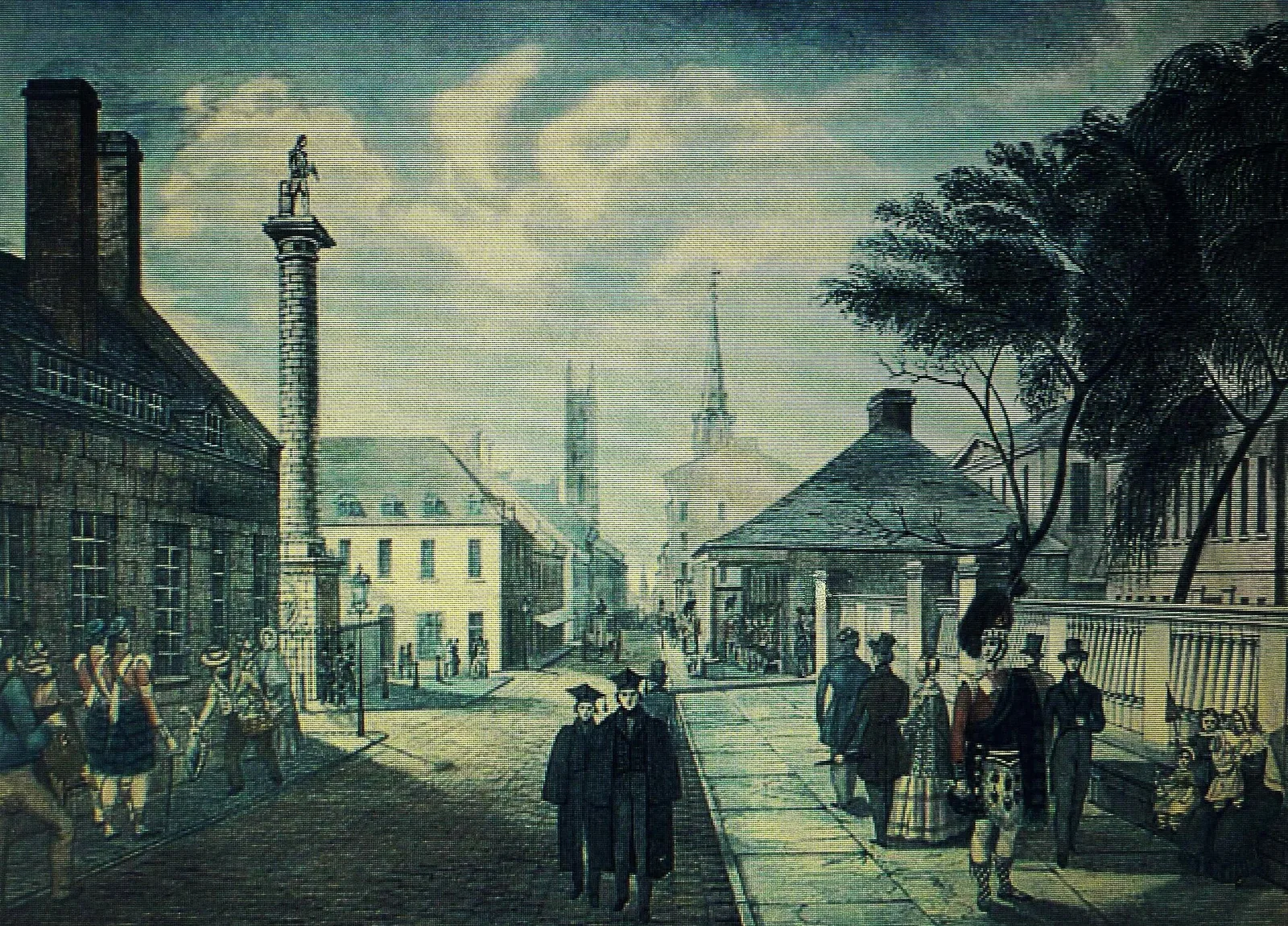
Montreal surrendered to the British in 1760, during the Seven Years’ War, and New France became a British colony. Over the next two centuries, English-speaking merchants, bankers and industrialists, many of Scottish origin, came to dominate the city’s economy. They built the grand mansions of the Golden Square Mile below Mount Royal, and McGill University. For generations, French-speaking Montrealers often had to use English to get ahead at work.
The Quiet Revolution
In the 1960s, the Quiet Revolution transformed Quebec: the Catholic Church lost its hold over education and health, the provincial government modernised the economy, and a new, confident francophone identity emerged. Montreal hosted Expo 67 and the 1976 Olympics. Language became central to politics, culminating in Law 101 in 1977.
Referendums and a changing city
Quebec held two referendums on sovereignty, in 1980 and 1995. Both were defeated, the second very narrowly. Many English-speaking Montrealers and businesses left for Toronto in the decades after 1976, and Montreal’s economy took years to recover. Since then, the city has become more bilingual and far more multicultural, with large communities from Haiti, North Africa, the Middle East, Latin America, Asia and Europe, many of whom speak French as well as their own languages.
The Main as a dividing line
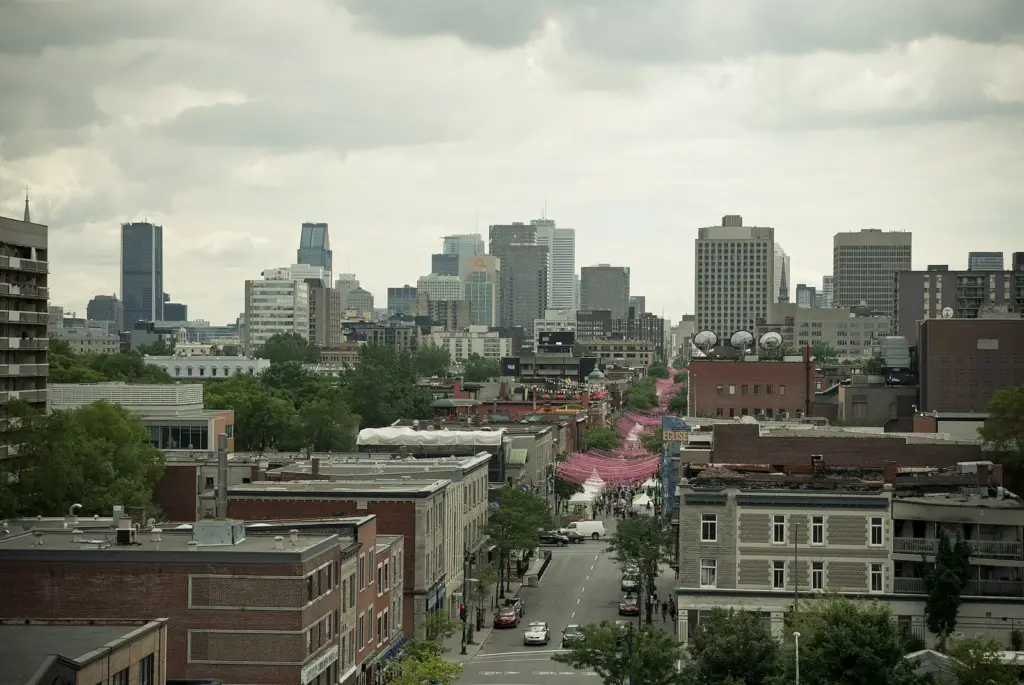
Boulevard Saint-Laurent, known as “the Main”, historically divided English-speaking west Montreal from French-speaking east Montreal. It still divides the city’s street addresses into Ouest (west) and Est (east), and immigrant communities traditionally settled along it, between the two. The divide is much blurrier today, but you’ll still notice it in some neighbourhoods. Our guide to Montreal’s neighbourhoods explains the character of each.
Where You’ll Hear Which Language
| Area | Main language on the street | How easy in English |
|---|---|---|
| Downtown and the Golden Square Mile | Bilingual, lots of English | Very easy |
| Old Montreal and the Old Port | Bilingual, tourist-facing | Very easy |
| Plateau Mont-Royal | French, with many English speakers | Easy |
| Mile End | Mixed French and English | Easy |
| Westmount, Notre-Dame-de-Grâce, West Island | Mostly English | Very easy |
| Côte-des-Neiges | Highly multilingual | Easy |
| Little Italy, Villeray, Rosemont | Mostly French | Usually fine |
| Hochelaga-Maisonneuve and the east end | French | Some French helps |
| Outside Montreal, most of Quebec | French | Harder; tourist services usually bilingual |

Even in the most French-speaking parts of the city, staff in restaurants, cafés and shops almost always have enough English to serve you. Outside Montreal, in rural Quebec and smaller towns, you’ll meet more people who speak little or no English, though hotels and tourist attractions usually do. Quebec City’s old town is very used to English-speaking visitors. See our day trips from Montreal for trips beyond the city.
Bonjour-Hi: How Language Works in Everyday Montreal
Walk into almost any shop or café in central Montreal and you’ll be greeted with “Bonjour, hi!” It’s the city’s bilingual greeting, inviting you to reply in whichever language you prefer. Answer in English and the conversation continues in English; answer “bonjour” and it continues in French.
The etiquette
- Start with “bonjour”. Even if you say nothing else in French, opening with “bonjour” (or “bonsoir” in the evening) is polite and noticed.
- Don’t open with “Do you speak English?” Say “Bonjour! Do you speak English?” or simply carry on in English after the greeting. The first sounds abrupt in a French-speaking city; the second is perfectly normal.
- Say “merci”. A thank-you in French costs nothing.
- Don’t be surprised by switching. If you try your French and the other person replies in English, they’re usually being helpful, not dismissive. If you want to practise, say so: “Je veux pratiquer mon français” is often greeted with delight.
- Be gracious. Replying in English is completely normal in Montreal and isn’t seen as a provocation. Complaining about French signs or menus, on the other hand, is a sure way to annoy people.
Franglais
Listen to young Montrealers talking and you’ll hear them switching between French and English mid-sentence, sometimes mid-word. This mix, often called franglais, is part of the city’s character, especially in the Plateau, Mile End and downtown. It’s fun to listen to and a sign of how deeply the two languages are intertwined.
Useful French Words and Phrases for Montreal
You don’t need to learn French for a visit, but a handful of words will help you read signs and menus and make a good impression.
Greetings and courtesies
| French | English | When to use it |
|---|---|---|
| Bonjour / Bonsoir | Hello / Good evening | Entering any shop, café or restaurant |
| Merci / Merci beaucoup | Thank you / Thank you very much | Everywhere |
| Bienvenue | You’re welcome (in Quebec) | Staff will say it after you thank them |
| S’il vous plaît | Please | Ordering or asking for help |
| Excusez-moi / Pardon | Excuse me / Sorry | Getting past someone on the metro |
| Parlez-vous anglais? | Do you speak English? | After “bonjour”, if needed |
| L’addition, s’il vous plaît | The bill, please | In a restaurant or bar |
| Santé! | Cheers! | Raising a glass |
| Bonne journée / Bonne soirée | Have a good day / evening | Leaving a shop |
Words you’ll see on signs and in the metro
- Arrêt: stop, on road signs and bus stops.
- Sortie: exit, in the metro and on highways.
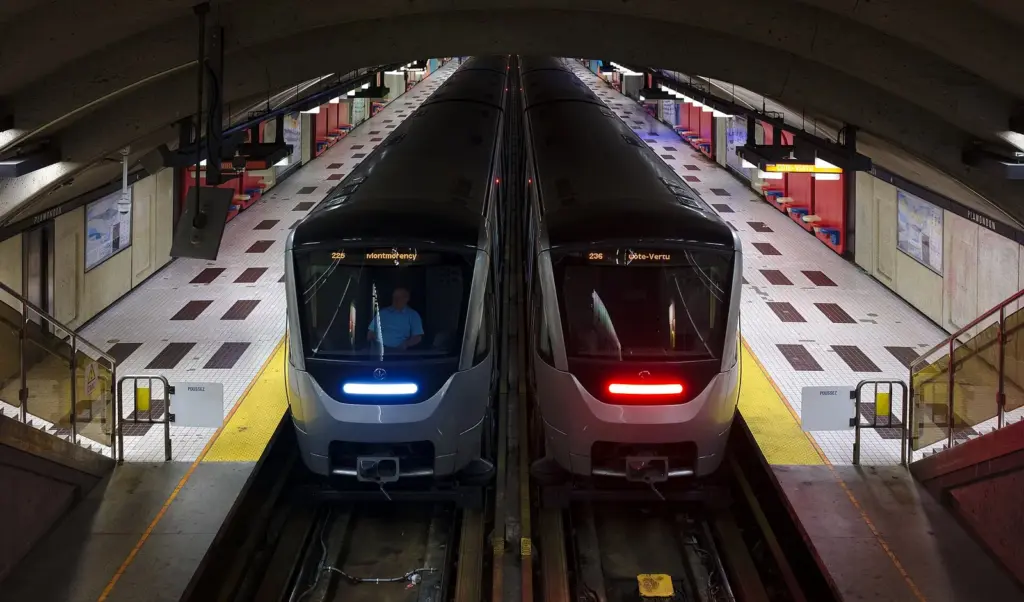
- Correspondance: transfer or connection between metro lines.
- Direction: the final station of a metro line, which tells you which way the train is going.
- Entrée / Poussez / Tirez: entrance / push / pull.
- Stationnement interdit: no parking; read parking signs carefully.
- Rue, avenue, boulevard, chemin: street types. Est and Ouest mean east and west.
- Fermé / Ouvert: closed / open.
- Toilettes: washrooms.
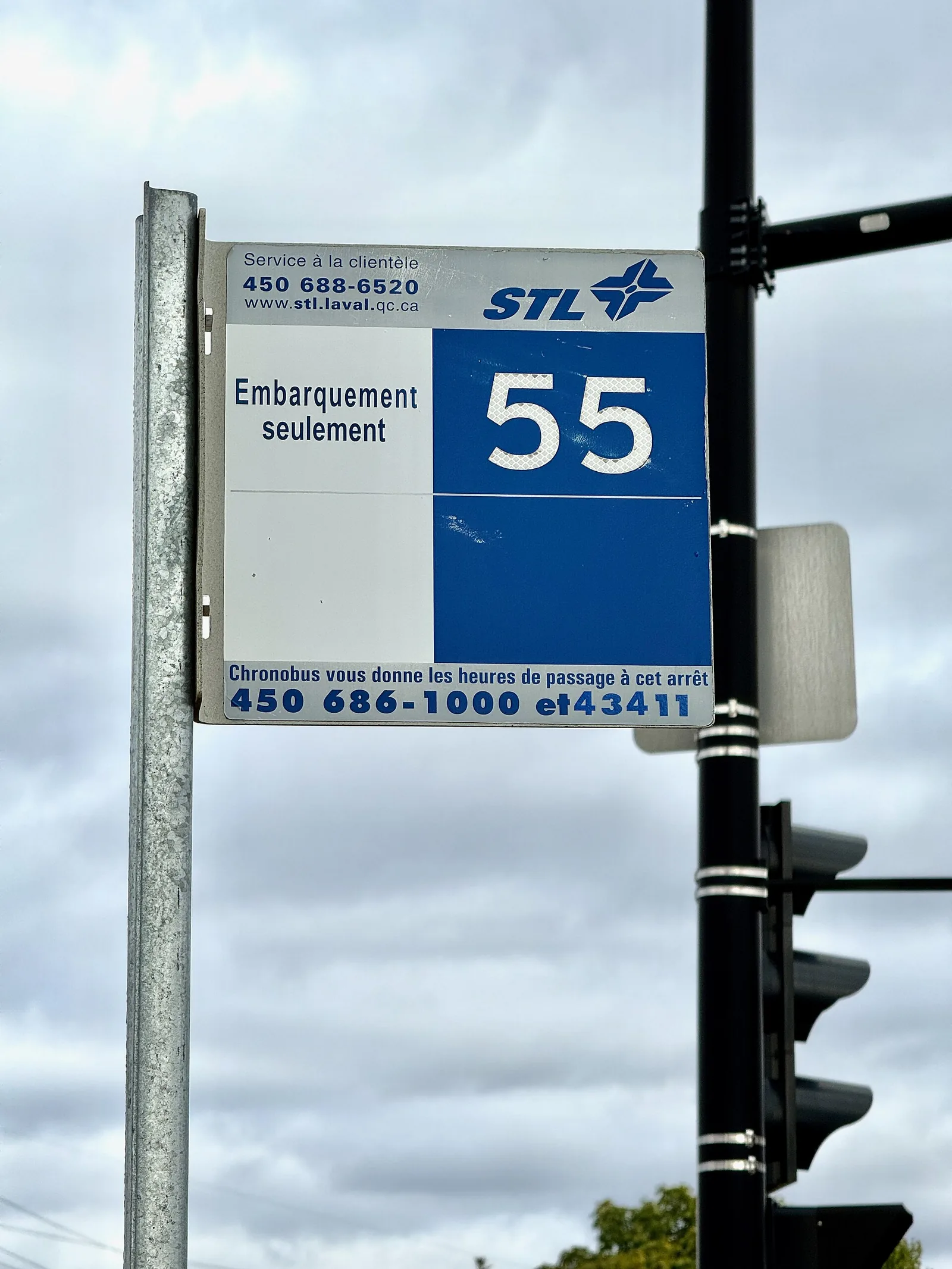
For more on how the metro, buses and fares work, see our guide to getting around Montreal.
Food and drink words
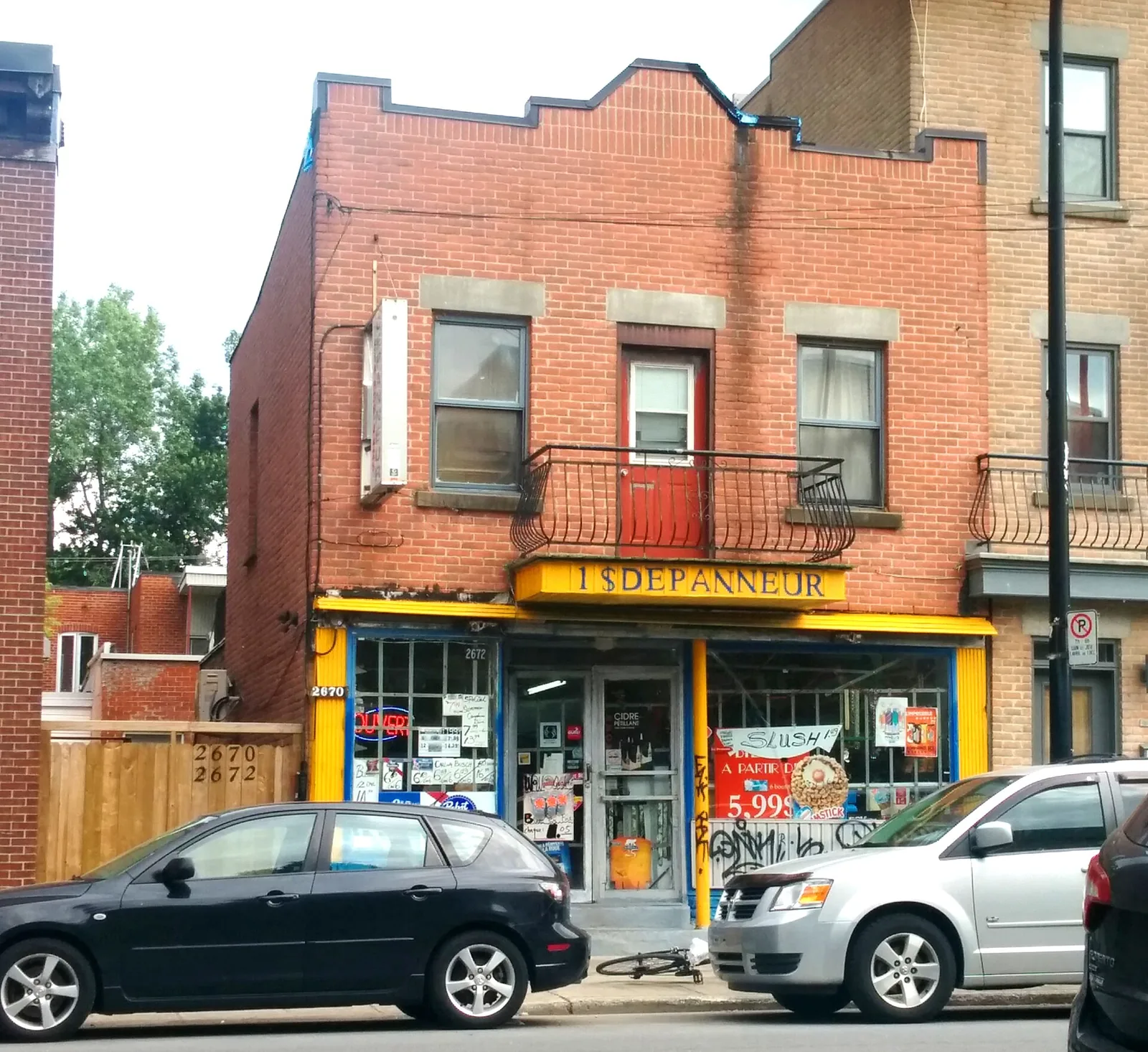
- Dépanneur: a corner shop, often called a “dep”, selling snacks, beer and wine (until 23:00).
- SAQ: the government-run liquor store.
- Terrasse: an outdoor patio, open roughly May to October.
- Apportez votre vin: bring your own wine; a BYOB restaurant.
- Table d’hôte: a set menu, often with a starter, main and dessert at a fixed price.
- Entrée: a starter or appetiser, not a main course as in the US.
- Déjeuner, dîner, souper: in Quebec, breakfast, lunch and dinner. In France, déjeuner is lunch and dîner is dinner, so this confuses even French visitors.
- Poutine: fries, cheese curds and gravy. No translation needed.
- Cabane à sucre: sugar shack, for maple-season feasts in March and April.
French for Common Situations
These short exchanges cover most of what a visitor might want to try in French. If your French runs out halfway, just switch to English; nobody minds.
| Situation | You could say | Meaning |
|---|---|---|
| Buying a metro ticket | Bonjour, un passe de 24 heures, s’il vous plaît. | Hello, a 24-hour pass, please. |
| Asking the way | Excusez-moi, où est la station de métro? | Excuse me, where is the metro station? |
| At a café | Un café au lait et un croissant, s’il vous plaît. | A latte and a croissant, please. |
| At a bakery | Une douzaine de bagels au sésame, s’il vous plaît. | A dozen sesame bagels, please. |
| In a shop | Je regarde seulement, merci. | I’m just looking, thank you. |
| Paying | Je peux payer par carte? | Can I pay by card? |
| At the hotel | J’ai une réservation au nom de… | I have a reservation under the name… |
| At a bar | Une pinte de bière en fût, s’il vous plaît. | A pint of draught beer, please. |
| Not understanding | Désolé, je ne parle pas bien français. | Sorry, I don’t speak French well. |
| Leaving | Merci, bonne journée! | Thanks, have a good day! |
Ordering in a Restaurant: A Walkthrough
Restaurants are where most visitors want to try their French, and where the differences between Quebec and elsewhere show up. Here’s how a typical dinner goes.
- Arriving: the host greets you with “Bonsoir!” or “Bonsoir, hi!” Say “Bonsoir, une table pour deux, s’il vous plaît” (a table for two), or mention your reservation.
- The menu: look for the table d’hôte, a set menu that’s often better value than ordering separately. The entrée is the starter and the plat principal is the main course. If the menu says apportez votre vin, it’s a bring-your-own-wine restaurant.
- Ordering: “Je vais prendre…” (I’ll have…) followed by the dish. For water, “une carafe d’eau” gets you free tap water.
- During the meal: the server may ask “Tout est correct?” (Is everything all right?). “Oui, c’est délicieux” (Yes, it’s delicious) is the perfect reply.
- The bill: ask for “l’addition, s’il vous plaît”. The server brings a card machine to the table, which suggests tip percentages; 15 to 20% is normal in Montreal, calculated before tax.
- Leaving: “Merci, bonne soirée!”
Remember that in Quebec, dîner means lunch and souper means dinner, so a “menu du dîner” is a lunch menu. For restaurant recommendations, see our Montreal food guide.
Quebec French vs the French of France
If you learned French at school in Europe, or you’re visiting from France, Quebec French will sound familiar and very different at the same time.
Accent and rhythm
Quebec French has its own accent, with distinctive vowel sounds and pronunciation that go back to the regional French of the 17th-century settlers. French visitors understand it easily in conversation, though fast, casual speech between Québécois friends, full of local slang, can be hard going at first.
Vocabulary
Quebec has kept some older French words and invented others, and it has been more determined than France to avoid English borrowings in official language. A few differences you’ll notice:
| Quebec | France | English |
|---|---|---|
| Courriel | ||
| Fin de semaine | Week-end | Weekend |
| Magasiner | Faire du shopping | To go shopping |
| Stationnement | Parking | Car park |
| Arrêt | Stop | Stop sign |
| Char (informal) | Voiture | Car |
| Blonde / chum | Copine / copain | Girlfriend / boyfriend |
| Tuque | Bonnet | Knitted winter hat |
| Piastre / piasse (informal) | Euro (no equivalent) | Dollar |
Tu and vous
Québécois use the informal “tu” more readily than people in France, including with strangers in casual settings. As a visitor, “vous” is always safe, but don’t be surprised if a server in a Plateau café calls you “tu”.
Swearing
Quebec’s strongest swear words, known as sacres, come from the vocabulary of the Catholic Church, a legacy of the Church’s power before the Quiet Revolution. You’ll overhear them. As a visitor, it’s best not to try them out.
Québécois Expressions You’ll Overhear
You don’t need to use these, but recognising them is fun, and a well-placed one will make a local laugh.
- Allô: hello, used in person as well as on the phone.
- C’est correct: it’s fine, no problem. You’ll hear it constantly.
- Pantoute: not at all, as in “pas pantoute”.
- Il fait frette: it’s freezing. Essential from December to March.
- Avoir de la misère: to have a hard time doing something.
- Tiguidou: perfect, all good; a cheerful, slightly old-fashioned word.
- Bon matin: good morning, a Quebec usage you won’t hear in Paris.
- Ben là!: come on! or oh, please!, depending entirely on the tone.
French Culture Through the Year
If you want to experience Montreal’s francophone culture at its liveliest, time your visit around these events and traditions.
| When | What | Why it matters |
|---|---|---|
| February | Montréal en Lumière (18–28 Feb 2027) and Nuit blanche (27 Feb 2027) | Quebec food, music and all-night culture in the depths of winter |
| March–April | Sugar shack season | The most Québécois meal of the year |
| June | Les Francos de Montréal (11–19 June 2027); Fête nationale (24 June) | Francophone music and Quebec’s national holiday |
| July | Just for Laughs; Canada Day and Moving Day (1 July) | Comedy in both languages; a very Montreal kind of chaos |
| September | POP Montreal (23–27 Sep 2026) | French and English indie music side by side |
| October | Festival du nouveau cinéma (7–18 Oct 2026) | Quebec and international film |
| December | Christmas markets and the réveillon | The traditional Christmas Eve feast with tourtière |
For weather, prices and crowds month by month, see the best time to visit Montreal.
Québécois Culture: What Makes Montreal Different
Montreal isn’t a French city transplanted to North America, or an American city with French signs. Its culture is its own, and its French-speaking identity runs through the arts, food, sport and festivals.
Identity
Many French-speaking Quebecers see Quebec as a nation within Canada, with its own language, history and institutions. The blue-and-white fleurdelisé flag flies everywhere, and the province’s motto, “Je me souviens” (“I remember”), is printed on every Quebec licence plate. Politics and identity are lively subjects, but visitors are rarely drawn into them. Curiosity is welcome; lecturing is not.
The Fête nationale and Canada Day
Quebec’s biggest holiday is the Fête nationale on 24 June, also known as Saint-Jean-Baptiste Day. Montreal celebrates with free concerts, street parties, neighbourhood events and a parade, traditionally along rue Saint-Denis, with fleurdelisé flags everywhere. A week later, on 1 July, Canada Day is more low-key in much of Montreal, partly because it coincides with Moving Day, when a huge number of Montreal leases end and the streets fill with moving vans and discarded furniture.
Music
Quebec has its own music industry and stars, most of them almost unknown in the English-speaking world. Les Francos de Montréal, the city’s big festival of francophone music, takes place from 11 to 19 June in 2027, with many free outdoor shows in the Quartier des Spectacles. It’s the best introduction to Quebec music, from chanson and folk to hip-hop and rock. POP Montreal, from 23 to 27 September 2026, mixes French- and English-language indie acts. See the Montreal festivals calendar for the full year.
Film and television
Quebec cinema punches far above its weight, and directors such as Denis Villeneuve and Xavier Dolan began their careers here. The Festival du nouveau cinéma, from 7 to 18 October 2026, shows new international and Quebec films. Quebec television has its own huge audience and its own celebrities.
Literature and theatre
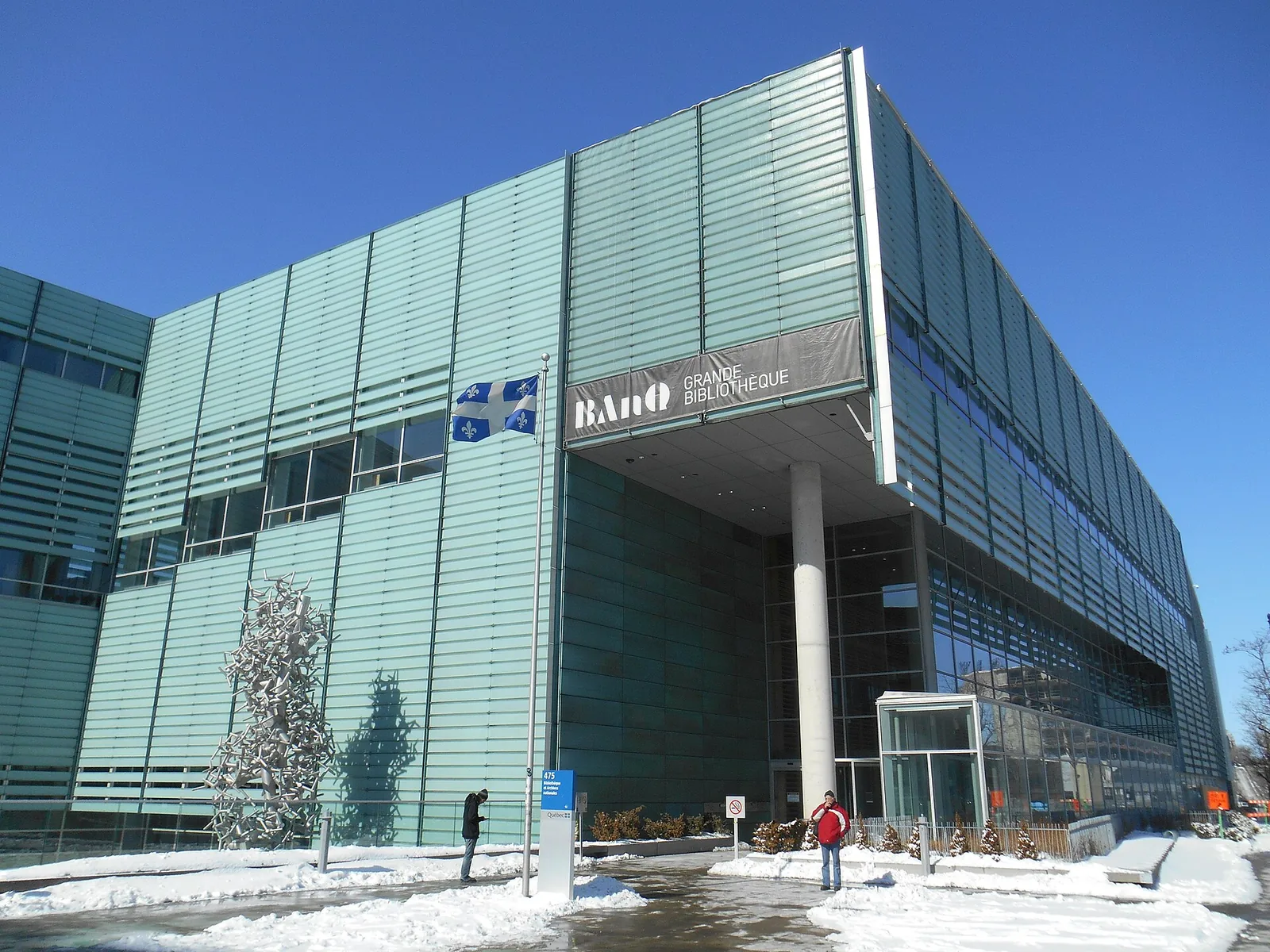
Montreal is the centre of French-language publishing in North America. Michel Tremblay’s plays and novels, set among the working-class families of the Plateau, are a classic introduction to the city’s francophone life. The Grande Bibliothèque, Quebec’s national library in the Quartier Latin, is free to visit and a good place to browse Quebec authors.
Comedy and circus
Just for Laughs (Juste pour rire), held in July (14 to 26 July in 2026), began as a French-language festival before becoming one of the biggest comedy festivals in the world. Cirque du Soleil, founded in Quebec in 1984, has its headquarters in Montreal and regularly premieres shows in the Old Port.
Sport
Hockey is a religion, and the Montreal Canadiens, known as “le Tricolore” or “les Glorieux”, are its church. The team’s history, including its record number of Stanley Cups, is bound up with French-Canadian pride. The 2026–27 home opener is on Tuesday 6 October 2026 at the Bell Centre.
Food
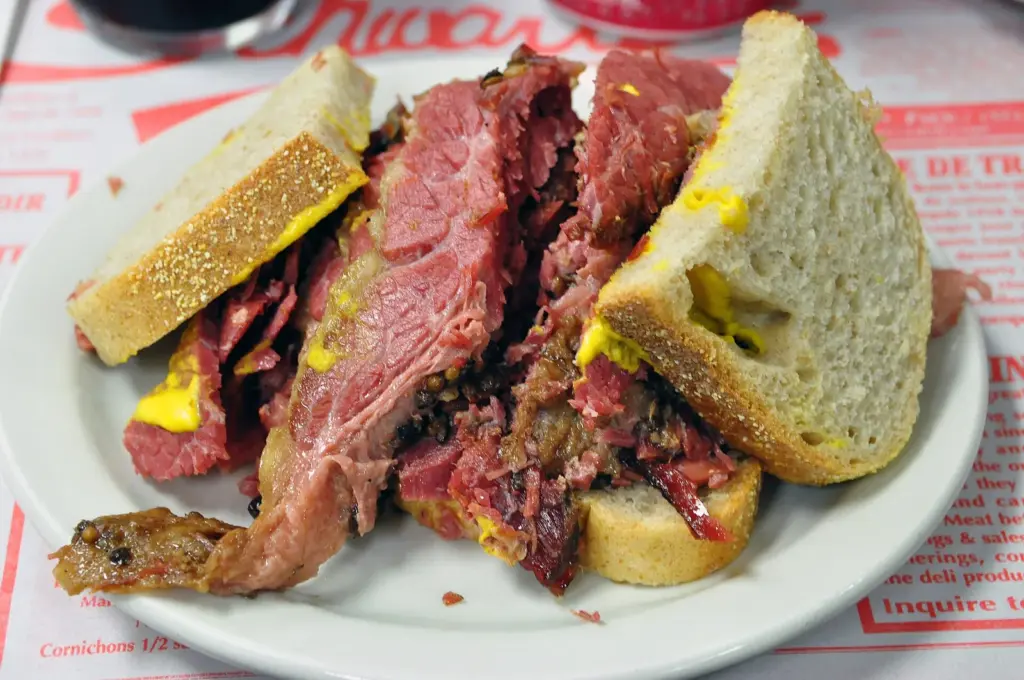
Québécois food traditions are rooted in rural, working-class cooking designed for long winters: tourtière (meat pie), pea soup, baked beans, pouding chômeur (a pudding baked in maple syrup) and the maple-soaked feasts of the sugar shack. Poutine, born in rural Quebec in the 1950s, is now a national icon. Montreal adds its own layers: bagels and smoked meat from its Jewish community, Italian, Portuguese, Haitian, Lebanese and Vietnamese cooking, and a restaurant scene that mixes French technique with Quebec produce. Our Montreal food guide has the best places to try it all.

Religion and the Quiet Revolution
Montreal is full of churches, from Notre-Dame Basilica to Saint Joseph’s Oratory, the largest church in Canada, but Quebec is now one of the most secular societies in North America. Many churches have been turned into condos, libraries and concert halls. The contrast between the grand religious buildings and today’s secular city is one of the most visible legacies of the Quiet Revolution. Our guide to Montreal museums includes the city’s great churches.
Reading Quebec’s Story in the Streets
Once you know a little history, Montreal’s street names and monuments tell the story of its two languages at every corner.
- Place d’Armes: the monument to Maisonneuve, Montreal’s founder, stands in front of Notre-Dame Basilica, facing the old Bank of Montreal, a symbol of the English-speaking financial power that once ran the city.
- Place Jacques-Cartier: at the top of the square, Nelson’s Column, put up in the early 19th century by the city’s British merchants, is one of the oldest monuments in Montreal, and a reminder of an era when British loyalty was on full display in a French city.
- City Hall: in 1967, during Expo 67, French president Charles de Gaulle stepped onto the balcony of Montreal’s City Hall and declared “Vive le Québec libre!”, a phrase that caused a diplomatic storm and energised the sovereignty movement.
- Boulevard René-Lévesque: the downtown boulevard, formerly Dorchester, was renamed after the founder of the Parti Québécois and premier who led Quebec into the 1980 referendum.
- Rue Sherbrooke and rue Papineau: Sherbrooke is named after a British governor; Papineau after Louis-Joseph Papineau, the French-Canadian politician who led the Patriote movement of the 1830s. Street names in Montreal switch between the two histories constantly.
A slow walk through Old Montreal passes many of these places in an hour.
Montreal’s English-Speaking Communities
Montreal’s French identity is only half the story. The city has a long, rich English-speaking history of its own, and its anglophone communities have shaped its culture as much as its economy.
The Irish arrived in large numbers in the 19th century, many fleeing the famine, and worked on the Lachine Canal and the Victoria Bridge. Montreal’s St Patrick’s Day parade, first held in 1824, is one of the oldest in North America. The Scottish merchants and bankers built the Golden Square Mile and McGill. Montreal’s Jewish community, many of whom arrived from Eastern Europe in the early 20th century, settled along boulevard Saint-Laurent and in the Plateau and Mile End, bringing the bagels and smoked meat the city is now famous for; the novelist Mordecai Richler wrote vividly about the neighbourhood. The poet and singer Leonard Cohen grew up in Westmount and remained attached to the city all his life.
Today, English-speaking Montrealers are concentrated in the west of the city, the West Island and Westmount, but English is heard all over the centre, and a large share of anglophones now speak French too. For how the neighbourhoods feel today, see our neighbourhood guide, and for bookshops in both languages, including Librairie Gallimard and Drawn & Quarterly, our guide to shopping in Montreal.
The Universities and Montreal’s Two Languages
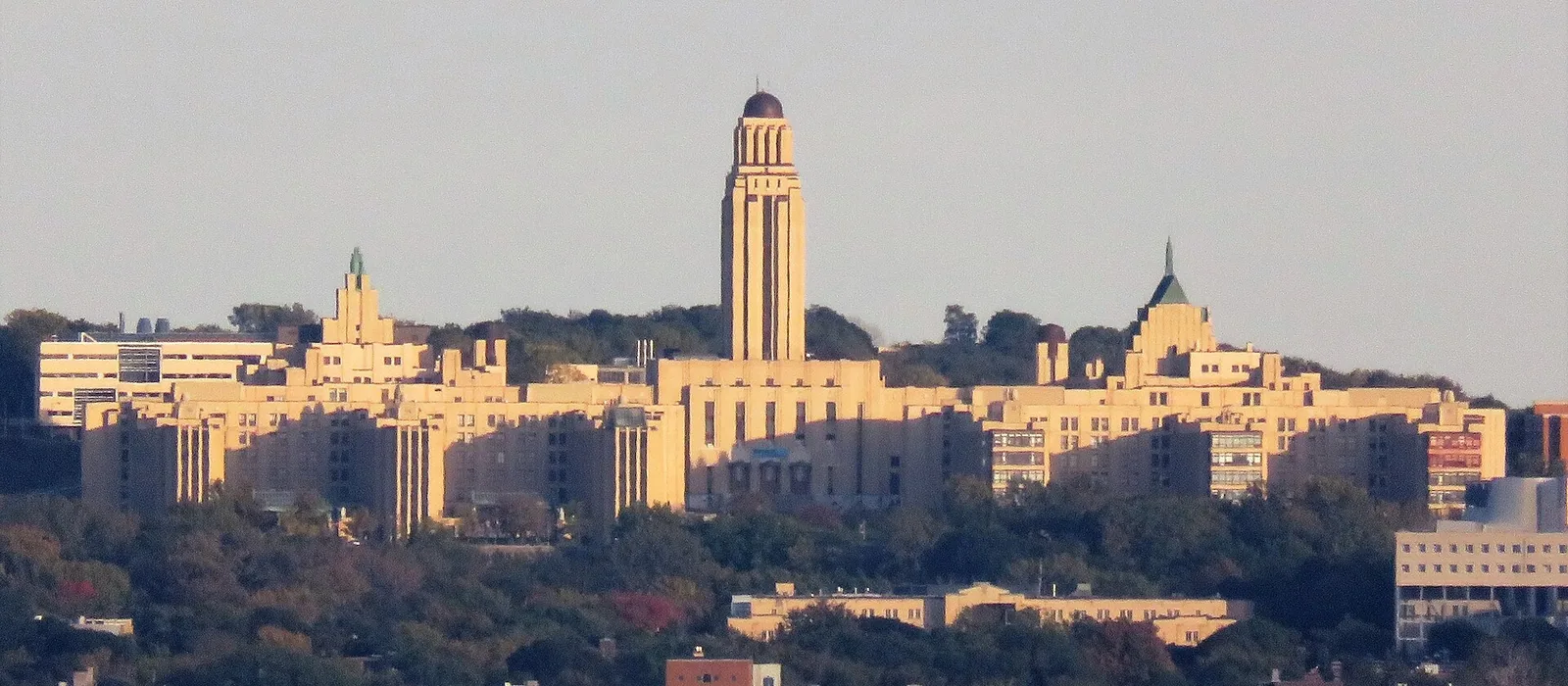
Montreal has two large English-language universities, McGill and Concordia, and two large French-language ones, the Université de Montréal and UQAM. The student populations help explain why the city feels so young and bilingual. McGill’s downtown campus sits at the foot of Mount Royal in the historically English west, while the Université de Montréal’s art deco main pavilion, with its tall tower, looks out from the mountain’s northern slope in Côte-des-Neiges, and UQAM is in the heart of the French-speaking Quartier Latin.
Do You Need to Speak French in Montreal to Live, Work or Study?
Visiting is one thing; moving here is another. If you’re thinking of living in Montreal, French matters much more.
Working
Plenty of jobs in Montreal, especially in tech, gaming, aerospace, hospitality and international companies, can be done mainly in English, and the 2021 census found that 80% of workers in the Montreal area were at least bilingual. But French is the normal language of work in Quebec, most jobs dealing with the public expect it, and your career options are far wider with it. Members of regulated professions, such as doctors, nurses, engineers and lawyers, must show an appropriate knowledge of French to join a Quebec professional order.
Studying
International students can study entirely in English at McGill or Concordia, and many do. French classes are widely available, and learning French while studying is the easiest way to make the most of the city. Children of most families moving to Quebec generally go to French-language public schools, since eligibility for English-language public schooling is restricted.
Everyday life
You can live day to day in English in parts of Montreal, particularly downtown, the West Island, Westmount and Notre-Dame-de-Grâce. But government services, many official documents and life in most neighbourhoods are in French, and Quebec’s government communicates with immigrants mainly in French after their first six months. Learning French is the single best thing a new resident can do.
Practical Situations: Health, Emergencies and Transport
- Emergencies: call 911. Operators handle calls in English and French.
- Health advice: call Info-Santé on 811 for non-urgent medical advice. Montreal has large hospitals with a long tradition of serving patients in English, including the McGill University Health Centre and the Jewish General Hospital.
- Pharmacies: pharmacists in central Montreal almost always speak English.
- Police: officers in central areas generally speak English.
- Public transport: station names and many announcements are in French only, but maps are easy to follow, and STM staff can usually help in English. The station names are the same in both languages.
- Driving: road signs are in French. The key rule for visitors is that you can’t turn right on a red light anywhere on the island of Montreal.
- Arriving: at Montréal–Trudeau airport, signs are bilingual and border officers serve travellers in English and French. See our Montreal airport guide.
Learning Some French Before You Go
A few weeks of practice with an app or podcast is enough to handle greetings, ordering and simple questions, and it will make your visit more enjoyable. Focus on listening and on polite phrases rather than grammar. If you can, watch a Quebec film or listen to Quebec music before you arrive, to get used to the accent.
Once you’re here, practise in low-pressure situations: ordering a coffee, buying bread at a market, thanking a bus driver. Montrealers are generally patient with learners, especially if you tell them you’re practising. For longer stays, the city has many language schools and free conversation exchanges where French and English speakers meet to practise.
Planning a Francophone Montreal Trip
If Quebec’s culture is your main interest, plan around it. Visit for the Fête nationale on 24 June or Les Francos de Montréal in June, stay in the Plateau or the Quartier Latin rather than downtown, spend an afternoon at the Grande Bibliothèque and an evening at a French-language show, eat at a sugar shack in March or April, and take the train to Quebec City, where the French colonial history is even more visible. Our Montreal itinerary and the list of things to do in Montreal will help you fill in the rest, and our guide to where to stay in Montreal covers the neighbourhoods.
Frequently Asked Questions
So, do you need to speak French in Montreal as a tourist?
No. Staff in hotels, restaurants, shops, museums and tourist attractions speak English, and 56.4% of people in the Montreal area were English–French bilingual in the 2021 census. Quebec’s language laws apply to businesses and government, not visitors. Start conversations with “bonjour” as a courtesy, then continue in English. Outside Montreal, some French is more useful.
Is Montreal French- or English-speaking?
Montreal is a majority French-speaking city in the province of Quebec, where French is the official language. It’s also highly bilingual and multilingual: 69.8% of people in the metropolitan area can hold a conversation in two or more languages. English is most common downtown, in the western neighbourhoods and the West Island, and French dominates in the east.
Will people be rude if I speak English in Montreal?
Almost never. Replying in English is completely normal in Montreal, and most people switch languages easily. The best approach is to greet people with “bonjour” and then continue in English, rather than opening with “Do you speak English?” Complaining about French signs or menus is what tends to cause friction, not speaking English.
What does Bill 96 mean for tourists?
Nothing that affects your trip. Bill 96, passed in 2022, strengthened Quebec’s Charter of the French Language, which requires French to predominate on commercial signs and gives customers the right to be served in French. It doesn’t require visitors to speak French, and businesses can still serve you in English.
What does “Bonjour-Hi” mean in Montreal?
“Bonjour, hi” is the bilingual greeting used in many Montreal shops and restaurants. It invites you to answer in whichever language you prefer, and staff will continue in that language. Answering in English is perfectly acceptable. Some politicians have criticised the greeting, but it remains common and is a sign of the city’s bilingual everyday life.
Is Quebec French hard to understand?
For people who learned French at school, Quebec French can be challenging at first because of its accent, faster rhythm and local vocabulary, such as “fin de semaine” for weekend and “dîner” for lunch. Speakers from France understand it easily. In tourist situations, staff usually speak more slowly or switch to English if you’re struggling.
Is Montreal in Quebec or Canada?
Both. Montreal is the largest city in the province of Quebec, which is one of Canada’s ten provinces. Quebec is the only province where French is the sole official language. Montreal uses the Canadian dollar, and visitors enter Canada at Montreal’s airport or at the land border, just as they would anywhere else in the country.