The best Montreal museums punch well above the city’s size: a fine arts museum with five pavilions that is free for anyone 25 or under, an archaeology museum built directly over the ruins of the 17th-century settlement, a natural science park where you walk from a rainforest into the sub-Antarctic in ten minutes, and a scattering of small history houses in Old Montreal that most visitors walk straight past. Below are the museums worth your time and the ones you can skip, what they cost as of September 2026, which are closed or changing, how to get to each by metro, the free days and passes that save money, and ready-made plans for a rainy day, a family weekend or an art lover’s trip.
Which Museum for Which Visitor
- Only have time for one? Pointe-à-Callière. It tells the story of Montreal where it actually happened, underground.
- Art lovers: the Montreal Museum of Fine Arts, then the Canadian Centre for Architecture and the free PHI Foundation.
- Families with young children: the Biodôme and the Insectarium, or the Montreal Science Centre in the Old Port.
- History buffs: Pointe-à-Callière, Château Ramezay and the McCord Stewart Museum.
- Under 26: the Montreal Museum of Fine Arts is free for you. Go.
- On a budget: Saint Joseph’s Oratory, the Bon-Secours Chapel, the university galleries and the PHI Foundation cost nothing.
- A rainy day with no plan: the fine arts museum on Wednesday evening, when it stays open until 21:00.
Montreal Museums at a Glance: Prices and Hours
Here are the main museums side by side. Prices are for one adult, checked on the museums’ own sites in September 2026, and include tax unless marked otherwise. Many offer lower rates for seniors, students and children, and most are closed on Mondays, so plan your week around that.
| Museum | Area | Nearest metro | Adult price | Allow | Best for |
|---|---|---|---|---|---|
| Montreal Museum of Fine Arts | Golden Square Mile | Guy-Concordia or Peel (Green) | $30 ($32 with major exhibition); free 25 and under | 3–4 h | Art of every era |
| Pointe-à-Callière | Old Montreal | Place-d’Armes (Orange) | $30 (ages 31–64) | 2–3 h | Archaeology and city history |
| McCord Stewart Museum | Downtown | McGill (Green) | $20 online, $22 at the door; first Sunday pay what you wish | 1.5–2 h | Social history, fashion, photography |
| Biodôme | Olympic Park | Viau (Green) | $25.50 | 2 h | Families, ecosystems |
| Insectarium | Botanical Garden | Pie-IX (Green) | $25.50 | 1.5 h | Families, curious adults |
| Planetarium | Olympic Park | Viau (Green) | $25.50 | 1.5 h | Space shows |
| Biosphère | Parc Jean-Drapeau | Jean-Drapeau (Yellow) | $25.50; closed Mondays from September | 1.5 h | Environment, Expo 67 architecture |
| Botanical Garden | Hochelaga-Maisonneuve | Pie-IX (Green) | $25.50 | 2–4 h | Gardens, Gardens of Light in autumn |
| Montreal Science Centre | Old Port | Place-d’Armes (Orange) | $37 for exhibitions | 2–3 h | Hands-on science, teens |
| Château Ramezay | Old Montreal | Champ-de-Mars (Orange) | $14.99; daily 10:00–17:00 | 1 h | New France history |
| Marguerite-Bourgeoys Museum | Old Montreal | Champ-de-Mars (Orange) | $16; chapel itself free | 1 h | Archaeology and a harbour view |
| Saint Joseph’s Oratory | Côte-des-Neiges | Côte-des-Neiges (Blue) | Free; museum $3 | 1.5–2 h | Architecture, religious art |
What’s Closed or Changing in 2026
Montreal’s museum map is in flux, and several of the places you’ll find on older lists aren’t open as described. As of September 2026:
- Musée d’art contemporain (MAC): Quebec’s contemporary art museum is rebuilding its home at Place des Arts. Its temporary exhibitions at Place Ville Marie have ended; the space now hosts artist residencies and a programme of talks and workshops rather than gallery shows. Don’t plan a visit around seeing its collection this year.
- Montreal Holocaust Museum: the permanent exhibition has closed ahead of a move to a new museum at 3535 boulevard Saint-Laurent, due to open in 2027.
- Montreal Tower observatory: at Olympic Park, closed until spring 2027. The Biodôme and Planetarium next door are open.
- Au Sommet Place Ville Marie: the observation deck no longer operates, whatever some lists say.
The Montreal Museum of Fine Arts
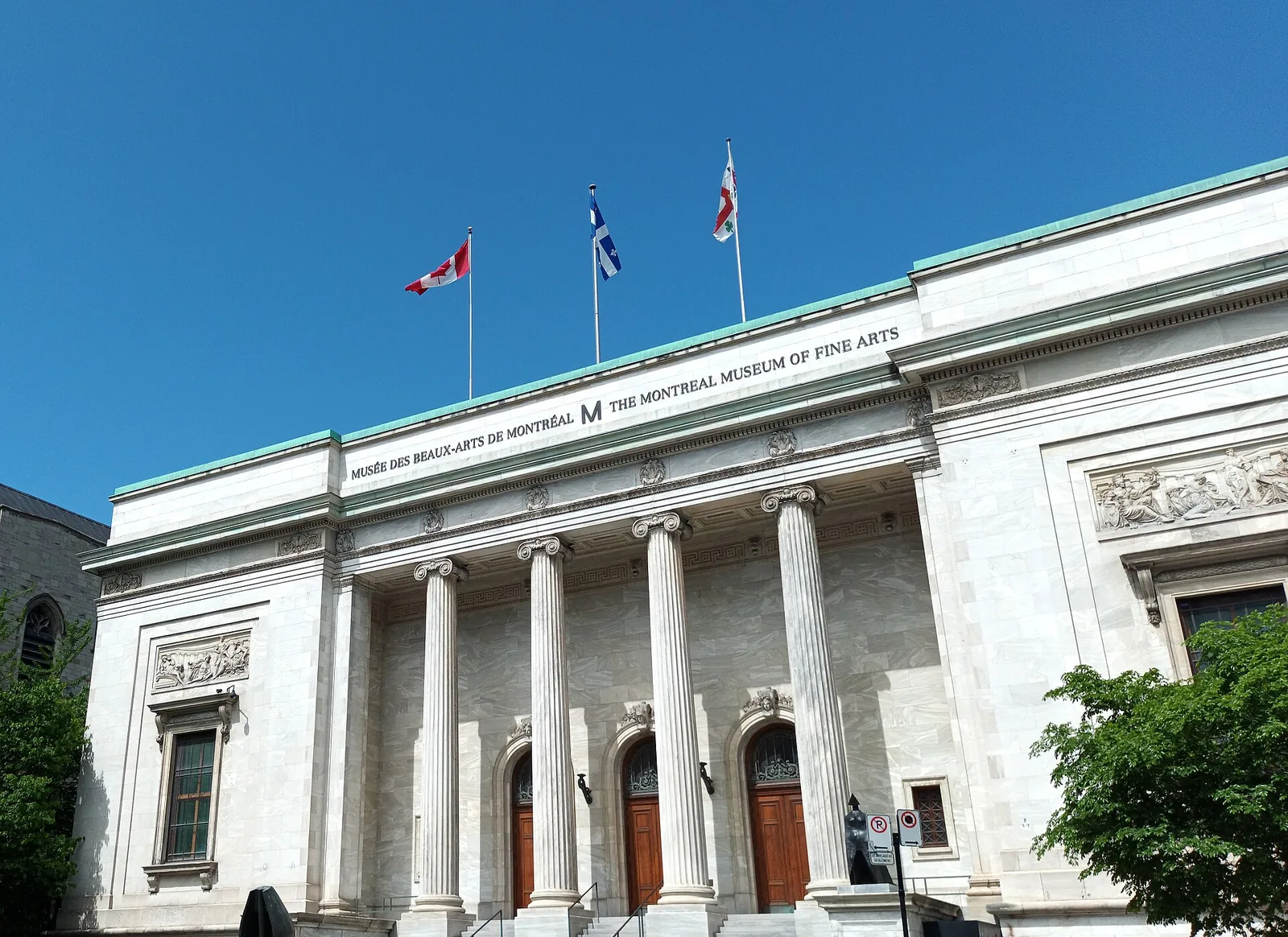
The Montreal Museum of Fine Arts (MMFA, or MBAM in French) is the city’s big one and the reason many art lovers come. Its collection runs from antiquity to contemporary art, spread across five connected pavilions on both sides of rue Sherbrooke, linked by an underground passage.
Start in the 1912 marble-columned building on the north side of the street, then work through the modern pavilion opposite, which houses the international collections and the big temporary exhibitions. Don’t miss the Bourgie Pavilion, a converted church with Tiffany stained-glass windows, which holds the Quebec and Canadian art collection: this is where to see the Group of Seven, the Quebec painters of the early 20th century, and the Automatistes, whose 1948 manifesto helped kick off Quebec’s cultural revolution. The decorative arts and design galleries are another highlight, with furniture and objects you won’t see elsewhere.
Price-wise, the MMFA is one of the best deals in North America. Admission is $30 for adults, or $32 with a major exhibition, and it’s free for everyone aged 25 and under. It’s closed on Mondays (except in summer, when it opens Mondays from 10:00 to 17:00 until 23 September), open Tuesday to Sunday from 10:00 to 17:00, and open until 21:00 on Wednesdays, which is a good time to visit when the day’s crowds have gone.
- Metro:
- Guy-Concordia or Peel (Green)
- Cost:
- $30–$32; free 25 and under
- Allow:
- 3–4 hours
How to do the MMFA in a morning
If you have three hours, don’t try to see everything. Pick the temporary exhibition if one appeals, then the Quebec and Canadian galleries in the Bourgie Pavilion, then a walk through the international modern art. Have lunch in the museum café or head to one of the restaurants on nearby rue Crescent. The museum sits in the Golden Square Mile, once the home of Montreal’s Victorian merchant elite, and the streets around it are worth a slow walk afterwards.
Pointe-à-Callière, Montreal’s Archaeology and History Museum
If you only see one museum in Montreal, make it this one. Pointe-à-Callière is built on the spot where Montreal was founded in 1642, and much of it is underground, among the real remains of the settlement: stone foundations, an old cemetery, and the city’s first collector sewer, built in the 1830s over a small river and now a walkway you can follow beneath the streets. It’s a National Historic Site.
The museum starts with an excellent short multimedia show about the city’s history, projected over the ruins, which sets the scene for everything else. Then you descend into the archaeological crypt beneath Place Royale, where the layers of the city are exposed one above the other. Other buildings in the complex cover the remains of Fort Ville-Marie, the first fortified settlement, and host big temporary exhibitions, often on ancient civilisations.
Admission is $30 for adults aged 31 to 64, with reductions for younger and older visitors. It’s open Tuesday to Friday from 10:00 to 17:00 and at weekends from 11:00 to 17:00. It combines perfectly with a walk through Old Montreal, which starts right outside the door.
- Metro:
- Place-d’Armes (Orange)
- Cost:
- $30 adults 31–64
- Allow:
- 2–3 hours
The McCord Stewart Museum
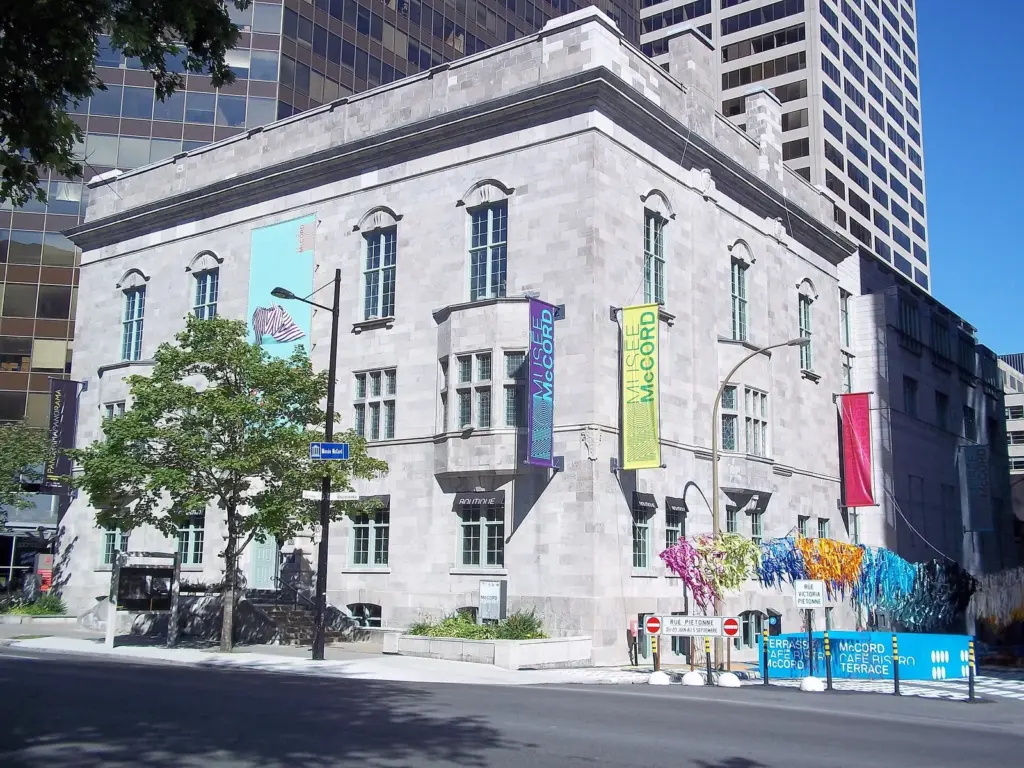
Opposite the McGill University gates on rue Sherbrooke, the McCord Stewart Museum is Montreal’s museum of social history: how people in this city lived, dressed, worked and saw themselves. Its collections cover Indigenous cultures, fashion and textiles (among the most important dress collections in Canada) and a huge photographic archive, including the work of the 19th-century Montreal photographer William Notman, whose studio recorded everyone from fur traders to Victorian society.
It’s smaller and quieter than the MMFA, which makes it a good choice for a couple of hours on a rainy afternoon. The permanent exhibition on Montreal’s history is the best introduction to the city after Pointe-à-Callière. Admission is $20 online or $22 at the door, and on the first Sunday of each month you pay what you wish.
- Metro:
- McGill (Green)
- Cost:
- $20 online, $22 door
- Allow:
- 1.5–2 hours
Space for Life: The Biodôme, Insectarium, Planetarium and More
Space for Life (Espace pour la vie) is the umbrella for Montreal’s five natural science museums: the Biodôme, the Botanical Garden, the Insectarium and the Planetarium in the east end, and the Biosphère on Île Sainte-Hélène. Each charges its own admission, $25.50 for adults or $68 for a family ticket, and there’s no one-day combo ticket. Instead, the Space for Life Passport costs $87 for one person or $155 for a family and gives unlimited visits to all five for 12 months, so it pays for itself on the fourth visit.
The Biodôme
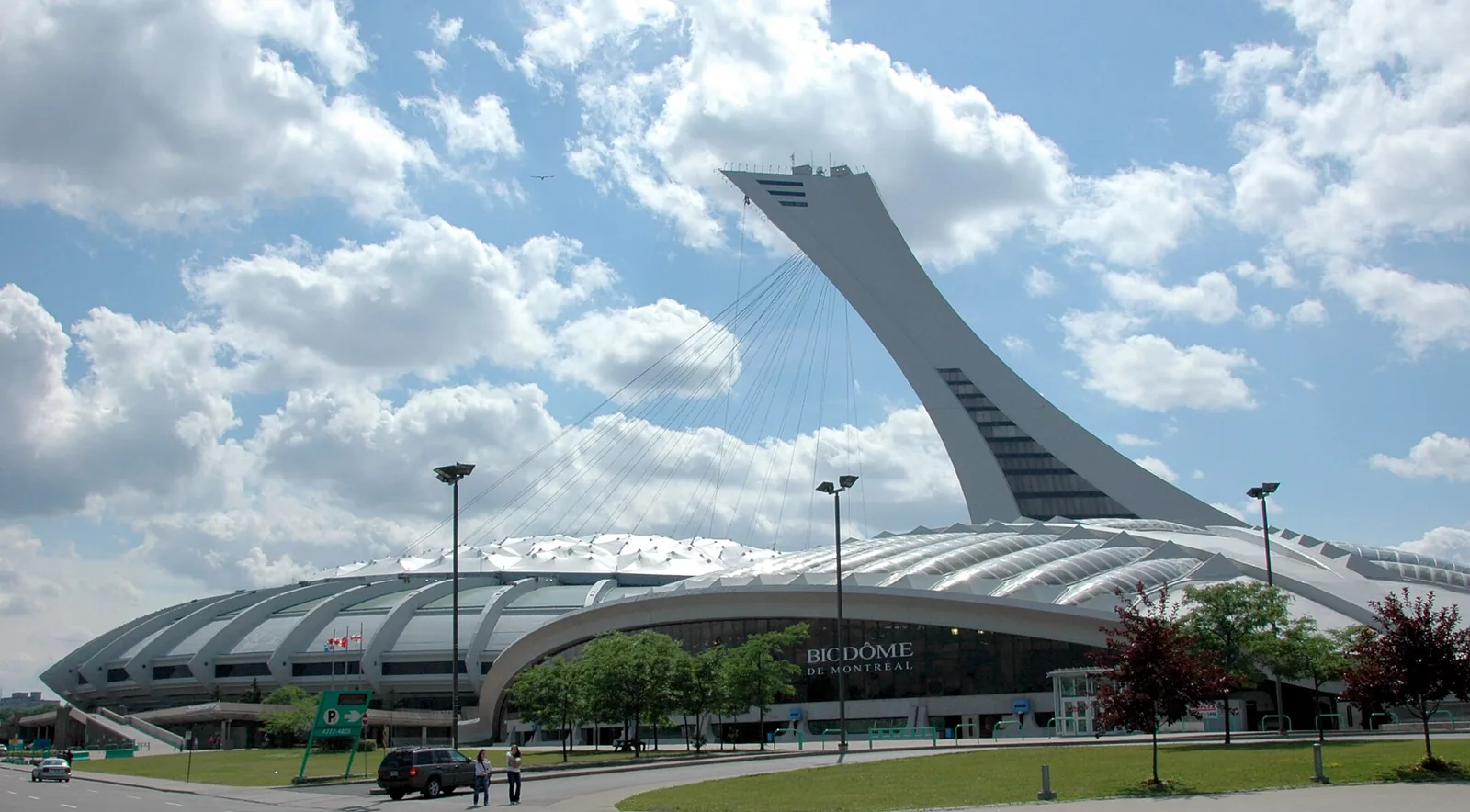
Built inside the former velodrome for the 1976 Olympics, the Biodôme recreates several ecosystems under one roof: a humid tropical rainforest, the Laurentian maple forest, the Gulf of St Lawrence, and the sub-polar regions of the Labrador coast and the sub-Antarctic islands. You walk from one to the next, and the temperature and the animals change with them, from sloths and monkeys to lynx, seabirds and penguins. The penguins are the stars. It’s a great place for children, and there’s enough detail to hold adults’ attention too.
- Metro:
- Viau (Green)
- Cost:
- $25.50
- Allow:
- 2 hours
The Insectarium
Inside the Botanical Garden, the Insectarium is the largest museum of its kind in North America. It reopened after a total redesign that changed it from a display of pinned specimens into an immersive experience, with a live insect collection, a walk-through vivarium, and exhibits that encourage you to look closely rather than recoil. Children love it, and it’s more thoughtful than you’d expect.
- Metro:
- Pie-IX (Green)
- Cost:
- $25.50
- Allow:
- 1.5 hours
The Planetarium
Next door to the Biodôme, the Rio Tinto Alcan Planetarium runs shows in two dome theatres, one more scientific and one more artistic, alongside an exhibition on space and meteorites. It’s a good addition to a Biodôme visit and a reliable rainy-day option. Check show times when you buy, as each ticket is for a set show.
- Metro:
- Viau (Green)
- Cost:
- $25.50
- Allow:
- 1.5 hours
The Botanical Garden
Across the road from Olympic Park, the Botanical Garden covers about 75 hectares, with around 20 themed gardens and 10 greenhouses. The Chinese and Japanese gardens are the highlights, and the First Nations Garden is a thoughtful counterpoint. In September and October, it opens from 09:00 to 21:00, and Gardens of Light, its lantern festival, runs from 3 September to 1 November 2026, with timed evening tickets that include daytime entry to the garden. Go at dusk.
- Metro:
- Pie-IX (Green)
- Cost:
- $25.50
- Allow:
- 2–4 hours
The Biosphère
Buckminster Fuller’s geodesic dome, built as the US pavilion for Expo 67, now houses an environment museum focused on climate and ecology. The exhibitions are aimed at families and school groups, but the building itself is the draw: walk around the outside for the view of the dome against the river and downtown. It’s closed on Mondays from September.
- Metro:
- Jean-Drapeau (Yellow)
- Cost:
- $25.50
- Allow:
- 1.5 hours
The Montreal Science Centre
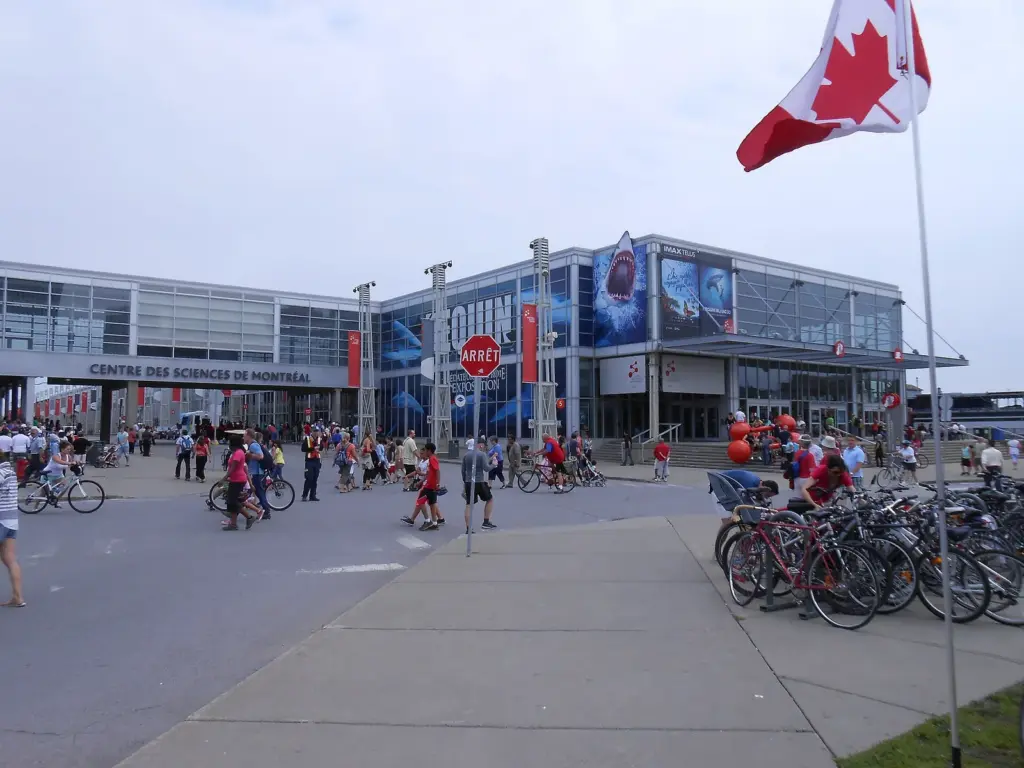
In a converted hangar on the King Edward Pier in the Old Port, the Montreal Science Centre is packed with hands-on exhibits about technology, the human body and the environment. It’s designed for children and teenagers, and it’s at its best with kids aged about 8 to 14, who can spend hours pressing buttons and building things. It also has an IMAX theatre. Adult admission to the exhibitions is $37, which is steep for adults on their own; without children, skip it.
- Metro:
- Place-d’Armes (Orange)
- Cost:
- $37 exhibitions
- Allow:
- 2–3 hours
Old Montreal’s Smaller History Museums
Old Montreal has a cluster of small historic museums that most people walk past on their way to Notre-Dame Basilica. They take about an hour each and give you a richer sense of the old city than the souvenir shops on rue Saint-Paul ever will.
Château Ramezay
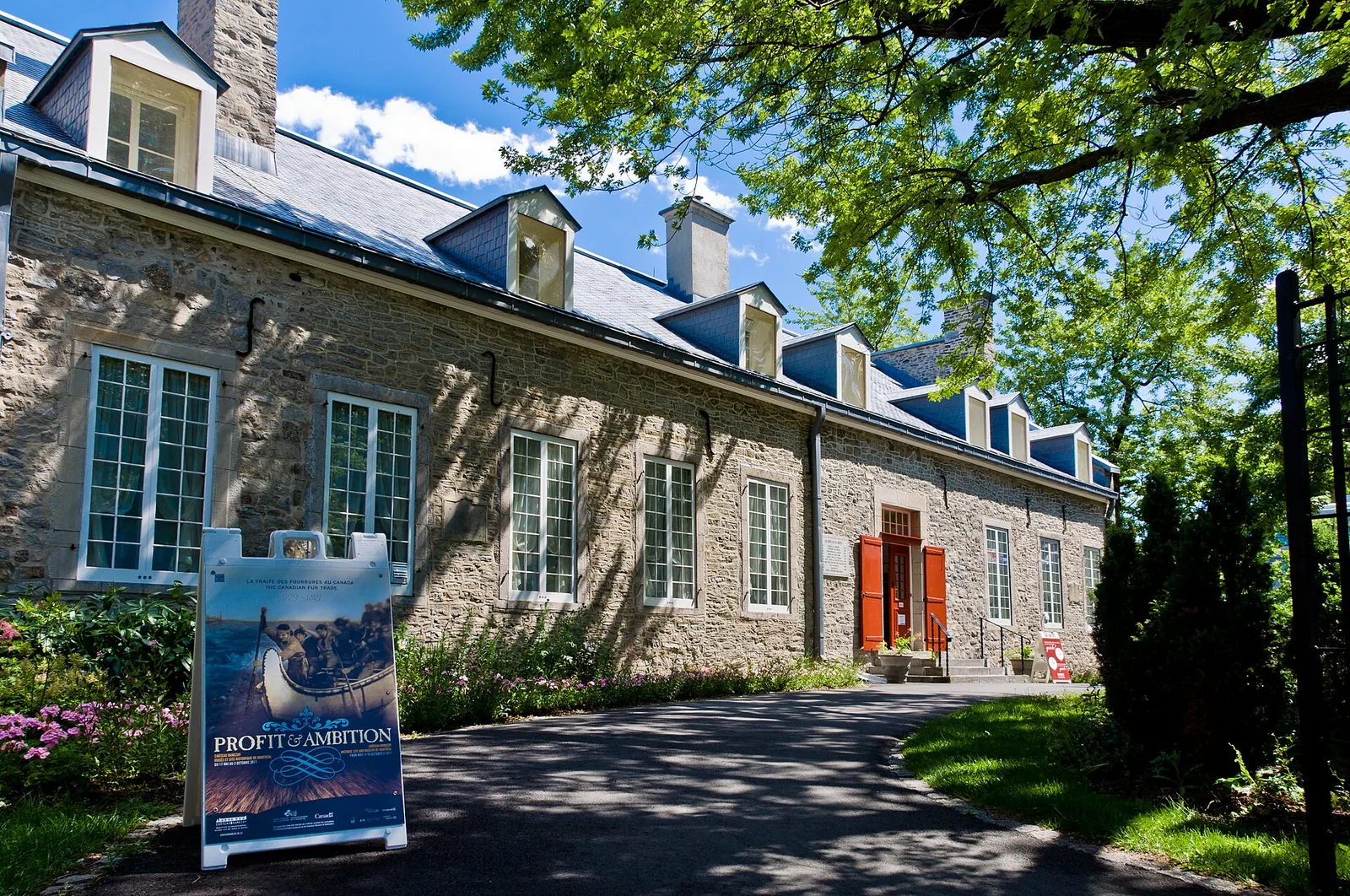
Built in 1705 as the residence of the governor of Montreal, Claude de Ramezay, this low stone house on rue Notre-Dame is one of the oldest buildings in the city. Its museum covers life in New France and the city’s early centuries, with period rooms, a vaulted cellar, and a small recreated 18th-century garden behind the house that’s a quiet retreat in summer. It costs $14.99 and is open daily from 10:00 to 17:00.
- Metro:
- Champ-de-Mars (Orange)
- Cost:
- $14.99
- Allow:
- 1 hour
Marguerite-Bourgeoys Museum and the Bon-Secours Chapel
The Notre-Dame-de-Bon-Secours Chapel, the “sailors’ church” at the east end of rue Saint-Paul, is free to enter; look up to see the model ships hanging from the ceiling, left by sailors in thanks for safe passage. The museum attached to it tells the story of Marguerite Bourgeoys, who founded the chapel and was a pioneer of education in New France, and includes an archaeological site beneath the chapel. Admission is $16, and it’s the only way up to the chapel’s tower, which has one of the best views of the Old Port.
- Metro:
- Champ-de-Mars (Orange)
- Cost:
- $16; chapel free
- Allow:
- 1 hour
Notre-Dame Basilica
Strictly a church rather than a museum, Notre-Dame Basilica is the city’s greatest work of religious art: a deep blue vaulted ceiling studded with gold stars, a carved wooden pulpit and altarpiece, and stained glass that tells the story of Montreal rather than of saints. A daytime visit costs $16 including tax. In the evening, AURA, a sound-and-light show by the Montreal studio Moment Factory, costs $37 plus tax; evening tickets are sold only online or by phone, and they sell out, so book ahead.
- Metro:
- Place-d’Armes (Orange)
- Cost:
- $16 day; AURA $37 + tax
- Allow:
- 1 hour
Contemporary Art and Galleries
With the MAC between homes, Montreal’s contemporary art scene has spread out across smaller venues, many of them free. This is where the city’s art feels most alive.
PHI Foundation for Contemporary Art
In two historic buildings in Old Montreal, the PHI Foundation puts on ambitious exhibitions by major international and Canadian artists, and admission is free. Shows change a few times a year and are consistently among the best in the city. It sits a few minutes’ walk from the Basilica, so it’s easy to add to an Old Montreal walk.
The university galleries
Montreal’s universities run serious public galleries, and they’re free. The Galerie de l’UQAM, in the Quartier Latin, focuses on contemporary Quebec and international art, and Concordia’s Leonard & Bina Ellen Art Gallery downtown puts on thoughtful exhibitions in a space right by Guy-Concordia metro. Both are good for a 30-minute stop.
The Darling Foundry and the Belgo Building
In Griffintown, the Darling Foundry (Fonderie Darling) is a contemporary art centre in a former industrial foundry, with large-scale installations and artists’ studios. Downtown on rue Sainte-Catherine, the Belgo Building is a former commercial building whose upper floors are full of small commercial galleries and artist-run spaces; you can wander from floor to floor and drop into whichever doors are open.
Public art
Montreal has one of the largest public art collections in Canada, and you’ll pass pieces in parks, metro stations and squares. Two to look out for: La Joute, Jean-Paul Riopelle’s bronze sculpture-fountain in the Quartier international, which on summer evenings is surrounded by a ring of fire and mist; and the metro stations themselves, many decorated with stained glass, murals and sculpture since the system opened in 1966. Champ-de-Mars station’s stained glass is especially striking.
Architecture, Design and Ideas: The CCA
The Canadian Centre for Architecture (CCA) is one of the most respected architecture institutions in the world, founded by the architect Phyllis Lambert in 1979. It’s built around Shaughnessy House, a grey-stone mansion from 1874, and puts on exhibitions that treat architecture as a way of thinking about cities, climate and everyday life, rather than a parade of famous buildings. The exhibitions are intellectual but well designed, and even if you’re not an architect you’ll come away looking at cities differently.
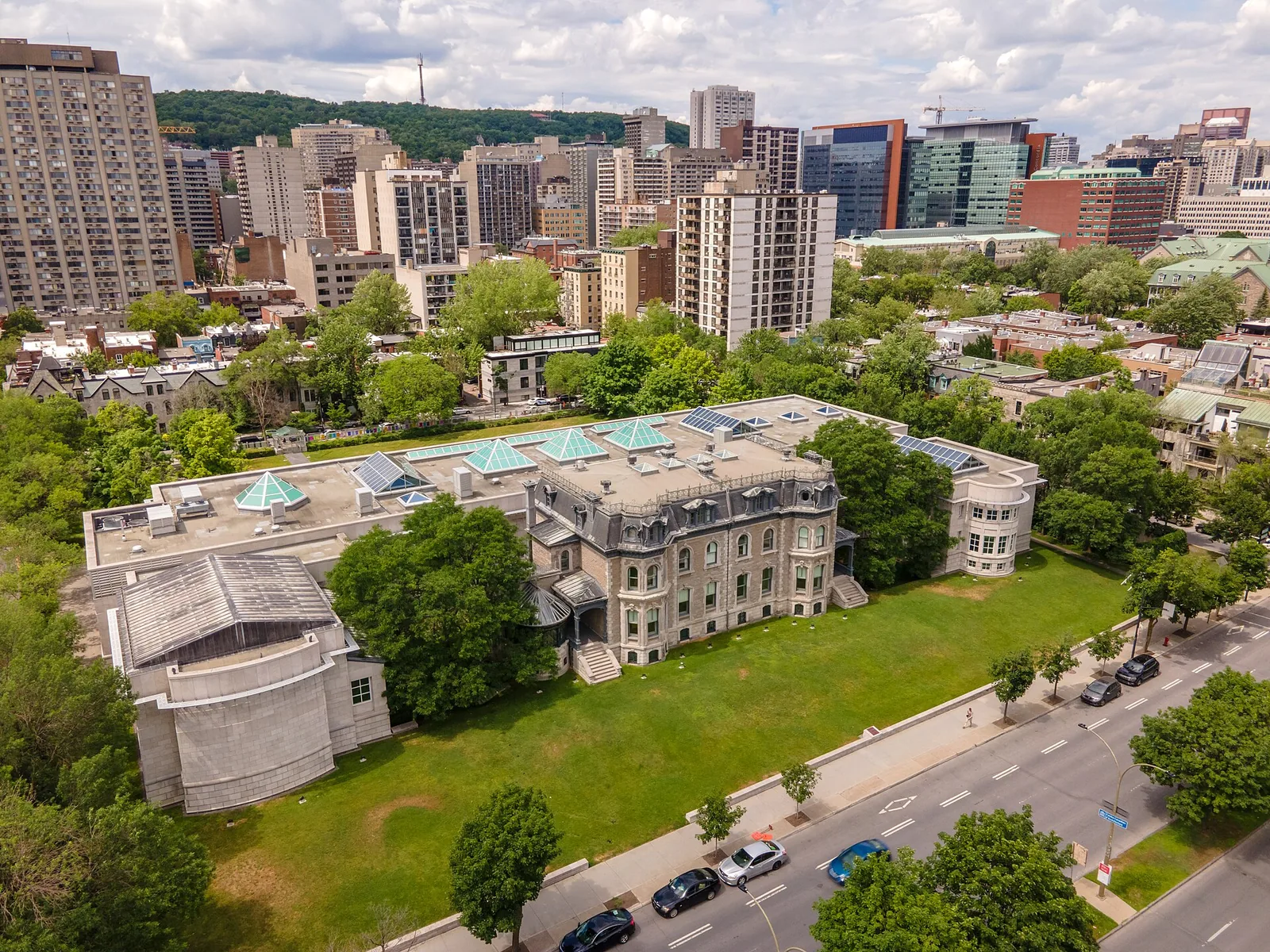
Across boulevard René-Lévesque, the CCA’s sculpture garden by Melvin Charney, with architectural fragments on columns and a view south over the city, is free and open to wander. The CCA is a 10-minute walk from Guy-Concordia or Atwater metro (Green). Check its website for current exhibitions and admission.
Science, Nature and City History
The Redpath Museum
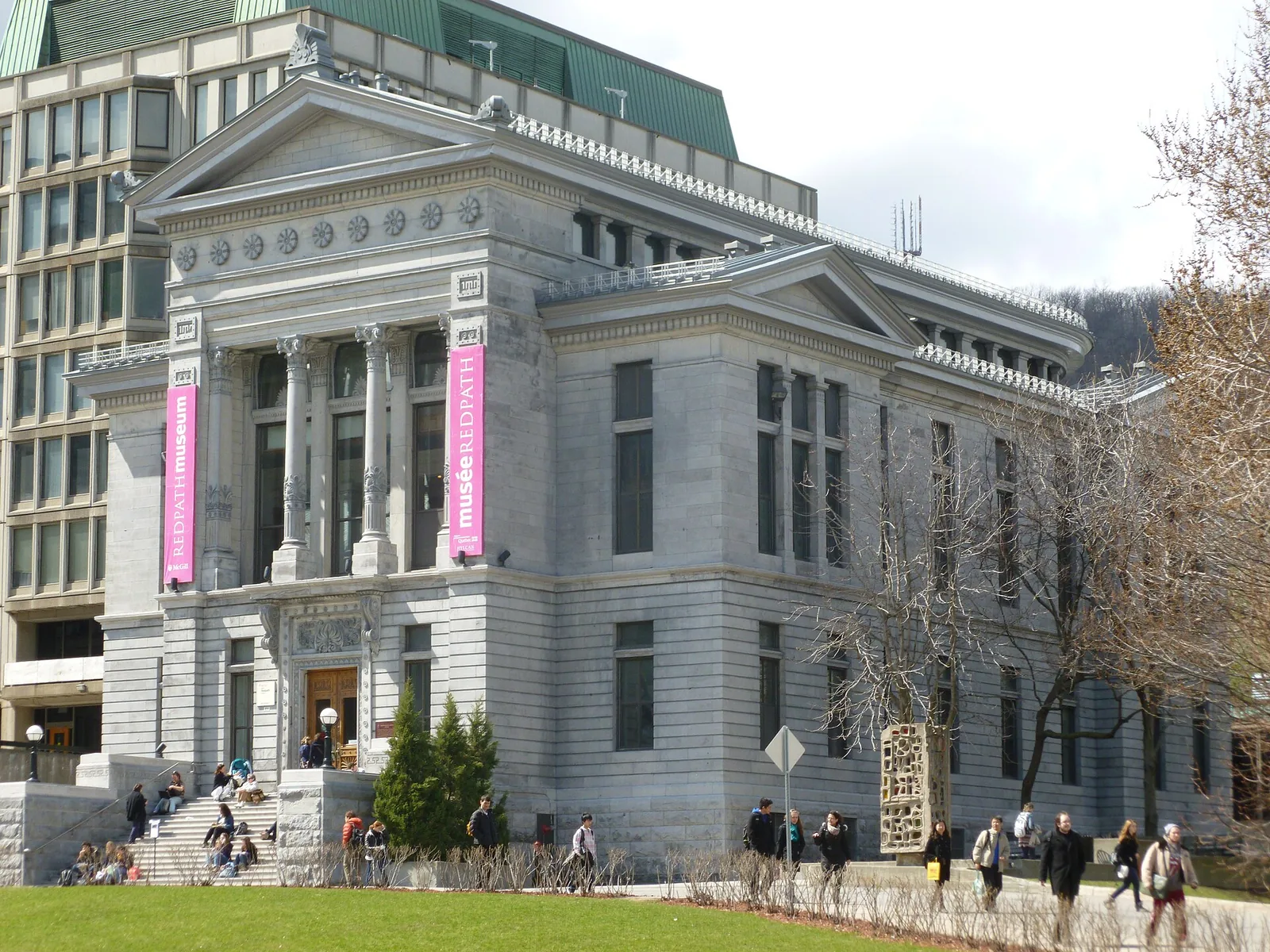
On the McGill campus, the Redpath Museum opened in 1882 and is the oldest building in Canada built as a museum. Its Victorian galleries hold a natural history collection of dinosaur skeletons, minerals, fossils and ethnographic objects, including Egyptian mummies. It’s small, charming and old-fashioned in the best way, and a good stop for families after the McCord Stewart across the street. Check McGill’s website for hours before you go, since they follow the university calendar.
- Metro:
- McGill or Peel (Green)
- Allow:
- 45 minutes
MEM – Centre des mémoires montréalaises
The city’s own history centre, MEM, on boulevard Saint-Laurent at the edge of the Quartier des Spectacles, tells Montreal’s story through the voices and memories of the people who’ve lived here, from its Indigenous past to recent immigrant communities. It’s a more personal counterpart to Pointe-à-Callière and a good choice if you’re interested in how the city’s neighbourhoods came to be.
The Écomusée du fier monde
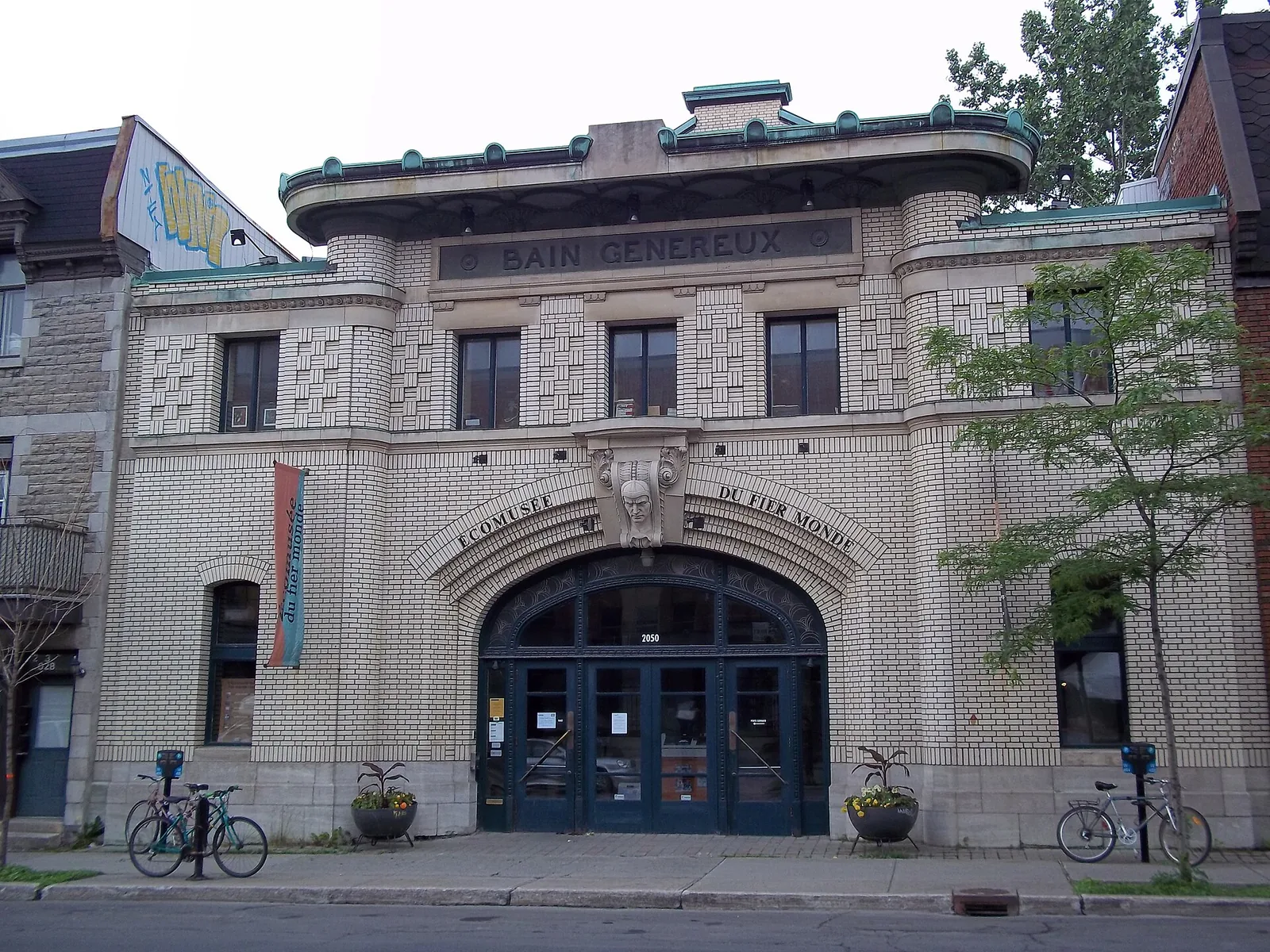
In the working-class Centre-Sud district, the Écomusée du fier monde occupies the Bain Généreux, a grand 1920s public bathhouse. Its exhibitions cover the industrial and labour history of the neighbourhood, and the building alone, with its tiled former pool hall, is worth the detour. It’s a short walk from Papineau metro (Green).
Exporail, the Canadian Railway Museum
South of the city in Saint-Constant, Exporail is the largest railway museum in Canada, with a huge collection of locomotives and carriages, some of which you can climb aboard. It’s a half-day trip and easiest by car. Train-obsessed children will talk about it for months. It pairs well with other day trips south of Montreal.
Religious Art and Heritage
Saint Joseph’s Oratory, on the slope of Mount Royal, is the largest church in Canada and is free to visit, from 06:30 to 21:00. Its small museum of religious art costs just $3, and the terrace in front of the basilica has a sweeping view to the north of the city. Parking costs from $3.75 to $25.
Mary Queen of the World Cathedral, downtown next to the Fairmont Queen Elizabeth hotel, is a scale replica of St Peter’s Basilica in Rome, and free to walk into. It makes a quick stop on the way between the MMFA area and Old Montreal. Montreal has so many churches that Mark Twain joked you couldn’t throw a brick without breaking a church window; many are open to visitors and a few have been turned into concert halls and libraries.
Metro: Côte-des-Neiges (Blue) for the Oratory; Bonaventure (Orange) for the cathedral
Indigenous Art and History in Montreal’s Museums
Montreal sits on land long used by Indigenous peoples, and the island’s Kanien’kehá:ka (Mohawk) name, Tiohtià:ke, is increasingly heard in official welcomes. When Jacques Cartier arrived in 1535 he found Hochelaga, a large fortified village of St Lawrence Iroquoians somewhere near the mountain; by the time Maisonneuve’s settlers came a century later, it had vanished. Several museums take this history seriously, and it’s worth seeking out.
- McCord Stewart Museum: one of the country’s more thoughtful First Nations and Inuit collections, presented with Indigenous voices rather than as ethnographic curiosities.
- Montreal Museum of Fine Arts: Inuit sculpture and prints, and contemporary Indigenous artists, woven into the Quebec and Canadian galleries.
- Pointe-à-Callière: exhibitions on the Iroquoian peoples who farmed the St Lawrence valley long before the French, and on the trade networks that met at this point on the river.
- Botanical Garden: the First Nations Garden explores the relationship between Indigenous peoples of Quebec and the plants of the forest and tundra.
- Mount Royal: the main lookout is named after Kondiaronk, the Huron-Wendat chief whose diplomacy led to the Great Peace of Montreal in 1701. Our Mount Royal guide covers the walk up.
Montreal Museums With Kids
Montreal is an easy city for museum-going with children, as long as you match the museum to the age. Most big museums have family areas, activity sheets or free weekend workshops, and entry for young children is heavily discounted or free.
| Age | Best choices | Why | Skip for now |
|---|---|---|---|
| Under 5 | Biodôme, Insectarium, Botanical Garden | Animals, space to move, short visits | MMFA temporary exhibitions, CCA |
| 5–8 | Biodôme, Insectarium, Planetarium, Redpath Museum | Penguins, bugs, dinosaurs, dome shows | McCord Stewart, Château Ramezay |
| 8–14 | Science Centre, Pointe-à-Callière, Exporail | Hands-on exhibits, real ruins, climbable trains | Small history houses |
| Teenagers | Science Centre, MMFA, PHI Foundation, AURA | Interactive, visual and free or cheap for under-26s | Anything with a long audio guide |
A few habits help. Go at opening time, when galleries are quiet and children are fresh, and stop for lunch before anyone melts down. Split big museums into two shorter visits if you have a Space for Life Passport, since you can come back as often as you like. And in winter, build in a run-around outside, even if it’s just a snowball fight in Parc Maisonneuve between the Biodôme and the Insectarium.
Where to Eat Near the Museums
Museum cafés are convenient but rarely memorable. These are the better options within a short walk.
- Near the MMFA and McCord Stewart: the side streets around rue Crescent and rue de la Montagne have everything from quick sandwiches to long lunches, and Concordia’s student strip on rue Bishop is good for cheap noodles and dumplings.
- Near Pointe-à-Callière and Old Montreal: Olive et Gourmando on rue Saint-Paul is the classic lunch stop; get there before noon or expect a queue.
- Near the Biodôme, Planetarium and Botanical Garden: walk south to rue Ontario in Hochelaga-Maisonneuve, where there are bakeries, bistros and the public Marché Maisonneuve.
- Near Saint Joseph’s Oratory: the Côte-des-Neiges neighbourhood around the metro is one of the most diverse in the city, with inexpensive Filipino, Vietnamese, South Asian and Middle Eastern restaurants.
For the full picture, from bagels and smoked meat to Michelin-starred tasting menus, see our guide to eating in Montreal.
When to Visit Montreal’s Museums
Museums are busiest at weekends, on rainy summer days when everyone has the same idea, and during school holidays, including the Quebec spring break in early March. Weekday mornings are the quietest time almost everywhere. Big temporary exhibitions draw the largest crowds in their first and last weeks.
Seasonally, autumn is the sweet spot: the new exhibition season has opened, the Gardens of Light is on at the Botanical Garden, and the weather is still good enough to walk between museums. Winter is the best time for long museum days, and summer is best for pairing short visits with time outside. Our guide to the best time to visit Montreal covers what else is on month by month.
Free and Cheap Montreal Museums
You can build a very good cultural day in Montreal without paying a cent, and a great one for very little. Here’s what’s free or discounted as of September 2026.
| Museum or site | Free or cheap deal |
|---|---|
| Montreal Museum of Fine Arts | Free for everyone aged 25 and under |
| McCord Stewart Museum | Pay what you wish on the first Sunday of each month |
| Saint Joseph’s Oratory | Free; museum $3 |
| Notre-Dame-de-Bon-Secours Chapel | Free (museum and tower $16) |
| PHI Foundation | Free |
| Galerie de l’UQAM and Leonard & Bina Ellen Art Gallery | Free |
| CCA sculpture garden | Free |
| Mary Queen of the World Cathedral | Free |
| Space for Life Passport | $87 for 12 months of all five museums; pays off by the fourth visit |
One more saving that doesn’t involve a museum ticket: on the transit network, children aged 11 and under ride free with a fare-paying passenger aged 14 or over, so getting a family to the Biodôme costs only the adults’ fares.
Is a Montreal Museums Pass Worth It?
There are two passes to think about, and whether either is worth it depends entirely on how you travel.
The Montreal Museums Card
The Société des musées de Montréal, which represents nearly 50 museums across the city, sells a Montreal Museums Card in several packages. Prices and what’s included change, so check the current options on museesmontreal.org before you buy. As a rule, museum passes like this only pay off if you visit two big museums a day for several days. If you’re planning one major museum and a couple of small ones on a long weekend, you’ll usually do better buying tickets individually, especially if you’re under 26 and get the MMFA free.
The Space for Life Passport
At $87 for an individual or $155 for a family, the Passport covers unlimited visits to the Biodôme, Botanical Garden, Insectarium, Planetarium and Biosphère for a year. Four single adult tickets cost $102, so if you plan to visit four of the five, it’s already worth it. It’s the obvious choice for a family spending two days in the east end, or for anyone visiting in autumn who wants daytime garden visits and an evening at the Gardens of Light.
Museum Plans for Every Kind of Trip
A rainy day downtown
Start at the McCord Stewart Museum when it opens, then walk up to the Redpath Museum on the McGill campus. Have lunch around rue Crescent, then spend the afternoon at the Montreal Museum of Fine Arts. If it’s a Wednesday, stay until 21:00 and have dinner nearby. You’ll barely need to go outside for more than a few blocks at a time, and in winter you can use the underground passages around McGill metro for part of the route.
A history day in Old Montreal
Begin at Pointe-à-Callière at opening time, then walk to Notre-Dame Basilica. After lunch, visit the Château Ramezay and the Marguerite-Bourgeoys Museum, and climb the chapel tower for the late-afternoon light over the Old Port. Book AURA at the Basilica for the evening. Our Montreal itinerary shows how to fit this into a longer trip.
A family weekend
Spend Saturday in the east end: the Biodôme in the morning, a picnic in Parc Maisonneuve, and the Insectarium and Botanical Garden in the afternoon, buying the Space for Life Passport if you’ll visit four or more. On Sunday, head to the Old Port for the Science Centre, then an hour at the Biosphère on Île Sainte-Hélène. Children 11 and under ride the metro free with you all weekend.
An art lover’s weekend
Day one: the MMFA, with a long lunch, then the CCA and its sculpture garden in the late afternoon. Day two: the PHI Foundation in Old Montreal, the Belgo Building’s galleries on Sainte-Catherine, the Galerie de l’UQAM, and the Darling Foundry in Griffintown. Finish with dinner in Griffintown or Saint-Henri.
A winter museum day
Museums are one of the best things to do in Montreal in winter, when the cold makes long outdoor walks hard work. Combine the MMFA with shopping on Sainte-Catherine, or head out to the Biodôme, where the tropical rainforest is a welcome break from January. In late February, the Nuit blanche during Montréal en Lumière, on Saturday 27 February 2027, keeps many museums and galleries open late into the night with special events.
Beyond Museums: Montreal’s Performing Arts
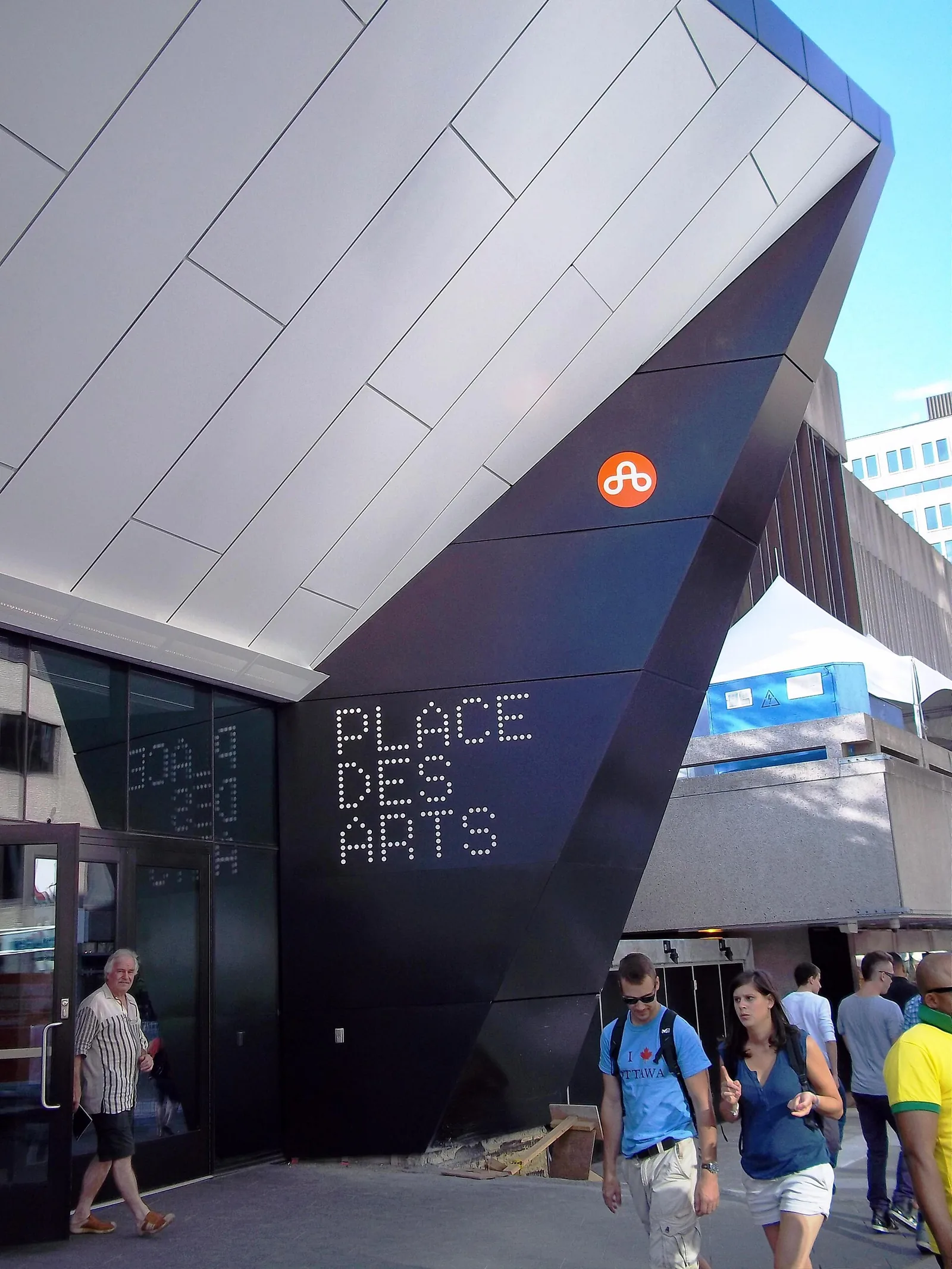
Montreal’s culture isn’t confined to galleries. Place des Arts, at the heart of the Quartier des Spectacles, is the city’s main performing arts complex, home to the Montreal Symphony Orchestra in the Maison symphonique, the Opéra de Montréal and Les Grands Ballets Canadiens. The surrounding plazas host many of the city’s free festival performances in summer.
Montreal is also Cirque du Soleil’s home city, and the company regularly premieres new big-top shows in the Old Port. Autumn has its own cultural calendar: POP Montreal, the independent music and arts festival, runs from 23 to 27 September 2026, and the Festival du nouveau cinéma from 7 to 18 October 2026. See the Montreal festivals calendar for the rest of the year.
Practical Tips for Visiting Montreal Museums
- Mind Mondays. Most museums close on Mondays, including Pointe-à-Callière and, outside summer, the MMFA. Château Ramezay and Saint Joseph’s Oratory are good Monday choices.
- Book timed tickets for the big draws. AURA evenings, the Gardens of Light and major MMFA exhibitions can sell out, especially at weekends.
- Use the coat check. In winter you’ll want to leave your parka and boots at the cloakroom; most big museums have one, sometimes with lockers.
- Check photo rules. Photography without flash is usually allowed in permanent collections, but often not in temporary exhibitions.
- Language: labels in the major museums are in French and English, and staff switch easily.
- Use the metro. Almost every museum on this page is within a 10-minute walk of a station. Our guide to getting around Montreal explains the passes.
- Pair museums with neighbourhoods. The MMFA goes with the Golden Square Mile and downtown, Pointe-à-Callière with Old Montreal, and the Biodôme with the Olympic Park and Hochelaga-Maisonneuve. Our neighbourhood guide helps you plan around them.
- Stay central. Downtown and Old Montreal put the biggest museums within walking distance; see where to stay in Montreal.
For everything else to see and do between museum visits, from the mountain to the markets, see our list of things to do in Montreal, and for the city’s green side, our guide to Mount Royal and Montreal’s parks.
Frequently Asked Questions
What is the best museum in Montreal?
For most visitors, Pointe-à-Callière, the archaeology and history museum in Old Montreal, is the single best museum, because it tells the city’s story on the site where it was founded. For art, the Montreal Museum of Fine Arts is the largest and most important, and free for anyone aged 25 and under. Families usually get the most out of the Biodôme.
Are any Montreal museums free?
Yes. The Montreal Museum of Fine Arts is free for visitors aged 25 and under, and the McCord Stewart Museum is pay-what-you-wish on the first Sunday of each month. Saint Joseph’s Oratory, the Bon-Secours Chapel, Mary Queen of the World Cathedral, the PHI Foundation and the university galleries at UQAM and Concordia are free for everyone.
Which Montreal museums are open on Mondays?
Many close on Mondays, including Pointe-à-Callière and, outside its summer schedule, the Montreal Museum of Fine Arts. Château Ramezay is open daily from 10:00 to 17:00, and Saint Joseph’s Oratory is open every day from 06:30 to 21:00. The Biosphère closes on Mondays from September. Check the individual museum’s site for holiday Mondays.
Is there a Montreal museum pass?
Yes. The Société des musées de Montréal sells a Montreal Museums Card in several packages covering museums across the city; check museesmontreal.org for current prices. For the natural science museums, the Space for Life Passport costs $87 per person or $155 for a family and covers unlimited visits to all five museums for 12 months.
Is the Musée d’art contemporain open?
Not for exhibitions. As of September 2026 the MAC’s temporary exhibitions at Place Ville Marie have ended while its permanent home at Place des Arts is rebuilt. The Place Ville Marie space now hosts emerging-artist residencies, talks and workshops. For contemporary art in the meantime, visit the free PHI Foundation, the university galleries or the Darling Foundry.
How much does the Biodôme cost?
Adult admission to the Biodôme is $25.50 including tax, with a family ticket at $68, as of September 2026. The same prices apply to the Insectarium, Planetarium, Botanical Garden and Biosphère, each ticketed separately. If you plan to visit four or more, the Space for Life Passport at $87 gives a year of unlimited entry to all five.
How many days do you need for Montreal’s museums?
Two full days covers the essentials: one downtown for the Montreal Museum of Fine Arts and the McCord Stewart, and one in Old Montreal for Pointe-à-Callière, Château Ramezay and the Bon-Secours Chapel. Add a third day for the Space for Life museums in the east end if you’re travelling with children or love natural history.