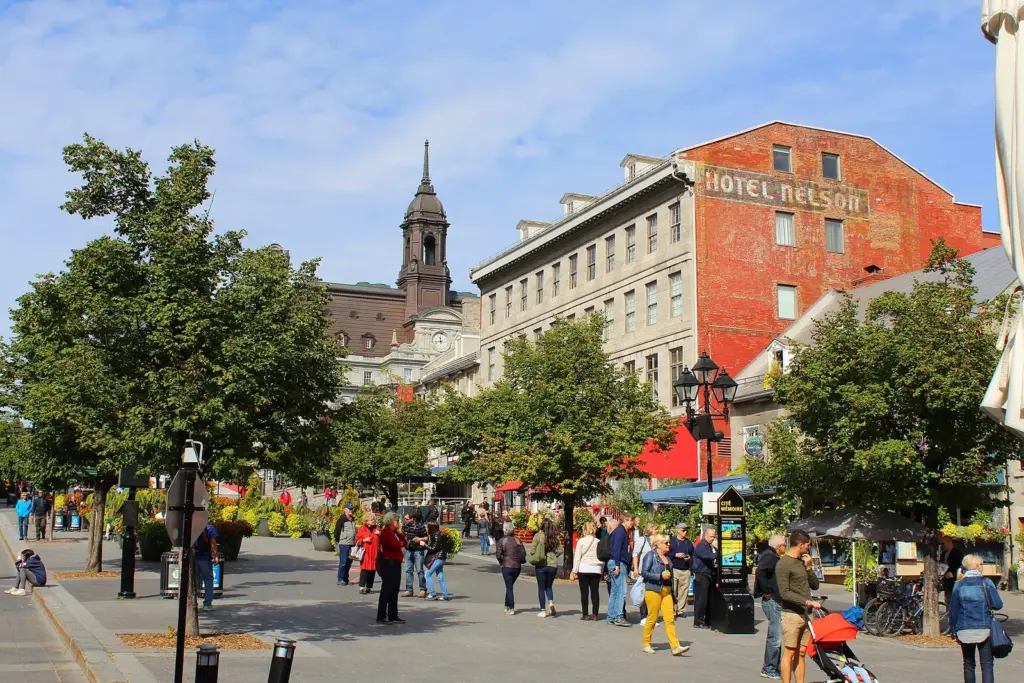
Old Montreal is the grid of stone streets where the city began in 1642, and it is still where almost every visitor spends their first morning. Within a few blocks you get a basilica with one of the most theatrical interiors in North America, a museum built directly on top of the founding site, a 1771 sailors’ chapel, and at the foot of the slope the Old Port’s two and a half kilometres of riverfront. It is small enough to walk in a day and busy enough that it pays to have a plan. What follows is what each sight costs as of September 2026, which ones earn the ticket, the order to walk them in, and the handful of tourist traps to step around.
Get one thing straight before you go: Old Montreal is not downtown. The towers, the department stores and rue Sainte-Catherine sit fifteen to twenty minutes’ walk uphill to the north-west. Old Montreal is the historic district below them, and it feels like a different city — lower, older, cobbled, and noticeably quieter once the shops close. If you are still working out how much of your trip to give it, our ranked list of things to do in Montreal weighs it against everything else in town.
Old Montreal at a Glance
The district is a strip roughly a kilometre and a half long and a few blocks deep. Rue McGill is the western edge, rue Berri the eastern one, rue Saint-Antoine the top and the river the bottom. Three streets run the long way and do most of the work: rue Notre-Dame along the ridge, with the basilica and City Hall; rue Saint-Paul in the middle, with the shops, galleries and terrasses; and rue de la Commune along the water, facing the port.
People use “Old Montreal” and “the Old Port” as if they were the same place. They are neighbours, not synonyms. Vieux-Montréal is the historic district of streets, squares and buildings. The Vieux-Port is the waterfront strip below rue de la Commune: the quays, the riverside promenade, the Clock Tower, the Science Centre and the observation wheel. The port is managed separately from the rest of the district, which is why it has its own website, its own events calendar and its own seasonal rhythm. You will walk from one into the other without noticing, but it helps to know which one a sign or a ticket belongs to.
- Metro: three stations on the edge of the district, all on the Orange line — Square-Victoria–OACI, Place-d’Armes and Champ-de-Mars.
- Cost to enter: nothing. It is a neighbourhood, not an attraction. You pay only for the museums and rides inside it.
- Time needed: two hours for a walk-through, half a day with one museum, a full day if you do it properly.
- Busiest: summer weekends, festival weeks and days when cruise ships are docked at the Grand Quay.
- Language: the signs are in French and nobody expects you to speak it. Staff in Old Montreal switch to English the moment you answer their “Bonjour-hi”.
A Short History That Makes the Streets Make Sense
Paul de Chomedey de Maisonneuve and Jeanne Mance landed here in May 1642 with a few dozen settlers and founded Ville-Marie, a religious mission on a point of land where a small river met the St Lawrence. That point is now Pointe-à-Callière, and the museum there sits on top of it. The mission became a fur-trading town, the town grew a stone wall in the early 1700s, and the wall came down in the early 1800s once it had become more nuisance than defence. You can still see its foundations laid out in the grass at Champ-de-Mars.
The 19th century built most of what you see. Montreal was the commercial capital of Canada, rue Saint-Jacques was its financial street, and the warehouses along rue Saint-Paul and rue de la Commune filled with goods coming off the river. That is why so much of Old Montreal is grey limestone and Victorian bank architecture rather than the French colonial village some visitors expect.
Then the money moved uphill. Through the 20th century business drifted to the new downtown, and later much of it left for Toronto. Old Montreal emptied out and came close to being bulldozed for an expressway. Quebec declared it a historic district in 1964, and the Old Port was rebuilt as a public waterfront in time for the city’s 350th anniversary in 1992. The district you walk through today is the result of that rescue: protected buildings, converted lofts, boutique hotels and a lot of restaurants.
Getting to Old Montreal
By metro
The Montreal metro is run by the STM (Société de transport de Montréal), and all three Old Montreal stations are on the Orange line. Use Place-d’Armes for the basilica and Pointe-à-Callière — it is about five minutes’ walk south to the square. Use Champ-de-Mars for City Hall, Château Ramezay, Place Jacques-Cartier and the eastern end of the port. Square-Victoria–OACI is the stop for the western end, Crew Collective and Bota Bota.
Fares are set regionally and changed on 1 July 2026. As of September 2026 a single trip is $3.75, a 24-hour pass is $11.25, a 3-day pass is $21.75, the weekend pass (Friday 16:00 to Monday 05:00) is $17.00 and an evening pass valid from 18:00 to 05:00 is $6.75. You can tap a contactless credit or debit card at the turnstile for a single fare, or buy an OPUS card — the reusable transit card, $6 on its own — and load passes onto it. Current fares are on the STM website.
From the airport
The 747 bus runs 24 hours a day from Montréal–Trudeau airport (YUL) and costs $11.25 — the same as a 24-hour pass, and the ticket works as one, so your first day’s metro rides are covered. Since January 2026 its downtown terminus has been on boulevard René-Lévesque at rue Berri, roughly fifteen minutes’ walk down to Place Jacques-Cartier. Ignore anything you read about taking the REM light rail from the airport: the airport station is still under construction, with opening targeted for the end of 2027.
On foot or by bike
From downtown, walk down Côte du Beaver Hall from rue Sainte-Catherine to Square Victoria and you are in Old Montreal in fifteen to twenty minutes, all of it downhill. Coming back up is the same distance and feels twice as long in July. BIXI, the city’s bike-share, has stations throughout the district and along the port. There is no day pass: you pay $1.60 to unlock plus $0.21 a minute on a classic bike or $0.36 on an e-bike, tax extra. Cobbles make cycling inside the old streets unpleasant, so ride the flat path along rue de la Commune and walk the rest.
By car
Don’t, if you can help it. The streets are narrow, several are pedestrianised in summer, and meters in the Old Port and downtown run about $2.50 to $4.25 an hour depending on the zone. If you do drive, remember the rule that catches most American visitors: there is no right turn on a red light anywhere on the island of Montreal.

The Sights of Old Montreal, in the Order They Earn Your Time
This is a ranking, not a checklist. The top four are what you came for. The middle of the list is worth it if you are passing. The bottom depends on who you are travelling with and how much money you want to spend.
1. Notre-Dame Basilica
From the outside it is a handsome Gothic Revival church. Inside it is something else: a deep blue vaulted ceiling scattered with gold stars, carved and gilded woodwork climbing behind the altar, and stained glass that tells the history of Montreal’s parish rather than the usual Bible scenes. It was completed in 1829 to a design by James O’Donnell, an Irish-American Protestant who converted to Catholicism while building it and is buried in the crypt. Walk through to the Sacré-Cœur Chapel behind the main altar. It was destroyed by an arson fire in 1978 and rebuilt with an enormous bronze altarpiece, and it is a sharp modern contrast to the nave.
A daytime visit costs $16 including tax. In the evening the basilica hosts AURA, a sound-and-light show by the Montreal studio Moment Factory, at $37 plus tax, or from $45 as a package with a guided tour. You can buy AURA tickets at the basilica during the day, but evening sales are online or by phone only, and summer and weekend shows sell out. Book ahead on the basilica’s website. If you must choose, see the interior by daylight: AURA is spectacular, but the lights-down format means you never quite see the church itself.
- Metro:
- Place-d’Armes (Orange)
- Cost:
- $16 day visit, AURA $37 + tax
- Allow:
- 45 minutes by day, about 1 hour for AURA

2. Pointe-à-Callière, Montreal Museum of Archaeology and History
If you only pay for one museum in Old Montreal, make it this one. It stands on the actual spot where Ville-Marie was founded, and the best part is underground: you walk along the exposed foundations of the early settlement, the city’s first Catholic cemetery, and a 19th-century stone sewer tunnel that once channelled a small river into the St Lawrence. It is a National Historic Site, and the archaeology is real rather than reconstructed. The temporary exhibitions upstairs vary in quality; the permanent underground circuit never disappoints.
Adult admission (ages 31 to 64) is $30 including tax, with lower rates for younger and older visitors. Posted hours are Tuesday to Friday 10:00–17:00 and weekends 11:00–17:00, so do not plan it for a Monday. Check the day’s schedule on the museum’s website.
- Metro:
- Place-d’Armes (Orange), 10 minutes’ walk
- Cost:
- $30 adult
- Allow:
- 2 to 3 hours
3. Place d’Armes and rue Saint-Jacques
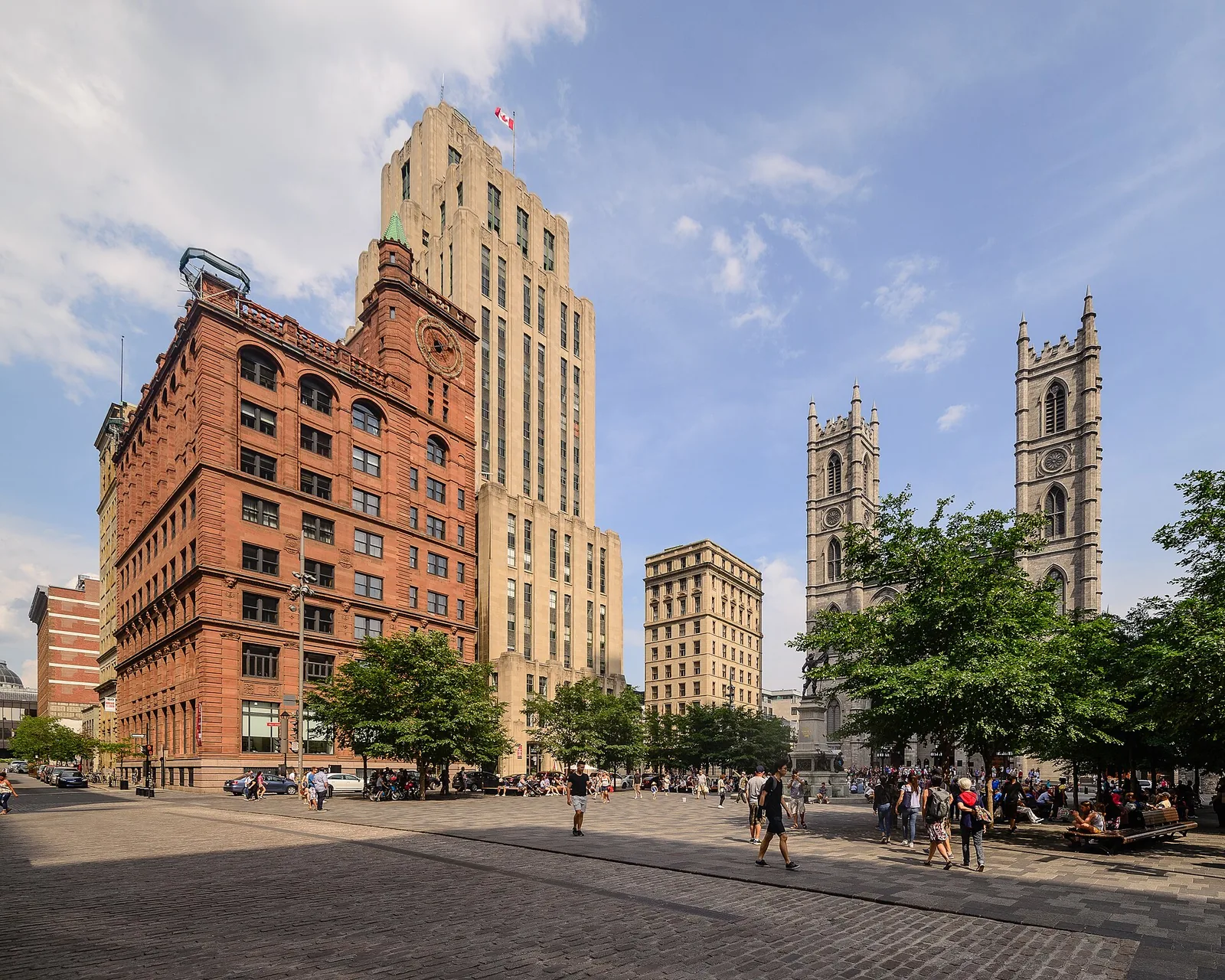
Place d’Armes is free, takes ten minutes, and gives you three centuries of Montreal in one turn of the head. Louis-Philippe Hébert’s statue of Maisonneuve stands in the middle. The basilica fills the south side, and beside it, behind a stone wall, is the Sulpician seminary, built in the 1680s and generally described as the oldest surviving building in the city. On the east side, the red sandstone New York Life Building went up in 1888 as Montreal’s first skyscraper, all eight storeys of it. The art deco Aldred Building next door belongs to the 1930s. The columned bank on the north side is the Bank of Montreal’s 19th-century head office.
Walk a block west along rue Saint-Jacques, which was the Wall Street of Canada until the head offices moved to Toronto. At number 360, the former Royal Bank head office still has its gilded 1920s banking hall intact. It is now Crew Collective & Café, and the price of a coffee buys you a seat under one of the finest interiors in the district.
- Metro:
- Place-d’Armes (Orange)
- Cost:
- free (coffee extra)
- Allow:
- 30 minutes
4. Rue Saint-Paul
Rue Saint-Paul is one of the oldest streets in the city and the backbone of any Old Montreal walk. It runs parallel to the river from the western end of the district to Marché Bonsecours, lined with 19th-century stone warehouses turned into galleries, fashion boutiques, hotels and restaurants. The western stretch, roughly from rue McGill to rue Saint-Laurent, is quieter and has better food. The eastern stretch near Place Jacques-Cartier is where the maple syrup shops and the moose T-shirts live.
Do the whole length, at least once, slowly. Look up: the upper floors are where the best stonework is, and the side streets running down to the port frame the river in almost every gap.
- Metro:
- Place-d’Armes or Champ-de-Mars (Orange)
- Cost:
- free
- Allow:
- 45 minutes walking, longer if you browse

5. Place Jacques-Cartier and Nelson’s Column
This is the long, sloping square that runs from rue Notre-Dame down to the port, and in summer it is the loudest place in Old Montreal: buskers, caricature artists, flower beds, and restaurant hosts waving menus at you. At the top stands Nelson’s Column, put up by Montreal’s British merchants in 1809 after Trafalgar. It is the oldest monument in the city and more than thirty years older than its famous cousin in London. The little lane off the square’s west side, rue Saint-Amable, fills with artists selling sketches and watercolours in summer.
Enjoy the square for what it is — theatre — and then eat somewhere else. The terrasses here charge a premium for the view and cook for people they will never see again. A beer at the top of the square at sunset is fine. A full dinner is a waste of a Montreal meal.
- Metro:
- Champ-de-Mars (Orange)
- Cost:
- free
- Allow:
- 20 minutes
6. City Hall and Champ-de-Mars
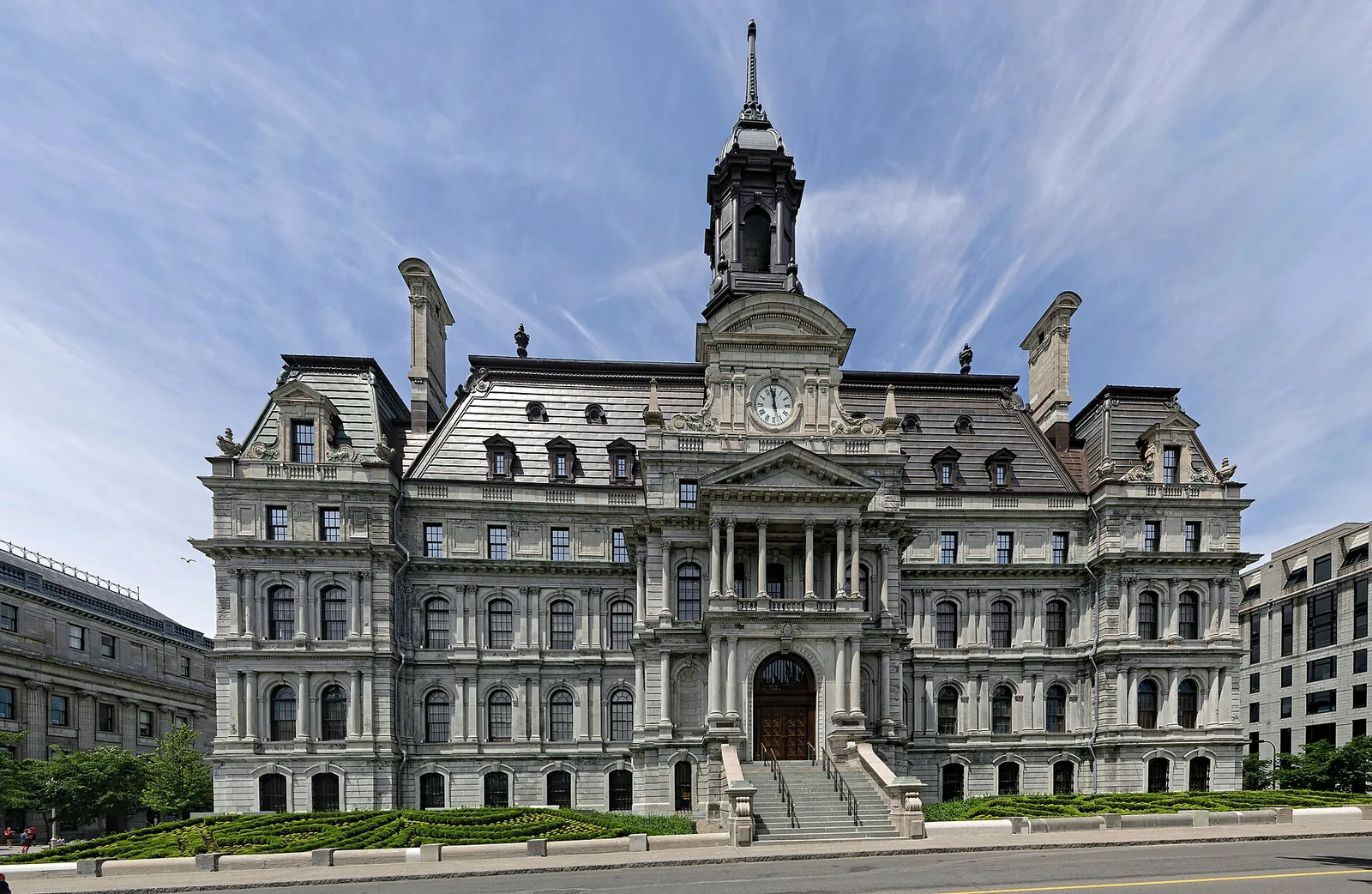
At the top of Place Jacques-Cartier, the Second Empire Hôtel de Ville was finished in 1878, gutted by fire in 1922 and rebuilt inside the old walls. Its balcony is the most politically loaded in Canada: on 24 July 1967, visiting French president Charles de Gaulle stepped out onto it and shouted “Vive le Québec libre!” to the crowd below, setting off a diplomatic row that cut his visit short. Stand in the square and look up at the spot.
Walk round behind the building to Champ-de-Mars, a former parade ground where the foundations of the 18th-century fortification wall have been excavated and laid out in the grass. It is free, open, and the easiest way to picture how small the walled town really was.
- Metro:
- Champ-de-Mars (Orange), 3 minutes
- Cost:
- free
- Allow:
- 20 minutes
7. Château Ramezay
Directly across rue Notre-Dame from City Hall, this low stone house was built in 1705 for Claude de Ramezay, the governor of Montreal. It later served the French fur trade and, during the American invasion of 1775–76, became the headquarters of the Continental Army; Benjamin Franklin stayed here in 1776 while trying, unsuccessfully, to talk Quebec into the revolution. It has been a museum since 1895. The vaulted cellars and the recreated 18th-century governor’s garden behind the house are the highlights. Some of the upstairs rooms are old-fashioned in presentation, which suits the building.
- Metro:
- Champ-de-Mars (Orange)
- Cost:
- $14.99 including tax
- Hours:
- daily 10:00–17:00
- Allow:
- 1 hour
8. Notre-Dame-de-Bon-Secours Chapel and the Marguerite-Bourgeoys Museum
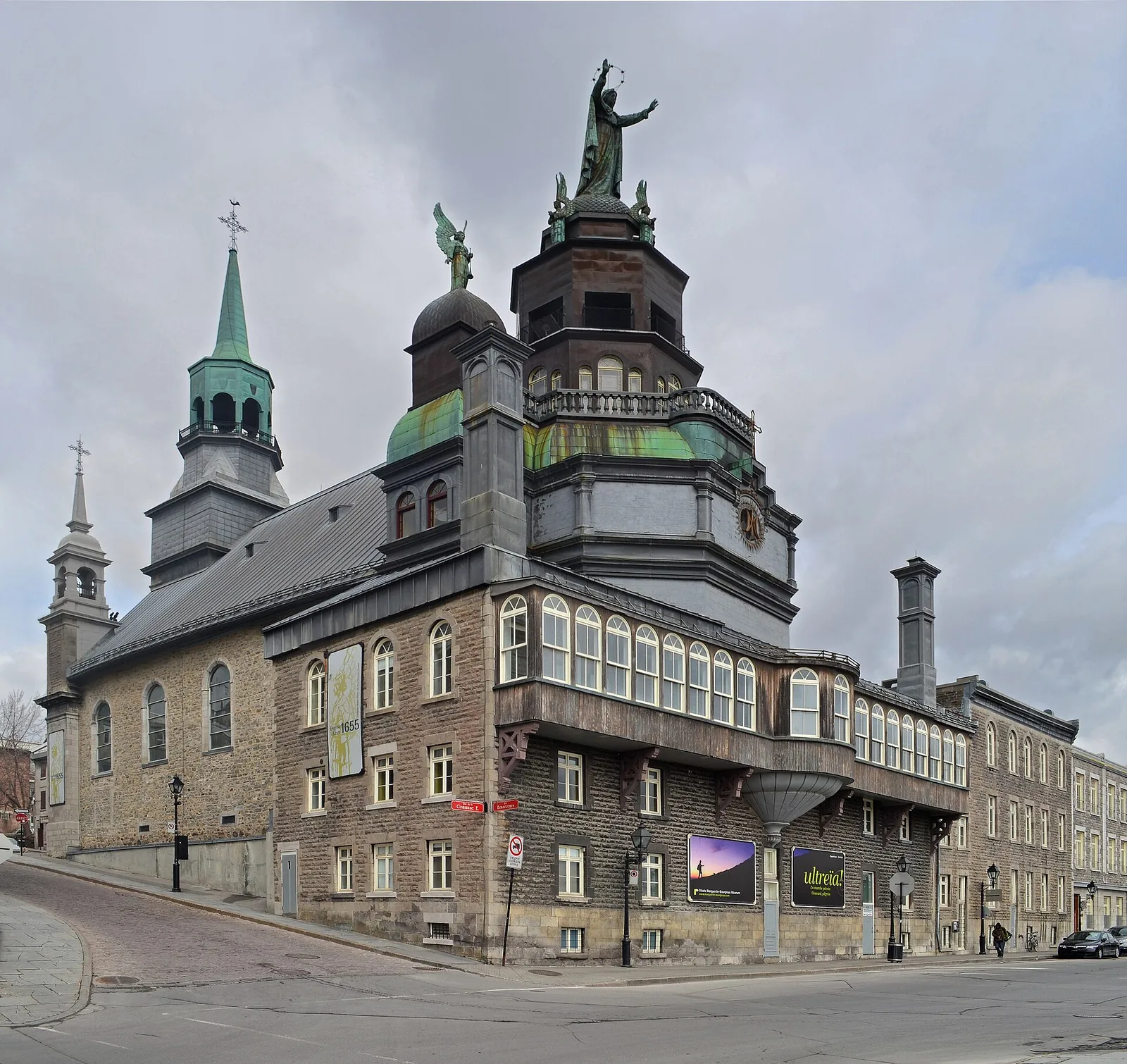
Montreal’s first teacher, Marguerite Bourgeoys, built a wooden chapel on this spot in 1655; the present stone chapel dates from 1771. It is known as the sailors’ chapel. Sailors who survived the crossing hung model ships from the ceiling as thanks, and they are still there, and a statue of the Virgin on the roof faces the river with arms open to the boats. The chapel itself is free to enter and worth five quiet minutes.
The adjoining Marguerite-Bourgeoys Museum costs $16 and is the only way up the tower. From the lookout you get one of the best views of the Old Port, Marché Bonsecours’s dome and the Jacques Cartier Bridge. It also takes you down into an archaeological dig beneath the chapel. Of the smaller museums in the district, this is the one with the best ratio of payoff to price.
- Metro:
- Champ-de-Mars (Orange), 8 minutes
- Cost:
- chapel free, museum $16
- Allow:
- 1 hour with the museum
9. Marché Bonsecours
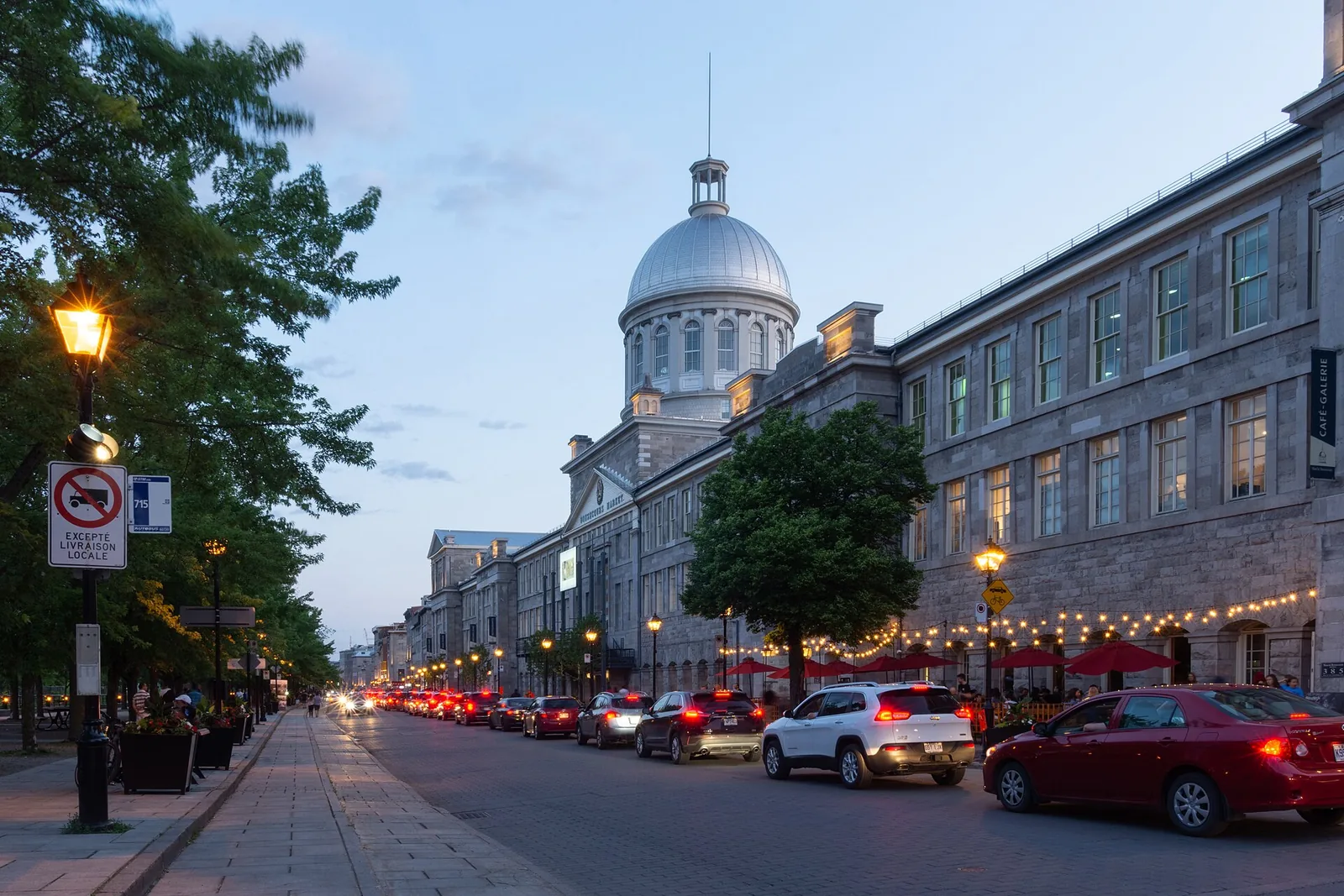
The long neoclassical building with the silver dome opened in 1847 as the city’s main public market and, for a quarter of a century, also housed City Hall. The farmers moved out long ago, and today the halls hold boutiques of Quebec designers, jewellers and craftspeople, with restaurant terrasses along the rue de la Commune side. It is the better place in Old Montreal to buy a gift that was actually made in Quebec. The building is most beautiful from outside, lit up in the evening from rue Saint-Paul or from the water. If you are short on time, admire it and move on.
- Metro:
- Champ-de-Mars (Orange)
- Cost:
- free
- Allow:
- 20 to 30 minutes
10. The Old Port promenade and the Clock Tower
Cross rue de la Commune at the bottom of any side street and you are on the promenade: a wide, flat, car-free path along the water, with benches, lawns and the cycle track. It is free, it is the best place in the district to sit down, and in the evening, when the Jacques Cartier Bridge lights up, it is where half of Montreal comes to walk.
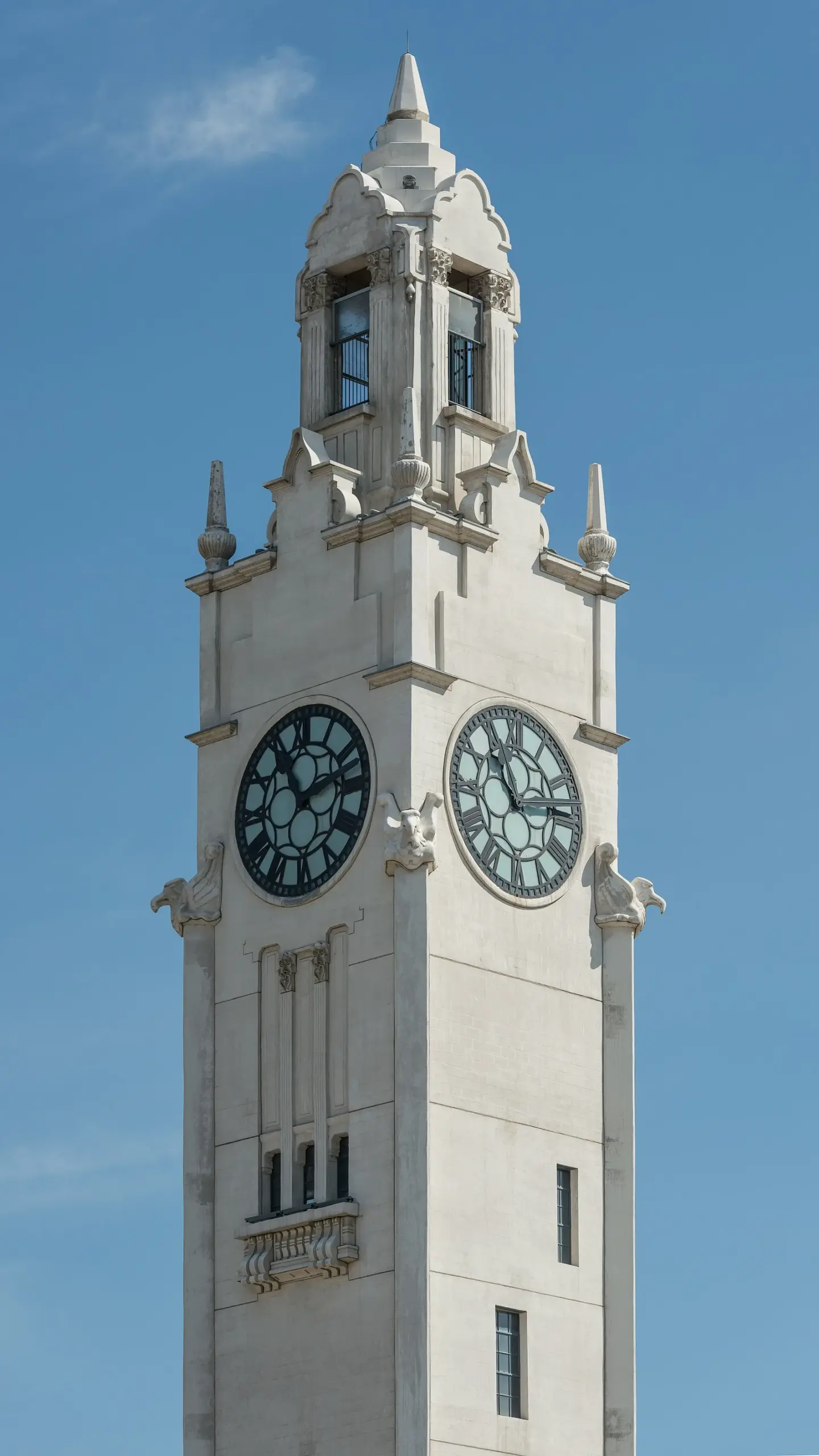
At the eastern end, the white Clock Tower stands at the tip of Quai de l’Horloge. It was finished in 1922 as a memorial to the sailors lost in the First World War. Beside it is the Clock Tower Beach, a strip of sand with parasols and deck chairs but no swimming — the St Lawrence here is a shipping channel, not a bathing spot. Whether the tower’s stairs are open on a given day varies by season, so check the Old Port’s website before planning around the climb.
- Metro:
- Champ-de-Mars (Orange), 12 minutes
- Cost:
- free
- Allow:
- 45 minutes, more on a sunny evening
11. La Grande Roue de Montréal
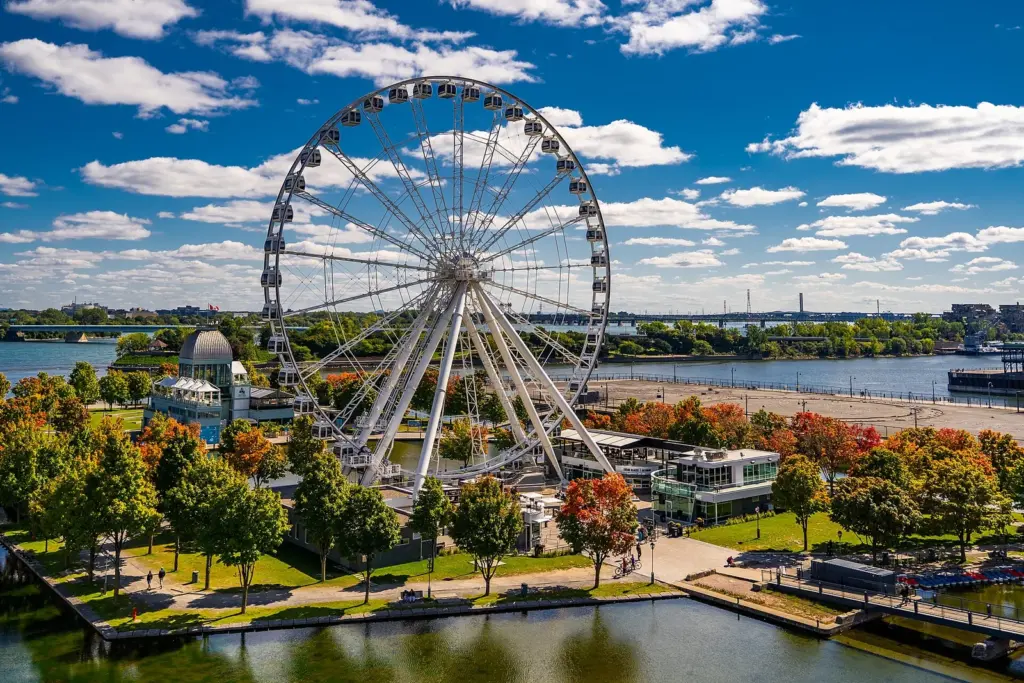
The observation wheel on Quai de l’Horloge has enclosed, climate-controlled gondolas, which means it runs in January as happily as in July. A ride costs $29.50 plus tax, and it operates 10:00–23:00. Is it worth it? At sunset, looking down the river and back over the rooftops of Old Montreal, yes, once. In the middle of a grey afternoon, the free view from the Bon-Secours tower comes close for a lot less money. With the Montreal Tower observatory at Olympic Park closed until spring 2027, the wheel is currently the easiest paid viewpoint in the city.
- Metro:
- Champ-de-Mars (Orange), 12 minutes
- Cost:
- $29.50 + tax
- Allow:
- 30 to 45 minutes

12. Montreal Science Centre
On King-Edward Quay, the Science Centre is a big, hands-on museum aimed squarely at children and teenagers. On a rainy day with kids it is the obvious move in Old Montreal, and it keeps them busy for a morning. Adults travelling without children can skip it without regret. Adult admission to the exhibitions is $37.
- Metro:
- Place-d’Armes (Orange), 10 minutes
- Cost:
- $37 adult
- Allow:
- 2 to 3 hours
13. Bota Bota
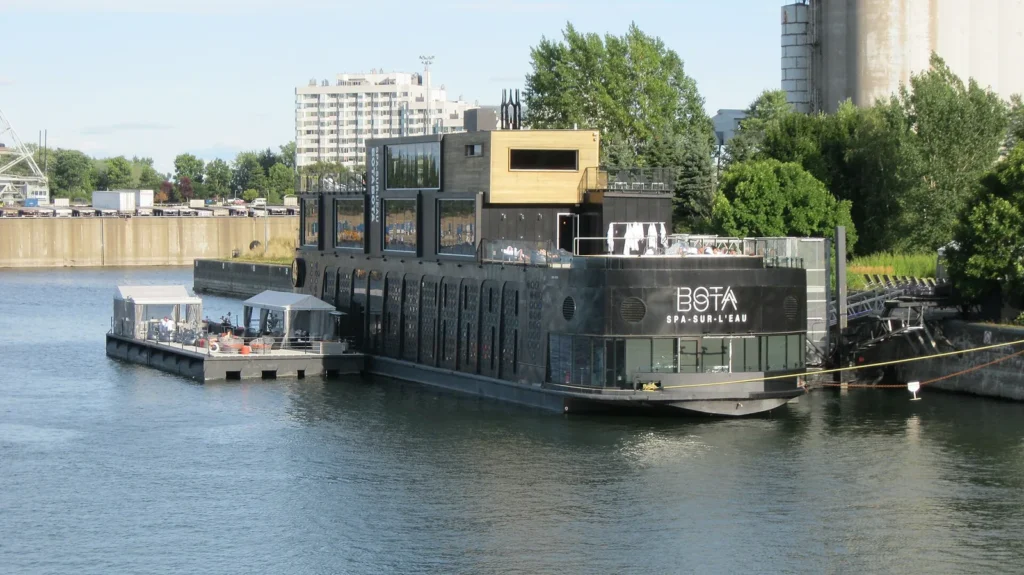
A 1950s ferry moored at the western end of the Old Port, converted into a Nordic spa: hot pools, saunas, cold plunges and decks looking back at the Old Montreal skyline. The water circuit costs $65 to $155 before tax depending on the day and the length of the visit (two hours up to a full day), and it is 18 and over only. It is an indulgence, but a very Montreal one, and it is at its best on a cold, clear evening in late autumn.
- Metro:
- Square-Victoria–OACI (Orange), 10 minutes
- Cost:
- $65–$155 before tax
- Allow:
- 2 hours minimum
14. Habitat 67, seen from the Old Port
Moshe Safdie’s stacked-box apartment complex, built for Expo 67, sits across the harbour on the Cité du Havre peninsula. You can see it from the western end of the promenade, or walk there in 25 to 30 minutes. Most of it is private homes, so the only way inside is a guided tour: $58 including tax for 90 minutes, on Saturdays from April to November in 2026. Architecture fans should book one. Everyone else will be happy with the view from the path.
- Metro:
- none close; walk or cycle from the Old Port
- Cost:
- free to look, $58 tour
- Allow:
- 1 hour from the Old Port, 90 minutes more for the tour
What is no longer there
Two things still turn up in other guides and on old blog posts. Calèches, the horse-drawn carriages that used to line up on rue Notre-Dame, were banned by city bylaw from 1 January 2020, and the trade is gone. And the Old Port skating rink in the Bonsecours Basin is permanently closed. For outdoor skating in winter, head up to Beaver Lake (Lac aux Castors) on Mount Royal instead.
Old Montreal Prices Compared (September 2026)
All prices are adult prices in Canadian dollars, checked in September 2026. “Incl. tax” means the price at the door is the price you pay; “+ tax” means sales tax (GST and QST) is added at the till.
| Sight | Adult price | Hours / booking | Allow | Nearest metro |
|---|---|---|---|---|
| Notre-Dame Basilica | $16 incl. tax | Daytime visits; buy on site | 45 min | Place-d’Armes |
| AURA light show | $37 + tax | Evening; book online, sells out | 1 h | Place-d’Armes |
| Pointe-à-Callière | $30 incl. tax (ages 31–64) | Tue–Fri 10–17, Sat–Sun 11–17 | 2–3 h | Place-d’Armes |
| Château Ramezay | $14.99 incl. tax | Daily 10–17 | 1 h | Champ-de-Mars |
| Marguerite-Bourgeoys Museum | $16 | Includes tower lookout | 1 h | Champ-de-Mars |
| Bon-Secours Chapel | Free | — | 10 min | Champ-de-Mars |
| La Grande Roue | $29.50 + tax | 10:00–23:00 | 30–45 min | Champ-de-Mars |
| Montreal Science Centre | $37 | Best on rainy days with kids | 2–3 h | Place-d’Armes |
| Bota Bota spa | $65–$155 before tax | 18+ only | 2 h+ | Square-Victoria–OACI |
| Habitat 67 tour | $58 incl. tax | Saturdays, Apr–Nov 2026 | 90 min | None nearby |
| Place d’Armes, rue Saint-Paul, Place Jacques-Cartier, Champ-de-Mars, Old Port promenade | Free | Always open | 2–3 h combined | Any of the three |
A realistic day of the headline paid sights — basilica, Pointe-à-Callière and the Bon-Secours museum — comes to $62 per adult before food. Add the wheel and AURA and you are past $130. Plenty of people spend a very good day here paying for nothing but lunch.
A Half-Day Walking Route Through Old Montreal
This route covers about 3.5 km, runs west to east through the old streets and then back west along the water, and finishes near a metro station. It takes about three and a half hours with one museum stop, or two hours if you only look at the outsides. It is flat except for the gentle slope between rue Notre-Dame and the river.
- Place d’Armes (start). Come up from Place-d’Armes metro, five minutes south. Take in the square and the buildings around it. 10 minutes.
- Notre-Dame Basilica, on the south side of the square. Go in as soon as it opens to beat the tour groups. 45 minutes.
- Rue Saint-Jacques to Crew Collective, three minutes west. Coffee under the banking-hall ceiling. 20 minutes.
- Pointe-à-Callière, seven minutes’ walk down to the water at Place Royale. If you have a full day, do the whole museum. On a half-day, do the underground circuit only. 1 to 2 hours.
- Place d’Youville, just behind the museum. The long open square was the site of the Parliament of the Province of Canada, burned by a rioting mob in 1849. 5 minutes.
- Rue Saint-Paul, heading east. Walk its full length from the museum to Place Jacques-Cartier, detouring down any side street that catches your eye. 20 minutes.
- Place Jacques-Cartier, City Hall and Champ-de-Mars. Walk up the square, look at the balcony, circle behind City Hall to see the wall foundations. 20 minutes.
- Château Ramezay, across rue Notre-Dame. Go in if you have time; otherwise look through the gates at the garden. 5 minutes or 1 hour.
- Bon-Secours Chapel and Marché Bonsecours, five minutes east along rue Saint-Paul. Step into the chapel, then walk the length of the market. 20 minutes.
- The Clock Tower. Cross rue de la Commune and walk out along Quai de l’Horloge. 15 minutes.
- The promenade west. Walk back along the water past the Grande Roue, Quai Jacques-Cartier and King-Edward Quay. Climb back up to Place-d’Armes metro or carry on to Square-Victoria–OACI. 25 minutes.
If you have more time
With a full day, add the wheel at sunset, a proper sit-down lunch on the western half of rue Saint-Paul, and the Bon-Secours tower. With two days, give one of them to Pointe-à-Callière and Château Ramezay at a slow pace, and return to the basilica for AURA in the evening. Two days in Old Montreal alone is generous. Most visitors are better off with one day here and the rest of the trip spent in the neighbourhoods up the hill.
The Old Port Beyond the Promenade
Most visitors stop at the Clock Tower and the wheel. Keep walking west and the port gets more interesting and much less crowded.
Past King-Edward Quay, the rebuilt cruise terminal on the Grand Quay has a public rooftop park, one of the best free vantage points down the harbour. Beyond it rises Silo No. 5, a huge concrete grain elevator that has stood empty since the 1990s. It is off-limits, but it is one of the most striking industrial ruins in Canada and a photographer’s favourite at dusk. Across the water, the red Farine Five Roses sign glows over the old flour mill at night, a landmark every Montrealer knows.
At the far western end, the port opens into the Lachine Canal. Its flat towpath runs 14.5 km inland to Lake Saint-Louis, and it is the easiest bike ride in the city: grab a BIXI at the Old Port and ride as far as Atwater Market, about half an hour at an easy pace, for lunch among the market stalls before coming back.
Boat tours leave from the quays in the warmer months. The little river shuttle to Île Sainte-Hélène — $7 each way in 2026 — is a summer-only service and ended its season on 7 September. From autumn to spring, the Yellow line metro to Jean-Drapeau is the way across to the islands.
Where to Eat in Old Montreal
Old Montreal has some of the best restaurants in the city and some of the worst value, sometimes on the same block. The rule of thumb is simple: the further you walk from Place Jacques-Cartier, the better and fairer the food. The western half of rue Saint-Paul and the streets around Place d’Youville and McGill are where Montrealers go.
- Olive et Gourmando, rue Saint-Paul Ouest. The bakery-café everyone recommends, and for good reason: generous sandwiches, excellent pastries, big salads. Weekend queues are real, so go early or late.
- Crew Collective & Café, rue Saint-Jacques. Not a meal, but the best coffee setting in the district.
- Toqué!, on Place Jean-Paul-Riopelle at the district’s northern edge. Chef Normand Laprise’s restaurant is one of the most influential kitchens in Quebec and a serious tasting-menu splurge. Book well ahead.
- Chinatown, five to ten minutes north of Place d’Armes. The budget escape hatch: dumplings, noodle soups and bakeries at a fraction of Old Montreal prices.
Two things to save for elsewhere. Poutine is better at La Banquise on the Plateau, which is open 24 hours. Bagels are a Mile End thing — St-Viateur is open 06:00 to midnight, not around the clock as some guides claim.
Tipping works the American way: 15 to 20 percent at a table, a dollar or two per drink at a bar. Menu prices never include sales tax, so a $30 main is really about $34.50 before the tip. The legal drinking age in Quebec is 18, and bars pour until last call at 03:00.
Old Montreal Through the Seasons
Summer (June to August)
Old Montreal at its fullest and busiest. Terrasses are open, the promenade is packed until late, and parts of the old streets close to cars. Hotel prices peak, especially in the big festival weeks: the Jazz Festival ran from 25 June to 4 July in 2026, and Just for Laughs from 14 to 26 July. Both are centred on the Quartier des Spectacles downtown rather than in the old town, but they fill every hotel within reach. Visit the basilica at opening and the port in the evening, and spend the hot middle of the day inside Pointe-à-Callière.
Autumn (September to November)
The best time to do Old Montreal properly. September is warm, the crowds thin once school goes back, and the terrasses stay open well into October. Fall colour peaks in the city around mid-October, later than the rest of Quebec because of the urban heat island, and the trees along the promenade and on Mount Royal behind the skyline make the wheel worth riding. By November it is cold, quiet and grey, and a good month for the museums.
Winter (December to March)
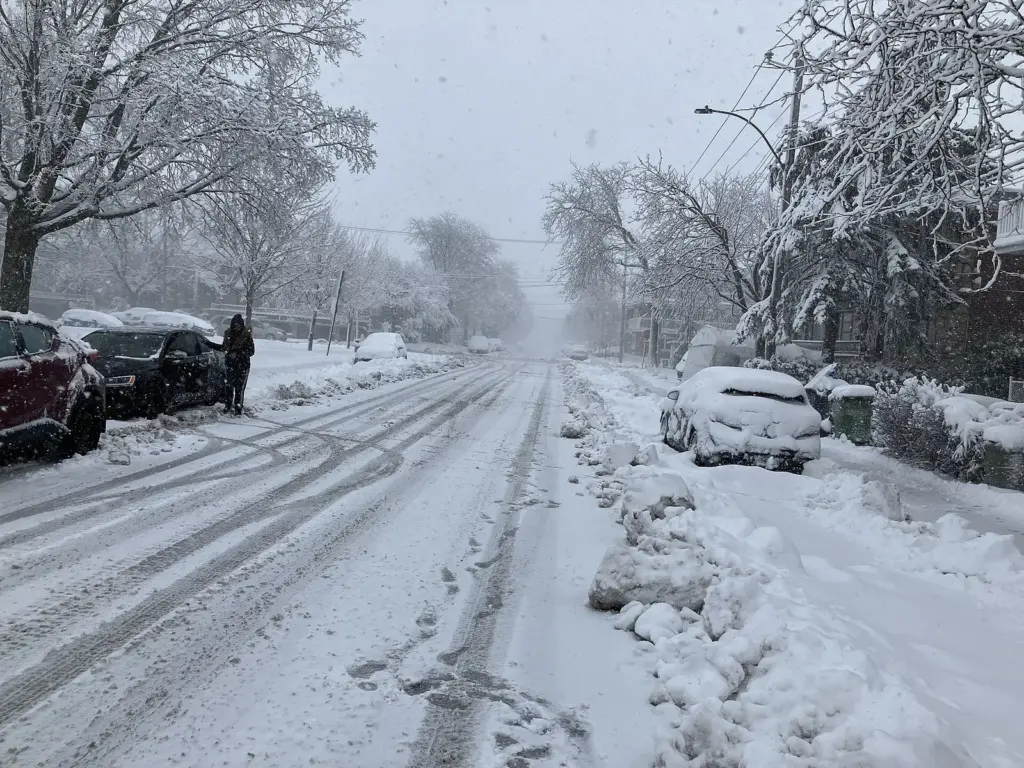
Winter runs roughly from mid-November to mid-March, and January averages about −9 °C before windchill. The cobbles get icy, so bring boots with real grip. The payoff is that the district looks its most beautiful under snow and is almost empty on weekday mornings. Igloofest, the outdoor electronic music festival, takes over the Old Port from January into early February; it ran from 15 January to 7 February in 2026, and the 2027 edition runs from 14 January to 6 February. Montréal en Lumière runs from 18 to 28 February 2027, with Nuit blanche, the all-night arts crawl, on Saturday 27 February. Remember there is no longer a rink in the Old Port.
Spring (April and May)
Slushy in early April, lovely by late May. This is the cheapest time to stay in the district, the Habitat 67 tours restart in April, and the terrasses come back out in May. Spring is also sugar shack season, but those are in the countryside, not here.
Staying in Old Montreal: Worth It or Not?
Staying in the old town is a treat, not a necessity. You get the district to yourself early in the morning and late at night, which is when it looks best. You can walk to the basilica, the port and the museums, and most of the hotels are in converted 19th-century buildings — Le Saint-Sulpice, Hôtel Nelligan, Hôtel Place d’Armes, Auberge du Vieux-Port and William Gray among them.
The downsides are real, though. Rooms usually cost more than comparable hotels downtown for the same dates. There are few supermarkets or late-night dépanneurs (corner shops), and the district goes very quiet in winter evenings. The nightlife and the best cheap eating are in the Plateau and Mile End, about four metro stops away on the Orange line from Place-d’Armes to Mont-Royal. For a first trip of three nights or more, a downtown or Plateau base with a day in Old Montreal usually makes more sense. For a romantic weekend, stay here.
With Children, Strollers or Limited Mobility
Families do well in Old Montreal. The Science Centre, the wheel, the sand at the Clock Tower Beach and the wide lawns along the promenade cover most ages, and Pointe-à-Callière’s underground ruins tend to grip children over about eight. Public toilets are scarce, so plan around museum and café stops.
The cobbles are the main obstacle. They are hard on stroller wheels and on anyone with limited mobility, and some sidewalks in the old streets are narrow and uneven. The Old Port promenade is the exception: flat, wide and smooth for its whole length. Not every metro station has an elevator, so check the STM’s accessibility list before choosing which stop to use.
Mistakes First-Time Visitors Make
- Thinking Old Montreal is the city centre. Downtown is up the hill. Old Montreal is one district, not the whole trip.
- Eating on Place Jacques-Cartier. Have a drink there if you like, then walk five minutes west for dinner.
- Turning up for evening AURA without a ticket. Evening sales are online or by phone only, and good nights sell out.
- Planning Pointe-à-Callière for a Monday. Its posted hours run Tuesday to Sunday.
- Looking for a calèche ride or the Old Port rink. Both are gone.
- Wearing thin-soled shoes. Cobbles in summer, ice on cobbles in winter.
- Stopping at the Clock Tower. The western end of the port, the Grand Quay and the Lachine Canal are quieter and just as good.
With Old Montreal sorted, the rest of the city is a short metro ride away. Our guide to what to do in Montreal covers Mount Royal, the markets, the Plateau and the Olympic Park.
Frequently Asked Questions
Is Old Montreal worth visiting?
Yes, for at least half a day. It holds the city’s founding site, its most famous church and the whole riverfront, and nowhere else in North America has quite this mix of French colonial and Victorian stone architecture on such a walkable scale. Just don’t mistake it for the whole city: give it a day at most and spend the rest of your trip in the neighbourhoods up the hill.
How much time do you need in Old Montreal?
Two hours covers a walk past the main squares and a look inside Notre-Dame Basilica. Half a day adds one museum, ideally Pointe-à-Callière. A full day lets you add the Bon-Secours chapel tower, a proper lunch, the Old Port promenade and the observation wheel at sunset. More than two days in the district alone is more than most visitors need.
What is the difference between Old Montreal and the Old Port?
Old Montreal (Vieux-Montréal) is the historic district of streets, squares and buildings, including Notre-Dame Basilica, rue Saint-Paul and Place Jacques-Cartier. The Old Port (Vieux-Port) is the waterfront strip below rue de la Commune, with the quays, the promenade, the Clock Tower, the Science Centre and La Grande Roue. They sit side by side and you can walk from one into the other in a minute.
Which metro station is closest to Old Montreal?
Three stations on the Orange line serve the district. Place-d’Armes is best for Notre-Dame Basilica and Pointe-à-Callière. Champ-de-Mars is closest to City Hall, Place Jacques-Cartier and the eastern Old Port. Square-Victoria–OACI suits the western end. A single fare is $3.75 and a 24-hour pass $11.25 as of September 2026.
Is Old Montreal free to visit?
Walking around it costs nothing. The squares, rue Saint-Paul, the Old Port promenade, Champ-de-Mars and the Bon-Secours Chapel are all free. You pay only for specific sights: $16 for a daytime visit to Notre-Dame Basilica, $30 for Pointe-à-Callière, $14.99 for Château Ramezay and $29.50 plus tax for La Grande Roue, all adult prices as of September 2026.
Can you still take a horse-drawn carriage ride in Old Montreal?
No. Montreal banned calèches by city bylaw from 1 January 2020, and the horse-drawn carriages that used to wait on rue Notre-Dame and Place Jacques-Cartier are gone. Any guide or tour listing that still offers them is out of date. To see the district at a relaxed pace, walk it or take a guided walking tour instead.
Is there still skating at the Old Port in winter?
No. The Old Port’s outdoor rink in the Bonsecours Basin is permanently closed. For outdoor skating in winter, Beaver Lake (Lac aux Castors) on Mount Royal is the classic alternative. The Old Port still comes alive in winter for Igloofest, which runs from January into early February; the 2027 edition runs from 14 January to 6 February.