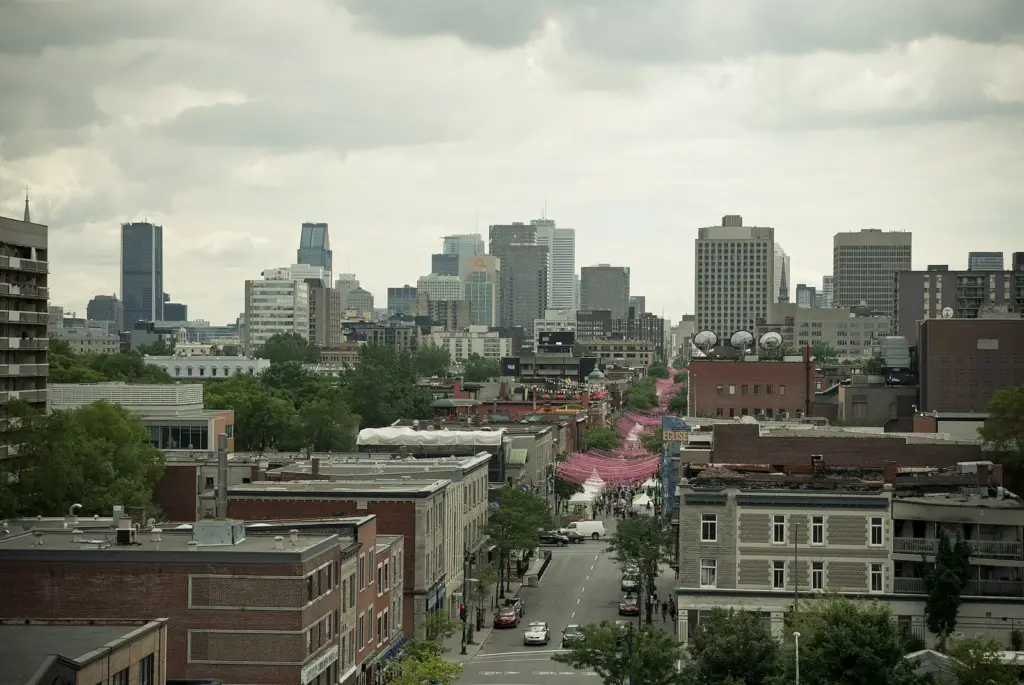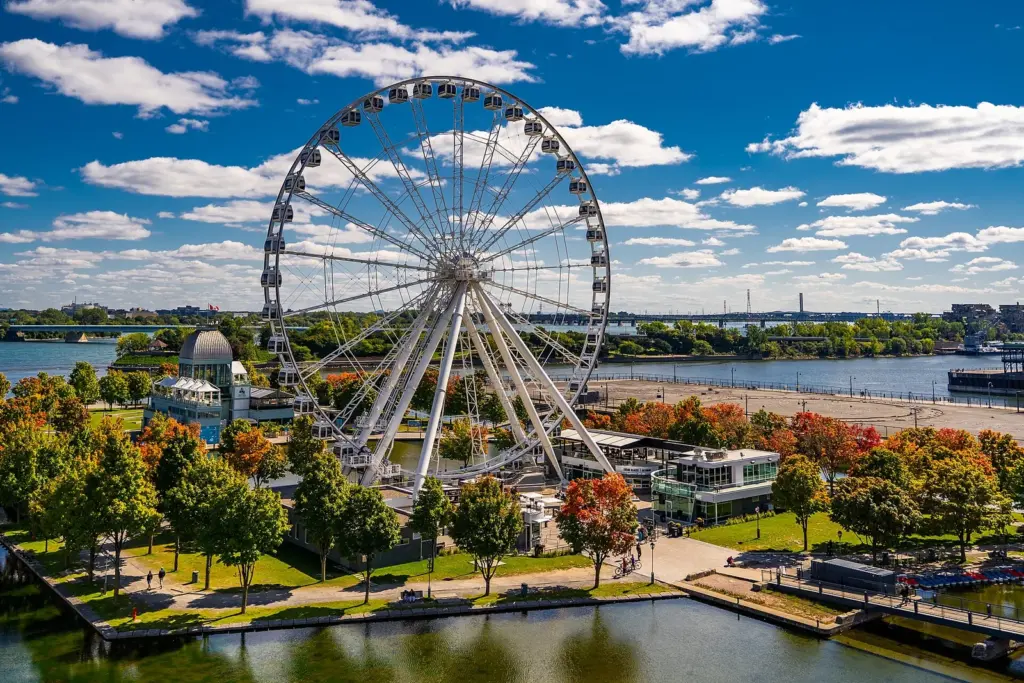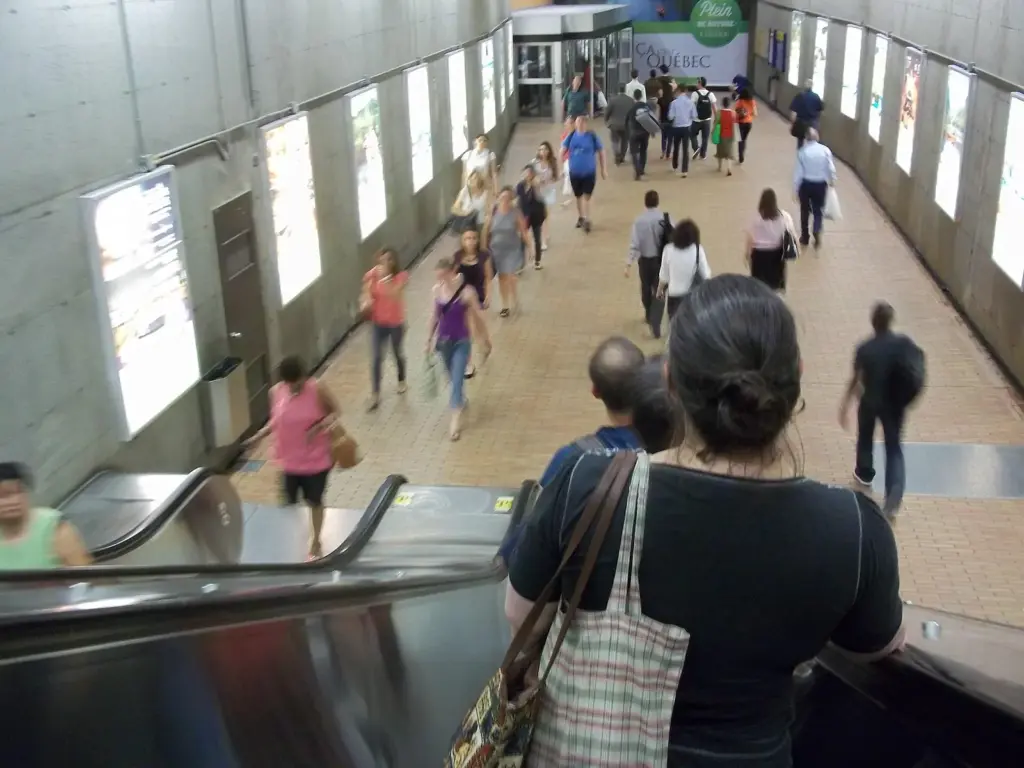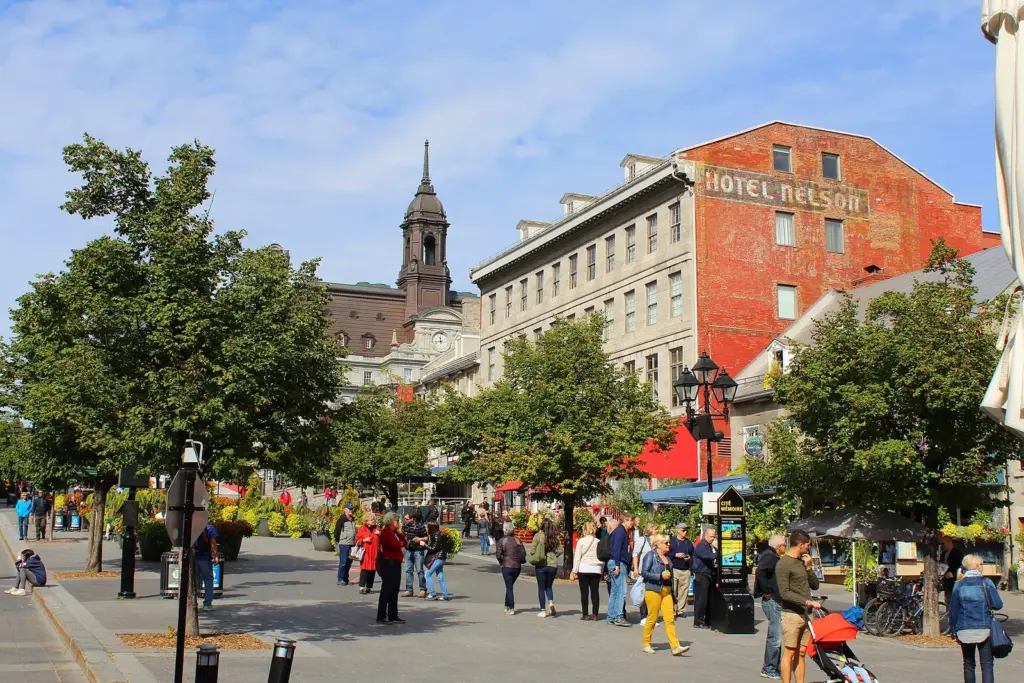
Deciding where to stay in Montreal comes down to one question: what do you want to be able to walk to? The city is compact and the metro is excellent, so there’s no truly bad central base, but each neighbourhood gives you a very different trip. Downtown is practical, connected and a little anonymous. Old Montreal is beautiful and quiet at night. The Plateau and Mile End are where the city actually lives, but they have few hotels. Griffintown and the south-west are new, modern and close to the canal. Below, each area is compared honestly, with the metro stations that serve it, who it suits and what nobody tells you. After that come the practical things that change your bill and your options: hotel taxes, the city’s strict rules on short-term rentals, the best time to book, and how to get from the airport to each neighbourhood.
One point first, because a lot of guides blur it: Old Montreal is not downtown, and the Plateau is not Mile End. They’re four distinct neighbourhoods with different characters, and choosing the right one matters more than choosing the right hotel. If you’re still deciding what you want to see, our guide to the best things to do in Montreal maps the main sights by neighbourhood.
The Short Answer: Where to Stay in Montreal
- First trip, three or four nights: downtown, near McGill, Peel or Place-des-Arts metro. Everything is within walking distance or one metro ride.
- Romantic weekend: Old Montreal, in one of the boutique hotels in converted 19th-century buildings.
- Food and neighbourhood life: the Plateau or Mile End, in a B&B or small inn, or a legal summer rental.
- Festivals: the Quartier des Spectacles or the Quartier Latin, near Place-des-Arts or Berri-UQAM.
- Winter: downtown, ideally in a hotel connected to the RÉSO underground network.
- Luxury: the Golden Square Mile on rue Sherbrooke Ouest, or a top-end Old Montreal boutique hotel.
- Modern apartment-style stays and the canal: Griffintown.
- Nightlife: the Plateau, the Village or the Quartier Latin.
- An early flight: the hotel inside the airport terminal.
Montreal Neighbourhoods Compared
| Area | Best for | Character | Metro | Hotel supply | Relative price |
|---|---|---|---|---|---|
| Downtown | First-timers, winter, shopping, business | Busy, central, practical | McGill, Peel, Bonaventure (Green, Orange) | Large | Mid to high |
| Golden Square Mile | Luxury, museums | Elegant, quiet at night | Peel, Guy-Concordia (Green) | Small, upscale | High |
| Old Montreal | Couples, history, atmosphere | Cobbled, romantic, quiet after dark | Place-d’Armes, Champ-de-Mars, Square-Victoria–OACI (Orange) | Boutique hotels | High |
| Quartier des Spectacles / Quartier Latin | Festivals, nightlife, students | Lively, noisy, a bit rough in places | Place-des-Arts (Green), Berri-UQAM (Green, Orange, Yellow) | Medium | Low to mid |
| The Plateau | Food, neighbourhood life, return visits | Residential, colourful, walkable | Sherbrooke, Mont-Royal, Laurier (Orange) | Small; B&Bs and inns | Mid |
| Mile End | Cafés, bagels, creative scene | Artsy, relaxed | Laurier (Orange), bus 55 | Very small | Mid |
| The Village | LGBTQ+ travellers, nightlife, Pride | Lively, friendly | Beaudry, Papineau (Green) | Small | Low to mid |
| Griffintown / Saint-Henri | Modern stays, the canal, food | New-build, young, trendy | Lionel-Groulx (Green, Orange), Georges-Vanier (Orange) | Growing; apartment-hotels | Mid |
| Near the airport | Early flights only | Functional | None; 747 bus | Airport hotels | Mid |
Where to Stay in Montreal by Neighbourhood
Downtown (Centre-Ville)
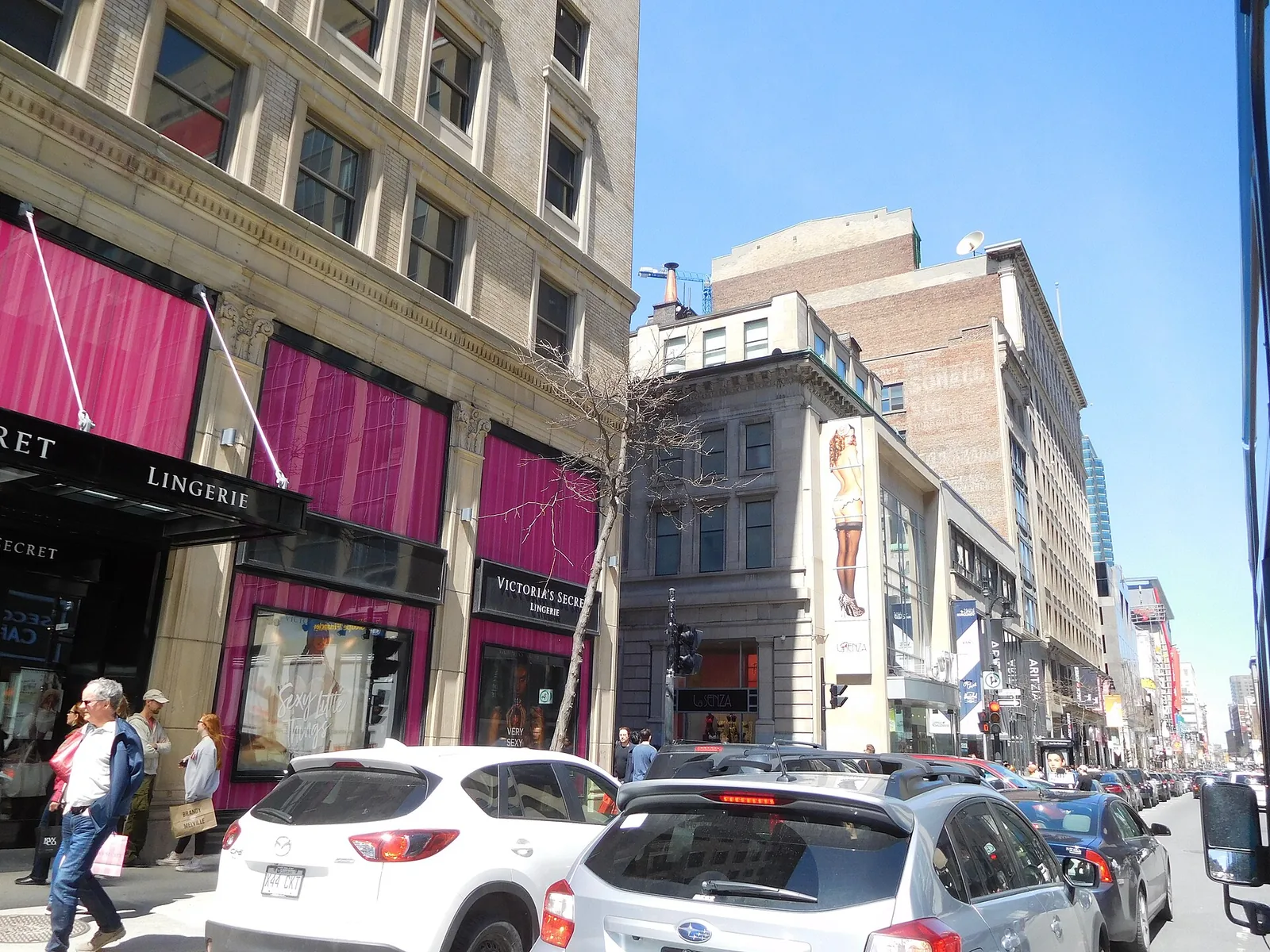
Downtown is the default for a first visit, and for good reason. It’s the most central area, with the largest choice of hotels, from international chains to independent boutique properties, and everything you need within walking distance or a single metro ride: rue Sainte-Catherine’s shops, the Montreal Museum of Fine Arts, the Bell Centre, the Quartier des Spectacles, the foot of Mount Royal and, a fifteen-minute walk downhill, Old Montreal.
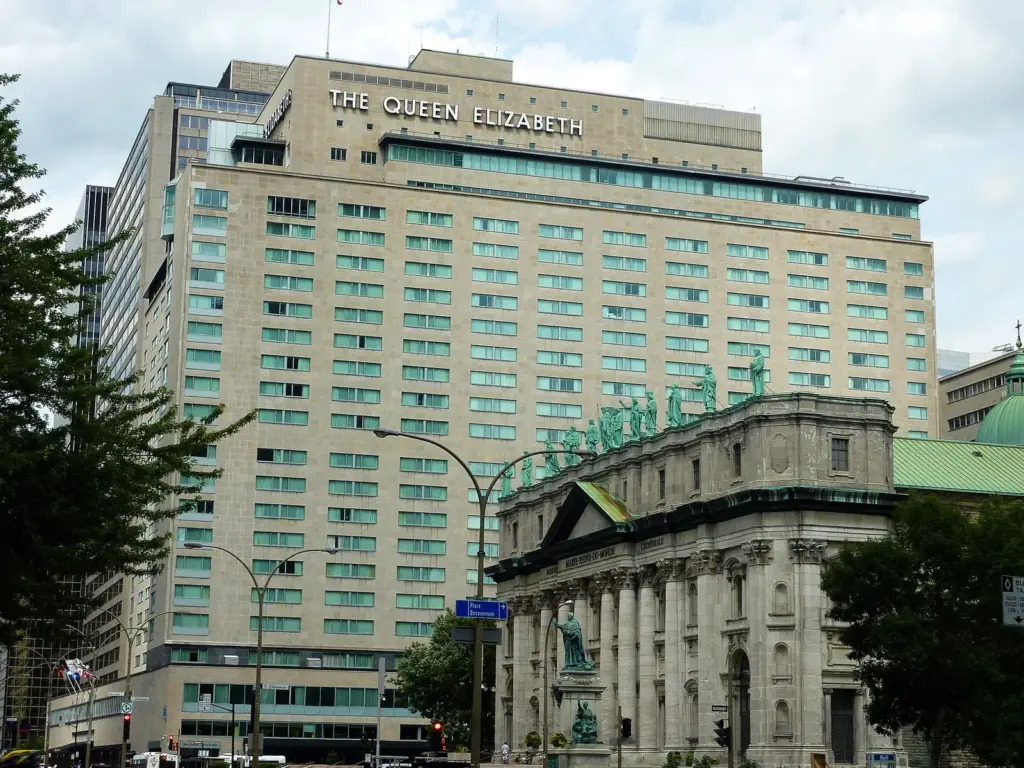
Its secret weapon is the RÉSO, Montreal’s network of about 33 km of connected indoor pedestrian passages. Several downtown hotels link straight into it, including the Fairmont The Queen Elizabeth, which sits above Gare Centrale, the city’s main train station, and the Hotel Bonaventure, built on top of Place Bonaventure. On a −20 °C January morning, being able to reach the metro, shops and restaurants without going outside is worth a lot. The RÉSO isn’t one continuous underground city, but it’s a very useful network of segments joined through buildings and metro stations.
The downside is character. Downtown is busy, businesslike and dominated by office towers and malls, and summer brings plenty of construction and orange cones. Evenings are lively around the Quartier des Spectacles and rue Crescent, but you won’t get the neighbourhood feel of the Plateau.
- Metro:
- McGill, Peel, Guy-Concordia (Green), Bonaventure, Lucien-L’Allier (Orange)
- Best for:
- first-timers, winter trips, shoppers, hockey fans
- Watch out for:
- construction noise, anonymous chain hotels
The Golden Square Mile
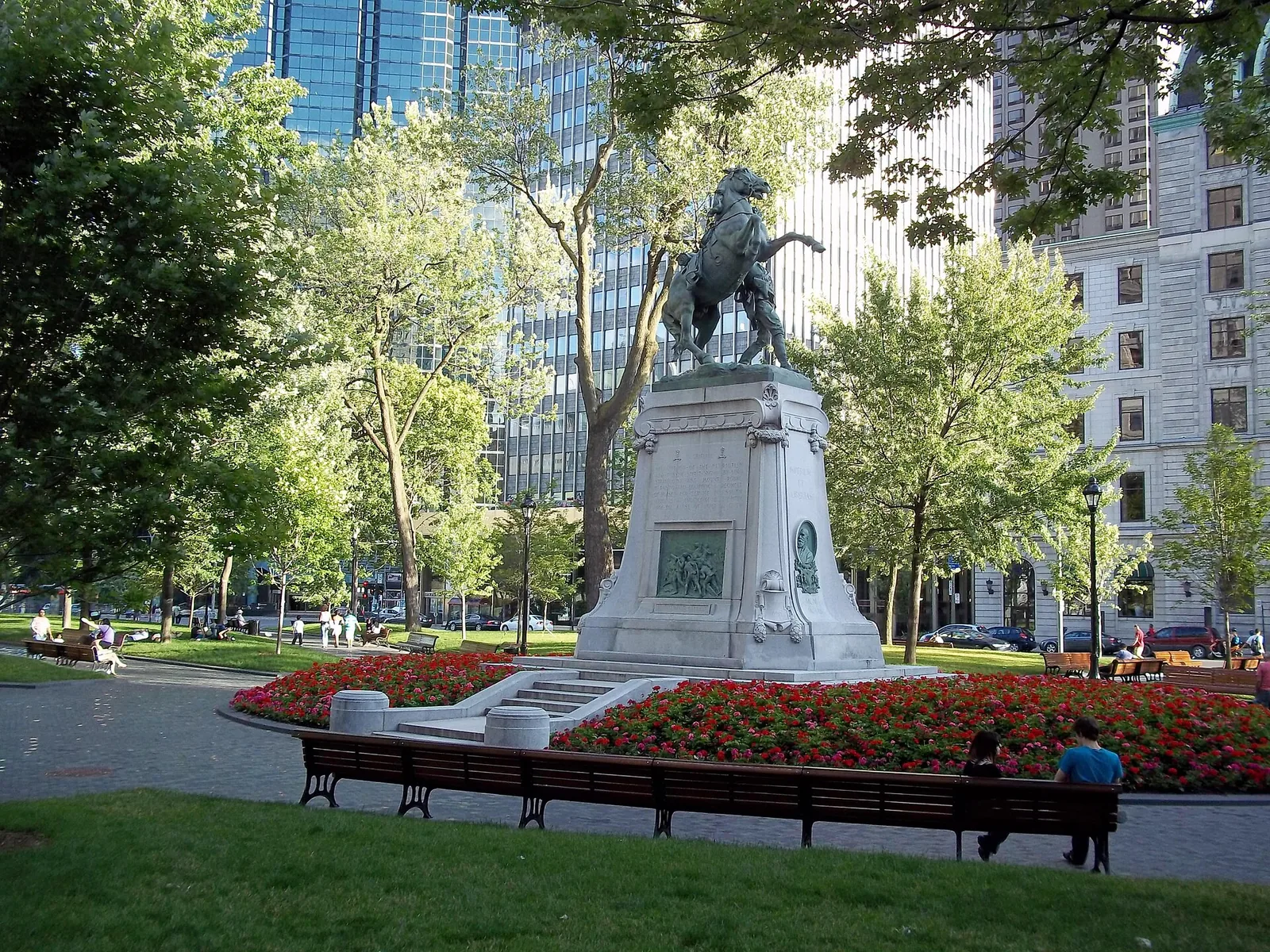
Just north-west of the downtown core, on the slopes below Mount Royal, the Golden Square Mile was where Montreal’s richest families built their mansions in the 19th and early 20th centuries, when the city was the commercial capital of Canada. Rue Sherbrooke Ouest is still its elegant spine, lined with galleries, luxury boutiques, the McGill University campus and the Montreal Museum of Fine Arts, which is free for anyone aged 25 and under.
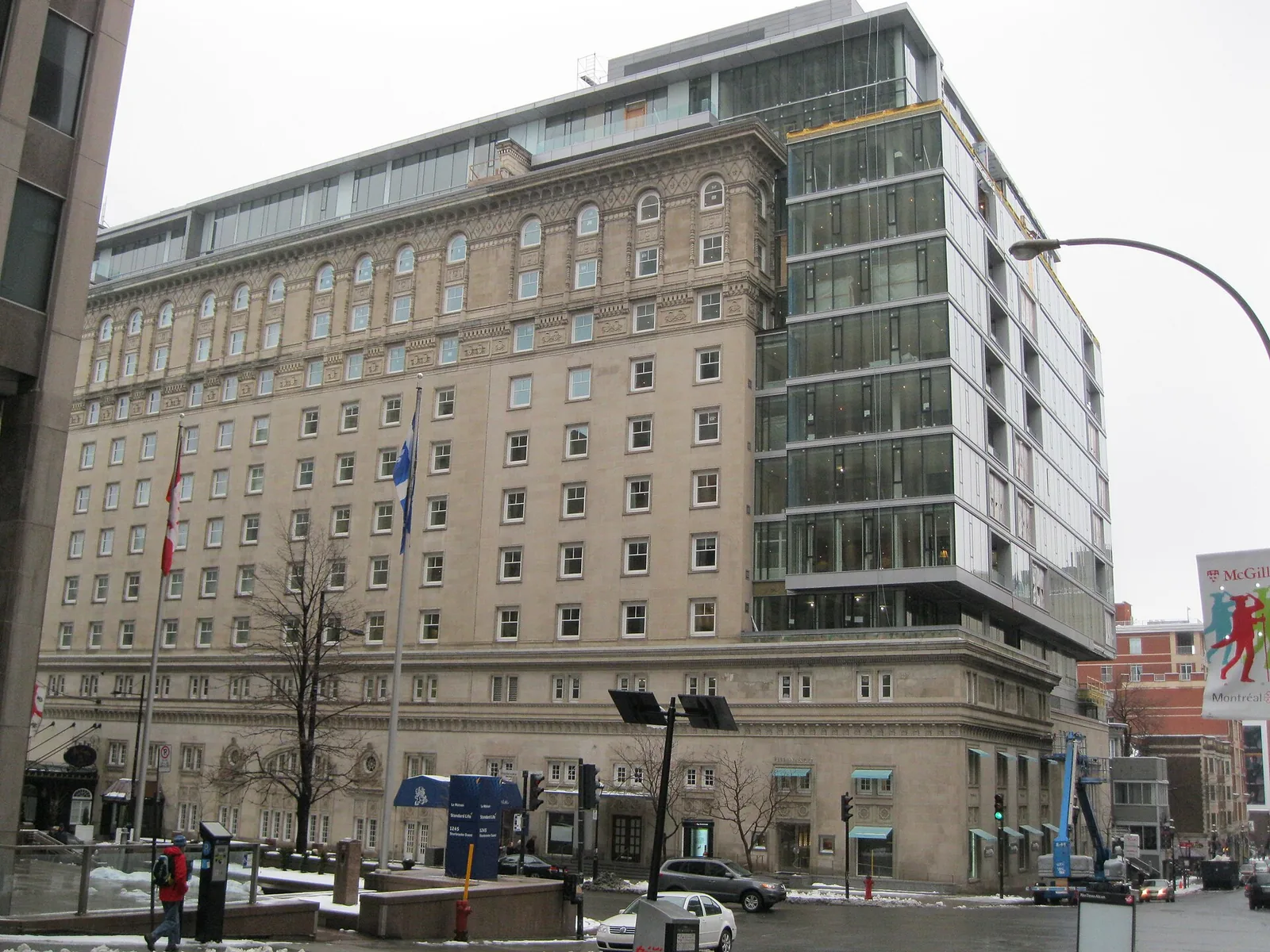
This is where you’ll find the Ritz-Carlton Montreal, the grand hotel on rue Sherbrooke, and a handful of other upscale properties. It’s quiet, polished and very close to the trails up Mount Royal. It’s also expensive, and it goes quiet after the shops close, so you’ll be walking or taking the metro for dinner and nightlife.
- Metro:
- Peel, Guy-Concordia (Green)
- Best for:
- luxury, art lovers, Mount Royal walkers
- Watch out for:
- high prices, quiet evenings
Old Montreal (Vieux-Montréal)
The historic district is the most atmospheric place to stay in the city. Its hotels are mostly small boutique properties in converted 19th-century warehouses and banks, with exposed stone walls, beamed ceilings and a sense of place no downtown chain can match. Among the best known are Le Saint-Sulpice, Hôtel Nelligan, Hôtel Place d’Armes, Auberge du Vieux-Port and William Gray. The great advantage is timing: you’ll have the cobbled streets, Notre-Dame Basilica and the Old Port almost to yourself early in the morning and late at night, when the day-trippers have gone.
The downsides are real. Rooms usually cost more than comparable hotels downtown. There are few supermarkets or late-night dépanneurs (corner shops). The district goes very quiet in the evenings, especially in winter, when icy cobbles make walking hard work. And the Plateau and Mile End, where locals actually go out, are a metro ride away: four stops on the Orange line from Place-d’Armes to Mont-Royal. For a romantic weekend, it’s perfect. For a week, most visitors are better off elsewhere with a day here. Our Old Montreal guide covers the district in detail.
- Metro:
- Place-d’Armes, Champ-de-Mars, Square-Victoria–OACI (Orange)
- Best for:
- couples, history lovers, short stays
- Watch out for:
- high prices, cobbles, quiet winter evenings

Quartier des Spectacles and the Quartier Latin
East of downtown, the Quartier des Spectacles is Montreal’s entertainment district, built around Place des Arts and the Place des Festivals, where the Jazz Festival, the Francos and Montréal en Lumière hold their big free outdoor shows. Just to the east, the Quartier Latin around rue Saint-Denis and the Université du Québec à Montréal (UQAM) is a student district of bars, cafés, theatres and cheaper hotels and hostels.
For festival-goers it’s ideal: you can walk back from late shows, and Berri-UQAM is the one station where the Green, Orange and Yellow lines meet, so you’re one ride from almost anywhere, including Parc Jean-Drapeau for Osheaga and the Grand Prix. The trade-offs are noise, especially during festivals, and a slightly rough edge on some blocks of rue Sainte-Catherine Est around Berri-UQAM late at night. If you’re a light sleeper, ask for a room away from the street.
- Metro:
- Place-des-Arts, Saint-Laurent (Green), Berri-UQAM (Green, Orange, Yellow)
- Best for:
- festivals, nightlife, budget travellers
- Watch out for:
- noise, a few gritty blocks
The Plateau-Mont-Royal
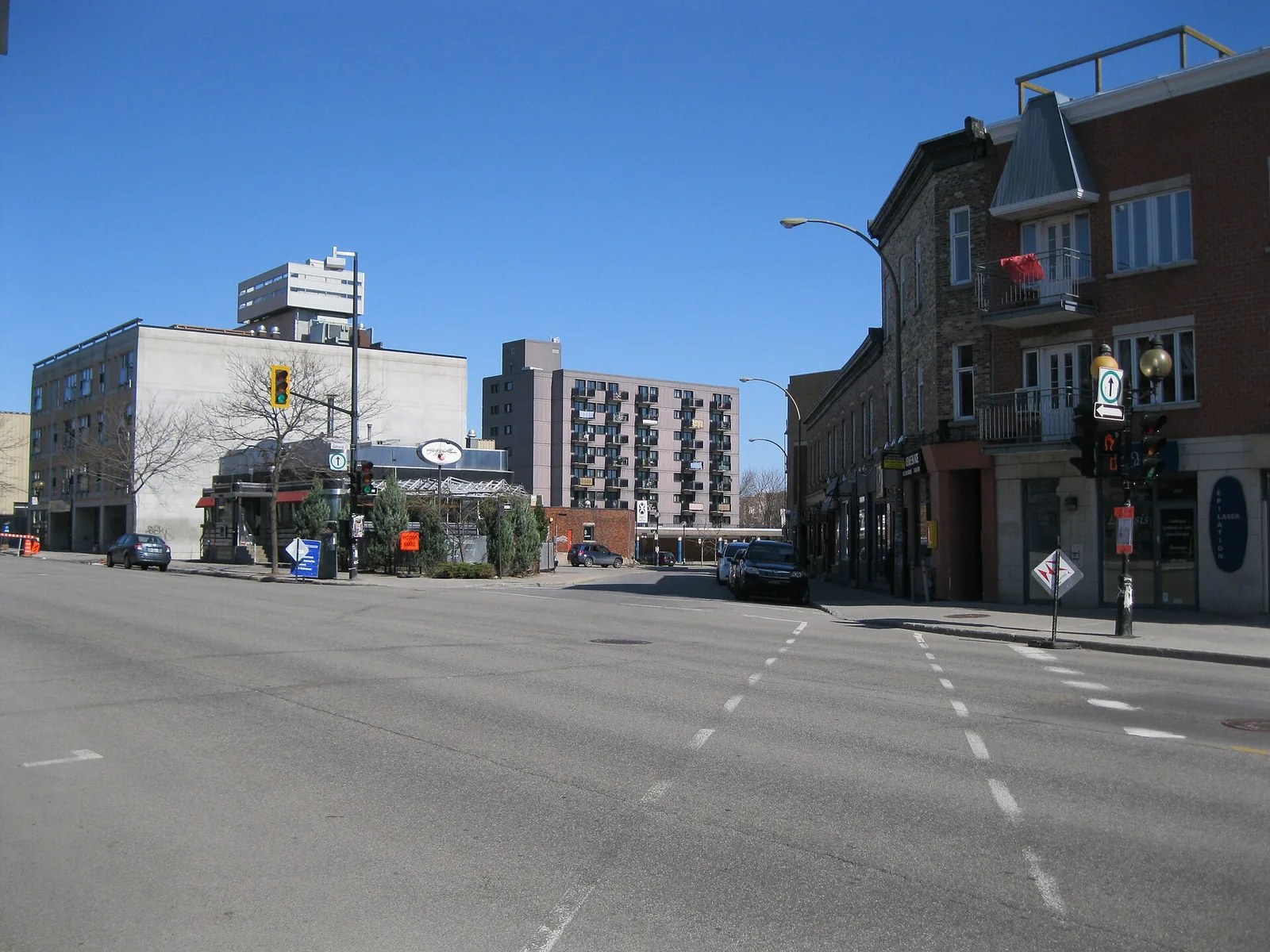
The Plateau is the Montreal of postcards and films: rows of colourful triplexes with curling iron staircases outside, leafy side streets, and busy commercial streets — boulevard Saint-Laurent, rue Saint-Denis and avenue du Mont-Royal — lined with cafés, bistros, boutiques and bars. It’s home to Parc La Fontaine, Schwartz’s, La Banquise and dozens of bring-your-own-wine restaurants, and it’s the easiest place to feel like a local for a few days. Our guide to where to eat in Montreal has the neighbourhood’s best addresses.
The catch is that the Plateau has very few hotels. Most accommodation is in small inns, B&Bs and apartment rentals, and Montreal’s short-term rental rules are strict: renting out a principal residence to tourists is only allowed from 10 June to 10 September (more on this below). Outside summer, a legal B&B or inn is the safer choice. The Plateau is also a little further from the downtown sights, although Sherbrooke and Mont-Royal metro stations put you a few minutes from downtown and Old Montreal on the Orange line.
- Metro:
- Sherbrooke, Mont-Royal, Laurier (Orange)
- Best for:
- food lovers, return visitors, longer stays
- Watch out for:
- few hotels, rental rules
Mile End
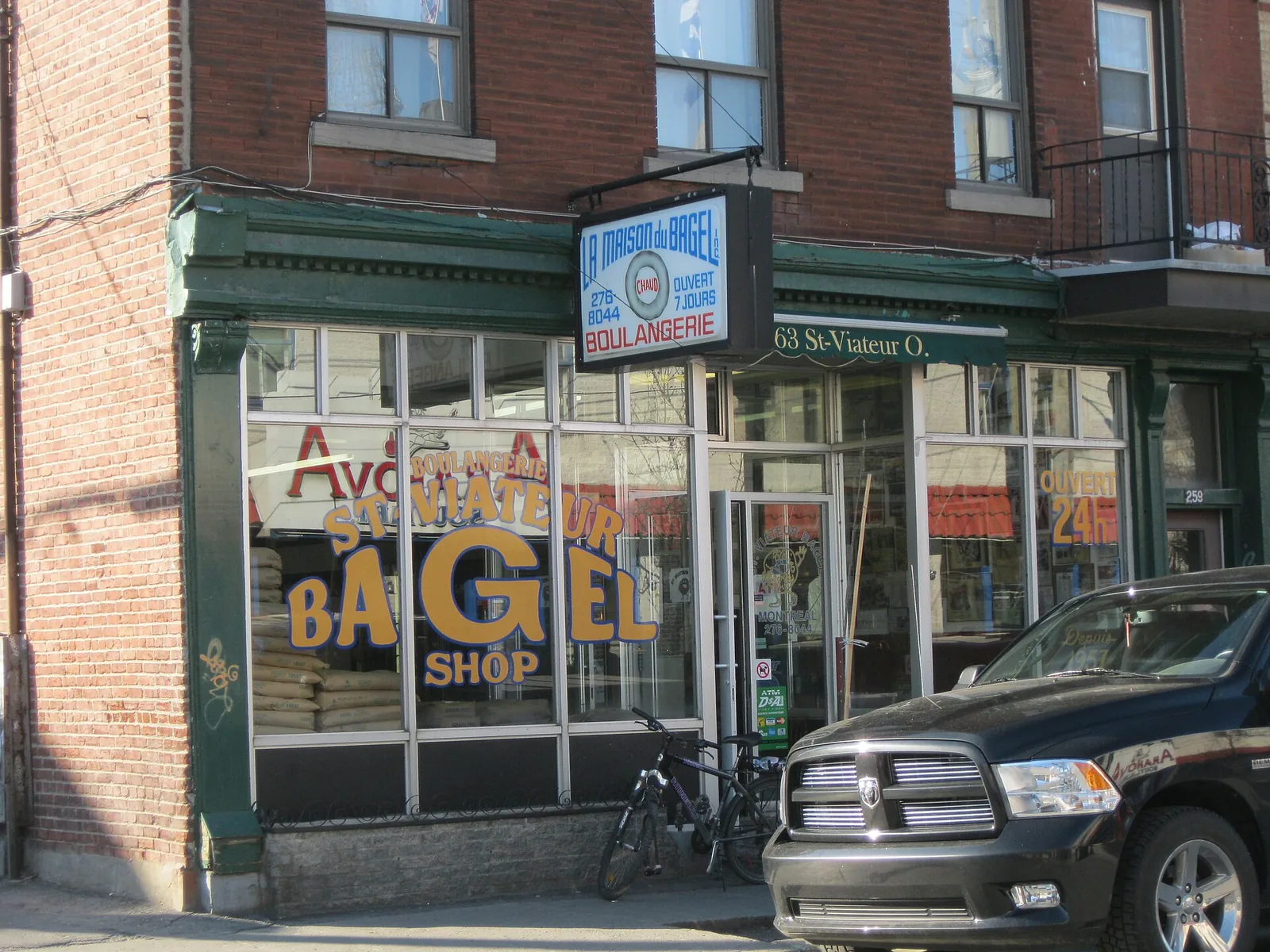
Just north of the Plateau, and often lumped in with it, Mile End has its own distinct identity: a historically Jewish, Portuguese and Greek neighbourhood that became the heart of Montreal’s creative and music scene. It’s where you’ll find the famous bagel bakeries, St-Viateur and Fairmount, independent cafés, record shops, vintage stores and some excellent small restaurants, especially along boulevard Saint-Laurent, rue Saint-Viateur and rue Bernard.
Mile End has almost no hotels. Accommodation is mostly B&Bs and apartment rentals, with the same summer-only rules for principal-residence rentals as the Plateau. It’s a wonderful place to spend a few days if you find a legal place to stay, but it’s a bit further from the metro than the Plateau: Laurier station is about fifteen minutes’ walk from the heart of the neighbourhood, and bus 55 runs along boulevard Saint-Laurent.
- Metro:
- Laurier (Orange), bus 55
- Best for:
- creative types, coffee and bagel devotees, repeat visitors
- Watch out for:
- almost no hotels, longer walk to the metro
The Village
Montreal’s LGBTQ+ neighbourhood, centred on rue Sainte-Catherine Est between rue Saint-Hubert and avenue Papineau, is one of the largest in North America and a lively, welcoming place to stay for anyone. It has bars, clubs, cafés and restaurants, and it’s the heart of Fierté Montréal, the city’s Pride festival, which ran from 31 July to 9 August in 2026. Hotels and B&Bs here tend to be cheaper than downtown, and the area is one or two stops from the Quartier des Spectacles on the Green line.
- Metro:
- Beaudry, Papineau (Green)
- Best for:
- LGBTQ+ travellers, nightlife, Pride
- Watch out for:
- late-night noise at weekends
Griffintown, Saint-Henri and Little Burgundy
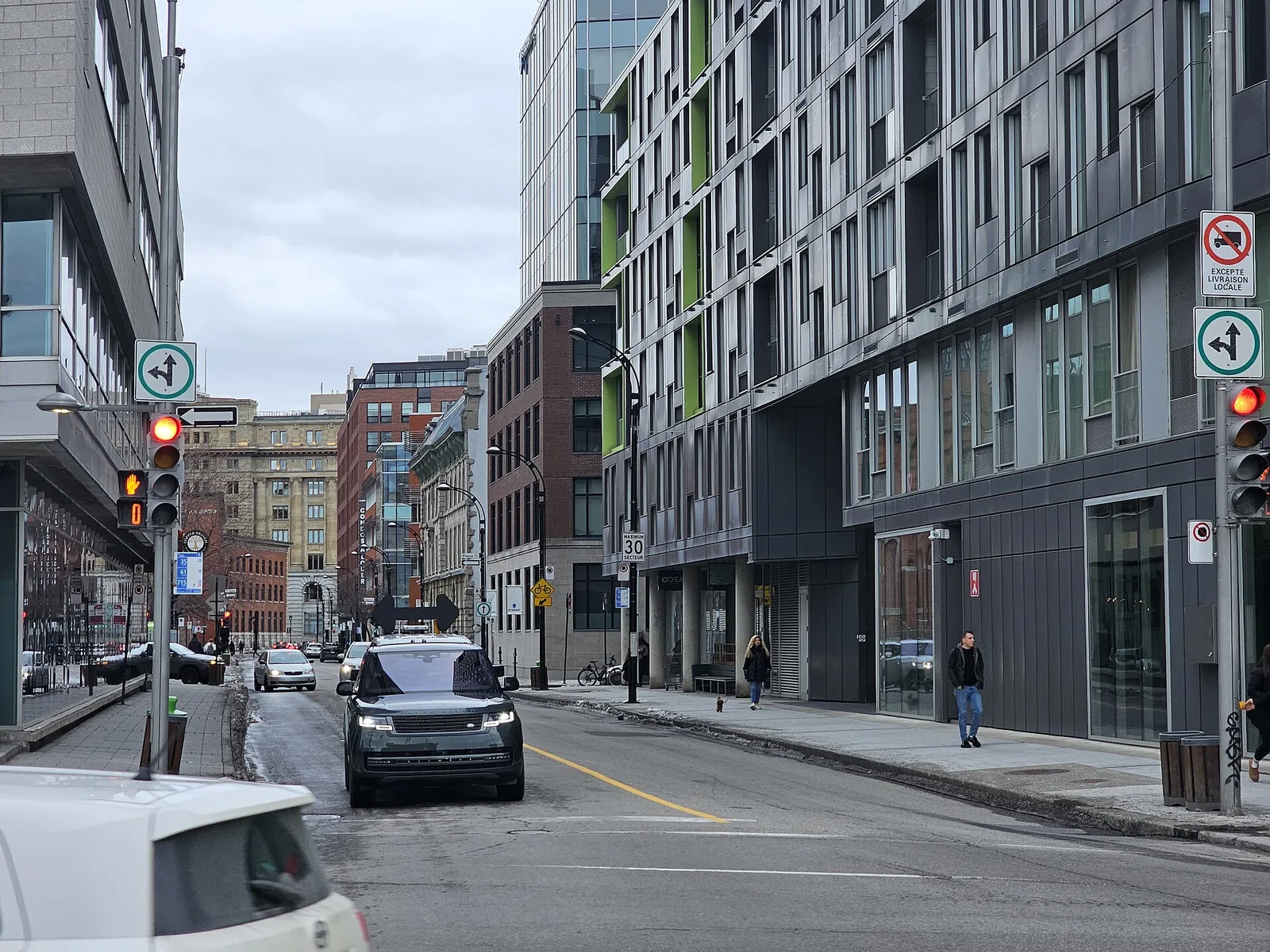
South-west of downtown, along the Lachine Canal, these three former industrial neighbourhoods have been transformed over the past two decades. Griffintown, once a working-class Irish district, is now a forest of new glass-and-steel condo towers, with a growing number of apartment-hotels and serviced apartments that suit families and longer stays. Next door, Little Burgundy and Saint-Henri have become one of the city’s best eating areas, along rue Notre-Dame Ouest, home to Joe Beef, Liverpool House and a string of wine bars, with Atwater Market at the end of the street.
The big draw is the Lachine Canal, whose flat 14.5 km towpath runs from the Old Port to Lake Saint-Louis, perfect for cycling and walking. The area also has one very practical advantage for arrivals: the 747 airport bus has an express branch to Lionel-Groulx station, about 30 to 35 minutes from the airport with one stop, which is a short walk or metro hop away. Downsides: Griffintown can feel like a construction site in places, and it’s short on the historic charm of the Plateau.
- Metro:
- Lionel-Groulx (Green, Orange), Georges-Vanier (Orange)
- Best for:
- modern apartments, families, cyclists, food lovers
- Watch out for:
- ongoing construction
Near the airport
Montréal–Trudeau airport (YUL) has a hotel inside the terminal, the Montréal Airport Marriott In-Terminal Hotel, and several more nearby. Only stay out here if you have a very early flight or a late-night arrival and are flying out again the next day. The city centre is 30 to 70 minutes away on the 747 bus, depending on the branch and traffic, and the REM light rail does not yet serve the airport; its station is targeted for the end of 2027.
Where to stay in Montreal for a first visit
If you’re still torn, here’s our honest recommendation. For a first trip of three or four nights, stay downtown, as close as possible to McGill, Peel or Place-des-Arts metro. You’ll be able to walk to Old Montreal, the Quartier des Spectacles and the foot of Mount Royal, the Orange and Green lines will take you anywhere else in minutes, and in winter you’ll have the RÉSO on your doorstep. Spend a day in Old Montreal, a day on the Plateau and in Mile End, and a day on Mount Royal and in the markets. On a second trip, stay in the Plateau.
Hotels Worth Knowing, Area by Area
Room rates in Montreal swing so much with the festival calendar that quoting prices would be misleading. Instead, here are the hotels that come up again and again, what makes each one distinctive, and who it suits. Check current rates for your dates, and remember that taxes may not be included in the first price you see.
Downtown and the Golden Square Mile
Fairmont The Queen Elizabeth is the big, historic downtown hotel above Gare Centrale, linked to the RÉSO and to Bonaventure metro. It has a famous piece of pop history: in 1969 John Lennon and Yoko Ono staged their “Bed-In for Peace” in one of its suites and recorded “Give Peace a Chance” there. It suits travellers arriving by train, winter visitors and anyone who wants a full-service hotel in the centre of everything.
Hotel Bonaventure sits on top of Place Bonaventure, with rooms arranged around a rooftop garden and a heated outdoor pool, and a direct link to the underground network below. It’s a practical, slightly retro choice that families like.
The Ritz-Carlton Montreal on rue Sherbrooke Ouest is the grand old lady of the Golden Square Mile, a luxury hotel with a long social history: Elizabeth Taylor and Richard Burton married there in 1964. It suits a special occasion and anyone who wants the Museum of Fine Arts and Mount Royal on the doorstep.
Downtown also has a large choice of international chain hotels around rue Peel, boulevard René-Lévesque and the Quartier des Spectacles, which are often the best value on a busy weekend, and the Hyatt Regency above Complexe Desjardins, which connects to the underground network and sits right beside the Place des Festivals.
Old Montreal
Le Saint-Sulpice stands on the little street beside Notre-Dame Basilica, with suites and a courtyard garden, and suits couples who want the basilica and the old streets at the door. Hôtel Nelligan, named after the Quebec poet Émile Nelligan, occupies linked 19th-century buildings on rue Saint-Paul and has a rooftop terrace. Hôtel Place d’Armes looks straight onto the square and the basilica. Auberge du Vieux-Port faces the river on rue de la Commune, with stone walls, wooden beams and views over the Old Port. William Gray mixes a modern wing with restored historic houses near Place Jacques-Cartier and suits travellers who want boutique style without heavy period decor.
All of them are best for short stays, weekends and special trips. Ask for a room on the quieter side of the building if you’re staying in summer, when the terrasses below can be busy until late.
The Plateau, Mile End and the Village
These areas are the domain of small inns and B&Bs rather than named hotels. The best of them occupy classic Montreal triplexes, with a handful of rooms, a generous breakfast and hosts who know every bakery in the neighbourhood. Book directly or through a reputable platform, and check the listing’s registration details, because small, legitimate B&Bs are registered establishments and will say so.
Splitting Your Stay Between Two Areas
On a trip of five nights or more, many visitors get the best of Montreal by splitting their stay between two very different neighbourhoods. Three combinations work particularly well.
- Old Montreal then the Plateau. Two nights in a boutique hotel in the old town for the history, the Old Port and a special dinner, then three nights in a Plateau B&B for cafés, markets, Mount Royal and nightlife.
- Downtown then Griffintown. A central downtown hotel for the sights and shopping, then an apartment-hotel near the Lachine Canal for cycling, Atwater Market and the restaurants of Little Burgundy.
- Quartier des Spectacles during a festival, then somewhere quieter. Stay in the thick of things for the festival nights, then move to the Golden Square Mile or the Plateau to recover.
The metro makes moving between neighbourhoods easy, but pack light: many B&Bs and older buildings in the Plateau and Old Montreal have narrow stairs and no elevator.
Noise, Safety and Accessibility
Safety. Montreal is generally a safe city for visitors, and the central neighbourhoods on this page are busy and well lit into the evening. Take the usual big-city precautions: watch your belongings in crowds and on the metro during festivals, and use a taxi or ride-share late at night rather than walking long distances alone. A few blocks around Berri-UQAM and rue Sainte-Catherine Est can feel rough late at night, but they’re rarely a problem for visitors who stick to busy streets.
Noise. The liveliest areas are the loudest. Downtown around rue Crescent, the Quartier Latin, the Village and the Quartier des Spectacles during festivals can be noisy until the bars close at 03:00. Summer also brings construction, often starting early in the morning. If you’re a light sleeper, ask for a high floor or a room at the back, and pack earplugs.
Accessibility. Large downtown hotels are generally the most accessible, with elevators and adapted rooms. Many Old Montreal boutique hotels and Plateau B&Bs are in historic buildings with steps at the entrance, narrow staircases and no elevator, so check carefully before booking if mobility is a concern. Not every metro station has an elevator either; check the STM’s list of accessible stations when choosing where to stay.
Moving Day. One Montreal quirk affects rentals in particular: 1 July is Moving Day, when most residential leases in Quebec end and much of the city moves house at once. Residential streets fill with trucks and furniture, and rental availability and quality can be unpredictable around that date. It also falls on Canada Day. If you’re renting an apartment, avoid arriving or leaving on 1 July if you can.
Where to Stay by Type of Traveller
Couples
Old Montreal is made for couples: boutique hotels, candlelit restaurants, evening walks along the Old Port and the basilica’s AURA light show a few steps away. A night at Bota Bota, the spa boat in the Old Port, makes a special trip even better (it’s 18 and over only).
Families
Families usually do best downtown or in Griffintown, where apartment-hotels and suites with kitchens are easier to find, and where the metro gives quick access to the Biodôme and the other Space for Life museums, the Science Centre in the Old Port and Parc Jean-Drapeau’s beach in summer. Check that a hotel has rooms with two beds or connecting rooms before you book.
Budget travellers
The Quartier Latin and the Village have the cheapest hotels and several hostels. Staying in winter, from January to March outside festival weekends, or in November and April, will also save a lot. Avoid the Grand Prix weekend and the peak festival weeks, when prices soar.
Winter travellers
Choose downtown, and specifically a hotel connected to the RÉSO or within a block of a downtown metro station. It makes a real difference when it’s −15 °C and windy. Our Montreal winter guide explains how the underground network works and what to pack.
Festival-goers
Stay near the festival you’re coming for: the Quartier des Spectacles for the Jazz Festival, the Francos and Montréal en Lumière; Old Montreal for Igloofest at the Old Port; anywhere on the Yellow line or near Berri-UQAM for Osheaga and the Grand Prix on Parc Jean-Drapeau. Book as soon as dates are announced. Our Montreal festivals calendar has the 2026–27 dates.
Travellers without a car
Montreal is one of the easiest cities in North America to visit without a car. Choose any area close to a metro station and you’ll never need one. Downtown, Old Montreal, the Quartier Latin and the Plateau are all well served. Mile End and parts of Griffintown involve slightly longer walks.
Hotels, B&Bs, Apartments or Hostels?
Hotels are concentrated downtown, in Old Montreal and around the Quartier des Spectacles. They range from big international chains and historic grand hotels to small independent boutique properties. They’re the most reliable choice, especially in winter and during festivals.
B&Bs and small inns (gîtes in Quebec French) are common in the Plateau, the Village and the Quartier Latin. They offer a more personal stay and a home-cooked breakfast, often in a traditional Montreal triplex.
Apartment-hotels and serviced apartments are increasingly common downtown and in Griffintown. They’re ideal for families and longer stays, with kitchens and more space, and they operate legally year-round.
Hostels are found downtown, in the Quartier Latin and in the Plateau, and are the cheapest option for solo travellers and backpackers.
Short-term rentals: the rules that matter
This is where many visitors get caught out. Montreal has some of the strictest short-term rental rules in North America, designed to protect housing for residents. According to the City of Montréal:
- A resident may rent out their principal residence to tourists for stays of 31 days or less only between 10 June and 10 September. Outside that window, it’s prohibited.
- The host needs a permit from the city, renewed each year, and must rent to a single person or group under one reservation, without serving meals.
- Principal-residence rentals are allowed in every borough except Lachine, Saint-Laurent and Saint-Léonard.
- Commercial tourist rentals (whole units that aren’t anyone’s main home) are allowed only in specific authorised areas.
In practice, this means that a typical apartment rental in the Plateau or Mile End for a trip in, say, January or October is likely to be illegal unless it’s an authorised commercial tourist residence. Illegal listings can be cancelled at short notice, leaving you stranded. Before you book a rental, check that the listing shows a registration or permit number, and ask the host if you’re unsure. Outside summer, a hotel, B&B, inn or apartment-hotel is the safer bet.
What a Hotel Room Really Costs: Taxes and Extras
The price you see first is rarely the price you pay. Three taxes are added to accommodation in Montreal:
- GST (the federal goods and services tax) and QST (the Quebec sales tax), which together add just under 15% to most purchases.
- The tax on lodging, usually 3.5% of the price of the overnight stay, charged on the room price only and not on extras like breakfast or parking, according to Revenu Québec.
Some booking sites show prices with taxes included, others don’t, so compare like with like. Other extras to budget for: parking, which most downtown and Old Montreal hotels charge for, often at a steep nightly rate; breakfast, which is often not included in city hotels; and tips for housekeeping and porters, following the same US-style tipping culture as restaurants.
When to Book
Montreal’s hotel prices follow the festival calendar more closely than the weather.
- Book months ahead for the Grand Prix weekend, which moved from June to late May in 2026 (it ran from 22 to 24 May; in 2027 it runs from 21 to 23 May), the Jazz Festival in late June and early July, Just for Laughs in July, and the Osheaga and Pride period in early August.
- Book a few weeks ahead for September and October weekends, especially Canadian Thanksgiving (the second Monday of October).
- Book late for bargains from January to March (except Montréal en Lumière, 18–28 February 2027), in November and in April.
Keep bookings cancellable until festival dates are confirmed. For a month-by-month breakdown of weather, events and prices, see our guide to the best time to visit Montreal.
Getting From the Airport to Your Neighbourhood
The 747 bus runs 24 hours a day from Montréal–Trudeau airport and costs $11.25, which includes 24 hours of unlimited travel on the bus and metro network. It has two branches: the 747-1 runs downtown with 12 stops, taking roughly 45 to 70 minutes to its terminus on boulevard René-Lévesque at rue Berri; the 747-2 runs to Lionel-Groulx metro station with one stop, in roughly 30 to 35 minutes. The REM light rail doesn’t serve the airport yet. There’s also a fixed taxi fare from the airport to downtown; check the current rate at the taxi stand.
| Staying in | Best route from YUL |
|---|---|
| Downtown | 747-1 to a downtown stop near your hotel |
| Old Montreal | 747-1 to the René-Lévesque/Berri terminus, then walk about 15 minutes or take the Orange line from Berri-UQAM |
| Quartier des Spectacles / Quartier Latin | 747-1 to the terminus or a nearby stop |
| The Plateau / Mile End | 747-1 to Berri-UQAM, then the Orange line north to Sherbrooke, Mont-Royal or Laurier |
| The Village | 747-1 to the terminus, then the Green line east to Beaudry or Papineau |
| Griffintown / Saint-Henri | 747-2 express to Lionel-Groulx |
By train: VIA Rail from Toronto, Ottawa and Quebec City, and Amtrak’s Adirondack from New York, arrive at Gare Centrale downtown, directly beneath the Queen Elizabeth hotel and linked to Bonaventure metro. By car: remember there’s no right turn on red anywhere on the island of Montreal, and budget for hotel parking. Street meters in the centre cost about $2.50 to $4.25 an hour.

Getting Around Once You’re Here
Whichever neighbourhood you choose, the metro will be your main way around. As of September 2026, a single fare is $3.75, a 24-hour pass $11.25, a 3-day pass $21.75, and a weekend pass (Friday 16:00 to Monday 05:00) $17.00. You can tap a contactless credit or debit card at the turnstile or buy a reusable OPUS card for $6. The metro runs until roughly 00:30, later on Saturdays. In the warmer months, BIXI bike-share stations are everywhere, with the full season running from 15 April to 15 November; there’s no day pass, just a $1.60 unlock fee plus a per-minute rate.
Mistakes to Avoid When Booking
- Booking an illegal short-term rental. Principal-residence rentals are only allowed from 10 June to 10 September. Outside summer, stick to hotels, B&Bs, inns and apartment-hotels.
- Staying far out to save money. The savings disappear in transit time and fares. Stay near a metro station.
- Forgetting the taxes. GST, QST and the 3.5% lodging tax all apply on top of many quoted rates.
- Booking Old Montreal for a long winter stay. It’s beautiful but very quiet, icy and far from the neighbourhoods where locals go out.
- Treating the Plateau and Mile End as the same place. They’re neighbours with different characters, and Mile End is further from the metro.
- Booking during the Grand Prix by accident. Check the race date before you book any trip in late May or June.
- Paying for airport hotels when you don’t need them. The 747 runs 24 hours a day.
Frequently Asked Questions
What is the best area to stay in Montreal for first-time visitors?
Downtown, near McGill, Peel or Place-des-Arts metro, is the best base for most first-time visitors. It has the widest choice of hotels, it’s within walking distance of Old Montreal, the Quartier des Spectacles and Mount Royal, and the metro reaches everything else quickly. In winter, many downtown hotels connect directly to the RÉSO underground network.
Is it better to stay in Old Montreal or downtown?
Old Montreal is more atmospheric and romantic, with boutique hotels in historic buildings, but it’s usually more expensive, quiet in the evenings and further from the Plateau’s restaurants and nightlife. Downtown is more practical, with more hotels, better transport links and RÉSO access in winter. For a romantic weekend choose Old Montreal; for a longer first trip choose downtown.
Is the Plateau a good place to stay?
Yes, especially for food lovers and return visitors. The Plateau is Montreal’s most characterful residential neighbourhood, full of cafés, bistros, bars and parks, and it’s on the Orange line. The drawback is the lack of hotels: most accommodation is in B&Bs, small inns and rentals, and principal-residence rentals are only legal from 10 June to 10 September.
Are Airbnbs legal in Montreal?
Only under strict conditions. According to the City of Montréal, residents may rent their principal residence to tourists for stays of 31 days or less only between 10 June and 10 September, with a city permit, and not in Lachine, Saint-Laurent or Saint-Léonard. Commercial tourist rentals are only allowed in authorised areas. Check that any listing shows a registration or permit number.
What taxes are added to hotel bills in Montreal?
Hotel stays in Montreal carry the federal GST and the Quebec QST, which together add just under 15%, plus Quebec’s tax on lodging, usually 3.5% of the price of each overnight stay. The lodging tax applies to the room price only, not to breakfast or parking. Some booking sites include these taxes in the displayed price and some don’t.
Which Montreal hotels are connected to the Underground City?
Several downtown hotels link directly into the RÉSO underground network, including the Fairmont The Queen Elizabeth above Gare Centrale and the Hotel Bonaventure on top of Place Bonaventure. The Hyatt Regency connects through Complexe Desjardins. In winter, a RÉSO-connected hotel lets you reach the metro, shops and restaurants without going outside.
Where should I stay for the Grand Prix or Osheaga?
Both events take place on Parc Jean-Drapeau, reached by the Yellow line to Jean-Drapeau station. The Yellow line starts at Berri-UQAM, so the Quartier Latin, the Village and the eastern downtown are the most convenient bases. Book very early: the Grand Prix weekend, in late May from 2026, is the most expensive hotel weekend of the year.