The best Montreal travel tips are the ones nobody puts in the brochure: that the new light rail doesn’t go to the airport yet, that every price tag leaves out almost 15% in tax, that you can’t turn right on a red light, that the famous underground city isn’t one continuous city, that bars pour until 03:00 but the metro stops around 00:30, and that “Bonjour, hi” is the most useful phrase you’ll learn. This is our practical guide to a smooth trip, with prices and rules checked in September 2026: entry requirements, what to pack for each season, how to get in from the airport and around the city, money, tax and tipping, language and etiquette, safety, food and drink customs, ways to save, and the mistakes visitors make most often, including a few that other travel sites are still making for them.
The 15 Montreal Travel Tips That Matter Most
- Take the 747 bus from the airport. It runs 24 hours a day, costs $11.25 and the ticket gives you 24 hours of unlimited bus and metro travel. A taxi to downtown is a fixed $49.45 by day.
- Ignore anyone who tells you to take the REM from the airport. The REM light rail’s airport station is still under construction, with a target of the end of 2027.
- Add 14.975% to every price. Sales tax (5% GST plus 9.975% QST) is added at the till, and visitors can’t claim it back.
- Tip as you would in the US. 15 to 20% in restaurants, $1 to $2 a drink at a bar.
- Say “bonjour” first. Then carry on in English. Nobody expects visitors to speak French, and no law requires it.
- Don’t turn right on red. It’s illegal everywhere on the island of Montreal.
- Buy the right transit pass. A single fare is $3.75, a 24-hour pass $11.25, a 3-day pass $21.75 and a weekend pass $17.00. Children 11 and under ride free with a paying adult.
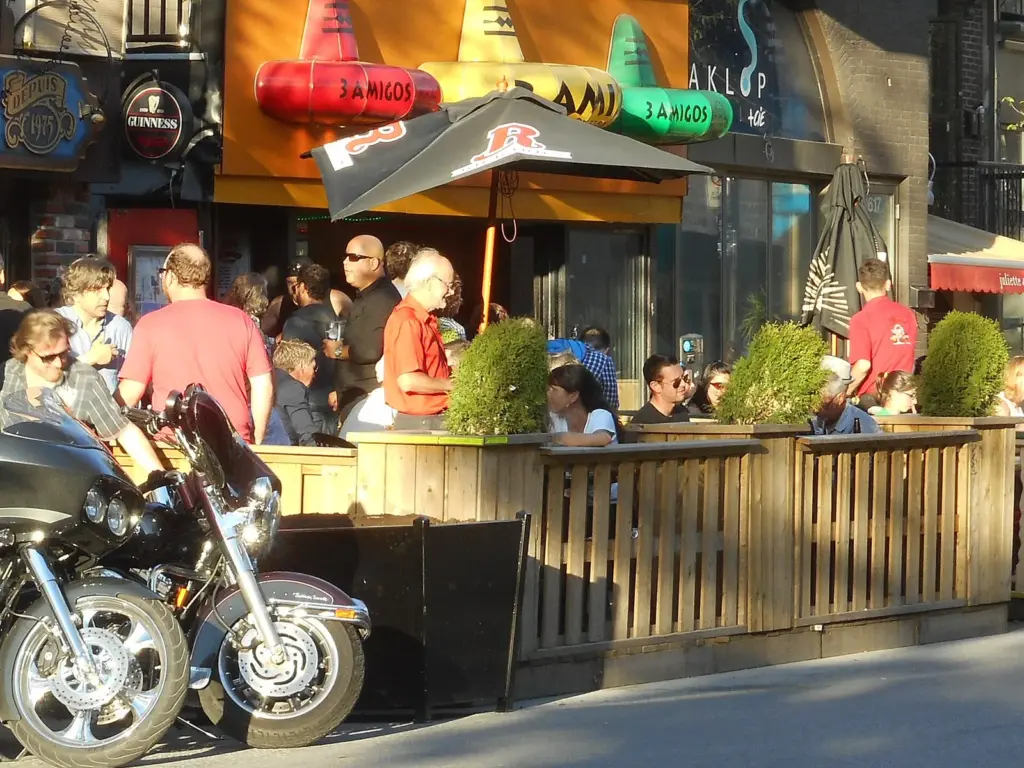
- Plan your ride home. The metro stops around 00:30 (later on Saturdays), but bars stay open until 03:00.
- Pack for the season, seriously. January averages about −9 °C before windchill, and summer can be hot and humid.
- Use the underground city with realistic expectations. The RÉSO links about 33 km of passages, but it’s a series of segments, not one continuous indoor city.
- Check festival dates for the year you’re travelling. They move every year, and many websites still show last year’s.
- Book popular things ahead. AURA’s evening shows at Notre-Dame Basilica, Canadiens games and Grand Prix hotels sell out.
- Know what’s closed. The Montreal Tower observatory is shut until spring 2027, the Au Sommet observation deck no longer operates, calèche rides were banned in 2020 and the Mount Royal Chalet is closed for works in 2026.
- Don’t confuse neighbourhoods. Old Montreal isn’t downtown, and the Plateau isn’t Mile End.
- Bring your own wine. Many restaurants are “apportez votre vin” (BYOB), which makes dinner much cheaper.

Montreal Travel Tips for Planning Your Trip
Entry requirements
Montreal is in the province of Quebec, in Canada, so Canadian entry rules apply.
- US citizens need a valid passport to fly to Canada, or a passport, passport card, NEXUS card or enhanced driver’s licence to arrive by land. No visa or eTA is needed.
- Visa-exempt travellers flying in, including citizens of the UK, most of the EU, Australia and Japan, need an Electronic Travel Authorization (eTA), which costs CAN$7. Apply only on the Government of Canada website, never through lookalike sites that charge more.
- US green card holders don’t need an eTA but must carry their green card and passport.
- Other nationalities generally need a visitor visa, which takes much longer to obtain.
Don’t bring cannabis across the border in either direction, even though it’s legal in Canada, and declare all food at customs. Our Montreal airport guide covers customs and arrivals in detail.
When to visit
Every season in Montreal has its fans, and its trade-offs.
| Season | What it’s like | Pros | Cons |
|---|---|---|---|
| Winter (mid-November to mid-March) | Cold, snowy, often sunny; January averages about −9 °C | Lowest hotel prices, skating, Igloofest, Montréal en Lumière, hockey | Deep cold and windchill; short days |
| Spring (late March to May) | Slushy then green; sugar shack season into early April | Few crowds, maple season, terrasses return in May | Grey, wet stretches; muddy parks |
| Summer (June to August) | Warm to hot, humid, long days | Festivals, terrasses, beaches, free outdoor shows | Highest prices, crowds, construction |
| Autumn (September to mid-November) | Crisp; colour peaks around mid-October in the city | Great walking weather, harvest markets, Gardens of Light | Cold snaps in November; beaches closed |
If you’re flexible, September and early October are hard to beat. For month-by-month detail, see the best time to visit Montreal, and for the cold months, our guide to Montreal in winter.
How long to stay
Three full days is the sweet spot for a first visit: enough for Old Montreal, Mount Royal, the Plateau and Mile End, a museum or two and a good meal every night. Two days covers the highlights at a brisk pace. With five days or more, add day trips to Quebec City, the Laurentians or the Eastern Townships. Our Montreal itinerary has plans for one to five days, and day trips from Montreal covers the countryside.
Where to stay
For a first visit, stay downtown or in Old Montreal for easy access to the sights, or in the Plateau for neighbourhood life and restaurants. Whatever you book, check its distance to a metro station. Two rules are worth knowing: most stays carry a lodging tax, usually 3.5% of the room price, on top of GST and QST; and renting a private home (a principal residence) to tourists is only allowed from 10 June to 10 September, so outside that window, apartment rentals must be licensed tourist accommodation. See where to stay in Montreal for neighbourhood-by-neighbourhood advice.
Book ahead for
- Hotels during the Jazz Festival (late June to early July), the Grand Prix (late May from 2026) and other big festival weekends.
- AURA evening shows at Notre-Dame Basilica, sold only online or by phone.
- Montreal Canadiens games, especially Saturday nights.
- Popular restaurants on Friday and Saturday nights.
- Sugar shacks in March and April; the most famous open bookings on 1 December.
- Gardens of Light timed tickets at the Botanical Garden in autumn.
Health and insurance
Healthcare for visitors in Canada isn’t free, and hospital bills can be high, so buy travel insurance that covers medical care. For non-urgent medical advice, call Info-Santé on 811. For emergencies, call 911. Pharmacies are everywhere, and many are open late.
Phones, plugs and practicalities
- Power: Canada uses 120-volt electricity and North American two- and three-pin plugs, the same as the US. Visitors from Europe, the UK and Australia need an adapter, and check that your devices handle 120 V.
- Mobile data: Canadian mobile plans are expensive. Check your home carrier’s roaming charges, or buy an eSIM before you arrive.
- Wi-Fi: widely available in cafés, hotels, museums and at the airport.
- Tap water: safe to drink.
- Time zone: Eastern Time, the same as New York and Toronto.
- Measurements: metric. Temperatures are in Celsius, distances in kilometres, and fuel in litres.
What’s Closed or Changed in 2026
Montreal’s attractions change more than most guidebooks admit. As of September 2026:
- Montreal Tower observatory at Olympic Park: closed until spring 2027. The Olympic Stadium is also closed for works, and the Olympic Park guided tour ran only until 27 September.
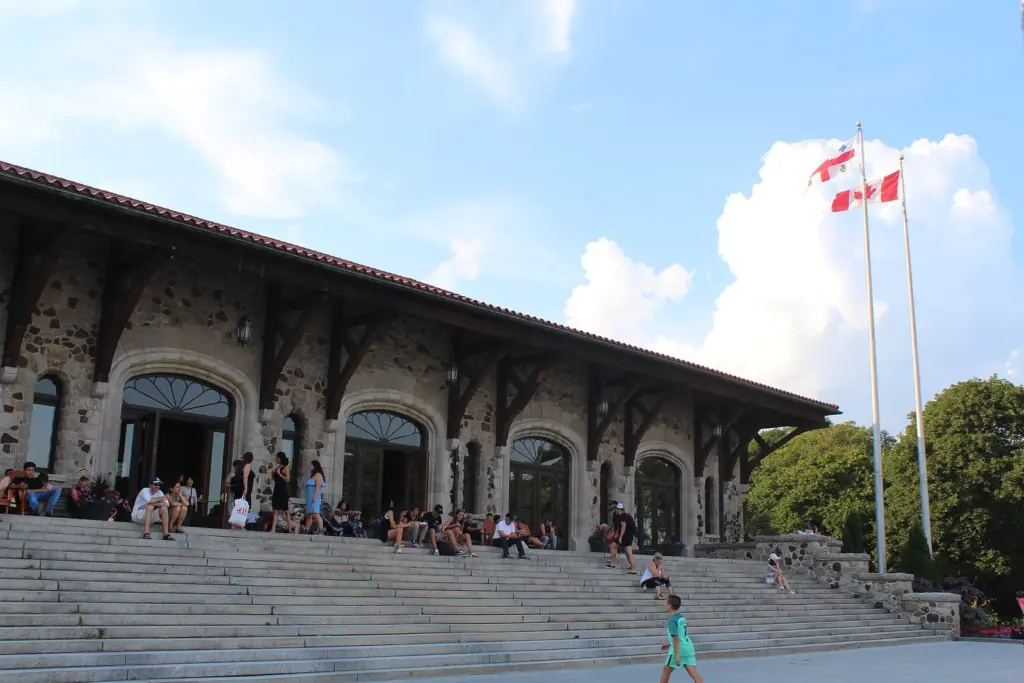
- Mount Royal Chalet: closed during excavation work on chemin Olmsted, with access to the Kondiaronk Belvedere hindered by construction. The lookout can still be reached on foot.
- Au Sommet Place Ville Marie: the downtown observation deck no longer operates.
- Musée d’art contemporain: exhibitions at its temporary Place Ville Marie home have ended while its Place des Arts building is rebuilt.
- Montreal Holocaust Museum: the permanent exhibition is closed ahead of a new museum opening in 2027.
- Old Port skating rink: permanently closed. Skate at Beaver Lake on Mount Royal instead.
- Hudson’s Bay: the department store chain closed its stores in 2025, including its downtown Montreal landmark.
- Calèches: horse-drawn carriage rides were banned from 1 January 2020.
- River shuttle from the Old Port to Île Sainte-Hélène: its 2026 season ended on 7 September.
- Canadian Grand Prix: now held in late May rather than June, from 2026.
What Things Cost: A Quick Price Guide
Here’s a snapshot of common costs, checked on operators’ own sites in September 2026. Prices include tax unless marked “+ tax”.
| Item | Price |
|---|---|
| Canada eTA (visa-exempt air travellers) | CAN$7 |
| 747 airport bus (with 24 h of transit) | $11.25 |
| Taxi, airport to downtown (day / night) | $49.45 / $56.70 |
| Metro single fare / 24-hour pass / 3-day pass | $3.75 / $11.25 / $21.75 |
| BIXI bike | $1.60 to unlock + $0.21 a minute, + tax |
| Notre-Dame Basilica day visit | $16 |
| AURA at Notre-Dame Basilica | $37 + tax |
| Pointe-à-Callière (adults 31–64) | $30 |
| Montreal Museum of Fine Arts | $30 ($32 with major exhibition); free 25 and under |
| Biodôme, Insectarium, Planetarium, Botanical Garden or Biosphère | $25.50 each; family $68 |
| Saint Joseph’s Oratory | Free; museum $3 |
| La Grande Roue | $29.50 + tax |
| Habitat 67 guided tour | $58 |
| La Ronde | From $34.99 + tax and fees |
| Club cover charge | Roughly $5–$25 |
| Bell Centre event parking | About $29 |
Arriving in Montreal
Most visitors fly into Montréal–Trudeau International Airport (YUL), about 20 km west of downtown. Your options into the city:
| Option | Cost (Sep 2026) | Time | Notes |
|---|---|---|---|
| 747 bus, downtown branch | $11.25 incl. 24 h of transit | 45–70 min | 24/7; cash or card |
| 747 bus to Lionel-Groulx metro | $11.25 incl. 24 h of transit | 30–35 min, then metro | Faster at rush hour |
| Taxi | Fixed $49.45 (05:00–23:00) or $56.70 (23:00–05:00) | 25–45 min | To downtown; tip extra |
| REM light rail | — | — | Not serving the airport; target end of 2027 |
By train, VIA Rail arrives at Gare Centrale downtown from Ottawa (about 2 hours 4 minutes on average) and Quebec City (about 3 hours 26 minutes), and Amtrak’s Adirondack runs from New York. By car, remember you can’t turn right on red anywhere on the island. Full details are in our Montreal airport and arrivals guide.
Getting Around Montreal
The metro
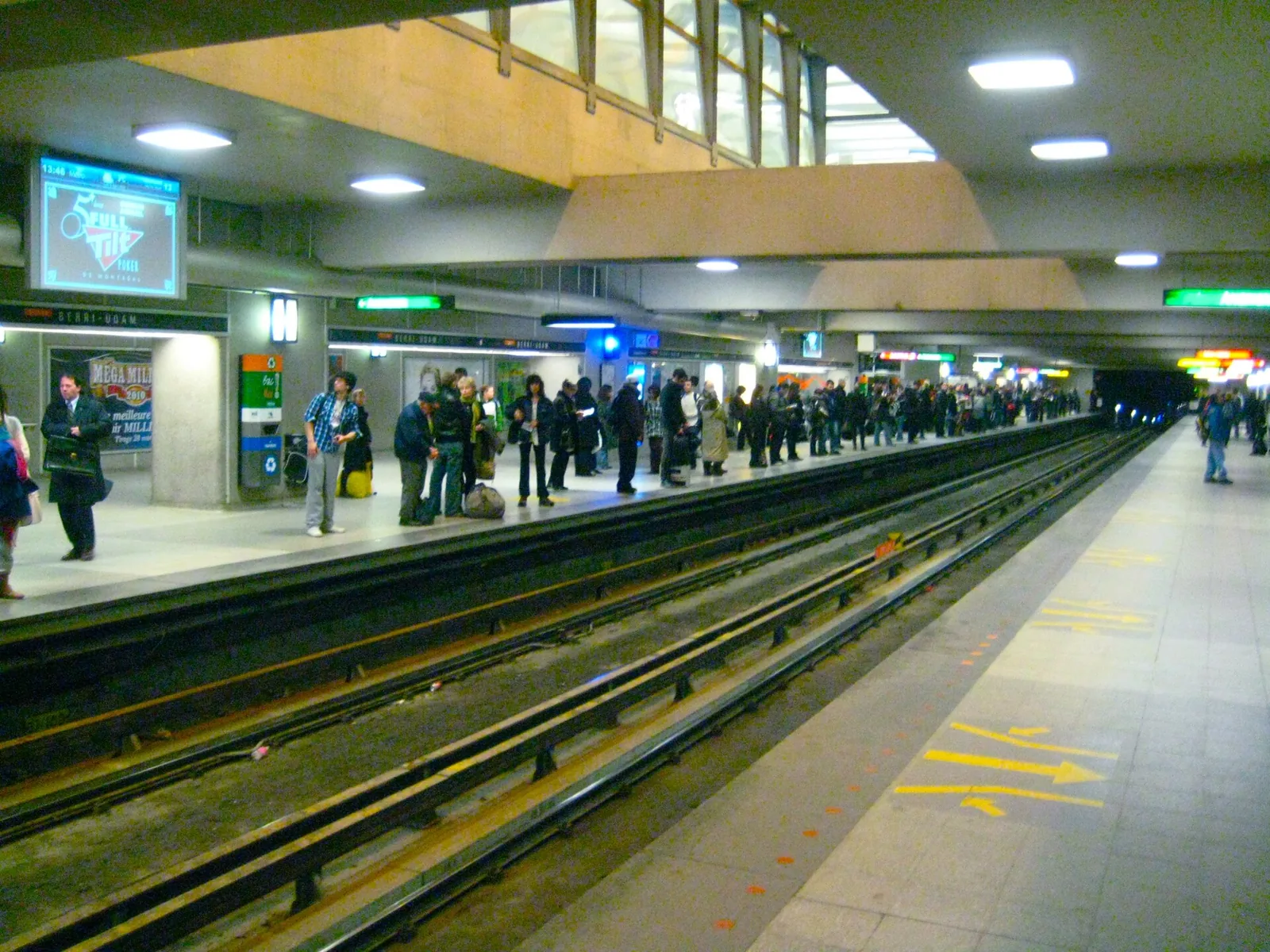
Montreal’s metro, run by the STM, has four colour-coded lines: Green (1), Orange (2), Yellow (4) and Blue (5). There’s no Line 3; it was planned and never built. Trains are frequent, clean and quick, and almost every sight a visitor wants is within a short walk of a station. Trains follow the direction of the final station on the line, so check the end-of-line name on the signs, and look for the word “correspondance” when you need to change lines.
Fares and passes
Fares are set by the regional transit authority and apply across the island’s buses and metro. Prices as of September 2026, in effect since 1 July 2026:
| Fare | Price | Best for |
|---|---|---|
| Single fare | $3.75 | One or two rides |
| 24-hour pass | $11.25 | A busy day; pays off on the third ride |
| 3-day pass | $21.75 | A long weekend |
| Weekend pass | $17.00 | Friday 16:00 to Monday 05:00 |
| Evening pass | $6.75 | 18:00 to 05:00; not valid on the 747 |
| 747 airport bus | $11.25 | Includes 24 h of network travel |
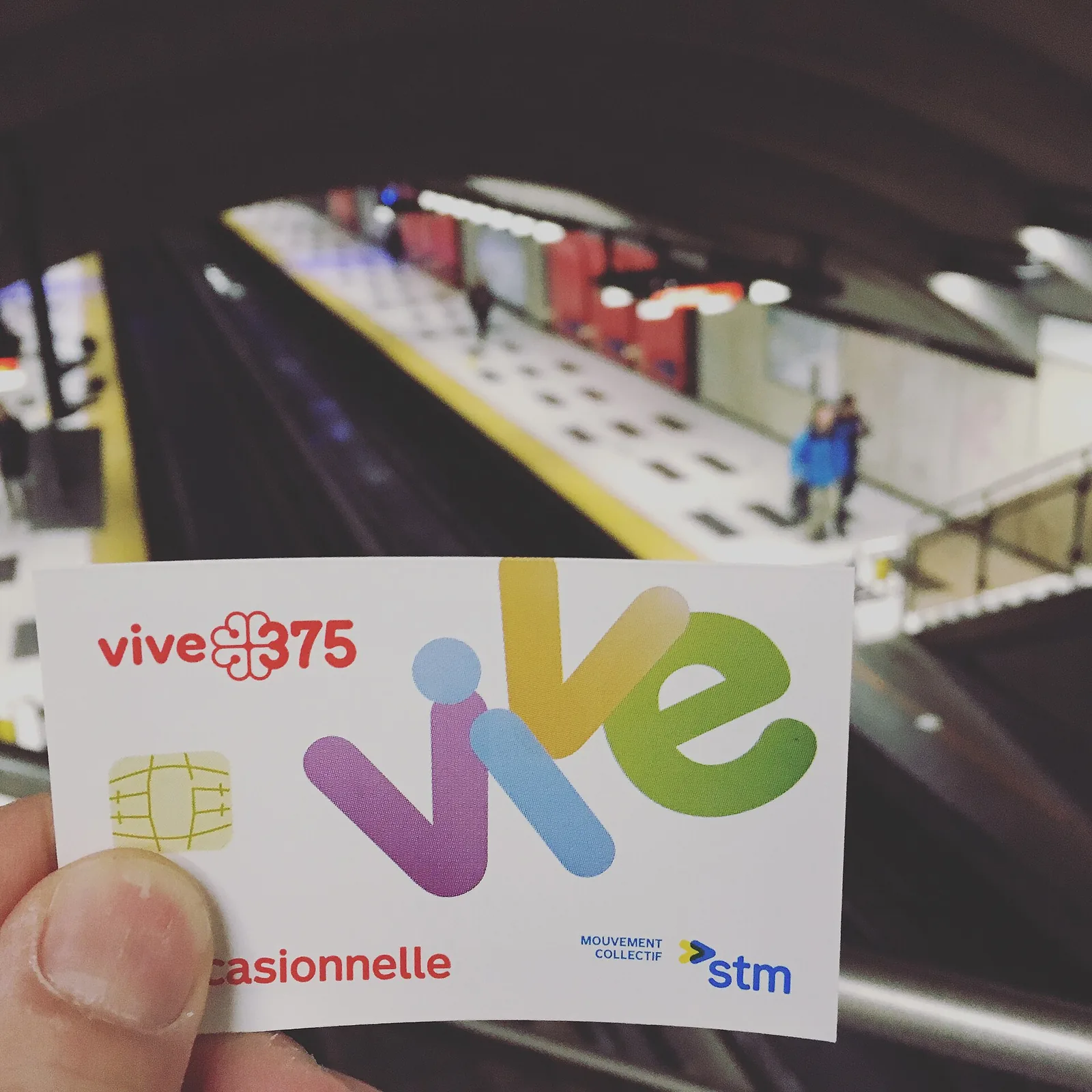
| OPUS card | $6 one-off | Reusable card to load passes onto |
For a single ride, you can simply tap a contactless credit or debit card at the turnstile or bus reader. For passes, buy an OPUS card from a machine or ticket booth in any metro station. Children aged 11 and under ride free at all times with someone aged 14 or older who has a valid fare. Note that the free travel for over-65s applies only to Montreal residents, not visitors.
When the metro stops
The metro runs until roughly 00:30, a little later on Saturdays. After that, the STM runs night buses on main routes, and taxis and Uber are easy to find in central areas. Never plan a late night around catching a metro after the last train.
Walking and cycling
Central Montreal is very walkable, but distances add up: Old Montreal to the Plateau is a good 30-minute walk. BIXI, the bike-share system, is a great way to get around in the warmer months. There’s no day pass: it costs $1.60 to unlock a bike plus $0.21 a minute for a regular bike or $0.36 a minute for an e-bike, plus tax. The full season runs from 15 April to 15 November, with a smaller winter service. Don’t walk in the separated bike lanes; cyclists ride fast and expect them to be clear.
Taxis and ride-share
Taxis use meters, starting at $4.10 by day and $4.70 at night, plus $2.05 per kilometre by day and $2.35 at night. Uber operates throughout the city. Tip taxi drivers around 10 to 15%.
Driving and parking
You don’t need a car in the city, and parking is expensive and confusing. Street parking downtown and in the Old Port costs roughly $2.50 to $4.25 an hour, depending on the zone, and signs listing when you can and can’t park are notoriously hard to read, in French and often stacked several deep. In winter, temporary no-parking signs go up for snow clearing, and cars left in the way are towed. Right turns on red are illegal on the whole island, and rush hours run roughly 07:00 to 09:00 and 16:00 to 18:00. Rent a car only for day trips.
The underground city
The RÉSO links about 33 km of pedestrian passages between metro stations, shopping centres, offices and hotels, with more than 1,700 shops and 200 restaurants. It’s genuinely useful on cold or wet days. But it’s not a single underground city you can wander at will: it’s made of separate segments, some connected only through building lobbies or metro stations, with no unified opening hours. Treat it as a way to get between specific buildings, not an attraction. More in our guide to getting around Montreal.

Money, Tax and Tipping
Currency and payment
Montreal uses the Canadian dollar (CAD). All prices on this site are in Canadian dollars. Credit and debit cards are accepted almost everywhere, and contactless payment is standard, including in taxis and at market stalls. Carry a little cash for tips, small cafés and the occasional cash-only spot. Bank ATMs give better exchange rates than currency exchange counters.
Sales tax
Shelf and menu prices don’t include tax. At the till, 5% GST and 9.975% QST are added, a total of 14.975%. Basic groceries are generally tax-free. There’s no tax refund for visitors. Hotel stays also carry the lodging tax, usually 3.5% of the room price.
Tipping
| Service | Typical tip | Notes |
|---|---|---|
| Restaurants | 15–20% | Usually calculated on the pre-tax total; the card machine suggests amounts |
| Bars | $1–$2 per drink, or 15–20% of a tab | Tip each round for good service |
| Cafés and counter service | Optional | Small tips appreciated, not expected |
| Taxis | 10–15% | Round up for short rides |
| Hotel housekeeping | A few dollars a night | Leave it daily with a note |
| Tour guides | 15–20% of the tour price | Pay what it was worth on tip-based tours |
| Shops | None | Tipping isn’t expected in retail |
Language and Etiquette
Montreal is a French-speaking city, and a very bilingual one. In the 2021 census, 56.4% of people in the Montreal area could hold a conversation in both English and French. You’ll hear “Bonjour, hi!” when you walk into shops and restaurants, which invites you to answer in either language. Answering in English is perfectly normal.
- Visitors aren’t required to speak French. Quebec’s language law, including Bill 96, applies to signs, businesses and government, not tourists.
- Start with “bonjour” and end with “merci”. It’s appreciated, and costs nothing.
- Don’t lecture anyone about language politics. Curiosity is welcome; complaining about French signs isn’t.
- Smoking is banned indoors and on restaurant and bar terrasses.
- Alcohol is allowed in parks only with a meal.
- Queue politely. Montrealers queue patiently for bagels, brunch and buses.
For phrases, history and culture, read our guide: do you need to speak French in Montreal?
Safety
Montreal is one of the safer big cities in North America, and most visits are trouble-free. The usual big-city precautions apply.
- Pickpockets work crowded places: festival sites, busy metro platforms and packed bars. Keep your phone and wallet secure.
- Bike theft is common. If you rent a bike rather than using BIXI, lock it properly.
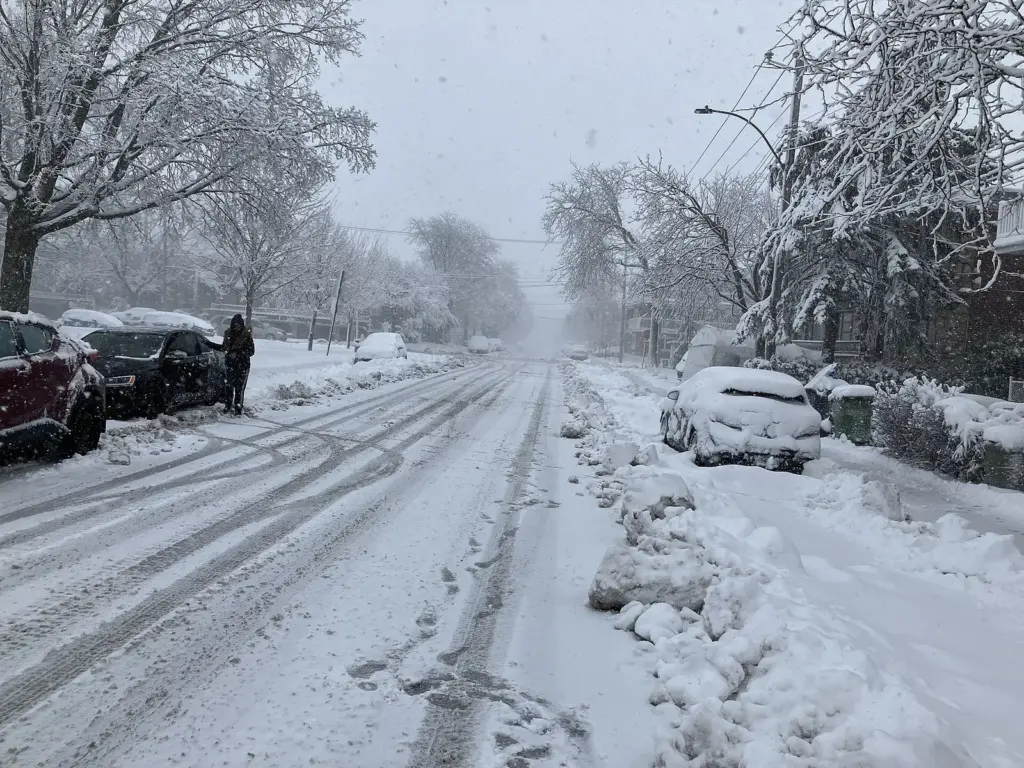
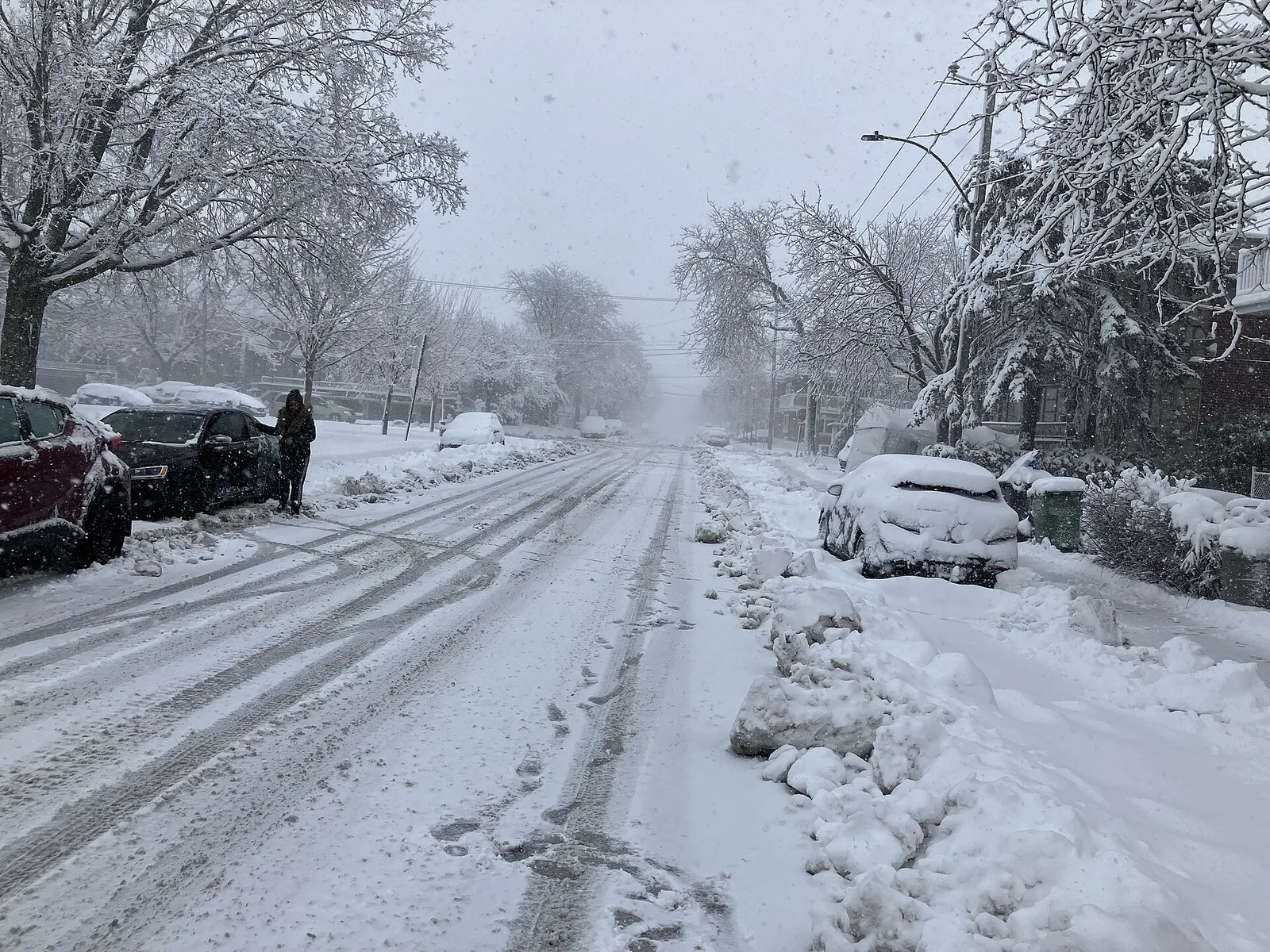
- Winter hazards are the biggest real risk: icy sidewalks, snow and ice falling from roofs (walk around cordoned-off areas) and frostbite on very cold, windy days. Good boots with grip matter more than anything else you pack.
- Summer heat can be intense and humid. Drink water and take breaks in the shade or air conditioning.
- Swimming: only swim at supervised beaches, such as Verdun Beach and Plage Jean-Doré in summer. The river’s currents are dangerous elsewhere.
- At night: central nightlife streets stay busy until after closing time. Use licensed taxis or ride-share apps, and watch your drink.
- Emergencies: call 911. For health advice, call Info-Santé on 811.
Weather and Seasons in Practice
Winter survival tips
- Dress in layers: a thermal base layer, a warm mid-layer and a long, insulated, hooded coat. You’ll constantly move between freezing streets and overheated shops and metro stations.
- Boots matter most: insulated, waterproof and with a grippy sole. Sidewalks are icy and slushy for months.
- Protect your extremities: mitts, a tuque (winter hat) and a neck warmer.
- Watch the windchill: the temperature that matters is the “feels like” figure in the forecast.
- Buy locally if you’ve underpacked: Simons on rue Sainte-Catherine and outdoor stores have everything you need.
- Plan indoor backups: museums, the Biodôme’s tropical rainforest and the downtown malls.
Spring and summer
Spring brings slush, puddles and potholes as the snow melts; waterproof shoes help. Summer is Montreal’s festival season, but it’s also construction season, when orange cones and detours seem to appear on every other street. Allow extra time for taxis and buses. Terrasses are open roughly from May to October, and summer afternoons can bring sudden thunderstorms.
Holidays that affect your trip
| Date | Holiday | What it means for visitors |
|---|---|---|
| 24 June | Fête nationale du Québec | Free concerts and parties; many shops closed |
| 1 July | Canada Day and Moving Day | Leases turn over across Quebec; streets full of moving vans; avoid driving in residential areas |
| First Monday of September | Labour Day | Long weekend; end of summer season for many attractions |
| Second Monday of October | Canadian Thanksgiving | Long weekend; busy for fall colour trips |
| 25–26 December and 1 January | Christmas and New Year | Many shops and restaurants close or shorten hours |
Food and Drink Tips
- Eat the classics: Montreal bagels (St-Viateur, at 263 rue Saint-Viateur Ouest, is open 06:00 to midnight, not 24 hours), smoked meat at Schwartz’s, and poutine at La Banquise, which really is open 24 hours.
- Look for “apportez votre vin”: bring-your-own-wine restaurants save money on dinner.
- Try the table d’hôte: set menus are often the best value, especially at lunch.
- Know the words: in Quebec, an entrée is a starter, dîner is lunch and souper is dinner.
- Book ahead for dinner and weekend brunch: the most popular places fill quickly.
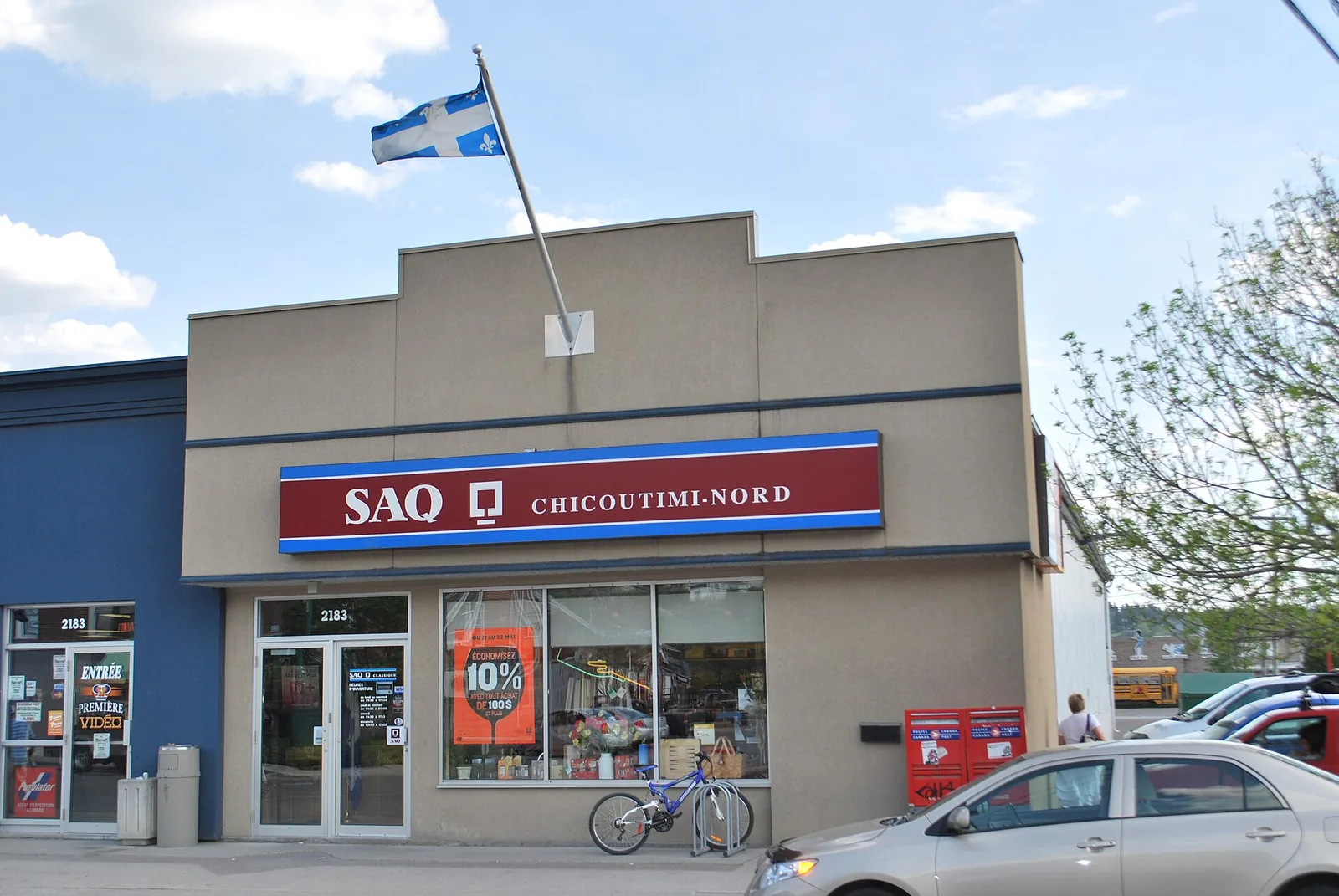
- Buying alcohol: spirits are sold at the SAQ, Quebec’s government liquor stores; beer and wine are also sold at dépanneurs (corner shops) until 23:00. The legal drinking age is 18.
- Last call is 03:00: the latest of any major city in North America.
- Cannabis: legal from age 21 in Quebec and sold only at government SQDC stores.
For restaurants by neighbourhood and budget, see our Montreal food guide, and for late nights, the Montreal nightlife guide.
How to Save Money in Montreal
Montreal is cheaper than Toronto, New York or Boston, and it’s easy to enjoy on a budget.
Free things to do
- Climb Mount Royal to the Kondiaronk Belvedere for the city’s best view.
- Visit Saint Joseph’s Oratory, the largest church in Canada, free from 06:30 to 21:00.
- Step into the Notre-Dame-de-Bon-Secours Chapel in Old Montreal.
- See the Montreal Museum of Fine Arts free if you’re 25 or under.
- Pay what you wish at the McCord Stewart Museum on the first Sunday of the month.
- Join the tam-tams at the foot of Mount Royal on Sunday afternoons from May to September.
- Catch free outdoor shows at the Jazz Festival and other summer festivals.
- Swim at Verdun Beach in summer, free.
- Browse Jean-Talon and Atwater markets.
Budget tips
- Let the 747 be your first day pass: the $11.25 airport bus ticket includes 24 hours of travel.
- Choose the right pass: the weekend pass at $17.00 covers Friday 16:00 to Monday 05:00.
- Eat your big meal at lunch: lunch table d’hôte menus are often much cheaper than dinner.
- Drink at a cinq à sept: after-work specials are the cheapest drinks of the day.
- Visit in the shoulder season: hotels are cheaper outside summer and major festivals.
- Consider the Space for Life Passport: at $87 for one person, it pays off if you visit four of the five natural science museums.
For more ideas, see the list of things to do in Montreal and our guide to Mount Royal and Montreal’s parks.
Montreal Travel Tips for Different Travellers
Families
Children 11 and under ride public transit free with a paying adult, and the Biodôme, Science Centre and Old Port are all easy by metro. Old Montreal’s cobbles are hard on strollers, and not every metro station has an elevator. See Montreal with kids.
Travellers with limited mobility
Only some metro stations have elevators, so check accessible stations on the STM website before planning routes. Taxis and the 747 bus are easier than the metro for many trips. Old Montreal’s cobbles and Mount Royal’s slopes are the hardest areas; the Old Port promenade and downtown are flatter.
Solo travellers
Montreal is easy and safe to explore alone. Food and walking tours are a good way to meet people, and bar seats at restaurants are welcoming. Our guide to Montreal tours lists the best options.
LGBTQ+ travellers
Montreal is one of the most LGBTQ+-friendly cities in the world, with a large, lively Village along rue Sainte-Catherine Est. Fierté Montréal, the largest Pride festival in the French-speaking world, takes place in late July and August.
Sports fans
Canadiens tickets sell fast; choose a midweek game against a Western Conference team for better value. See our guide to Montreal Canadiens tickets and sports.
A Packing List by Season
| Season | Essentials | Nice to have |
|---|---|---|
| Winter | Insulated waterproof boots with grip, long hooded parka, thermal base layers, mitts, tuque, neck warmer | Slip-on crampons for icy stairs, hand warmers, lip balm |
| Spring | Waterproof shoes, rain jacket, warm layers | Umbrella, a scarf for cold evenings |
| Summer | Light breathable clothes, comfortable walking shoes, sunscreen, hat, refillable water bottle | Swimsuit for the city beaches, insect repellent, a light layer for air-conditioned venues |
| Autumn | Layers, a warm jacket, waterproof shoes | Gloves and a hat for November |
| All year | Passport, travel insurance, contactless card, plug adapter if you’re from outside North America | Reusable shopping bag, a phone power bank for mobile tickets |
Useful Apps and Websites
- Transit: the STM’s app and the regional Chrono app show routes and service updates; general transit apps work well for journey planning.
- BIXI: the BIXI app shows stations and available bikes and lets you unlock them.
- Taxis and ride-share: Uber operates throughout the city, and local taxi apps let you book licensed cabs.
- Translation: download French for offline use in a translation app, handy for menus and parking signs.
- Weather: check the “feels like” temperature and windchill every morning in winter.
- Entry and border: apply for an eTA only on the Government of Canada website, and check the Canada Border Services Agency’s live wait times if you’re driving across the border.
- Mount Royal: the Les amis de la montagne website publishes current closures and conditions on the mountain.
- Festivals: always confirm dates on the organiser’s own site for the year you’re visiting.
Montreal Travel Tips by Neighbourhood
- Old Montreal: wear flat, comfortable shoes for the cobbles, visit Notre-Dame Basilica early and book AURA evenings online. Restaurants here are pricier; walk ten minutes into Chinatown or downtown for cheaper meals.
- Downtown: use the underground passages around the metro stations in bad weather, and remember rue Sainte-Catherine is busiest on Saturday afternoons.
- The Plateau: look for BYOB restaurants, respect the residents living above the bars, and don’t try to park.
- Mile End: go early for bagels and weekend brunch, and walk rather than drive.
- Little Italy: visit Jean-Talon Market on a weekday morning to avoid the Saturday crowds.
- Olympic Park area: combine the Biodôme, Planetarium, Insectarium and Botanical Garden in one day, and check what’s closed at the stadium before you go.
- Parc Jean-Drapeau: take the Yellow line, bring water in summer, and check the event calendar, since festivals can close parts of the islands.
Common Mistakes to Avoid in Montreal
These are the errors we see visitors, and plenty of travel websites, make again and again.
- Looking for the REM at the airport. It doesn’t serve YUL yet; take the 747.
- Quoting old transit fares. Fares changed on 1 July 2026: a single ride is $3.75.
- Expecting a continuous underground city. The RÉSO is a series of linked segments.
- Planning a calèche ride. Horse-drawn carriages were banned from 1 January 2020.
- Worrying that you must speak French. Bill 96 doesn’t apply to visitors.
- Confusing the Plateau and Mile End, or thinking Old Montreal is the city centre.
- Trusting last year’s festival dates. Check the organiser’s site for your year.
- Planning a visit to the Montreal Tower observatory or Au Sommet. The first is closed until spring 2027; the second no longer operates.
- Heading to the Old Port skating rink. It has closed permanently; skate at Beaver Lake on Mount Royal instead.
- Looking for Hudson’s Bay on Sainte-Catherine. The chain closed its stores in 2025.
- Forgetting the tax. Add 14.975% to shelf and menu prices.
- Turning right on red. It’s illegal on the island.
- Using an evening pass on the 747. It isn’t accepted on the airport bus.
- Assuming St-Viateur is open 24 hours. It closes at midnight.
- Missing the last metro. Trains stop around 00:30.
Your First 24 Hours in Montreal
Here’s how to put these tips to work on day one, assuming you land at the airport in the morning.
- On arrival: buy a 747 ticket with a contactless card or cash and take the bus into the city. Your $11.25 fare covers the next 24 hours of buses and the metro, so don’t buy another pass today.
- Late morning: drop your bags at the hotel, then take the metro to Place-d’Armes and walk Old Montreal. Step into Notre-Dame Basilica ($16) and wander rue Saint-Paul down to the Old Port.
- Lunch: look for a table d’hôte lunch menu, the best-value meal of the day, and remember to add tax and a 15 to 20% tip.
- Afternoon: ride the Orange line to Mont-Royal and walk through the Plateau, or take the 11 bus up the mountain for the view, checking first which paths are open while the chalet works continue.
- Evening: pick a BYOB restaurant in the Plateau, buying a bottle at the SAQ or a dépanneur before 23:00, or book AURA at the Basilica online.
- Late: enjoy the bars until last call if you like, but note the time of the last metro, around 00:30, and plan a taxi or night bus home.
For a full plan covering the next few days, see our Montreal itinerary, and if you’d like a guide for part of it, our round-up of Montreal tours.
Plan the Rest of Your Trip
Once you’ve got the practicalities sorted, the fun part is choosing what to see. Start with Old Montreal, pick the neighbourhoods that suit you, check the festival calendar for your dates, and save a rainy afternoon for the city’s museums. If you like browsing, our guide to shopping in Montreal covers the markets and streets.
Frequently Asked Questions
What are the most important Montreal travel tips for first-time visitors?
Take the 747 bus from the airport ($11.25, including 24 hours of transit), add 14.975% sales tax to prices, tip 15 to 20% in restaurants, and start conversations with “bonjour” before switching to English. Don’t turn right on red, pack for the season, plan your ride home before the metro stops around 00:30, and check which attractions are closed in 2026.
Do I need a visa or eTA to visit Montreal?
US citizens don’t need a visa or eTA, only a valid passport to fly (or a passport, passport card, NEXUS card or enhanced driver’s licence by land). Visa-exempt travellers flying to Canada, such as UK, EU and Australian citizens, need an eTA, which costs CAN$7 on the Government of Canada website. Other nationalities usually need a visitor visa.
Is Montreal expensive to visit?
Montreal is cheaper than Toronto, New York or Boston, but prices don’t include 14.975% sales tax, and tipping adds 15 to 20% in restaurants. Save money with transit passes ($11.25 for 24 hours), free sights such as Mount Royal and Saint Joseph’s Oratory, bring-your-own-wine restaurants, lunch set menus and visits outside summer and major festivals.
Is Montreal safe for tourists?
Yes. Montreal is one of the safer large cities in North America. Watch for pickpockets in crowds and on busy metro platforms, use licensed taxis or ride-share apps at night, and take winter hazards seriously: icy sidewalks, falling ice and extreme windchill. Only swim at supervised beaches. In an emergency, call 911; for health advice, call 811.
How much should I tip in Montreal?
Tip 15 to 20% in restaurants, usually on the pre-tax total, and $1 to $2 per drink at bars. Tip taxi drivers 10 to 15%, hotel housekeeping a few dollars a night, and tour guides 15 to 20% of the tour price. Tipping isn’t expected in shops, and it’s optional at counter-service cafés.
What is the best way to get around Montreal?
The metro is the best way to get around. It has four colour-coded lines, a single fare costs $3.75 and a 24-hour pass $11.25, and you can tap a contactless bank card for single rides. In warmer months, BIXI bikes are great for short trips. Walking works well in central areas. Trains stop around 00:30, after which night buses, taxis and Uber take over.
What should I pack for Montreal?
For winter (mid-November to mid-March), pack insulated waterproof boots with good grip, a long hooded coat, thermal layers, mitts, a hat and a neck warmer. For summer, bring light clothing, sunscreen, an umbrella for thunderstorms and comfortable walking shoes. In spring and autumn, pack layers and waterproof shoes. Visitors from outside North America need a plug adapter.